

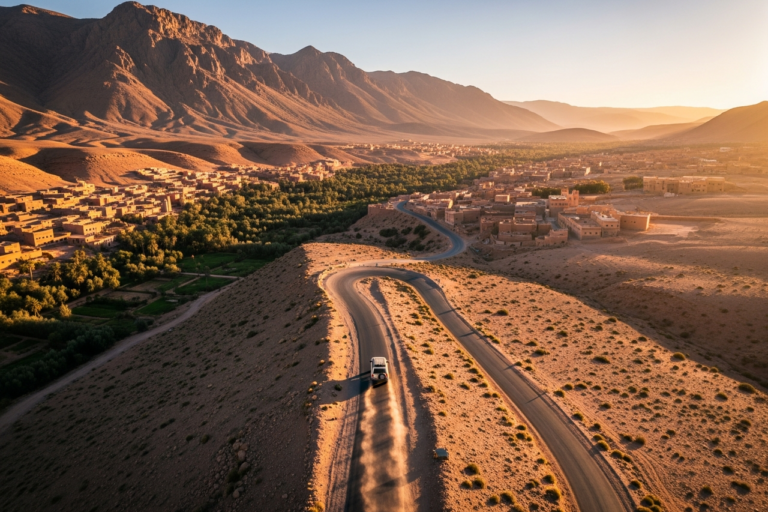
Key Highlights
-
Foreign drivers can use their own driving license in Morocco for up to one year.
-
It is a good idea to have an International Driving Permit (IDP), especially when you want to rent a car.
-
Most Moroccan roads are well-paved, even in mountain areas, but you should watch out because people and animals can be on the road.
-
There are many police checks, so you should follow speed limits or you might get a fine.
-
The speed limits are not high: They are 60 km/h in urban areas and 80-100 km/h on national roads.
-
Rental agencies will ask you for a valid license, a passport, and usually a credit card when booking a car.
Introduction
Are you thinking about taking a road trip in Morocco? It’s a good way to see the amazing places that are out there. When you drive yourself, you can stop where you want and take your time. If you are a foreign driver, the rules can look hard to understand at first. But don’t worry. This guide will help you with all you need to know. You will find out if your license works here and if you need an International Driving Permit (IDP). Be ready to get in the car and see what this country has for you. Driving on your own in Morocco is a new way to find adventure.
Types of Driving Licenses Recognized in Morocco
Morocco lets many foreign nationals drive there for a short time if they have a driving license from another country. If you have a national license from the United States or an EU country, you can usually use it in Morocco. But, the rules from Moroccan authorities can change. It is always a good idea to check the latest rules with the Moroccan authorities or the car rental companies before you go.
You might be able to get by with your national license, but having an International Driving Permit (IDP) can help. The IDP is an official way to show your license in other languages. It can be helpful if the police stop you, or when you talk to a car rental company or other rental companies in Morocco.
Using Your Home Country Driver’s License
Yes, you can drive in Morocco if you have a valid license from your home country. The good news is that most people can use their national license to drive in Morocco for up to one year from the date of entry. This rule is for people who come as tourists or for a short visit.
You must always keep your original license with you when you drive. Moroccan authorities will not accept a photocopy or a digital version if they stop you during road traffic checks. Make sure your license is valid and not expired. If your license is expired, the police in Morocco will see it as not valid.
Your national license is usually enough. But think about the language it is in. If your driver’s license is not in English or French, you could have some problems. In this case, it is a good idea to get an international driving permit. The international driving permit will translate your credentials, so you will not have trouble with language barriers when you talk to road traffic officers or Moroccan authorities.
Licensing Agreements Between Morocco and Other Countries
Morocco has specific licensing agreements with several countries, which simplifies the process for many EU license holders and other nationalities. These agreements mean that licenses from these countries are readily accepted without the mandatory requirement of an IDP for short stays, though it is still recommended.
Countries like France, Spain, and Italy have strong ties with Morocco, and their citizens often find driving there straightforward. This is part of a broader effort to facilitate tourism and travel. However, regulations can differ between tourists and foreign residents. Tourists can use their foreign license for up to a year, but if you become a resident, you’ll need to obtain a Moroccan license.
Here are some of the nationalities that benefit from these agreements:
|
Country |
Agreement Status |
|---|---|
|
France |
Recognized |
|
Spain |
Recognized |
|
Italy |
Recognized |
|
Belgium |
Recognized |
|
Germany |
Recognized |
Validity Periods for Foreign Licenses
If you are driving in Morocco with a driver’s license from a foreign country, it is important to know how long you can use it. As a tourist, you can drive with your home country’s license for up to one year after your date of entry. This gives you plenty of time to see more of Morocco and go on longer road trips.
The rule about the one-year period is only for people visiting as tourists or those on short visits. If you want to stay in Morocco longer for work or to live here, the rules are not the same. Moroccan authorities say that people who stay for a long time must trade their foreign country driver’s license for a Moroccan one.
Always carry your passport when you drive in Morocco. Your passport will show the date of entry and prove you can still use your foreign driver’s license. If the police stop you, they might ask to see both your driver’s license and your passport to check if you can drive in the country.
International Driving Permit (IDP) in Morocco
An International Driving Permit (IDP) works like a translation of your national driving license. It can change your license into many languages. You do not always need one to drive on Moroccan roads as a foreign driver, but having an IDP is a good idea. When you use it, you can talk with rental agencies, car rental companies, and the police with less trouble.
The IDP is there to help your regular driving license. You need to carry both together for the IDP to count. Some car rental companies even need you to show an IDP. Getting one can keep you away from headaches with rental companies on Moroccan roads.
When Is an IDP Required?
While Morocco does not ask every person from other countries to have an IDP, having one can make things much smoother when you drive there. The IDP is an official paper that gives a translation of your national driving license. This helps a lot if your license is not in French or Arabic.
Many car rental companies and rental agencies in Morocco ask for an IDP before you can drive their cars. The rules of rental companies are sometimes different from the rules of the government. It’s a good idea to check with the company you want to use before your trip. This way you will not face any problems at the last minute.
There are times when an IDP helps the most:
-
Your driving license is not in English or French.
-
The car rental agency or the rental companies you pick wants you to have it.
-
You want to stay away from problems when police check your documents.
-
It helps people check your credentials more easily when you show your passport, IDP, and driving license together.
How to Obtain an IDP Before Traveling
Getting an International Driving Permit (IDP) is simple, but you need to do it in your own country before your trip. You can’t get an IDP once you are in Morocco. The group who gives out the permit can be a national automobile club or a local authority, and it depends on where you live.
To apply for the IDP, you usually have to fill out an application form. You can often find this form on the internet. You need to get some documentation ready as well. Doing these steps before you go will help you avoid problems with car rental companies or local authority people in Morocco.
The usual things you need for your international driving permit application are:
-
A filled application form.
-
A copy of your valid national license, both front and back.
-
Two passport-sized photos.
-
The fee needed to process your request.
What If You Drive Without an IDP?
Driving in Morocco without an IDP can cause problems, especially if you need one to drive there. If your valid license from your home country is not in French or Arabic, the Moroccan authorities may find it hard to check your credentials during police checks. This can slow things down or cause some issues.
The result of not having the right IDP can be small or big. You may just get a simple warning from police. But sometimes there are more serious penalties, and you could get fined or have your car taken away for a short time. Without an IDP, they might say that you are driving without a valid license. That is a big problem in Morocco.
Here’s what might happen if police catch you without a needed IDP:
-
You could have to pay a fine or get a ticket.
-
The police may tell you to go to court.
-
The rental car company might say no to renting you a car, so your travel plans could get ruined.
Essential Documents for Foreign Drivers
Having the right documentation helps make driving in Morocco smooth and easy. You must always keep a few important things with you. These are your passport, your driving license, and, if you need one, an International Driving Permit (IDP).
If you drive a rental car, you need to have the car’s registration and insurance papers with you. Car rental companies will give you these papers when you pick up the car. Keeping all these documents ready makes everything go well if you talk with the authorities.
Mandatory Identification and Travel Documents
When you drive in Morocco, it is important to keep all the needed ID and travel papers close by. You want to be ready to handle any police stops or renting cars. This way, you can show who you are and prove you have the right to drive.
Your main paper is your passport, as it shows your identity. You also need your driver’s license from your own country. If you get an International Driving Permit (IDP), bring that with you, too. The IDP goes with your national license.
Here is a list of what to keep in your car:
-
Your passport with a valid entry stamp.
-
Your original, valid driver’s license.
-
An International Driving Permit (IDP), if you have one.
-
For car rentals, a credit card and the rental agreement.
Vehicle Registration and Insurance Papers
With your ID, you also need to have the right vehicle papers in the car. The vehicle registration and valid insurance are two of the most important documents. If you get a rental car, car rental companies will hand you these documents when you pick up the vehicle.
You must make sure the right documentation is always inside the car when you drive. Police can ask for these papers at checkpoints, so it’s best to keep them in the glove box where you can reach them fast. If you do not have the right, required vehicle papers, you could get fined or face hold ups that are not needed.
The key vehicle documents you should carry are:
-
The vehicle registration document (carte grise).
-
Proof you are covered by insurance.
-
The rental agreement if the car you are using is a rental car.
This makes it easy for you to show police or rental companies your documentation any time you need to.
Rental Car Agreements and Requirements
Renting a car in Morocco is a common thing for people visiting. The process is easy for most. But rental agencies and rental companies want you to meet some requirements. You should bring all the needed documentation with you. This helps you not have a problem when you go to get your car.
Most rental agencies and rental companies will want to see a valid driver’s license that you have had for one or two years. They also ask for your passport and a credit card in your name to hold a security deposit. Some companies may want an International Driving Permit (IDP). So, you should check with the rental company before you book.
When you rent a car, this is what you need to give:
-
Your passport and a valid driver’s license.
-
A credit card for the deposit.
-
An IDP if the rental agency asks for it.
Key Driving Rules and Regulations for Foreigners
To stay safe and have a good time when you drive on Moroccan roads, you need to know the local rules. You must follow the speed limits. Every person in the car has to wear a seat belt. There is no room for drinking and driving in Morocco, as the rules do not allow it.
You will see police checks on the roads a lot, so always carry your papers and follow the traffic laws. If you know and follow these rules, you and your people will be safe, you can get out of paying fines, and enjoy your trip in Morocco with no trouble.
Speed Limits and Road Etiquette
One of the main things you should know about driving on moroccan roads is the speed limits. The limits are usually lower than you may think, and the rules are followed closely. Even if it looks like a short way on the map, it can take more time to get there because of the lower speeds. It is always a good idea to add extra time when making your itinerary in morocco.
Another thing about moroccan roads is how drivers talk to each other. If an oncoming car flashes the headlights at you, it is telling you to slow down because a police checkpoint is up ahead. You will also see people, animals, and carts, sharing the road, mostly in or near villages. So, it is best to drive slow and be careful at all times.
Here are the usual speed limits you will see:
-
Urban areas: 60 km/h
-
National roads (rural): 80-100 km/h
-
Motorways (toll roads): 120 km/h
-
Always watch for any signs. Limits can go down or up quick when you are driving.
Seat Belt Laws and Mobile Phone Use
Safety comes first on moroccan roads. The laws are made to keep people safe. Everyone in the car must wear a seat belt, even those in the back. Moroccan authorities make sure to check this at police checks. If you do not wear a seat belt, you will often get a fine. So, make sure every person in your car has their seat belt on before you drive.
There is another big rule about using your phone while you drive on moroccan roads. You cannot hold or use a phone when you are driving. This is the law because it is not safe. If you want to use a map app, ask a friend sitting next to you to help, or use a hands-free setup. Moroccan authorities are serious about people not paying attention when they drive, and you may have to pay a lot of money if you break these rules.
To stay safe and follow the law:
-
Ensure the driver and all passengers wear seat belts at all times.
-
Never use a handheld mobile phone while driving.
-
Be prepared for police checks where officers will be looking for these violations.
Alcohol Limits and Random Police Checks
Morocco takes drinking and driving very seriously. On moroccan roads, the blood alcohol limit is zero. It is best to not drink at all if you plan to drive. The rules are strict. If you get caught, the punishment is tough. These laws are there to keep people safe in morocco.
You will see a lot of police checks, or checkpoints, while driving around. They are common, especially when you go in or out of towns and cities. The police checks may be many, and you should expect them on any moroccan roads. The officers are usually nice to tourists, but they will give fines if you break any rules.
When you get close to a checkpoint:
-
Slow down and get ready to stop.
-
Keep your papers (license, passport, car papers) ready.
-
Stay calm, be nice, and work with the officers.
Understanding Moroccan Traffic Signs and Signals
Moving around on Moroccan roads is easier because many traffic signs are like the signs used in other countries. The shapes and symbols on the signs will be easy to spot if you have driven in Europe. This helps you know when to stop, yield, or keep to the speed limits.
The signs have words in both Arabic and French. For big places and important roadside details, you can also find English on the signs, mostly in tourist areas. This mix of languages makes it easier for foreign visitors to find their way on Moroccan roads.
Common Signage for Urban and Rural Roads
The signs you see while driving on Moroccan roads are usually the same and simple to know. In urban areas, you will see signs for speed limits, parking rules, and one-way streets. These are like what you find in many other countries. On national roads or in the countryside, there will be signs that show if a curve is coming, if two roads meet, and changes to speed.
When you are on the motorways in Morocco, there is clear signage for exits, where to get food or gas, and for toll booths. Most of the pictures on the signs are used all over the world. So even if you cannot read some text, you can get what it says. Make sure to watch for signs showing speed limits because speed limits often change on these roads.
Common signs on Moroccan roads include:
-
Standard octagonal stop signs.
-
Triangular yield signs.
-
Circular signs with a red border that mean you cannot do something (for example, no entry).
-
Blue circular signs mean you must go one way.
These signs will help you travel safely in Morocco.
Language of Traffic Signs in Morocco
One of the good things about Moroccan road signs is that they use more than one language. Most signs show text in both Arabic and French. Because French is spoken by many and the letters are easy for most people to read, this helps foreign drivers find their way. You will not see any Cyrillic letters on Moroccan signs.
In big cities and tourist areas, you will see many important signs written in English too. This is really good for drivers in new places who may be looking for airports, big things to see, or places like Marrakech or Casablanca.
Key points about the language on traffic signs:
-
Signs are mainly in Arabic and French.
-
English is used for important directions in places where there are many tourists.
-
Familiar symbols help people understand most signs, no matter what the language is.
Navigation Tips for Tourists
While road signs do help, using modern navigation tools can make your trip much better. A GPS app like Google Maps on your phone is a smart choice. It gives you up-to-date travel times. It also knows about real traffic, and it will help you find your way when you drive in big cities, even if the roads there are confusing.
Before you start a long trip, you should check your route and save the map for offline use if you can. This can come in handy in remote areas since data service might not be good there. If you know about your itinerary and the most important turns ahead of time, it can help you a lot.
Here are some navigation tips for your trip:
-
Use Google Maps or another good GPS app for directions that update in real time.
-
Give yourself a few extra hours on top of Google Maps’ travel time since you might make stops.
-
You might want to rent a car that comes with a GPS for more ease.
-
Let a passenger handle navigation. That way, the driver keeps his or her eyes on the road.
Renting and Driving a Car in Morocco as a Foreigner
Renting a car is a good choice for people who want to see Morocco. The process is easy. There are many car rental companies at airports and in big cities. You can pick from well-known international brands or go with local rental companies. What you choose will depend on your money and your needs.
If you want to use a car, you will need to fit certain rules. These can be about your age or how much driving experience you have. You will also need to give the right documentation. Make sure you know what your insurance will cover so you stay safe when you drive on Moroccan roads.
Eligibility and Age Requirements for Rentals
When you want to rent a car in Morocco, you have to meet the age and other rules set by the rental agencies. Most rental companies will ask that you be at least 21 or 25 years old. If you are under 25, you may have to pay a fee for being a young driver.
You also must have your driver’s license for at least one year. The rental company will check this when you show your papers. This is done to make sure the person renting the car has enough experience.
Here’s what you need to know about the usual rules:
-
Minimum age is 21 or 25, based on what the company wants.
-
You must have a valid driver’s license for at least one year.
-
A credit card in the main driver’s name is needed for the security deposit.
Recommended Insurance Coverage Options
Picking the right insurance is one of the most important things to do when you rent a car in Morocco. Most rental agencies include basic third-party liability insurance in the price. Still, it is a good idea to get more coverage to feel safe.
The best choice is full insurance. This is often called Collision Damage Waiver (CDW) with zero deductible. Moroccan roads can be tough to drive on. There can be small scratches from gravel or sand. With full cover, you do not need to stress about surprise bills for little repairs or cleaning fees that some rental agencies may charge.
Here are some insurance types to think about:
-
Collision Damage Waiver (CDW): Covers damage to the rental car.
-
Theft Protection (TP): Covers the vehicle if it gets stolen.
-
Full insurance (zero deductible): Gives the most cover and peace of mind.
Conclusion
To sum up, driving in Morocco can be a good experience for a foreigner if you are ready and know what to expect. It is very important to know what documentation you need, like a driver’s license from your home or an international driving permit. You should also learn the local rules for driving and what you should do on the roads. This will help you have a safe trip.
Knowing the traffic signs and how people drive in Morocco will also help you a lot. It will make your road trip across the country much easier. No matter if you want to go up the coast or see big cities, always remember to drive safe and enjoy all your time in Morocco. If you want to know more or need help to plan, you can ask for a free consultation.
Frequently Asked Questions
Can foreigners rent and drive cars anywhere in Morocco?
Yes, people who come from other countries can rent and drive cars in most parts of Morocco. Car rental companies have cars that fit the many types of Moroccan roads. You can find a car good for city streets and also for mountain roads. Most tourist areas are easy to get to by car. But for some far places that do not have paved roads, you may need a 4×4. Some rental companies may not let you use their 4x4s everywhere.
Do tourists need special car insurance in Morocco?
All car rentals come with basic third-party liability insurance. But if you are a foreign driver, it is a good idea to get extra comprehensive insurance. Full coverage (CDW) helps you feel safe. It protects you from paying for damage, theft, and other problems that could happen. This is important, especially if you do not know the roads very well.
Are Moroccan police checkpoints strict with foreign drivers?
Moroccan police check cars at certain points often. They are usually friendly to foreign drivers and act in a professional way. If you are polite, do what is asked, and have your driving license, passport, and all your vehicle documentation ready, you should not face any problems. The police mainly look for people who drive too fast, who are not using seat belts, or who do not have the right papers.



