

Key Highlights
-
You can drive in Cuba if you have a valid driver’s license from your home country. Still, an international driving permit is highly recommended.
-
Most foreigners rent a car to get around. You have to book your car with state-run rental companies.
-
You must buy car insurance locally when you rent a car. This insurance is required.
-
The roads in Cuba can have potholes, and signs may be limited. So, be careful and drive slowly.
-
Cuban traffic rules are like the ones in many Western countries. You will also see some different things, like people honking to warn each other.
-
You need to be at least 21 years old to rent a car. Some rental agencies may ask for even higher ages.
Introduction
Are you thinking about seeing Cuba’s amazing places by car? You can drive there as a foreigner, and it is a great way to enjoy the island in your own way. But, there are some things to keep in mind before you go. This simple guide gives you all the tips you need. You will learn how to get a rental car, what they ask for with your driver’s license, and how to use an international driving permit on the road. We will show you what you need to know for driving safely and to help your trip be easy in Cuba.
Overview of Driving in Cuba for Foreigners
For many people who visit Cuba, driving can be a good way to see the country away from regular tourist spots. As a foreign driver, you will use the right side of the road. Many rules feel the same as what you may know from your home country. Still, this is a different place, and the driving experience is not the same as what you are used to.
You can drive in Cuba if you have a valid license. But it is very important to know the different rules and what you need to have as a foreign driver. An International Driving Permit is not always required, but having it can help when you talk to local officials. Let’s take a closer look at what you need to know about the law if you want to drive in Cuba as someone from outside the country.
Legal Status of Foreign Drivers
Yes, you can drive in Cuba if you are a foreign driver. Cuban authorities will accept your license from your home country if you are a tourist. You can rent a car and explore the island on your own. Your license from your home country is all you need.
Cuba is part of the Geneva Convention on Road Traffic. This lets them accept licenses from other countries in the group. It helps many people coming from other countries because you do not have to get a local license if your trip is short.
If you deal with cuban authorities or car rental agencies, you must have your original license. Rental agencies will not take copies. You also need to follow traffic laws while you are in Cuba. It is a good idea to learn about these laws before you visit. This way, you can have a smooth and safe driving experience.
Who Qualifies as a Foreigner
Under Cuban driving rules, a “foreigner” is someone who is visiting Cuba, like a tourist or someone staying for a short time. If you are in Cuba with a tourist visa, you belong to this group. The Cuban government lets you rent a car and drive with your home country’s license for up to six months. These rules help people who travel for fun.
This meaning matters because it shows the difference between tourists and people who are Cuban citizens or live in Cuba for a long time. People who live in Cuba all the time have other rules to get a driver’s license or to register a car there. When you get your rental car, your driver information and country of origin will be checked.
Diplomats and foreign business people are in their own groups. They have their own plates on cars and special rules. But for most tourists, the main thing you need is proof that you are a visitor. You can show this with your passport and visa.
Common Questions by Tourists
People who want to drive a car in Cuba often have the same questions about the rules. If you are from Canada, you can drive in Cuba. You need your Canadian driver’s license with you. You will also need your passport and car insurance from Cuba. You buy this car insurance when you rent the car.
A lot of people ask if you really need an International Driving Permit. Most of the time your home country license will be enough. But the International Driving Permit is a good idea to have. This is a document the rental companies and police like because it gives a clear translation of your license and it can help you stay away from problems.
Here are some fast answers for what you need to drive as a tourist in Cuba:
-
License: Bring your valid driver’s license from your home country.
-
IDP: You do not have to have an international driving permit, but it is a smart thing to get.
-
Rental Age: You need to be 21 or older to get a car rental. A few rental companies in Cuba ask you to be 25.
-
Insurance: You have to buy Cuban car insurance, as other car insurance will not work in Cuba.
Requirements for Foreign Drivers in Cuba
To drive in Cuba, you need to meet some main rules. The biggest is that you must have a valid driver’s license from your home country. Also, you need to be at least 21 years old if you want to get a car rental. There are some rental agencies that may ask you to be even older before they give you a car.
When you go for a car rental, you also have to buy local insurance. You must do this. An international driving permit is not always checked by everyone, but bringing one is a good idea so you don’t run into problems. Next, we will talk more about these rules and what you need.
Accepted Driver’s Licenses
Cuba accepts driver’s licenses from most countries, especially those in the United Nations’ Geneva Convention on Road Traffic. If you have a valid home licence from these countries, you can drive in Cuba as a tourist. This makes travel easy and you do not need to take a local driving test.
The physical, original driver’s license is the key document. The car rental staff will ask to see it first when you get your vehicle. They do not take copies or digital versions. Your driver’s license must stay valid for the whole time you rent the car.
If your driver’s license is not in Spanish, you should bring an International Driving Permit. The IDP is a translation of your license into many languages. It can help if you are stopped by police or have an accident. The IDP is not a replacement for your license, but it helps show that your driver’s license is valid.
Validity Period for Tourist Licenses
When you drive in Cuba as a tourist, you can use your foreign driver’s license for up to six months from when you arrive. This time is set to fit the usual length of a tourist stay. It lets you visit cities and tourist areas in the country, and you don’t need to get a local permit.
This permission depends on you being a visitor. Six months is enough for most people who want to rent a car and travel around. If you plan to stay in Cuba longer, you may need to get a Cuban license.
For most trips, there is no need for tough paperwork or extra permits besides your passport and visa. If your home’s driver’s license is current and you are still inside that six-month limit, you can drive a rental car anywhere in Cuba legally.
Minimum Age to Drive
The legal age to drive in Cuba is 18. But to rent a car, you have to follow the rules set by rental companies and not just the law. These car rental agencies have their own age limits, which can be different from what the country asks for.
Most rental companies in Cuba want drivers to be at least 21 years old. But there are some places where you have to be 25 to get a car. It is very important that you check the age rules of the car rental agency before you book.
Here are some facts you should know about the age rules for car rental:
-
Minimum Rental Age: It is usually 21, but some car rental agencies or vehicle types may want you to be 25.
-
Young Driver Surcharges: If you are between 21 and 24 years old, the rental company might add a “young driver” fee for your rental.
-
Insurance Implications: Your age can change how much you pay for insurance with the rental contract. You should ask the car rental agency about this when you fill out your papers.
International Driving Permit (IDP) in Cuba
An International Driving Permit (IDP) helps by turning your driver’s license from your home country into many languages. The United Nations and agreements like the Geneva Convention set the rules for it. People all over the world know what it is. It’s not a real license. It’s an extra document you use with your normal license.
In Cuba, the international driving permit can really help you out. Sometimes you don’t have to have one for car rental, but it makes things easier with local authorities and workers at car rental companies, especially if your license is not in Spanish. Let’s take a look at whether you really need the international driving permit for your trip.
Is an IDP Mandatory?
You may wonder if you need an international driving permit to rent a car in Cuba. The simple answer is no. It is not always required. Most rental agencies in Cuba will accept a home licence from North America or Europe. This is true if your licence has information in Roman letters.
But it is a good idea to have an international driving permit. The permit is an official translation of your licence. If you are stopped by police or get in an accident, showing the permit with your home licence helps avoid any problems or waiting time. Some rental agencies can be more strict and may ask to see the permit.
Getting the international driving permit before you travel is smart. It helps if there are language issues and shows your licence is valid in a format people know all over the world. It is better to bring it. You may not need it, but if you do, you will be glad you have it when you want to rent a car.
How to Obtain an IDP in the United States
Getting an international driving permit in the United States is easy and clear. The U.S. Department of State lets only two groups give out this permit. These are the American Automobile Association (AAA) and the American Automobile Touring Alliance (AATA). You can turn in the international driving permit application by going to their place or by mailing your forms.
The steps to get this permit are not hard. You have to show a few papers to prove who you are and that you have a U.S. driver’s license. If you want to do a car rental outside the country, this permit is important.
Here is what you need for your application:
-
A filled out form from AAA or AATA.
-
Two passport photos, signed on the back.
-
A copy of the front and back sides of your driver’s license.
-
Pay the fee, which is about $20.
You will get your permit pretty fast if you apply in person. If you send it by mail, it could take a few weeks.
Using an IDP with Your Home License
It is important to know that the international driving permit is not a main license by itself. You always have to carry your home licence with you. The international driving permit works only when you show it with your home licence. Think of it as a translation paper and an extra document.
When you go to pick up your rental car in Cuba, car rental companies will ask to see your original driver’s license and your passport. If you have an international driving permit, you need to show that too. If you bring all three, signing your rental contract will be easier.
The best way is to keep your home licence, your international driving permit, and your passport together in a safe spot. When you drive, you need these documents with you at all times. If the police stop you, you will be asked to show your original license and the international driving permit. This shows you are allowed to drive.
Documents Needed to Rent and Drive a Car
When you want to get a car rental and drive in Cuba, you need to have the right papers. The car rental place will need to see some important documents. You should also keep these with you while you are on the road. The two biggest things you will need are your driver’s license and your ID, like your passport.
Getting these essential documents ready before you leave will help the whole process go well. Doing this can help you avoid problems. Next, let’s talk about what you need to bring. This will cover what the car rental company will ask for and the insurance you must show when you get the car.
Rental Car Company Documentation
When you get to the rental desk, car rental companies in Cuba will ask for some documents before you can get the car. The most important is the rental agreement or your booking confirmation. This is needed if you booked your car online before you came. It shows that your car rental is ready for you.
You will also need your valid driver’s license and your passport. Car rental agencies use these to check who you are and that you can drive. Make sure the name on your license, passport, and booking are all the same. If they are not, fix any problems before you travel.
At the rental agencies, you will have to sign a rental contract. Read it well before you sign. It has the rules for your rental. This paper says what insurance you have, what you have to pay if something goes wrong, and what to do with the gas. You will often need a credit card to pay for the car and the deposit. But some car rental companies might take cash for the deposit.
Proof of Identity and Residency
Your passport is your main proof of identity in Cuba. You need it when you pick up your rental car. You should keep it with you at all times while you drive. Cuban authorities may stop you, and you will be asked to show your ID.
For car rental, the passport also shows that you are a tourist. Rental agencies must check that you are not living in Cuba. Different rules apply for locals. Keep your tourist visa with your passport. This visa is usually a card you get when you arrive in the country.
It is smart to have photocopies or digital copies of your passport and other documents. But these copies do not replace the original papers. When driving a rental car, the law says you need the original documents with you. This keeps you safe and helps things go well if you meet Cuban authorities.
Car Insurance Requirements
Car insurance is a must when you rent a car in Cuba. You cannot use your own insurance from your home country or a policy from your credit card. All foreigners who get a rental car must buy a Cuban insurance policy. This comes from the state-run provider called ESEN.
The insurance is usually sold by the rental companies when you pick up your car. The policy covers you for collision, theft, and liability. The car insurance cost is separate from the rental fee. You pay it at the rental counter. The price changes based on your type of car and how long you rent it.
It is against the law to drive a rental car in Cuba without this car insurance. The penalties for this are very strict. If you have an accident and do not have the right insurance, you will have to pay for everything. You could get in legal trouble too. So, make sure you get all the details and pay for your insurance when you pick up your rental car from the rental companies.
Unique Driving Rules and Regulations
Many of Cuba’s traffic laws are a lot like what you may know, but there are a few special driving guidelines to remember. You will be on the right side of the road, which is what most people are used to. That said, there are road rules and local ways of driving that might be new for you.
If you know about these things first—like how to read the road signs and the unwritten rules—it makes your driving experience better and safer. So, let’s go over some main ways Cuban roads are different and what to look out for.
Road Signage and Official Languages
In Cuba, you may not see many road signs, especially if you are driving in rural areas. You can find signs on big city roads and highways, but they may not show up as often as what you get at home. All of the road signs will be in Spanish because that’s the official language. It is a good idea to learn some simple traffic words before you get there.
The road signs you see will often look like the common ones you find around the world. Still, their shape or color may be faded, and some can be hard to read. Most places in cities will have traffic lights, but sometimes you will only see them after you go across the intersection. You have to stop at the line, even if the traffic light is on the other side of the road.
Here are a few common signs and words you should look for:
-
PARE: This is a stop sign.
-
CEDA EL PASO: This means yield.
-
DESVÍO: This shows a detour.
-
PELIGRO: This means there is danger or a problem ahead.
If you know these road signs, you will find it much easier to get around and feel good about driving in Cuba.
Speed Limits and Enforcement
Following the speed limit is very important when you drive in Cuba. The police can be strict, and they watch some places more than others. The speed limits are not too hard, but sometimes you may feel they are slow because of the road conditions. On big roads called autopistas, the speed limit is usually 100 km/h, which is about 62 mph.
If you drive on country roads, the speed drops to 80 km/h, or 50 mph. When you are in cities and towns, you should go 50 km/h, or 31 mph. Be extra careful when you get close to towns. The speed limit often falls to 40 km/h, or 25 mph, as you approach. Police often wait right after these speed limit signs to catch people who drive fast.
Enforcement of traffic rules is common in Cuba, and the police use radar guns. They give fines right on the spot. When you see a sign with an “H” for Hospital, you should slow down to 40 km/h. Always look out for speed limit signs. They can change without warning. That will help keep you and others safe on the road.
Seatbelt and Child Safety Laws
Seatbelt laws in Cuba say that the driver and the person in the front seat must wear seatbelts at all times. This rule may seem simple, but it is important. You need to follow it because road conditions can change and be risky. If there are seatbelts in the back seats, it is smart that all passengers use them too.
For child safety, Cuba does not enforce the rules as strictly as some other places. Still, you should put your child’s safety first. Child seats are hard to find for rent in Cuba. Rental cars almost never come with them.
If you are going to Cuba with kids, it is best to bring your own child safety seat from home. Most airlines will let you check a car seat for free. This way, your child is safe and you are following the best safety options, even if the local rules are not strong. The road conditions make it more important to be careful.
Restrictions for Foreign Drivers
As a foreign driver in Cuba, you get to enjoy a lot of freedom on the road. But, there are some rules you should know. Some of these will be about where you can drive, the types of vehicles you will be able to use, and times when things could change for you very quickly.
It is good to know these restrictions before you start driving. This can help you stay safe and keep you out of any trouble. From places you are not allowed to go, to things you have to do with your rental car, we will look at what you can and cannot do as a visitor who gets behind the wheel.
Areas Where Foreigners Can’t Drive
You can drive to most tourist areas and through many rural areas in Cuba. But there are some parts where the Cuban government does not let foreigners drive. These places are often important for the military or are special for the government. Most of the time, these places are not marked well. So, you should stay on main roads and routes that are well-known.
If you try to drive into one of these places, you could get in trouble. The police may stop you and ask a lot of questions. You could also have legal problems. If you spot a sign for a military zone or notice the road is very private and has guards, you should turn around right away.
Here are some places that are usually off-limits:
-
Military bases and installations: You cannot go to these. They might not always have a fence.
-
Certain government buildings or complexes: You may not be able to enter, because of security.
-
Undeveloped or protected ecological reserves: You may need a permit or a guide to go in.
To keep out of trouble, plan your trip before you go. Always use main roads and drive on the usual routes.
Limitations on Vehicle Types
As a foreigner, you can drive only the types of vehicles that rental companies offer. You cannot drive private cars owned by Cubans, including vintage cars, unless you hire them with a driver. The law does not let tourists use private cars that belong to Cuban citizens.
Your rental car will have a special license plate. It shows that it is a tourist vehicle, and it often starts with a “T”. This way, the authorities can spot rental vehicles easily. Rental companies usually have modern and imported cars, from brands like Peugeot, Kia, or Geely.
You cannot drive commercial vehicles, motorcycles (unless you rent them through a tourist agency), or use farm machines. Your choices are limited to the rental car fleet for people. It may look like you have few options, but these rental vehicles are usually the best and most safe for Cuban roads.
Temporary Driving Restrictions
Temporary driving restrictions can be set by local authorities at short notice. These can happen because of national holidays, special events, visits from dignitaries, or emergencies like hurricanes. The restrictions may mean road closures, detours, or checkpoints.
Finding information about changes to traffic rules can be hard, especially for tourists. Sometimes, the updates be on local radio or television. But, if you do not speak Spanish, this is not good for you. The best way to stay up to date is to ask locals, like the staff at your hotel.
If you see a closed road or a police checkpoint, you should follow the instructions the authorities give. Trying to ignore the restrictions or argue is not a good idea. When driving in Cuba, you should be flexible with your plans, because delays and detours can happen without warning.
Renting a Car in Cuba as a Foreigner
Renting a car is the best way for people from other countries to drive in Cuba. You have to book your rental car through state rental agencies, since there is no way for tourists to use private car rental in the country. It is a good idea to make your booking early. During the busy season, rental cars can be hard to get because there are not many of them.
The rules for rental car use are clear but you have to follow them closely. You will need your passport, and a driver’s license that is still good. You must also buy local insurance for your car while you are in Cuba. Now let’s talk about how you can find the right car and what you should look for with car rental.
Popular Rental Companies
All car rental agencies in Cuba are state-owned, so you won’t find international brands like Hertz or Avis. The main players are REX, Havanautos, and Cubacar. While they are all government-run, there can be differences in their fleet, pricing, and service quality. REX is often considered the premium option with newer cars, while Cubacar and Havanautos offer more budget-friendly choices.
Booking in advance through an official tour operator or directly on their websites is highly recommended, as vehicle availability is often a major issue. You can compare their offerings to find the best fit for your budget and itinerary.
Here is a quick comparison of the main rental car companies:
|
Company |
Price Point |
Typical Fleet |
Reputation |
|---|---|---|---|
|
REX |
High |
Newer, mid-range to luxury models |
Generally better service and vehicle quality. |
|
Havanautos |
Mid-range |
A mix of economy and mid-size cars |
One of the largest fleets, widely available. |
|
Cubacar |
Budget |
Mostly economy and compact models |
Often the most affordable, but cars may be older. |
Vehicle Availability and Selection
One of the biggest problems you will face when you want to rent a car in Cuba is finding a rental vehicle. There are not many cars for rent on the island, and there are more people who want them, especially from December to March when a lot of tourists come. If you plan to visit during this time, you need to book a rental car many months before your trip.
The choice of rental cars is also small. Most cars are compact or mid-size sedans that come from Chinese or European brands. You will not find many big SUVs, vans, or fancy cars. Cars with automatic transmission are also very hard to find. Most of the cars from rental companies come with manual transmission.
If you need something special, like an automatic car, you should try to book as soon as you can. It also helps to talk to the rental companies yourself and ask. Do not think you can just arrive at the counter and see a lot of cars ready to pick up. It is almost impossible to get a rental this way.
Payment Methods and Cost Expectations
When you want to pay for your car rental in Cuba, you will need a credit card. Most rental agencies ask for a credit card that is not from the US. You will use this card to pay for your car rental and the security deposit. The Cuban economy can be tricky, but credit cards from banks in Canada and Europe are often fine to use.
The price you pay for your car rental comes from a few parts. You pay a daily rate, and you must also pay for insurance, a security deposit, and many times, a full tank of gas at the start. Make sure to look at your rental contract and read all the rules and fees.
Here is what you can expect to pay:
-
Rental Cost: You may pay from $60 to $100 or more per day. The cost depends on the type of car and when you come.
-
Security Deposit: The rental agency will put a hold of a few hundred dollars on your credit card. You get this money back if there is no problem.
-
Insurance Fees: Every renter must pay for insurance. It often costs between $15 and $30 a day.
If you budget for these things, you will not get a bad surprise when you talk to the car rental agency.
Insurance and Liability Considerations
Understanding car insurance and liability is a big part of renting a car in Cuba. You need to know that buying local insurance is required. Your own policy from home will not work. This insurance is your main way to stay safe if there is an accident or the car gets stolen.
You should know what the standard car insurance covers. It is also good to know what you may have to pay if something goes wrong. Knowing these facts helps you stay safe with your money and the law when you travel. Now, let’s go over what Cuban car insurance gives you.
Understanding Cuban Car Insurance
Cuban car insurance is provided by only one company, ESEN, which is run by the state. When you rent a car in Cuba, you must buy one of their car insurance policies. The basic package is not something you can skip. It is added right to your rental car bill when you pay at the counter. The car insurance cost is based on how many days you rent the car.
The standard car insurance usually pays for damage to the vehicle, theft, and for harm to other people. But the coverage does not protect you from everything. For example, most rental companies do not give you coverage for damage to tires or the car’s undercarriage. This matters a lot in Cuba, because the roads can be in bad shape, especially in rural areas.
Some rental companies give you a choice to buy better insurance for an extra fee each day. These upgraded policies can cover more, like a lower deductible, or damage that is not part of the basic package, including things from the undercarriage or tires. If you want to get more peace of mind, and you plan to drive a lot or go out into rural areas, it can be a good idea to ask about these extra options.
Coverage for Rental Cars
The insurance for your rental car in Cuba is explained in the rental agreement you sign. It is good to read this agreement all the way through, even if the agreement is in Spanish. This helps you know what coverage you get. You also need to know that the basic insurance often works as something called a Collision Damage Waiver. This means if the car gets some damage, you will have to pay for repairs up to a set amount. After you pay that amount, the insurance pays the rest.
If there is an accident or your rental car is stolen, you must get a police report at once. If you do not get a police report, the rental companies may say your insurance does not count. You will be left to pay the full cost for any damage or if the car is lost. The phone number for the insurance company will be in your rental contract.
Before you drive away, check the rental car well. Look at it from all sides for marks, dents, or other spots. Write all problems you find on the rental agreement. You can also use your phone to take photos. If you do this, the rental companies cannot say you made damage that was there before when you come back with the car.
Penalties for Uninsured Driving
The penalties for driving a rental car in Cuba without car insurance are very serious. The law says you must buy local car insurance. You do not have a choice here. Rental companies will not give you a rental car if you do not show proof that you have bought the ESEN policy.
If you did get to drive a rental car without insurance and got into an accident, the results would be very bad. You would have to pay for everything yourself. This means you pay for repairs to your own rental car, pay for damage to any other cars or property, and also cover any bills for people who get hurt. Cuban authorities care a lot about traffic accidents and act fast in these cases.
There is more trouble if you do not have car insurance and get into an accident. The local authorities can keep you until they decide who is at fault and until all bills are paid. If someone gets badly hurt or dies, you might even be charged with a crime. Driving a rental car without the right insurance is not worth taking any risks.
Driving Culture and Etiquette in Cuba
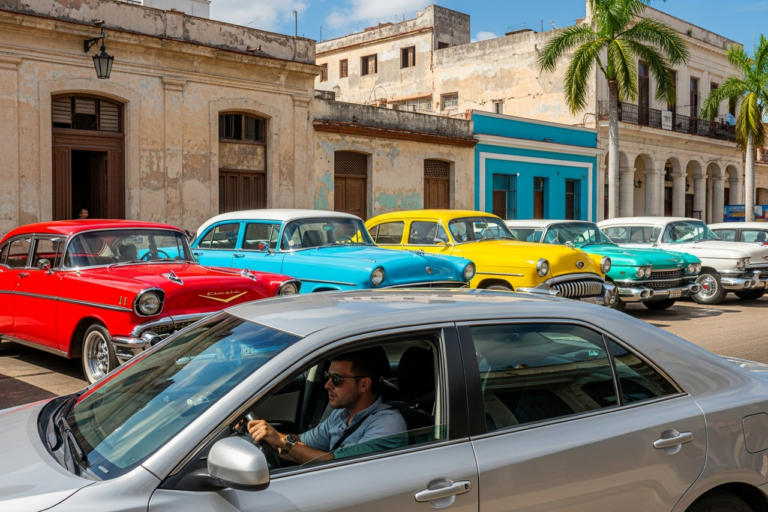
Getting to know the driving culture and rules in Cuba helps make your trip smoother. In Cuba, you will drive on the right side of the road. You will see many vintage cars, and there will be other road users too. It is good to know the traffic rules and look out for road signs. Also, watch your speed while driving. Local people are often willing to help. If you ask them in a kind way, you will get support. Talking to Cubans can make your time better. This is true whether you are in a city or out in the countryside. When you learn about the rich culture, you will have even more great memories.
Interacting with Locals
Talking with the locals when you drive in Cuba can make your time there much better. The people in Cuba are open and want to talk, especially in tourist areas. If you stop and ask people for directions or good places to go, you may find some new favorite spots. Locals often know about things others do not see. A smile and taking your time help a lot to make things better.
Remember, not everyone will speak English, so you should keep that in mind. Learning a few easy Spanish words can help you talk with people and make your stay more enjoyable.
Dealing with Police Checkpoints
Going through police checkpoints in Cuba can be easy if you know what to do. When you get to a checkpoint, stay calm and be polite. Have your essential documents with you. This means your rental agreement, your international driving permit, and your driver’s license from your home country. Police will often ask simple questions about your travel plans. They may also take a look at your car.
If you know the traffic laws, it will help make things go well. These stops are normal in Cuba. Local authorities use them to make roads safe. Be friendly and answer their questions. If you do this, you will have a good time on the road.
Tips for Safe Driving
Driving in Cuba can be exciting, but you need to stay safe. Always have your international driving permit with you, along with your rental agreement. Watch out for road signs and follow traffic rules, especially when you are in tourist areas. Try to drive during daylight, as it is easier to see and safer, and stay off country roads at night since they can be dark. You should know the speed limits, because they change from place to place. Show respect for local authorities, and get help from fellow drivers or an expert support team if you need it. Safe travels!
Road Conditions and Safety
Driving on Cuban roads can be different because the road conditions change a lot. Many main roads are kept in good shape. But when you go into rural areas, the roads can be a bit rough, and you might find things like potholes or even animals. You need to stay alert because traffic rules in Cuba can be different from what you have back in your home country. Watch for speed limit signs. Pay attention to how people drive around you to learn local ways. In cities like Havana, street lighting can be very different from one block to the next. The way streets are lit at night can change, so this can make driving at night more risky. When you head out to lonely places on Cuban roads, offline maps can be helpful since you might not have good internet there.
Common Hazards on Cuban Roads
Driving on Cuban roads can feel like a real adventure. There are some things you need to watch out for. The roads can have potholes and bumps that pop up at any time, so it is good to stay alert. You will see a lot of vintage cars, and there are many slow cars—especially in the middle of town or out in rural areas. That means the traffic can change fast. Sometimes, animals walk into the road, mostly when you are far from the busy city areas. It helps to know the traffic rules before you go. Try to keep offline maps with you, too. This will help you get the most out of your driving experience on those beautiful, but tricky, Cuban roads.
Accessibility in Urban vs Rural Areas
Moving around cities in Cuba gives you a mix of old beauty and some of the problems you find in today’s world. The busy streets of Havana have many roads that connect well to many important places people need. This helps make things easier for people from outside Cuba. But, road conditions can be very different, especially when you go to rural areas. Out there, you see more unpaved roads and not as many traffic signs. This can make driving more tricky.
Seeing these nice country views means you have to do some planning first. It is good to use offline maps when you go out in rural areas. Knowing how different things are, from the busy streets of Havana to the open countryside, can make your driving experience better. This way, you can feel safe and comfortable as you enjoy both new towns and pretty countryside with good road conditions.
Emergency Services and Contact Numbers
Driving in Cuba can be full of new things. But it is important to know what to do in an emergency. When you are in trouble, people often say to call 106 for the police and 104 for medical help. You should always have these numbers near you because it can be hard to find them, especially if you are in rural areas. It is also good to have the contact of your car rental company. They can help if your car stops working or you face other problems. Try to save these numbers in your phone or keep them on offline maps. This can help you fast and lower the stress if you need support.
Long-Term Options and Buying a Car
Exploring long-term driving options in Cuba can add something new to your travel plans. People from other countries can buy and register a car, but the rules take some time to get used to. Before you buy anything, you must get an international driving permit. Rental agencies help many people get to know Cuban roads and what driving is like there. When you own a car, you get even more freedom. Be sure that you know what is in your rental contract and learn about local traffic laws. This way, you can drive across the country and see beautiful places or UNESCO World Heritage sites without any trouble. Having the right knowledge can really help you out on the road!
Can Foreigners Buy and Register Vehicles
Buying and registering a car in Cuba is not easy if you are not from there. The process can take time and has many steps. The Cuban government has rules that you must follow. Even though there are many old cars, all buyers must pay attention to these rules.
You will need to have an international driving permit. You also need essential documents like your passport and papers that show you live in Cuba. It is smart to work with a rental agency or a private seller who knows how the registration works. They can help you do things the right way.
There can be delays, so be ready to wait. Always check that your documents are in good shape before you drive. This will help you avoid problems with the road and the law. Have a good time driving!
Applying for a Cuban Driver’s License
Getting a Cuban driver’s license takes a few steps. You need to be ready with the right papers. First, gather your essential documents like your international driving permit and your home country driver’s license. Go to the local authorities and give them your application. Ask what you must do, since there could be some rules that are special for you.
You should have a local address. They may ask you for this. It may take some time for them to give you the license, so you have to be patient while you wait. Driving in Cuba can be a good experience, so enjoy the time there.
Conclusion
Exploring Cuba is full of color and life. The streets give you a driving experience that mixes the rich culture of the place with beautiful views. As you go down the roads, it is important to know about the traffic rules there. You should follow the driving etiquette on the island. This will help you have a smoother trip.
If you come from outside Cuba, you need to have the right papers. An international driving permit is a must if you want to rent a car and see what the island has to offer.
You should also be careful when driving. Watch for changes in road conditions. When you drive in Cuba, you can get to see so many things. You will find busy town centers, and as you keep going, you can reach breathtaking beaches. All this will make your travel experience one to remember.
Frequently Asked Questions
Can foreigners drive in Cuba with just their home country license?
Yes, foreigners can drive in Cuba with their home country license for up to 30 days. But, it’s good to get an international driving permit. It can help you talk to local authorities and rental companies, and makes your driving experience better.
Do I need an International Driving Permit to rent a car in Cuba?
Yes, you need an international driving permit to rent a car in Cuba. Some rental agencies might take a home country driver’s license, but it is good to have an international driving permit. This will help you follow the rules and make things easier for you.
Is road tripping safe and realistic for tourists in Cuba?
Road tripping in Cuba can be good and safe if you plan well. You need to know about local driving customs and the road conditions. There are things on the road that could be a hazard, so stay alert. You will see nice scenery and meet new people and places. But keep your safety tips in mind to make your trip memorable.



