Key Highlights
-
Spanish mealtimes are much later than those in many other places. Spanish people have a late lunch and an even later dinner time.
-
Many Spanish people start their day with two breakfasts. The first one is small and early in the morning. The second one is bigger and comes in the middle of the morning.
-
Lunch in Spain is called “la comida.” This is the main meal of the day. People eat it between 2:00 p.m. and 4:00 p.m.
-
Dinner is a light meal for Spanish people. They enjoy it late at night. On weekends, it can be as late as midnight.
-
The way meal times work in Spain is also because the country has been in the wrong time zone for more than 60 years.
-
You will find many restaurants in Spain offering a “menu del dia.” This is a set menu for lunch that is often a good deal.
Introduction
Have you ever walked around a city in Spain and felt hungry for dinner at 6:00 p.m., but saw that most places are still closed? This happens to a lot of people who visit. The meal times in Spain are different from what many are used to. Spanish people eat their meals much later in the day. Knowing this helps you make the most of the Spanish food scene and social life.
Understanding the Spanish Meal Schedule
The typical Spanish mealtimes might feel strange if you come to Spain from another country in Europe or somewhere else in the world. Spaniards live by a clock that is different from most places. You can see this in the times people eat. This set schedule is a big part of life here. Spain has a late lunch and an even later dinner, and the people plan their days around these times.
Most of Spain, from Madrid to Barcelona, follows the same late-eating routine. There are some small differences, but almost everyone sticks to the main plan. People start with a light breakfast, then have a small snack later in the morning. Lunch comes in the afternoon and is a big meal. Dinner is light and happens late at night. The timing has to do with Spain being in the Central European Time zone.
How Meal Times in Spain Differ from Other Countries
Meal times in Spain are very different from other places. Many Americans have lunch around noon. In Spain, people eat lunch two or three hours later. So, when Americans or people in the UK are having dinner at 6:00 or 7:00 p.m., Spanish folks are just starting their dinner at 9:00 p.m. or even later.
Portugal is right next to Spain, but it follows a different time, like Greenwich Mean Time. This makes Spain’s meal times stand out from the rest of Europe. Most other European countries eat earlier, so the Spanish way is truly unique.
If you are visiting for the first time, it might be hard to get used to these meal times. Try not to stick to your usual routine. Instead, go with the local schedule. When you eat like the Spanish do, you get to enjoy the culture and you won’t be hungry when kitchens are closed.
Why Spaniards Eat Later: Historical and Cultural Insights
Many people think the late Spanish mealtimes show that Spain is a relaxed and easygoing place. But, the real reason goes back in time. For more than sixty years, people in Spain have been living in a wrong time zone. If you look at the map, Spain should use the same time as the UK and Portugal. But instead, Spain is set to Central European Time.
This all started in 1940. Back then, Spain’s leader, Francisco Franco, pushed the nation’s clocks forward by one hour. He wanted the country lined up with Nazi Germany’s time. Because of this, the sun is in a different spot in the sky than the clocks show. So, when it’s 2:00 p.m. on the clock in Madrid, the sun says it’s really more like 1:00 p.m.
This little piece of history is a big reason why Spanish mealtimes are late. People in Spain follow their solar clock, not the official one. Even after so many years, this mix-up with time is now a big part of how the Spanish live. It changes the way people in Spain work, eat, and meet with others.
Breakfast in Spain: Desayuno and Almuerzo
Breakfast in Spain is often split into two meals. The first is called “desayuno”. It is usually light and happens soon after you get up. Many Spanish people just have a morning coffee, and maybe a small pastry or some biscuits. It is not meant to be a big meal, just a way to start the day.
A little later, between 10:30 a.m. and noon, there is the second breakfast. This is known as “almuerzo”. It is a more important break during the morning. Many office workers go to a cafe at this time. They usually get a bigger snack and another coffee. Now, let’s talk about what people in Spain usually eat for their morning meals.
Typical Foods Eaten at Breakfast
A typical Spanish breakfast is not heavy. People in Spain usually want something quick before they start their day. The main thing you will find on the table is a cup of coffee. This is often paired with something small.
You will not get a huge or savory meal in the morning here. The breakfast is simple instead. Most times, the two main things in a typical Spanish breakfast, or “desayuno,” are:
-
Pan con tomate: This is a slice of toast. People rub fresh tomato and garlic on it with a touch of olive oil.
-
Toast with some butter and jam.
-
Croissants or even other small pastries.
-
Magdalenas, which are small, fluffy cakes, or biscuits that many dip into their cup of coffee.
On weekend mornings or special days, some people enjoy “churros con chocolate.” These are pieces of fried dough that you dip in thick hot chocolate. You can get these at special churro shops called “churrerías.”
The Two-Breakfast Tradition Explained
The idea of a second breakfast, also called “almuerzo,” is special for many people in Spain. After the start of the workday, most Spaniards take a break for a bigger snack around 10:30 a.m. This break is not only about eating. It is also a time to be social and enjoy another morning coffee.
This snack helps fill the time between the light early meal, called “desayuno,” and the late lunch, which is known as “la comida.” The almuerzo is usually more savory than the first meal. People can have a small sandwich, called a “bocadillo,” a slice of Spanish omelet, or toast with ham.
For many in Spain, having this mid-morning meal is an important part of work. It lets coworkers meet at a local café, break up the morning, and get a boost of energy to last until la comida. This tradition shows that in Spain, the way people eat and the way they connect with others go hand in hand.
Lunch in Spain: La Comida as the Main Event
In many places, dinner is the biggest meal of the day. But in Spain, lunch is the main event. People call it “la comida.” Lunch happens between 2:00 p.m. and 4:00 p.m. This is the most important meal in spanish mealtimes. It shows how lunch is at the center of daily life in Spain.
Long ago, lunchtime was so important to people that stores would shut down for a siesta. This let everyone go home and eat with their families. Even though the break is not as long now because of modern life, a big and slow lunch, especially on weekends, is still a huge part of spanish culture.
What to Expect at Spanish Lunchtime
When you sit down for a Spanish lunch, prepare for a multi-course experience. The late lunch is a leisurely affair, often lasting an hour or more. Many restaurants align their opening hours with this schedule, offering a “menu del dia” or set menu, which is an excellent and affordable way to experience a traditional lunch.
This set menu is a fantastic deal, typically including a first course, a second course, dessert, bread, and a drink, all for a fixed price. It allows you to sample a variety of dishes. The structure of “la comida” is quite defined.
Here’s a breakdown of what a typical three-course “menu del dia” might look like:
|
Course |
Description |
|---|---|
|
Primer Plato |
The first course, often a lighter dish like a soup, salad, or vegetable plate. |
|
Segundo Plato |
The main course, which is usually a more substantial dish with meat or fish. |
|
Postre |
Dessert, which could be flan, a piece of fruit, or yogurt. |
Traditional Dishes and Dining Customs
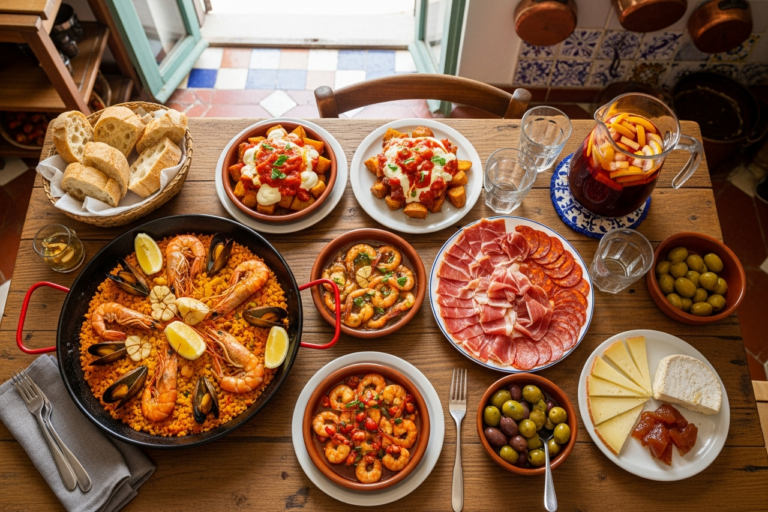
“La comida” is the time in Spain when people enjoy some of the most loved traditional food. Spanish lunch is all about fresh, local foods. The recipes people use often come from family and friends, passed down from older times. There is always bread at the table. People use it to soak up the sauce and make sure nothing is left.
At lunch, people in Spain like to enjoy being together. They talk a lot and do not rush. It is normal for lunch to last for a long time. Many even stay at the table and enjoy food and wine until the afternoon. There are a few well-known Spanish dishes you may see at lunch, such as:
-
Paella: The famous rice dish, which many love in Valencia.
-
Sopa de pescado: A fish soup full of flavor.
-
Huevos rotos: These are “broken eggs” that come on fried potatoes, sometimes with slices of ham.
-
Gazpacho: This cold tomato soup is great for a hot day.
You can also find simple foods that taste great. People often enjoy bread that is fresh, with good olive oil. They may put on ham or soft goat cheese as well.
Dinner and Evening Eating Habits
After a big lunch, the Spanish dinner, called “la cena,” is lighter and eaten later in the day. Dinner time in Spain does not start until about 9:00 p.m. or sometimes even as late as 10:30 p.m. On summer weekends, people can have their spanish dinner around midnight. Many restaurants in Spain do not open their kitchens for dinner time until 8:00 p.m.
The meal is not usually a big or formal affair. Cena in Spain is often simple, like a salad, a sandwich, or an omelet. Another thing people like to do is go out for tapas. They go from bar to bar, eating the spanish small dishes and enjoying this way of eating. This style fits spanish late-night dinner time and makes it a fun and social part of the day.
Meal Duration, Late Dinners, & Adapting as a Visitor
Getting used to eating late at night is one of the biggest things visitors have to face in Spain. The Spanish people eat lunch later in the day, and it is often a big meal. Because of that, they do not feel hungry again until later. Dinner usually happens much later at this time of day, and this also makes bedtime later. Many times, a normal late dinner in Spain can take one or two hours, especially if you go out with your friends or family.
If you want to get used to this Spanish way of life, the best thing to do is enjoy a “merienda.” This is a small snack in the late afternoon, usually around 5:00 or 6:00 p.m. People in Spain like to have a little piece of fruit or a small sandwich at this time. Eating a merienda helps you get through the long time between lunch and dinner, so you don’t get too hungry while waiting for restaurants to be open.
Getting into this time of day rhythm is a part of what makes visiting Spain special. If you plan for your merienda and move your own timetable, you can enjoy the nightlife, local dinners, and not feel hungry when the Spanish people are starting to get out for the evening. This way, you will also fit in better and enjoy your time in Spain.
Conclusion
Knowing about meal times in Spain can make your food experience better. It also helps you fit in with the local culture. Spanish meal habits, like late lunches and dinners, show that people like to eat with others and enjoy their food. The main event is lunch, but breakfast can be a nice way to start your day. If you are in Spain or just curious about its food, take the time to enjoy these special dining habits. They are a key part of Spanish life. If you want good tips or want to learn more, feel free to ask for a consultation.