Key Highlights
-
In Australia, people often eat early dinner because work hours set the time for meals.
-
Most Australians see dinner as the main meal, and it is a special time for family to be together.
-
Lunch happens in the middle of the day during a lunch break, when it is usually the busiest time at work. Lunch is often a lighter meal.
-
Breakfast is seen as one of the most important meals of the day. Many have it between 7:00 and 9:00 in the morning.
-
Australians often take a morning tea or afternoon tea break. These breaks are for a small snack and a drink.
-
Meal times can change on weekends. People may follow a slower schedule and get together for social events.
Introduction
Are you thinking about a trip to Australia, or maybe you want to know more about how people live there? It helps to learn about meal times in Australia. The way Australians eat shows a lot about their daily routine and what they care about. You will see a mix of old and new habits. People in Australia often want to be healthy and take care of their wellness. This simple guide will tell you what breakfast, lunch, and dinner are like in Australia. With this help, you can eat like locals do and really feel part of life in Australia.
Overview of Daily Meal Patterns in Australia
Australian meal times usually match up with the workday. People in Australia have breakfast in the morning. Lunch is eaten in the middle of the day, around midday. The main meal, which is also the largest meal of the day, happens in the evening. This setup helps break up the day, and it gives energy for work and free time.
For most Australians, dinner is the main meal and the largest meal of the day. It is a chance to relax after work and spend time with family. While the time and food in these meals can sometimes change, having three set meal times is still something most Australians stick to. Now, let’s look closer at how Australians plan their daily meals and what words they use for each.
How Many Meals Do Australians Usually Eat Each Day?
Most Australians eat three main meals every day. These are breakfast, lunch, and dinner. This way of eating gives them a steady routine. It also helps them get the energy they need for work and other tasks. Each meal time has its own meaning in the day.
Besides the main meal times, many Australians like to have a snack between meals. Morning tea or afternoon tea are common. During these breaks, people will eat a light snack and drink something. This helps them make it through the day and gives them a chance to slow down.
In the end, the three main meal times are the base of how Australians eat. Breakfast is seen as the important meal of the day to start off well. Lunch helps people refuel at midday. Dinner is the main meal, and it is often a time for family or friends to get together.
Common Meal Structure and Naming Conventions
In Australia, people usually have the main meal, and the biggest meal of the day, in the evening. The names for each meal can be a bit confusing, and this can be hard for some visitors. But for most people, the meal times and what to call them are simple enough.
In some places, or in some families, people use different words. One person might call the evening meal “tea,” while another person calls it “dinner.” Most people say “dinner” when they talk about the main evening meal. “Supper” is not used often and when people say it, they mean a small snack much later at night, after regular dinner time.
Here’s a quick guide to what people call the common meals:
-
Breakfast: The first meal of the day.
-
Lunch: The meal in the middle of the day.
-
Dinner or Tea: The evening meal, and often the main meal or the largest meal of the day. “Dinner” is more common, but some places in Australia still use “tea.”
Australian Breakfast Traditions
Breakfast is known as the most important meal of the day in Australia. It helps set the mood for what comes after. Most Australians keep it simple and quick on weekdays. They want to get full before going to work or school. Things like cereal, toasted bread, or yogurt are common choices then.
On weekends, breakfast feels very different. It is slower and more about spending time with others. Cafes in Australia are busy. People like the bigger meals there, and families make breakfast together at home. Next, we will talk about the usual times and foods you see in an Aussie breakfast.
Typical Breakfast Times Across Australia
Breakfast times in Australia are largely dictated by standard work hours. On weekdays, most people eat breakfast between 7:00 AM and 9:00 AM. This allows them to get ready and commute to work or school on time. It’s often a quick meal, eaten during a busy time of the morning.
The weekend schedule is much more relaxed. With no rush to get out the door, breakfast can happen anywhere from 8:00 AM to 11:00 AM. This is when the popular “brunch” culture comes alive, with many enjoying a slow, substantial meal that merges breakfast and lunch. This contrasts with the structured early dinner that often ends a weekday.
Here is a general guide to breakfast times:
|
Day |
Typical Time Range |
Notes |
|---|---|---|
|
Weekdays |
7:00 AM – 9:00 AM |
Aligned with work and school schedules; often quick. |
|
Weekends |
8:00 AM – 11:00 AM |
More relaxed; includes the popular brunch window. |
What Aussies Commonly Eat for Breakfast
What Australians eat for breakfast can be very different on weekdays compared to weekends. During the busy week, most people go for easy and fast choices for this important meal of the day. Australians like foods they can eat quickly or make in a short time.
But on Saturday and Sunday, there is more time. The breakfast menu gets much bigger. Many people enjoy the cafe scene or cook a big breakfast at home. The weekend breakfast is about more than just a quick meal. It is for catching up with family or friends and having a good time together. Many Australians feel that breakfast can be the most important meal of the day because it gives them a chance to connect with others.
These are some of the popular breakfast options you will see in Australia:
-
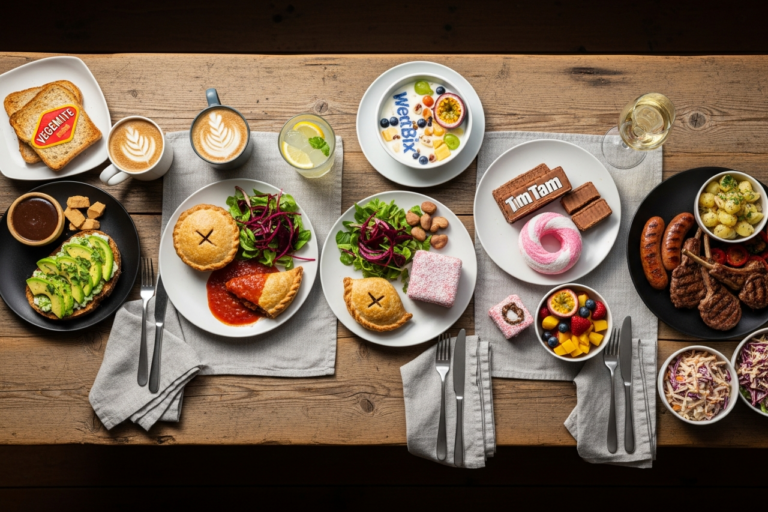
Weekday staples: Cereal with milk, toast with Vegemite or avocado, yogurt with fruit, or a smoothie.
-
Weekend favorites: “The big brekkie” (eggs, bacon, sausages, toast), avocado toast with feta, and eggs Benedict.
-
Cafe culture: Flat whites and lattes are the most common drinks to have with breakfast.
Australians think breakfast is important, whether it’s yogurt and fruit or a big plate of food with friends.
Lunch Habits in Australia
Lunch in Australia is often a smaller meal compared to dinner. People in Australia usually eat lunch at midday. It is an important way to get energy during the busiest time of the workday. The lunch break is also a key part of the workday. However, the time and style of lunch can be different for each person.
Many people who work in offices eat lunch very fast. They might eat at their desks or get food from a place close by. Lunch in Australia is not seen as the main meal. It is often lighter than the other meals. This helps people stay busy and work well during the afternoon because they do not feel too full. Know more about when people have lunch and what they eat in Australia.
Usual Lunchtime Hours and Regional Differences
The standard lunchtime in Australia falls between 12:00 PM and 2:00 PM. This window aligns with typical work hours, providing a much-needed break in the middle of the day. Most businesses and schools schedule their lunch break within this two-hour period, making it a universally recognized time for a meal.
While the 12-2 PM window is a good general rule, there can be slight variations. In busy corporate environments, such as in Sydney’s central business district, the lunch break might be shorter, with many grabbing a quick bite. In contrast, in more relaxed settings or on Fridays, the “long lunch” tradition might extend the break.
Here’s a general breakdown of lunchtime hours:
|
Setting |
Typical Lunchtime |
Notes |
|---|---|---|
|
Office/Corporate |
12:30 PM – 1:30 PM |
Often a shorter, one-hour break. |
|
Schools |
12:00 PM – 1:00 PM |
Structured break time for students. |
|
General Public |
12:00 PM – 2:00 PM |
The broadest window for cafes and restaurants. |
Popular Lunch Dishes and Culture
Australian lunch culture is mixed and you can see many types of food. There are people from all over the world who live in the country, and you can notice this in what people eat. On weekdays, most Australians want lunch that is easy to get, quick, and simple to carry. A lot of the time, people just take leftovers from dinner the night before. This way is smart and saves time.
If they are not taking leftovers, you will see Australians have many foods to pick from. Many like to go to bakeries for lunch, where they get hot meat pies or sausage rolls. Sandwiches and salads are also very common. You can make these at home or buy them at a nearby cafe. For lunch, the focus is usually not on family time, but on getting fuel and going back to what you were doing.
Popular lunch choices include:
-
Sandwiches or wraps with many kinds of fillings.
-
Meat pies and sausage rolls.
-
Sushi rolls or bento boxes.
-
Salads with lean meats.
-
Leftovers from the previous night’s dinner.
Dinner Time in Australia
Dinner time in Australia is seen as the most important meal of the day for many people. It is the main evening meal and lets family members come together. They talk about their day and spend time with each other. Australians have an early dinner compared to a lot of people in Europe. The evening meal is often eaten between 6:00 PM and 8:00 PM.
Having an early dinner helps families eat together before the children go to bed. It also gives adults time to relax later in the evening. The next parts will show more about dinner time in different parts of Australia and why this meal is so important for people.
Average Dinner Times in Urban and Rural Areas
In Australia, the average dinner time generally falls between 6:00 PM and 8:00 PM, but there can be subtle differences between urban and rural settings. In major cities like Sydney, a slightly later dinner time might be more common due to longer commutes and work hours. City dwellers might sit down to eat closer to 7:00 PM or 7:30 PM.
In contrast, in rural regions, the tradition of an early dinner is more pronounced. With lifestyles often tied to earlier start times, families in these areas may eat as early as 5:30 PM or 6:00 PM. This reflects a more traditional schedule where the day winds down sooner.
Here’s how dinner times can vary:
|
Area |
Typical Dinner Time |
Influencing Factors |
|---|---|---|
|
Major Urban Areas |
6:30 PM – 8:00 PM |
Longer work commutes, active social life. |
|
Suburban Areas |
6:00 PM – 7:30 PM |
Family-oriented schedules, children’s bedtimes. |
|
Rural Regions |
5:30 PM – 7:00 PM |
Earlier workdays, more traditional lifestyle. |
Family Dinners and Social Gatherings
The family dinner is an important moment for families in Australia. Most days, it is the one time the family members sit together at a table and put away their phones or screens. They eat, talk, and spend time together. This makes family dynamics stronger and helps everyone connect.
On weekends, people often invite friends and bigger groups to be part of this time. A big part of this is the Aussie barbecue, called a “barbie.” It is a fun way to spend time with others. People often have it outside in the backyard. The focus is not on fancy food or settings, but on spending time and sharing good food with everyone there.
Key aspects of social dinners include:
-
People focus on having a shared family dinner during the week.
-
Weekend barbecues are a common way to spend time and bring people together.
-
The “bring a plate” style means guests often bring a dish to share.
-
Everyone likes the relaxed and easy style instead of a more serious, formal dinner.
Snacks, Afternoon Tea, and Light Meals
Besides the three main meals of the day, Australians like to have smaller snacks as well. People in Australia really enjoy “morning tea” and “afternoon tea.” These times are a good chance to take a short break with a light snack. It is not just about eating food. It is also about stepping away from work or other things for a few minutes.
Having a snack during the day is now a common habit for many. It helps keep energy up and supports wellness. Let’s talk about what morning tea and afternoon tea mean and what snacks Australians often choose to eat.
Morning Tea and Afternoon Tea Traditions
Morning tea and afternoon tea are a big part of life in Australia. Morning tea happens at about 10:30 in the morning. It is a quick break from work or whatever you are doing. You get a cup of tea or coffee and a little snack. This time helps you get from breakfast to lunch.
Afternoon tea is at about 3:00 or 4:00 in the afternoon. It is there to help you feel better when you start to get tired later in the day. Some people may think of fancy afternoon tea with plates and treats, but most Australians keep it simple. It is often just a biscuit and a drink.
Common things about these tea breaks:
-
Timing: Morning tea is at about 10:30 in the morning, and afternoon tea is at about 3:30 in the afternoon.
-
Beverages: You will usually have coffee or tea.
-
Snacks: You might have a biscuit, some fruit, or a small pastry.
-
Purpose: These are short breaks to talk or clear your mind during the day.
Morning tea and afternoon tea are nice ways Australians use to relax and connect, often with a snack.
Favorite Snack Foods and When They’re Enjoyed
Australians like to have many snacks to help them get through the day. What snack they choose can change with the time of day or what’s going on. During the busiest time at work, they like a snack that is quick and simple to eat. There may not be enough time to make or eat anything that takes too long.
Sweet foods are loved, especially when it is morning or afternoon tea time. People often pick classic baked treats that are well-known in Australia. If someone wants a healthy snack, they might pick fruit, yogurt, or a few nuts instead. Kids often eat a bigger snack after school so they do not get hungry before dinner.
Some favorite Aussie snacks are:
-
Tim Tams: This is a well-known chocolate biscuit. Many people eat it with coffee.
-
Lamingtons: This is a soft sponge cake that is dipped in chocolate, then covered in coconut.
-
ANZAC biscuits: These are oat biscuits with history from WWI.
-
Fruit: It is simple and healthy.
-
Muesli bars: These are easy to take with you and eat anywhere.
Weekend vs. Weekday Mealtime Routines
There is a clear change in meal times for Australians between the workday and Sundays. During the week, meals are planned around work and school. People focus on speed and ease. These days are all about sticking to a routine and getting things done.
On Sundays and the weekends, things slow down. There is more relaxation, and meal times move toward being more fun and social. People take their time making food and enjoy sitting together. The aim is not just to eat, but to make it a nice time to share with others.
Let‘s look closer at how meal times are different for the workday and for Sundays.
Changes in Eating Times on Saturdays and Sundays
On weekends, the strict mealtime schedule during the week goes away. Breakfast often turns into a late “brunch,” especially on Sundays. These days are all about relaxation. People wake up later. They do not rush. Many people go to a cafe or make a big breakfast at home.
Lunch and dinner times are not set either. On the weekend, lunch could be a long barbecue with friends and last into the afternoon. Dinner may start late too, especially if people are out or spending time together. The focus is on being with loved ones and not worrying about the time.
Key weekend mealtime changes include:
-
The rise of late-morning brunch instead of early breakfast.
-
Longer, more social lunches.
-
Flexible dinner times based on social activities.
-
More time dedicated to cooking and enjoying meals together.
Workdays Versus Non-Workdays: What’s Different?
The way people in Australia eat changes a lot from a workday to the weekend. On workdays, meals are there to help get you through the day. Breakfast is fast, lunch is just a quick break, and dinner is something you have to finish the day. The point is to fit eating around everything else you have to do.
On weekends, this idea is different. Meals are more than just a stop in your day. Eating becomes something to enjoy. Australians use weekends to be with family and friends. You might have a slow breakfast, a backyard barbecue, or spend family time having dinner together. The focus moves from getting food fast to enjoying your time and being with others.
Here’s a summary of the differences:
-
Pacing: Meals are quick on a workday, but relaxed on the weekend.
-
Purpose: Food is just fuel in the week, but it helps people connect on weekends.
-
Cooking: On workdays, food is simple and fast. On weekends, meals are bigger and more special.
-
Company: Most lunches during workdays are eaten alone or with coworkers. On weekends, meals are with family and friends.
Meal Times in Australian Cities Versus Regions
Meal times in Australia differ from place to place. In big cities like Sydney, people often eat at different times than those living in country towns. Life moves fast in the city, and this changes when people choose to eat.
Things like work culture, long drives to work, and how people live in each area change meal times. The many restaurants and cafes in cities adjust to people’s busy lives. All these things show how the city and the country are not the same when it comes to eating. Culture and where you live also affect when meal times happen.
Mealtime Variations Between Major Cities and Rural Communities
In major cities like Sydney and Melbourne, longer work hours and commute times can push meal times later. A person working in the city might not get home until after 6:30 PM, meaning dinner, the largest meal of the day, might not be served until 7:30 PM or later. Urban areas also have a vibrant nightlife, with restaurants staying open later to accommodate diners.
In contrast, rural regions often operate on an earlier schedule. The workday may start and end sooner, leading to an earlier dinner time, sometimes before 6:00 PM. The pace of life is generally slower, and meal times reflect a more traditional, family-centric routine.
Here’s a comparison of typical meal times:
|
Meal |
Major Cities (e.g., Sydney) |
Rural Regions |
|---|---|---|
|
Breakfast |
7:00 AM – 9:00 AM |
6:30 AM – 8:30 AM |
|
Lunch |
12:30 PM – 2:00 PM |
12:00 PM – 1:30 PM |
|
Dinner |
7:00 PM – 8:30 PM |
6:00 PM – 7:30 PM |
Influences of Culture and Lifestyle on Local Meal Times
Australia is a place where many cultures come together. This mix has had a big effect on what people eat and sometimes when they eat. People have moved here from places like Italy, Greece, and many Asian countries. They brought foods and ways to eat that are different from what was here before. Even with all these changes in food, most people in Australia still eat their meals at the same times as before.
In places like Spain and Italy, people can eat dinner much later, even as late as 10:00 PM. In Australia, people eat dinner much earlier. This is because many in Australia still follow an Anglo way of life, working from 9 to 5. There are many kinds of food on people’s plates, but the time to eat is about the same for most.
Cultural influence in meal times can be seen through:
-
The range of foods you find, such as those from Greece or Vietnam.
-
Families eating together, which is common in places like Italy.
-
Many popular foods from other countries are now a normal part of meals here.
-
But even with all these changes, the meal times are still set by the Australian way of life.
Conclusion
To sum up, knowing about meal times in Australia lets you see more about the country’s way of life and how people spend each day. In Australia, people enjoy breakfast, lunch, dinner, and even love a nice afternoon tea. These times are not just for eating. They help bring people together and show off old and new customs. If you are in the city or out in the countryside, it’s good to look at how people eat. This can help make your visit better. So, when you are in Australia, try the meal times that locals have. Enjoy afternoon tea and all the other good food that helps shape life in Australia. If you want to know more, or have something you want to ask about Australian food, you can always get in touch!
Frequently Asked Questions
Are afternoon tea or snacks a daily custom in Australia?
It’s not a set rule that all Australians have morning tea or afternoon tea every day. Even so, the, morning tea or afternoon tea does happen a lot for people, especially at work. At this time, people take a break, grab a snack, and have a drink. It’s a good way to cut through the busiest time and make the day easier.
How do meal times in Australia compare to those in the United States?
Meal times in Australia and the United States are a lot alike. People in both places tend to eat an early dinner. The main meal is usually served in the evening. Lunch comes at midday and is not as big. Both countries like to have three meals during the day. Even though the meal times are similar, the foods people eat can be different.
Do restaurants in Australia serve dinner earlier than in other countries?
Yes, restaurants in Australia usually start serving dinner sooner than in Spain or Italy. Most kitchens open at about 5:30 PM or 6:00 PM. People there like to have an early dinner time, so they have more time to relax before bedtime.