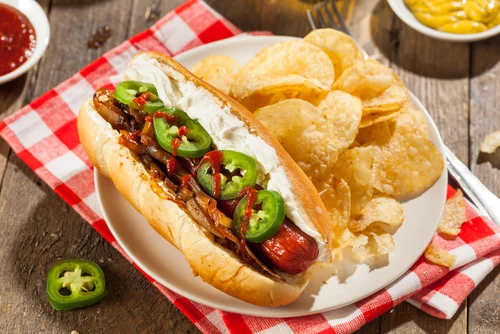
The New York Times Wirecutter conducted a structured nationwide taste test to find the best regional hot dog in America. Chef José Andrés — the James Beard Award-winning chef — led the evaluation alongside the Wirecutter team.
The test covered a wide range of America’s most beloved regional hot dog styles. Competitors included the Chicago Dog (no ketchup, ever), the Sonoran Dog from Tucson (bacon-wrapped, topped with pinto beans and crema), the Coney Dog from Detroit, and several others, each with a loyal local following and a legitimate claim to greatness.
The Seattle Dog won.
According to the taste test, the combination of flavors and textures set it apart. While most regional hot dogs rely on traditional condiments, the Seattle Dog’s cream cheese topping created a richness that no other entry could match. For Chef Andrés, a chef known for bold, creative flavor combinations, the Seattle Dog’s willingness to break the rules made it stand out.
You can read the full New York Times Wirecutter taste test at nytimes.com.
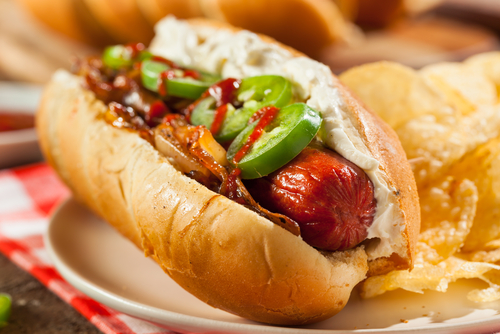
What Is a Seattle Dog?
A Seattle Dog is a simple concept built around one unexpected choice.
The classic ingredients:
- A grilled beef hot dog (usually a Polish sausage or a standard frank)
- A toasted hoagie-style bun
- A generous spread of cream cheese
- Grilled or caramelized onions
That’s the foundation. From there, every vendor — and every home cook — adds their own touch.
Common optional toppings:
- Jalapeños (very popular, adds heat)
- Sriracha
- Sauerkraut
- Mustard
- BBQ sauce
- Cabbage
No two Seattle Dogs are identical. Street cart vendors each develop their own signature style, and the variations are part of what makes tracking one down so enjoyable. Some go heavy on the jalapeños. Others layer in sauerkraut for a tangy bite. The cream cheese, however, is non-negotiable.
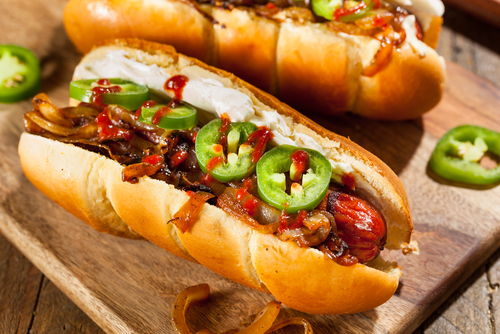
Why the Seattle Dog Is So Different From Other Regional Hot Dogs
Most American hot dog traditions are defined by what you put on top: sport peppers and celery salt in Chicago, chili and mustard in Cincinnati, coleslaw and onion rings in North Carolina. The condiments vary, but the logic is the same. Start with a hot dog and add flavor.
The Seattle Dog disrupts that logic by introducing a dairy element — cream cheese — as the primary topping. It transforms the experience. The hot dog’s smoke and char hit first, then the cream cheese coats everything in a rich, savory layer, and the grilled onions add sweetness and depth.
The result is a hot dog that eats more like a full meal than a snack. It’s filling, bold, and deeply satisfying — especially at 1 a.m. after a concert at Climate Pledge Arena, which is exactly where many Seattleites first encounter one.
This street-food origin is central to the Seattle Dog’s identity. It was never designed for fine dining. It was designed for hungry people on their way home at night, and that practicality is written into every bite.
The History of the Seattle Dog
The Seattle Dog’s origins trace back to the late 1980s and early 1990s, when street vendors outside Seattle’s bars and music venues began experimenting with whatever ingredients they had on hand. Cream cheese — already a Pacific Northwest staple, thanks in part to Seattle’s strong bagel culture — ended up on a hot dog, and the combination stuck.
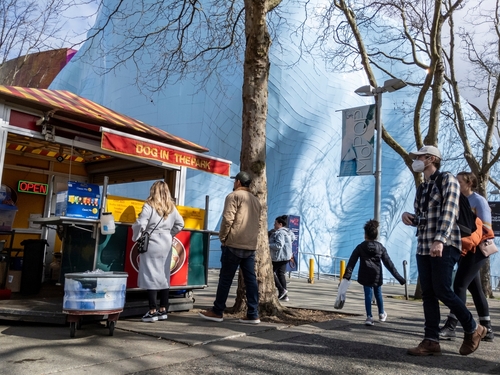
Capitol Hill and Pike Place Market are both credited as early hotbeds of the Seattle Dog’s popularity. Late-night carts near Pioneer Square and the Pike Place Market area drew crowds after bar close, and the combination of low cost, big flavor, and portability made the Seattle Dog a natural fit for the city’s late-night scene.
The exact origin remains debated. Several vendors have claimed credit over the years. What’s not in dispute is how quickly the topping caught on. By the mid-1990s, cream cheese on a hot dog had become a Seattle signature — something you explained to out-of-town visitors before inevitably watching them become converts.
Today, you’ll find Seattle Dogs at sports stadiums, food festivals, and late-night carts throughout the city. The format has barely changed, which is a testament to how right it was from the beginning.
Why Chef José Andrés Loved the Seattle Dog
According to the article, Chef José Andrés has cooked in Michelin-starred restaurants and disaster zones around the world. His palate is not easily impressed. So when the Seattle Dog stood out in the taste test, his assessment carried weight.
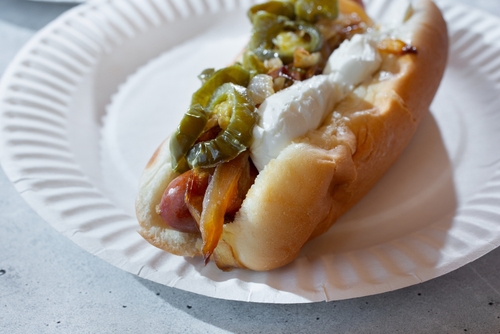
According to the coverage, Andrés responded to the Seattle Dog’s balance of flavors and textures. The cream cheese provided a creaminess that softened the hot dog’s smokiness without masking it. The grilled onions contributed sweetness and a slight caramelized bitterness. Together, the components created contrast and harmony at the same time.
What Andrés seemed to recognize is what Seattle has always known: simplicity, when executed well, is its own form of sophistication. The Seattle Dog doesn’t try to be complicated. It just tastes exceptional.
Can You Make a Seattle Dog at Home?
Yes, and it’s easier than you might think. The key is using quality ingredients and not rushing the onions.
Ingredients (serves 4):
- 4 beef hot dogs or Polish sausages
- 4 hoagie-style buns
- 4 oz cream cheese (full-fat, softened)
- 2 medium yellow onions, thinly sliced
- 1 tablespoon butter or oil
- Optional: jalapeño slices, sriracha, sauerkraut, mustard
Steps:
- Caramelize the onions. Heat butter or oil in a pan over medium-low heat. Add the onions and cook slowly, stirring occasionally, for 20–25 minutes until golden and sweet. Don’t rush this step — low and slow is what creates the depth of flavor.
- Grill the hot dogs. Cook the hot dogs on a grill or grill pan over medium-high heat, turning occasionally, until you get char marks and the casing starts to blister — about 5–7 minutes.
- Toast the buns. Place the buns cut-side down on the grill or in a dry pan for 1–2 minutes until lightly golden.
- Spread the cream cheese. Apply a generous layer to both sides of the toasted bun. Don’t be shy.
- Assemble. Add the hot dog, pile on the onions, and add any optional toppings you like.
Tips:
- Use a sausage with a natural casing for better texture and snap
- Softened cream cheese spreads more evenly and stays in place
- Jalapeños (fresh or pickled) add heat that balances the richness of the cream cheese perfectly
Why This Recognition Matters for Seattle
Seattle has one of the most underrated food cultures in the United States. The city is known nationally for coffee and salmon, but the depth of its local food scene — its night markets, street vendors, and neighborhood institutions — rarely gets the recognition it deserves.
Naming the Seattle Dog America’s best regional hot dog changes that conversation, at least a little. It signals that Pacific Northwest cuisine has a distinct identity worth paying attention to. It validates what street food vendors in Capitol Hill have been serving for thirty years.
There’s also a tourism dimension. Travelers researching Seattle food experiences will now encounter the Seattle Dog early in their research — and for many, it will become a must-try item on their itinerary. That’s good for local vendors, good for Seattle’s food economy, and good for the continued survival of the street cart culture that gave the Seattle Dog its character.
More broadly, this moment reflects a shift in how American food culture values regional specialties. The Chicago Dog, the Philly cheesesteak, the New Orleans po’boy — these dishes carry their cities with them. The Seattle Dog belongs in that conversation now, officially.
Key Takeaways
- The New York Times Wirecutter named the Seattle Dog America’s best regional hot dog in a taste test led by Chef José Andrés.
- A classic Seattle Dog consists of a grilled hot dog, toasted bun, cream cheese, and caramelized onions — with jalapeños as the most popular addition.
- The Seattle Dog originated in the late-night street food scene near Capitol Hill and Pike Place Market in the late 1980s and early 1990s.
- You can make a Seattle Dog at home in under 30 minutes using five basic ingredients.
Frequently Asked Questions (FAQs)
What is on a Seattle Dog?
A Seattle Dog is made with a grilled hot dog in a toasted bun, spread with cream cheese and topped with caramelized onions. Jalapeños are a popular addition. Optional toppings include sriracha, sauerkraut, mustard, and BBQ sauce. Every vendor adds their own variation, but cream cheese and grilled onions are the defining elements.
Why does a Seattle Dog have cream cheese?
Cream cheese became a Seattle Dog topping in the late 1980s when street cart vendors near Seattle’s bars began using it as an available ingredient. The combination worked — cream cheese adds richness and balances the smokiness of the grilled sausage. The topping caught on quickly and became the defining characteristic of the Seattle Dog style.
Who invented the Seattle Dog?
The exact origin is disputed. Several vendors in Seattle’s Capitol Hill and Pike Place Market neighborhoods claim to have introduced the cream cheese topping in the late 1980s and early 1990s. What is clear is that the style emerged from Seattle’s late-night street food scene and spread through the city’s bar and venue culture over the following decade.
Can you make a Seattle Dog at home?
Yes. You need a grilled hot dog or Polish sausage, a toasted hoagie bun, softened cream cheese, and caramelized onions. Jalapeños are recommended for heat. The most important step is taking 20–25 minutes to slowly caramelize the onions — this is what creates the sweetness that balances the cream cheese.