Key Highlights
-
Afghan meal times are a big part of Afghan culture. The focus is on being with the group and enjoying time with family members.
-
Breakfast is early and not heavy. The meal often has naan, green tea, and yoghurt.
-
Lunch is the main meal of the day for most people. Kabuli palaw is a dish people like to eat at this time.
-
Dinner happens later in the evening. It is a smaller meal that family members share together.
-
In Afghan culture, there is a strong sense of hospitality, more so when friends or guests share meals.
-
On special days like Ramadan, the way people plan their meal times can be very different.
Introduction
Welcome to the heart of Afghanistan’s daily life. Here, food is more than a way to fill your stomach. In Afghan culture, people treasure meal times. They use them to connect, share with family, and keep up old ways. Afghan cuisine is full of flavor and shows the history of the country. When you know what time people eat and how, you can see their world better. From tea early in the morning to a late dinner with family, each meal in Afghanistan says much about their values and life. Let’s look at the daily eating habits found in afghan cuisine and what they mean for afghan culture.
Meal Times in Afghanistan
The rhythm of Afghan food and daily life follows the different times people eat. In Afghan culture, meal times are not strict. People often eat with family or when it fits their plans for the day. Afghan cuisine shapes this schedule, with a big meal at noon. People eat lighter food in the morning and at night.
This way of eating helps people find time for work, prayer, and getting together with others. Now, let’s take a closer look at how people eat each day and see how this is not the same as the way meals happen in the West.
Typical Daily Eating Schedule
A typical day in an Afghan household revolves around three main meals, each with its own significance. The day starts early with a simple breakfast, followed by the largest meal at lunchtime, and concludes with a lighter dinner shared with family members.
This schedule is designed to fuel the body for the day’s work and bring everyone together. The focus on a large lunch provides energy for the afternoon, while a less heavy dinner is common before resting for the night. Afghan dishes are prepared with care for each of these occasions.
Here is a simple breakdown of the daily eating schedule:
|
Meal |
Typical Time |
Description |
|---|---|---|
|
Breakfast |
Early Morning |
A light start to the day, often with tea and bread. |
|
Lunchtime |
12:00 PM – 2:00 PM |
The main and largest meal of the day. |
|
Dinner |
Late Evening |
A lighter meal enjoyed with the entire family. |
How Afghan Meal Times Differ from Western Countries
If you come from a Western country, you may notice that meal times in Afghan culture are not the same. The main meal in the Afghan day is not dinner like in the West. It is lunch that stands out in Afghan culture, just like some south asian cuisines do.
In Afghanistan, lunch is a big part of the day. People often stop what they are doing to eat together and then take a short break before going back to work or other activities. Afghan food is made for sharing, and lunchtime is when everyone comes together.
When it gets to dinner time, the meal is lighter and happens later in the evening. This time is more about being with family, and not so much about having a big main course. This is very different from the Western habit of having a large evening meal. Sharing meals this way makes afghan culture special, and shows the warm feeling behind afghan food.
Afghan Breakfast Traditions
In Afghan culture, breakfast is calm and easy. The meal is light and helps get you ready for your day. You will often see green tea on the table. Drinking this green tea is a usual morning habit. It helps you start the day on a good note.
This breakfast is an important part of the day for all. It helps set a quiet mood for what comes next. Let’s see what kinds of Afghan food are eaten for breakfast. We will also talk about why this time in the morning matters in Afghan life.
Common Foods Eaten in the Morning
A morning meal in Afghanistan is simple and made with fresh things. The main part of this meal is fresh naan. Naan is a flatbread that you will find a lot in Afghan food. People like to eat this bread with different simple and tasty things.
Most people also drink a hot cup of green tea with their breakfast and that can be enjoyed all day. With the bread and tea, there can be other foods on the table that are not hard to make. These foods fill you up, but they are not too heavy.
Here are some foods you will often see for breakfast in Afghanistan:
-
Freshly baked naan bread
-
Creamy yoghurt, and sometimes it is homemade
-
Simple eggs
-
A pot of traditional green tea
Cultural Importance of Breakfast
While breakfast in Afghan culture may look simple, the meaning behind it is important. The first meal of the day is quiet and sets the base for family life. It brings family members together. This is a time to be with family before everyone goes off to work or school. There is a sense of peace in these moments.
These Afghan traditions show how much people value family unity. Sharing bread and tea in the morning is a small act, but it helps keep the family close. It is one of the comforts of daily life in Afghan culture.
The foods might not be fancy, but making and eating breakfast means a lot. It grounds the family and helps set a good mood for the day. These habits are a big part of afghan cuisine and help show what’s special about afghan culture.
Lunch in Afghan Households
Lunchtime is the biggest meal of the day in every Afghan home. At this time, families come together to eat the most filling and special Afghan dishes. It is a chance to take a break, sit down, and enjoy good, tasty food. The main dish on many tables for lunch is often Kabuli Palaw, which is the national dish and loved by many.
This midday meal shows the rich taste and large servings that are part of Afghan cuisine. It is a time to see how much flavor and care go into the food. In the next section, you will find out more about popular lunch dishes in Afghan cuisine and see the customs that make lunchtime important.
Popular Lunch Dishes
At lunch in Afghanistan, there are so many great and tasty choices. Kabuli Palaw is the most well-known and loved dish. Many people say it is the national dish of Afghanistan. Kabuli Palaw is a special rice meal with long-grain rice, tender lamb, sweet raisins, and carrots. The mix of flavors is so good, and it gives you the real taste of Afghan cuisine.
But there is more to Afghan food than just the national dish of Afghanistan. You can find lots of other classic Afghan dishes on the lunch table. Some have savory dumplings and some serve up tasty grilled meats. Every meal here shows a bit of their food history and culture.
Here are a few popular Afghan cuisine lunch dishes that people like:
-
Kabuli Palaw: This is the national dish. It is a rich rice pilaf with a perfect mix of flavors.
-
Mantu: These are steamed dumplings with spiced meat inside. They are served with a thick yoghurt sauce on top.
-
Kabob: These are skewers of meat that are marinated, often with lamb or chicken, then grilled.
If you want some food that is full of flavor and history, Afghan lunch will give you that.
Social Customs Surrounding Lunchtime
Lunchtime in Afghan culture is not just about the food. It is a time when family members gather, share the main meal of the day, and talk with each other. Hospitality is very important. Guests are always welcomed to join in and feel at home.
In Afghan culture, and among Pashtuns, people show respect and friendship by sharing food. If you get invited to have lunch, it means the host wants to be generous. The host will make sure there is a lot of Afghan food on the table so guests feel special and full.
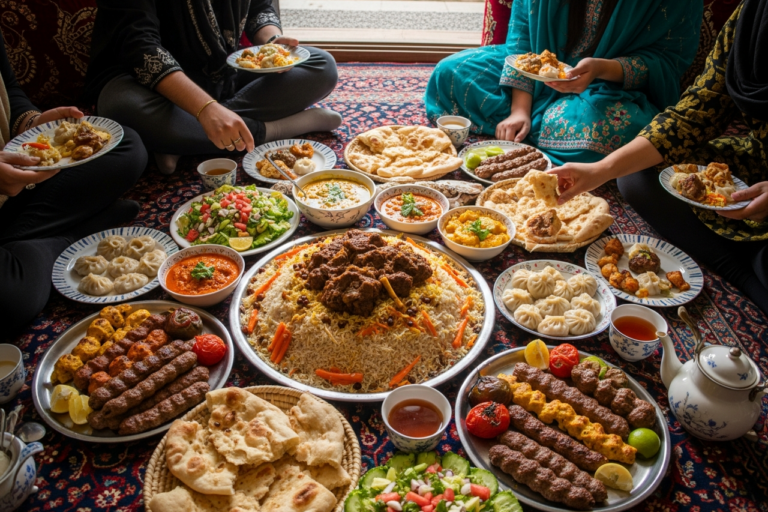
Afghans often eat together on a big cloth on the floor. Everyone sits close and eats as a group. This way of having lunch makes family and friends feel tight. Lunchtime is a special part of daily life for Afghan people.
Dinner Practices in Afghanistan
When the day starts to end in Afghanistan, families sit down together for dinner. Unlike the big lunch, this meal is more light. Afghan cuisine has many dishes that are perfect for a calm and easy dinner. The evening meal is for spending some quiet time with family before going to bed.
Even if the food is light, the taste is still great. There are simple kabob dishes or meals made with vegetables. Now, let’s talk about some foods people in Afghanistan eat at night and how the family matters so much during this meal.
Traditional Evening Foods
The evening meal in Afghanistan brings afghan food that is warm and not too rich. Because lunch is big, dinner needs to feel full but stay light. Many dishes use vegetables, like eggplant, spinach, or different legumes.
These afghan dishes come with bread and a side of creamy yoghurt. This yoghurt is very important in the afghan diet. People often add fresh mint to give a sharp taste. Kabob can be served at this meal, but it’s usually not as much as what you have at lunch.
Here are some afghan foods people eat for dinner:
-
Stewed eggplant dishes like Borani Banjan
-
Soups that use lentils and other legumes
-
A simple kabob served with naan
-
Dishes with fresh yoghurt mixed with mint
Family and Hospitality During Dinner
Dinner is an important part of the day for family members in Afghan culture. This is a time when everyone comes together after being away all day. They sit together, talk about their day, and enjoy good food. Many families do not use a dining table. Instead, they spread a tablecloth called a “dastarkhan” on the floor, and everyone gathers around it. This way of sitting helps bring people closer.
Hospitality is always important in Afghan culture. Even during a family meal, guests are treated very well. If there is a guest for dinner, the family will make sure to give them the best parts of the meal first. People do this to show respect and show how much they value their visitors. This is a well-known part of Afghan cuisine and hospitality.
The meal is relaxed and full of warmth. It is a good time for people to forget about their busy day and enjoy being together. The focus on family, eating together, and welcoming guests makes dinner a special time in Afghan culture. This simple meal is not just about food but also about being close with the people you care about.
Special Occasions and Meal Time Variations
In Afghan culture, meal times are not set in stone. People change when they eat, especially for festivals and big events. Every event comes with its own feel and special food traditions. This makes the daily eating routine different. Afghan cuisine is all halal, meeting Islamic dietary restrictions. The meals during these times show off the best of Afghan food.
There are many changes in food routines during the holy month of Ramadan and when people have big meals with guests. These moments show how flexible and rich Afghan cuisine can be. Now, let’s look at how meal times shift during Ramadan and the way people follow special traditions for big festivals.
Changes in Eating Routine During Ramadan
During Ramadan, the eating routine in Afghan culture changes a lot. Muslims do not eat or drink from sunrise to sunset. So, meals are eaten before the sun comes up and after the sun goes down. This month of fasting, praying, and thinking shapes how and when people eat.
The meal before sunrise is called “Suhoor.” It gives energy for the day ahead. This meal is usually big and fills you up. After sunset, people break their fast with the “Iftar” meal. Iftar often starts with dates and water. Then they enjoy many Afghan food dishes.
Every meal is halal. This means it meets Islamic rules for food. The Iftar meal is a happy time. Families and friends come together to eat Afghan food. The change in meal times during Ramadan shows how faith connects to food in Afghan culture.
Rituals for Festivals and Guest Meals
Festivals and having guests are a big part of Afghan culture. These moments come with their own special ways of eating. When people invite guests, hospitality is the most important thing. The host will make some of the best Afghan food to show the guests respect. This shows that they care and want to honor them. These meals are an important part of Afghan social life.
At festivals like Eid, families make big meals. They use special dishes that they do not have all the time. The guests and the family get together to celebrate, eat, and enjoy being with others. Food is at the heart of the fun.
Here are some usual rituals with these meals:
-
The best dishes are made for guests and for festivals.
-
Guests get served first and are asked to eat more.
-
Eating together brings people closer and helps the community.
-
Sweets and desserts are often part of these happy times.
Conclusion
In the end, learning about meal times in Afghanistan helps you see the culture and traditions there. Breakfast matters a lot. Lunch and dinner are times for people to be together, share food, and enjoy each other’s company. Every meal is more than what you eat; it is about connection, hospitality, and sharing good moments. Afghan meal times show a special mix of social habits and cooking styles. They are not the same as Western ways. If you use these traditions, you will understand Afghan life better and respect its unique heritage more. If you want to know more about Afghan cuisine or learn about the country, try looking deeper!
Frequently Asked Questions
How do soldiers in Afghanistan experience meal times?
For soldiers in Afghanistan, meal times change at different places. Most of the time, they get hot meals, but there are days when they get Meals Ready to Eat (MREs) instead. This can happen when a base is closing, or when the team needs to move fast. They usually get four meals each day. This helps them get all the food they need while working in tough areas.
Are snacks or light meals common between meals?
Yes, snacks are common in Afghanistan. People in Afghanistan like to eat small snacks between their main meals. Many people like nuts, seeds, and fresh fruit. Green tea, or chai, is also very popular. People drink it often during the day, usually with a sweet snack.
What is the guest etiquette during Afghan meal times?
Hospitality is key in Afghan culture. If you visit someone, you will get a lot of respect. The Afghan host will serve you first and give you the best food. You will be invited to eat as much as you want. Their aim is to make you feel special and at ease. This is an important part of being Afghan.