Key Highlights
Here are the key takeaways about meal times in South Africa:
-
In south africa, the day often starts with breakfast. There’s usually a meal at midday and another in the evening.
-
Lunch used to be the main meal of the day, but now many south africans have their main meal in the evening.
-
People enjoy many foods. South africans eat good breakfast foods and food that is heavy on meat when they have a braai.
-
People use both “dinner” and “supper” when talking about the evening meal. This depends on where they live or what their family says.
-
On weekends and holidays, people often have a social braai. This is a big barbecue and is a big part of life here.
-
It is common for people to snack between meals. South africans enjoy things like biltong and vetkoek at these times.
Introduction
Welcome to the lively world of food in South Africa. There is more to this country than the beautiful places and amazing animals. The food that south africans eat shows what this place is really like. Knowing about meal times in south africa is not only about when to eat. It is also about seeing how people here live each day. These daily habits come from many years of mixing old and new ways. South africans sit down for small bites early in the morning and stay for long meals with friends and family at night. Now, let’s look at how south africans eat every day and what makes meal times so special in this country.
Overview of Meal Times in South Africa
In south africa, people usually eat three times a day. They have breakfast, lunch, and dinner. The time of the day for each meal may be a bit different for everyone. In most places, south africans will eat breakfast early in the morning. Lunch is often in the middle of the day. Their evening meal or dinner happens later, after work.
In the past, lunch was the main meal of the day for most people in south africa. But now, things have changed, especially in the cities. Many south africans think of dinner as the main meal of the day. Dinner has become the biggest and most important meal for a lot of families. This change is mostly because of work and how families spend their day. The way people plan their meal times is not the same as it used to be. People in south africa now make the evening meal more special and have most of their food during this time.
Traditional Structure of Daily Meals
In South Africa, people used to have a big lunch as the main meal of the day. It gave them energy for work in the afternoon. Families would come together at this time. They ate stews, vegetables, and staples like pap, which is a kind of maize meal.
People would start their day with breakfast foods, but this meal was usually small and light. Later in the day, the evening meal was not as big. Many would eat leftovers from lunch or have a simple meal to end the day. This way of eating was common for a long time, both in cities and the countryside.
The old meal structure shows how daily life used to be more centered on home and being with others. The meal of the day at midday was important for family and friends. These days, some people in South Africa still follow this routine, but there have been big changes to the meal schedule for many with modern life.
Evolution of Eating Schedules in Modern Households
As South Africa moves forward, the way people eat has changed too. In busy cities, most south africans work regular hours from 9 to 5, so it’s hard to have a big lunch during the day. For many, lunch is a simple meal, and they eat it fast, usually at work or while going from one place to another.
So now, the main meal for many families is the evening meal. After a long day at work and school, south africans meet with their families for a big dinner together. Western foods have become more popular, and many people now plan their day around a bigger evening meal because of these western ways of eating.
But in some rural areas, things are still different. There, people stick to the old way, and lunch is still the main meal. This change in habits shows how new jobs and different ideas can shape the way people in a country like south africa eat every day.
Typical South African Breakfast Timing and Traditions
Breakfast in South Africa is the first meal people have to start their day. The time people eat it can change, based on how they live and where they stay. Most south africans have breakfast early, mostly during the week. This is because work and school begin early. Breakfast helps people get ready for what is ahead.
When it comes to breakfast foods, you find many different choices. This is because south africa has many cultures. Some may eat simple cereals. Others may want cooked meals that fill you up more. Let’s look at when people eat breakfast around the country and what popular breakfast foods you can find on the breakfast table.
Common Breakfast Times Across the Country
Breakfast times in South Africa are influenced by whether you’re in a city or a more rural setting. In urban centers like Cape Town and Johannesburg, the weekday rush means breakfast is often eaten between 6:00 AM and 8:00 AM. Weekends allow for a more relaxed schedule, with brunch becoming a popular option later in the morning.
In rural areas, the time of the day for breakfast might be tied to agricultural schedules, often starting at sunrise. While it’s not the main meal, it provides essential energy for a day of physical labor.
Here’s a general guide to breakfast times:
|
Region/Context |
Weekday Breakfast Time |
Weekend Breakfast Time |
|---|---|---|
|
Urban Centers |
6:00 AM – 8:00 AM |
8:00 AM – 11:00 AM |
|
Rural Areas |
5:30 AM – 7:30 AM |
7:00 AM – 9:00 AM |
|
Holiday/Resort |
Flexible (All morning) |
Flexible (All morning) |
Popular Foods Eaten for Breakfast
South African breakfast foods bring a lot of tasty choices. There is something here for every person. A classic breakfast is “pap.” This is a porridge that is made with maize meal. People often add milk, sugar, and butter to it. It’s a warm and filling way to start the day.
If you like a big meal in the morning, a hot cooked breakfast is common in South Africa. People eat eggs, bacon, and boerewors, which is a farmer’s sausage full of flavor. You will also find toast with apricot jam, and other dairy products like yogurt as a part of many breakfasts.
Here are some popular breakfast foods you might find:
-
Pap: A maize meal porridge, like grits or polenta.
-
Boerewors: A spiced farmer’s sausage that is very common.
-
Biltong: Some people eat this dried meat with their eggs instead of just having it as a snack.
-
Koeksisters: A sweet treat that many like with their morning coffee.
Lunch in South Africa: Routines and Staples
Lunch in South Africa is special for many people. Long ago, lunch was the main meal for south africans. Now, life is different. Most people have busier days, so lunch is not the heavy meal it used to be. It can be lighter and people often eat it at different times. Still, having lunch is a good way for them to take a break.
When you ask about south african cuisine at lunch, you will find so many choices at this time. There is everything from quick food sold on the street to longer meals, which usually happen during weekends when people have time. If you look at the african cuisine that people enjoy for lunch, it says a lot about their way of life. Let’s see when south africans eat lunch and what foods they like during this time.
When Is Lunch Usually Served?
For most south africans, especially office workers in cities, the time of the day for lunch is between 12:00 PM and 2:00 PM. People often do not have much time for their midday meal during the workweek. Many just get a fast bite to eat at their desks or go to a nearby café. The main thing people want is a meal of the day that is quick and easy, so they can keep up with their work.
On weekends, things change. The lunch meal of the day is more relaxed. Families and friends often get together, and they take their time. People sit down together for a good, longer meal. Sometimes, instead of just making sandwiches, they cook bigger dishes or have a braai (barbecue) that can go on for hours.
So, the time of the day that south africans have lunch depends on if it is a workday or a weekend. The way weekday lunches are all about speed and getting things done, but weekend meals are about time with others, good food, and talking together. This shows how daily life can be different for south africans during the week and the weekend.
Dishes Commonly Enjoyed at Lunchtime
Lunchtime in South Africa gives you the chance to try many foods. One famous and tasty dish is bunny chow. Bunny chow started with the Indian community in Durban. This dish is a loaf of bread with the middle taken out and filled with meat or vegetable curry.
Another lunchtime choice is vetkoek, also called “fat cake.” It is a round piece of fried dough. Street vendors often sell vetkoek stuffed with curried mince or just with cheese on top. Many people also eat leftovers from last night’s dinner for lunch. This is a quick and easy option.
Here are some popular lunchtime dishes:
-
Bunny Chow: A loaf of bread with curry put inside.
-
Vetkoek: Fried dough with salty or sweet fillings.
-
Boerewors Roll: A grilled sausage in a bun.
-
Bobotie: Minced meat topped with a creamy layer of egg, often eaten the next day.
These foods show the rich food mix in south africa. You get tasty meals from street vendors, and each one gives you a new way to enjoy lunch. Bunny chow and fat cake are great choices if you want something different and delicious.
Dinner or Supper? Understanding the Evening Meal
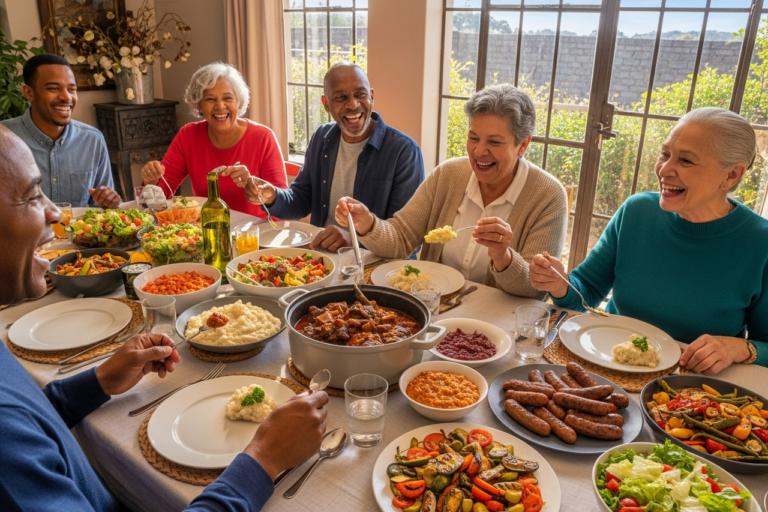
When the day ends in South Africa, families sit down together for the evening meal. People in south africa may call it either “dinner” or “supper.” What they choose to say can show small cultural or regional differences. For many south africans, this is the main meal of the day.
This main meal of the day is when people come together to connect and enjoy good, home-cooked food. Now, let’s look at when this evening meal usually takes place and talk about how people in South Africa use the words “dinner” and “supper.”
Standard Dinner Hours in Different Regions
In South Africa, people usually have their evening meal between 6:00 PM and 8:00 PM. In big cities like Johannesburg and Cape Town, it can be a bit later. Many young workers finish work late and this pushes their main meal to a later time.
On the coast, like the Western Cape, people may eat even later in the summer because the days stay light for longer. But in colder places, or during winter, families often have their main meal of the day earlier to keep warm.
The timing for the main meal in South Africa is not strict. It changes depending on the rhythm of life at home, the time of year, and local habits. This makes the evening meal something that fits in well with daily life for everyone.
“Dinner” vs. “Supper”: Cultural Differences Explained
In a usual South African home, the evening meal is often called either “dinner” or “supper.” Which word people use can come from their family’s story and who they are. In the past, “dinner” used to mean the main meal of the day, and people would have it in the middle of the day. “Supper” was for the lighter meal people ate in the evening.
Today, life is different for many in South Africa. The main meal of the day has moved to the evening. The word “dinner” now means the big evening meal for many south africans. Still, lots of people say “supper” when they talk about that meal, especially in homes where people speak Afrikaans or where families follow old ways, no matter the size of the meal.
In the end, in south africa, people use “dinner” and “supper” to talk about the same thing. For most, there is no hard rule. South africans let the words they use show their links to different ethnic groups and their home’s story. This small difference adds something special to life in a south african home.
Eating Habits Outside Main Meals
The food journey in South Africa is about more than the three main meals. Many south africans love to snack during the day. These tasty bites help people get through the time between breakfast, lunch, and dinner. For many, snacking is a big part of food culture, not just the meals.
There are so many choices, from salty snacks to cool drinks. These breaks are a good way to enjoy time with food and friends. Let’s take a look at how south africans love to snack and what drinks they enjoy each day.
Snacking Culture in South Africa
Snacking is very common in South Africa. There are many things you can try. One snack a lot of people like is biltong. It is a kind of dried meat. It is soft, buttery, and full of taste. People love to eat it any time of the day.
Another well-known treat is the vetkoek, also called “fat cake.” This is a deep-fried dough. You can get it with a meat filling like curried mince or something sweet, such as honey or jam. You will see many street vendors in South Africa selling this tasty snack.
Here are some snacks loved by people in South Africa:
-
Biltong: Cured, air-dried meat strips.
-
Vetkoek (Fat Cake): Fried dough balls with different fillings.
-
Droe Wors: Dried sausage that is like biltong.
-
Koeksisters: Sweet braided pastries in syrup.
Typical Beverages Served During and Between Meals
South africans enjoy many drinks during the day. One favorite is rooibos tea, known all over south africa. It does not have caffeine and grows in the western cape. People like to drink it hot or cold. Many add milk and honey to it. Afternoon tea is another custom. It goes well with sweet treats.
You can find fruit juices and “cool drinks” (which are sodas) in most places. There is also mageu, which is a popular local drink made from fermented maize meal. This drink is not alcoholic. It tastes a bit sour and creamy.
Here are some normal south african drinks:
-
Rooibos Tea: This is a famous herbal tea from the cederberg part of western cape.
-
Mageu: A common drink made from fermented maize meal.
-
Rock Shandy: A cool mix of lemonade, soda water, and bitters.
-
Local Wines: South africa is known for its wines, and people enjoy them with meals.
Meals on Weekends and Holidays
When the weekend comes or there is a holiday, meal times in South Africa change a lot. People move away from their regular weekday meal schedule. They start to eat in a more relaxed and social way. This is when eating really becomes a reason to celebrate.
The main thing at these get-togethers is usually the famous South African braai. A braai is not just a barbecue. It is a big part of life in South Africa. Now, let’s take a look at how meal times are different on these special days and the happy foods that bring people together.
Changes in Meal Timing During Special Occasions
Yes, meal times can change a lot for South Africans during weekends and holidays. During the week, people often eat at set times because of work. But on weekends, the schedule is not as strict. Meals turn into a social event, and people often come together just to enjoy being with each other.
A weekend brunch, for example, may go on for hours. A holiday lunch can start in the early afternoon and keep going until the evening.
During these special days, south africans like to take it easy. The focus is not on what time to eat, but on enjoying good food with family and friends. Eating together becomes all about being with people you care about, talking, and laughing together.
This means the meal is much more relaxed. Someone might light up the braai around midday, and food could be cooked and served slow over the day. Sometimes meal times do not matter as much. It is all about spending time with people. Each social event feels different and is easy to remember.
Festive Dishes and Gatherings
Food is at the center of any festive get-together in South Africa. The south african braai is not just cooking meat over an open fire. It is a big part of life that helps bring people from all walks of life together. It is not only a barbecue. It is a good time to meet and chat with others.
With the meat, you will see lots of tasty side dishes. These sides show the wide variety found in african cuisine. If you want to know more about the friendly ways and good food in South Africa, a braai is a great place to be.
Here are some festive dishes you will often see at a south african braai:
-
Boerewors: This sausage, made by farmers, should be at every braai.
-
Sosaties: These are meat skewers, usually in a sweet and curry sauce.
-
Chakalaka and Pap: A hot and spicy veggie mix that is eaten with maize meal.
-
Roosterkoek: Bread buns cooked right over the open fire.
Regional Variations in Meal Times
South Africa is a big country. You can find many cultures living here, and you will see this mix in meal times. People in south africa don’t all eat at the same hours. The time for meals can change because of where they live, what they do for work, and what their family traditions are.
In the big cities, life moves fast. People here might eat at different times than people who live in rural areas. In calm rural areas, people may have different routines for meal times, too. The way people eat is shaped by their lives and work. The customs stay special for each group.
Let’s look at how meal times can change between living in a city or in rural areas and see how people in south africa keep their old customs strong.
Differences Between Urban and Rural Areas
There are some clear differences in meal times between people who live in the cities and those in rural areas of South Africa. In big cities, most people work normal office hours, from 9 to 5. This makes the day feel faster. People eat breakfast early in the morning. Lunch is quick, and many eat it out or on the go. Dinner is now the main meal of the day, and the family usually eats this meal together in the evening.
But in rural areas, life is different. The day often begins early in the morning. Breakfast is set around farm work and what needs to be done on the land. In these areas, lunch is the main meal of the day. Families often come together at home and share food during lunch. The meal in the evening is simple. This dinner is usually lighter and served earlier than in the cities.
These meal times also show up in how food is made. Cooking styles in rural areas are more traditional. People there use ingredients they can get from local farms and shops. But in south africa cities, people can eat from many cultures. They also use more pre-made and fast foods. People get their main meal, and the meal of the day changes, based on whether they live in the city or in rural areas.
Ethnic and Community-Based Meal Time Customs
South Africa’s cuisine brings together different ethnic groups, and each group has its own way of eating and meal times. The Cape Malay community is known for food that is full of flavor and spices. Dishes like bobotie and rich curries are special, and people often make them for both family events and religious gatherings.
The Indian community in Durban is also important in shaping what people eat in south africa. They are famous for foods like bunny chow. Meal times and food are often tied to their own festivals and family get-togethers, too.
There are also hearty meals from the Cape Dutch group, and special foods from other groups in the country. Each one brings something new to south africa’s cuisine. Meal times and food ideas from different groups are an important part of life and culture in South Africa.
Dining Etiquette and Traditions
Dining in South Africa is not just about eating. It is about the people, being friendly, and sharing with others. The way people eat together shows how welcoming South Africa can be. You will notice this in both family barbecues and big fancy dinners. These customs help make each meal special and show what south africa is all about.
Meals are often shared with family, and there are rules for how people act at the table. The country’s traditions bring meaning to every meal. Here are some common things you may see when you dine in south africa.
Family Mealtime Practices
In many a South African home, people see mealtimes as a chance for everyone in the family to come together. The evening meal is often the main meal of the day. It is a special time to sit down, share stories with each other, and catch up after a long day. This helps to build stronger family ties and makes everyone feel like they are part of the group.
On weekends, this can become even bigger and turn into a social event. Sometimes, extended family and friends join for the main meal. The South African braai is a good example of this. People grill food together, and it can last for hours. In these moments, the food is nice, but the real star of the show is the good time that people get to spend together.
Even now, when life is so busy, this practice of sharing the main meal stays close to the heart of South African culture. It turns a simple dinner into something that means a lot, and brings people together every day.
Table Etiquette and Serving Customs
Dining customs in South Africa are a lot like those in Western countries. At the same time, there is a very friendly and easy-going feeling when people get together for a meal. If you are asked to go to someone’s home, be sure to come on time. It is seen as well-mannered to bring a small gift, like a bottle of wine or maybe a sweet treat.
At a braai, the host usually works the grill. Wait until the host tells you the food is ready before you start to eat. You will often see a buffet, so you can serve yourself from all the foods set out.
Below are some tips on table manners in South Africa:
-
Wait for the host to eat before you start.
-
Do not put your elbows on the table while eating.
-
It is good to offer to help clean up after you have eaten.
-
Say something nice about the food, as this will make the host happy.
Eating Out Versus Eating at Home
The choice to eat at home or go out is a big part of life for many South Africans. People still have home-cooked meals at the center of family life. But, more South Africans now eat out, especially in cities.
Recent studies say most South Africans go out to eat often. Even so, having meals at home with family is still important. Here is a look at how often south africans go out to eat and what makes them stay at the family dinner table.
Frequency of Dining Out in Urban Centers
In South Africa, many people like to eat out in busy cities. A new survey showed that 95% of South Africans go out to eat at least once a month. About 41% do this once a week or even more often. Most people do it because it is easy, lets them spend time with others, or to celebrate something special.
People go to restaurants for many reasons. Some head out for birthdays and anniversaries. Others meet with their friends and family for casual meals. The food in South Africa’s cities comes in many forms. You can try fine dining. There are also quick tasty meals from street vendors.
The act of eating out is a big part of city life in South Africa. People there like both the restaurant experience and its ease. This way of living is now common for many South Africans in urban areas.
Eating at Home: Family-Centered Meals
Eating out can be common, but most south africans still have their daily meals at home. At home, families eat together, connect, and keep traditions alive. The meal of the day, especially the evening meal, is often an important time.
In rural areas, dining out doesn’t happen as much. Home-cooked meals are usual. People here cook with care, use recipes from tradition, and use food from local sources. These meals help keep culture strong and make family ties closer.
Even in cities, life moves fast. Still, a home-cooked meal brings comfort and closeness. Many south africans feel that home is where the heart and the best food is.
Comparing South African Meal Times with Other Countries
South African meal times are different from other places because they mix European, African, and Asian foods. They have some things in common with the United States, but there are also special things that come from their own history.
People in South Africa start the day with an early breakfast and often have a braai, which is a meal with friends and family. The way they eat shows how different cultures have come together in south africa. Let’s look at how these meal times match up with what people do in the united states or Europe. We can also see the many ways people from around the world have helped make south african meals what they are today.
Contrasts with American and European Meal Schedules
When comparing meal times, South Africa often aligns more closely with British or American schedules than with some Southern European countries known for late dinners. The adoption of Western foods and work schedules has led to a familiar three-meal structure.
However, a key difference is the cultural significance of the braai, which is a much more central social event than a typical American barbecue. While a US family might grill for a couple of hours, a South African braai can be an all-day affair.
Here’s a simplified comparison of typical meal times:
|
Meal |
South Africa |
United States |
Spain |
|---|---|---|---|
|
Breakfast |
6:00 AM – 8:00 AM |
7:00 AM – 9:00 AM |
8:00 AM – 10:00 AM |
|
Lunch |
12:00 PM – 2:00 PM |
12:00 PM – 1:00 PM |
2:00 PM – 4:00 PM |
|
Dinner |
6:00 PM – 8:00 PM |
6:00 PM – 7:00 PM |
9:00 PM – 11:00 PM |
Influences from Around the World on South Africa’s Meal Times
South Africa’s meal times and food habits come from its long and complex history. When the Dutch East India Company arrived in the 1600s, they brought their European cooking styles. This started Cape Dutch cuisine, which focused on meals with meat and potatoes. You can still see this way of eating today.
At the same time, people who were brought from Indonesia, Malaysia, and other parts of Africa brought their own cooking styles. This helped create Cape Malay cuisine, which is famous for its rich curries and tasty spices. These flavors became part of people’s daily meals and made a mix that is special to South Africa.
In the past years, foods from the West and the rise of global media have changed the way people eat, especially in cities. The mix of old and new in South African meal times is a clear sign of the country’s many cultures coming together.
Conclusion
To sum up, meal times in South Africa are more than just about when to eat. They carry meaning tied to the culture. The way south africans set up meals and change their habits shows a lot about their background and how life has changed for them. If you look at the mix in african cuisine, you see different customs at play. Things like regional differences, how people act while dining, and what happens on special days all shape the meal times for south africa. When you eat at home or go out to a busy local place, you get a chance to learn about south african cuisine and what it stands for. If you want to know more about meal times and african cuisine, feel free to ask for a free consultation where you can find out what makes these foods unique for you!
Frequently Asked Questions
Are meal timing customs different during South African holidays?
Meal times in South Africa during holidays are much easier and more laid-back. People do not follow a set routine. Instead, all gather and spend more time together. These times are a social event. Everyone enjoys special food with family and friends. There is not as much focus on eating at a certain hour.
Is it common to eat snacks between meals in South Africa?
Snacking is something south africans do a lot. During meal times, people often get sweet treats or something salty to eat between main meal. Biltong and droewors are some that many like. You can also see koeksisters as a known sweet treat. Vetkoek, called “fat cake,” is very popular too. It often has curried mince inside and you can find it at street vendors.
What is the main difference between dinner and supper in South Africa?
In South Africa, people use “dinner” and “supper” to talk about the evening meal. In the past, dinner meant the main meal of the day and was eaten around midday. Supper was a smaller meal later in the day. Now, as most have their main meal in the evening, a lot of people call this meal dinner.