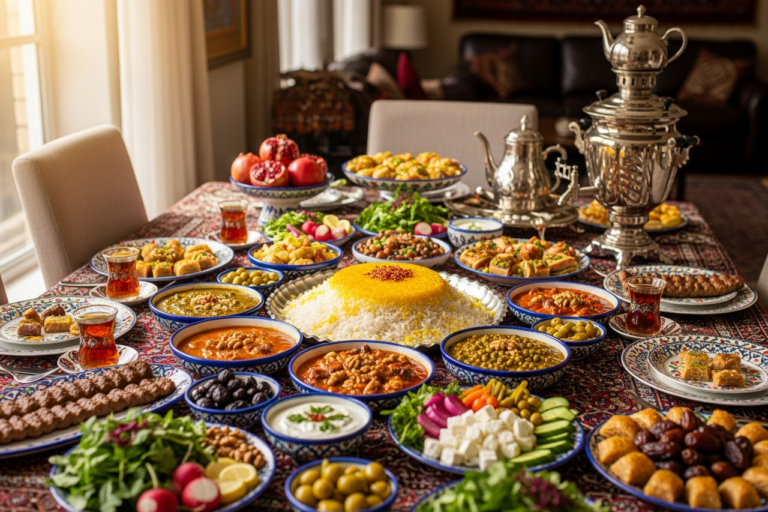
Key Highlights
-
In Persian culture, meal times in Iran are very important. Lunch is the main meal of the day.
-
Breakfast, called sobhāné, is eaten early. It has fresh bread, cheese, and jam.
-
Lunch, or nāhār, is a big meal served at noon. People often rest after lunch.
-
Dinner, named shām, is a lighter meal. It is shared with family later in the evening.
-
Meal times shift in Iran for events like Ramadan or Nowruz.
-
Hospitality is key in Iranian cuisine. Guests always get plenty of tasty food.
Introduction
Have you ever thought about how people eat in other parts of the world? In Iran, food is not just about filling your stomach. It is a big part of Persian culture. The time when people in Iran sit down to eat, the types of Iranian dishes they have, and all the little social steps around meals show a lot about life there. If you know when people eat in Iran, you start to see how much Iranian food means to everyone. You also start to see how central it is to spending time together and the traditions they have in their daily life.
An Overview of Iranian Meal Times and Eating Habits
In Persian culture, people treat meals with a lot of care and respect. They are not just about eating but about being together. In Iran, lunch is not just another meal. It is the biggest and most important one in the day. The way many people plan their day has a lot to do with these main eating times. There are special main dishes and customs for each mealtime.
You can see how much Iranians like company because they often share iranian food. Families and friends come together to eat iranian cuisine, and it makes eating a big social event. This is not just about food. It shows how people in iran value open arms and kindness, or what they call hospitality. It helps tell who they are and is found every day in their lives and cuisine.
Daily Structure of Meals in Iran
A normal day of eating in Iran follows an easy routine. People start the day with a light breakfast. This meal gets the day going and gets people ready for what is to come. Lunch is the main meal and is the biggest part of the day for food. People eat a big lunch, and it is a key part of their routine.
Dinner is lighter than lunch. This is not like most Western habits, where people eat their biggest meal at dinner. In Iran, the main dishes for both lunch and dinner almost always come with a type of rice, since rice is a big part of Iranian cuisine.
A common daily meal plan looks like this:
-
Breakfast (Sobhāné): Eaten in the morning.
-
Lunch (Nāhār): The main meal, served around noon.
-
Dinner (Shām): A lighter meal, eaten after sunset.
Social Aspects and Hospitality Traditions Around Eating
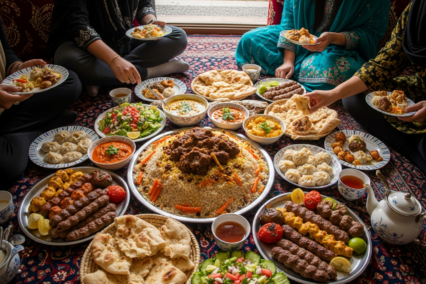
Hospitality, or pazeerāyee, is a big part of Persian culture. You see it best during mealtimes. When you walk into an Iranian home, people welcome you in with open arms. They see their guest as a gift from God. Everyone in the family works hard to show hospitality, often by making enough food to feed way more people than are there. Having a lot of food is a good way to show how much they care.
For Iranian families, a meal is not just about eating. It is about people getting together and sharing time. Meals are full of talk and laughter. When you are a guest, you are expected to taste a bit of everything that comes out. If you leave food on your plate, your host may think you did not like what they made, and that can be very rude.
This feeling of care and warmth can also be found in Iranian restaurants. But the deepest sense of this Persian culture is when you get to eat in someone’s home. Seeing a host cook enough food for everyone shows you how much they want you to feel happy and welcome. This respect and generosity goes to every guest who walks into their home.
Breakfast in Iran: Timing and Traditions
Breakfast, called sobhāné in Persian, is a big part of starting the day in Iran. People eat it early in the morning, and it is usually simple and tasty. The traditional Iranian breakfast might be lighter than lunch, but it gives you good energy to keep going.
The meal is about using fresh and good quality food. Fresh bread is very important for an Iranian breakfast. People buy it from a local bakery just before eating. The idea of fresh bread and fresh food is key to iranian food and culture.
Typical Breakfast Hours Across the Country
The timing for an Iranian breakfast is generally in the early morning, but it can vary slightly based on lifestyle and location. In bustling cities like Tehran, people might eat earlier to start their workday. Most families will enjoy their sobhāné together before heading out for their daily activities.
Some people opt for a more substantial breakfast experience, especially on weekends. There are special restaurants that open in the early hours and serve heavier, traditional dishes until around noon. This offers a different kind of Persian food experience for those looking for a heartier start.
Here’s a general idea of breakfast timing:
|
Meal |
Typical Time |
Notes |
|---|---|---|
|
Iranian Breakfast (Sobhāné) |
7:00 AM – 9:00 AM |
Consists of light fare like fresh bread, cheese, and tea. |
|
Special Breakfasts (Kalle-pache, Halim) |
Early morning until noon |
Served at specialty restaurants for a very hearty meal. |
Common Iranian Breakfast Foods and Their Cultural Meaning
A traditional Iranian breakfast is both simple and beautiful. The most popular meal is called noon-o-paneer, and it means bread and cheese. But this is not just any kind of bread and cheese. People often use fresh bread like Barbari with a salty feta cheese.
This old and well-loved breakfast can also include other good things. People like to add jam, called morabā, or honey, known as asal, to make it sweet. This is nice because the sweet taste goes well with the salty feta cheese. Walnuts, or gerdoo, are common too. They give the meal a good crunch and make the flavor deeper.
Here are a few foods you will find in a traditional Iranian breakfast:
-
Fresh Bread (Noon): You might see Sangak, Barbari, or Lavash.
-
Feta Cheese (Paneer): This salty cheese is key for iranian breakfast.
-
Jam (Morabā): It brings a sweet part to the meal.
-
Walnuts (Gerdoo): People like to eat these with the bread and cheese.
Lunchtime in Iranian Culture
Lunch, also called nāhār, is the main meal of the day in Iranian culture. It is usually a big and relaxed meal. This is very different from the quick lunches people often have in other countries. People in Iran take nāhār seriously, and you often see this in the way they prepare their special Iranian dishes.
At this time of day, family members come together. They enjoy the biggest and most well-made food of the day. Restaurants in Iran start serving lunch from noon. They keep it going into the late afternoon so everyone gets a chance to eat.
Iranian culture puts a lot into making this main meal something to look forward to.
When Is Lunch Eaten in Iran?
In Iranian culture, lunch is usually eaten around noon. Still, the time may change based on the place you are in or the season. Lunch is a big part of the day. It is not like the quick sandwiches or salads that people often have for lunch in western countries.
Many shops and businesses close for a few hours during the afternoon. This gives people time to go home, have a real meal, and rest. This shows just how important lunch is in the culture. It is the time for everyone to get energy again before they go back to work or other things.
When it comes to Persian food, lunch will almost always have a good amount of a special type of rice. Making this rice is seen as an art. The rice is served with rich stews or kebabs, so the meal is both filling and complete.
Popular Lunch Dishes and Midday Practices
Lunch is the time you get to try some of the best main dishes in Iranian food. The meals are full of taste and cooked slow to bring out their flavor. Rice is always part of the lunch table. You will see it made as polo, which is like pilaf rice, or sometimes steamed and plain.
One dish people love is Ghormeh Sabzi. It is a rich stew with green herbs, meat, and kidney beans. Kebab is also a big favorite and is known as the national dish of Iran. It’s grilled meat, usually lamb or chicken, that comes with rice flavored with saffron. These dishes show what Persian cooking is all about.
Common lunch foods in Iran include:
-
Kebab: Grilled lamb or chicken, served with rice.
-
Ghormeh Sabzi: A stew with fresh green herbs.
-
Khoresht-e Gheimeh: A stew made with yellow split peas.
-
Zereshk Polo: Rice mixed with barberries, usually served with chicken.
Iranian Dinner Customs and Timing
In Iranian culture, dinner, called shām, is not as heavy as lunch. People usually eat it later at night, mostly after the sun goes down. This meal brings the family together again, but the food is usually more simple.
Even though dinner is lighter, it is still a key part of the day. It lets people relax and talk with their loved ones before the night. The way Iranians eat dinner shows that they value taking time to connect and slow down.
Usual Time for Evening Meals in Iran
In Iran, the time for dinner is not fixed, and it happens later compared to many Western countries. People usually have their evening meal some time after sunset, mostly between 8 PM and 10 PM. In big cities such as Tehran, restaurants will be open until about midnight to let people eat late.
Having dinner late lets people do things together before they eat. People might spend time with friends or family first. Dinner is then the last part of the night. If you visit Iran, your host in Tehran may ask you to stay for dinner. This shows their hospitality and how welcoming the people are.
There is no need to hurry through the meal. The mood is relaxed and people take their time. For many, dinner is a chance to enjoy a good time together. This later time for dinner is a big difference from places like Europe or the United States, where people often eat much earlier.
Types of Dinners and Social Dinners With Family or Guests
Dinner is usually lighter than lunch, but what is on the table can change from day to day. Many times in iranian families, dinner will be simple. It might be just leftovers from the big lunch, or there could be some bread, yogurt, cheese, and fresh herbs to eat. Mint is used a lot in these meals too. But if guests come to eat, the host likes to show good hospitality. The dinner will be much bigger so that people can feel special.
When guests come, Iranian families get ready to serve more dishes. You may see stews that are not as heavy, grilled lamb, or other small dishes on the table. iranian families want their home to feel warm and full, so they make sure everyone gets enough food and enjoys the dinner.
Here are some things you may find at a social dinner:
-
Lighter stews or kebabs, which have less rice than what you get at lunch.
-
Flatbread, cheese, yogurt (which is called mast), and lots of fresh herbs like mint.
-
A mix of salads and side items put out for everyone to share with the main meal.
Snacks, Tea Times, and Light Meals Between Main Meals
Iranians love to eat snacks and drink tea during the day, besides their three main meals. The afternoon snack, called asrooné, is special to them. It is a simple meal that comes between lunch and dinner, usually around 4 PM.
This snack is the best time to rest, talk, and have Persian tea. Iranians enjoy this moment just like their main meals. They often have fresh fruits, pastries, and other snacks with their tea.
Persian Tea Culture and Afternoon Snacks
Persian tea, called chai, is the main drink in Iranian culture. It is picked by many for an afternoon snack. People drink it hot and black, and it is common to serve it to guests any time of the day to say “welcome.” The asrooné break is the heart of this custom.
This afternoon time is great for people to catch up and talk. Families and friends sit together, drink their tea, and eat a few snacks. It is not just about eating. The goal is to slow down, enjoy the company, and spend time talking with each other.
You will see these snacks during asrooné:
-
Persian tea (Chai): Most people like it with sugar cubes.
-
Pastries and sweets: You can find light cake and cookies.
-
Bread, cheese, and walnuts: This is a simple and savory choice.
Light Meals and Evening Gatherings
In the evenings, people in Iran often enjoy simple meals instead of having a big dinner. This is common when you visit friends or family. These get-togethers show the warm hospitality that is so important in Iran. People like to spend time together while eating easy foods. The food is put out in a casual way, so it is easy to eat while you walk around and talk with other people.
One popular option for a light evening meal is fresh flatbread. People eat it with things like feta cheese, walnuts, fresh herbs, mint, and slices of cucumber. This way of eating is fresh and good for you. It also lets everyone share what is on the table and chat at the same time.
You can find this eating style in many Iranian homes. It shows how much people in Iran care about fresh food and being together as a group. Meals like these, with simple but tasty items, are a big part of iranian food. People of all ages enjoy them.
Regional Differences in Meal Times Across Iran
Meal times in Iran follow a general pattern, but you will see how they change from place to place. Local weather and the way people live can affect when people eat their main meal. For example, in the hotter coastal regions in the south, people may change the times they eat to get away from the heat in the middle of the day.
In historic cities like Isfahan and Shiraz, and in Yazd, a desert city, every area has its own simple customs. These changes make Iran’s food landscape more rich. It makes traveling for food a real adventure in the country.
Northern vs. Southern Provinces: Timing and Food Choices
The local climate plays a significant role in shaping both meal times and food choices across Iran. In hotter southern provinces and coastal areas, the main lunch meal might be eaten slightly earlier or later to accommodate an afternoon rest during the peak heat. The cuisine here often features more seafood and distinct spices.
In contrast, the northern provinces, with their milder climate, might stick to a more standard midday lunchtime. Cities like Isfahan, Shiraz, and Yazd each have their own unique culinary traditions that influence their daily schedules. For instance, Shiraz is famous for its Faloodeh, a cold dessert perfect for its hot climate.
This table shows a general comparison:
|
Region |
Climate Influence |
Food Choices Example |
|---|---|---|
|
Southern/Coastal |
Hotter climate leads to adjusted lunch times and afternoon rest. |
Seafood is more common; dishes may use different spices. |
|
Northern/Central |
Milder climate allows for more consistent midday meal schedules. |
Cuisine reflects local agriculture; famous dishes from cities like Isfahan. |
Influence of Local Traditions on Meal Schedules
Local traditions are a big part of daily life in Iran. This is true for meal times too. It is not just the weather. The past and customs of each part of the country help decide when people eat and what they eat. Because of this, there is a lot to see in their food.
For example, there is a real variety of breads from one city to another, and this can change what people have for breakfast or dinner. In some parts of Iran, folks may eat a special local dish at a set time of day or week. These habits show the pride of each place in Persian culture.
Most people in Iran eat breakfast, a main lunch, and a smaller dinner. But these local food traditions make every meal special. The look and taste of their meals at different times come from years of history. You do not always find this mix anywhere else, as some Western countries have fixed times and types of meals. The way people in Iran do things is tied to their rich story, and their cuisine shows it.
Special Occasions and Changing Meal Times
During special events and holidays, the usual meal time in Iran changes a lot. Times like Nowruz (the Persian New Year) and the month of Ramadan bring in a different way to spend the day. Food has a big place during these times.
For iranian families, these days mean a lot. It’s a time for community, faith, and tradition. Their day does not follow the same plan as before. Instead, meals and the way people gather change, with special foods that they do not have on normal days.
Ramadan, Nowruz, and Other Holiday Meal Patterns
The meal plan changes a lot during Ramadan. In this month, people fast from sunrise to sunset. They stop having three meals a day. Now, they eat Iftar when the sun goes down, and Sahur before the sun comes up. These are the two main meals each day.
There are different food traditions for Nowruz, which is the Persian New Year. People on this day often have a special lunch or dinner. They make Sabzi Polo va Mahi, which is herbed rice and fried fish. This meal means new life and new beginnings for the spring season. Many enjoy this together with family.
Key food patterns for these holidays are:
-
Ramadan: People fast every day from sunrise to sunset. They eat before dawn and after sunset.
-
Nowruz: On the first day, people eat some foods for a special reason, like herbed rice and fish.
-
Other Special Occasions: There are big family meals with lots of special Iranian food.
With every celebration, tasty Iranian food and different kinds of polo are always a big part of the day.
Conclusion
To sum up, knowing when and how people eat in Iran shows us a lot about iranian culture, traditions, and their strong sense of hospitality. Meals in Iran have their own style and meaning, and each one tells us something about life there. People in iran enjoy breakfast, lunch, and dinner both as food and as times to get together and talk. These meal times are a big way for people to connect and share with each other. When you learn about these customs, you get to know more about iranian culture and enjoy local food even more. If you want to find out more or have any questions, just let me know.
Frequently Asked Questions
How do Iranian meal times compare to those in the United States?
Meal times in Iran are not the same as in the United States. People in Iran have lunch as the main meal, and they eat it around noon. Dinner in Iran is lighter, and people have it late, between 8 and 10 PM. But in the United States, dinner is the main meal, and it happens earlier in the evening. The meal habits in Iran and the United States are very different.
Are there changes in meal timing during special occasions?
Yes, meal times do change for special occasions. During Ramadan, people do not eat from sunrise to sunset. They eat meals before dawn and after the sun goes down. At Nowruz, which is the Persian New Year, families sit together for a special meal. That meal often has herbed rice with fish. They do this to mark the start of the new year.
What does a typical day’s meal plan look like for an Iranian family?
A normal day for Iranian families often begins with a traditional Iranian breakfast. This breakfast usually has bread and cheese. Lunch is the main and bigger meal and is served around noon. The day ends with a lighter dinner that people eat later in the evening. During the day, people often enjoy snacks and tea.