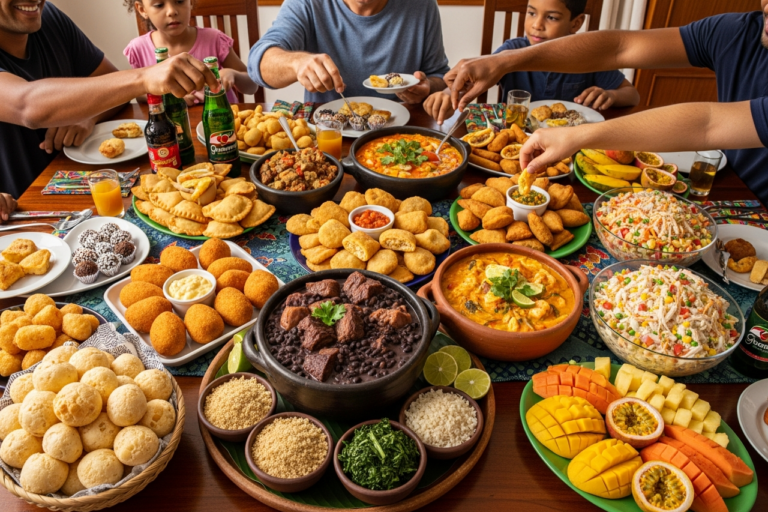
Key Highlights
-
In Brazil, lunch is the main meal of the day. It is usually bigger than dinner.
-
Brazilian food culture has a slow, sit-down lunch. This is true even on workdays. Many people eat at buffet style restaurants.
-
Breakfast is a light meal. It includes coffee, fresh fruit, and bread. People often eat dinner late.
-
Snacking during the day is normal. Lots of people buy food from street vendors for a quick treat.
-
A classic main meal in Brazil often has rice, black beans, and meat or fish.
Introduction
Welcome to the bright and lively world of Brazilian cuisine. In Brazil, eating is about more than food. It is a time to celebrate life, family, and friendship. From the busy streets in Rio de Janeiro to quiet meals with family, meal time is special every day. This look at Brazil will help you see what people eat, when they eat, and why it matters. You will get to know rio de janeiro and the way brazilian cuisine brings people together. Get ready to see food in a new way and feel the joy of eating with good company.
Understanding Meal Times in Brazil
Brazil is known for how people eat meals together, and this comes from its Portuguese roots. But there is also something special about the way meals are done here that makes it stand out. Lunch is often the main meal of the day in Brazil. It is not like in some other places where lunch is small and quick. People here take their time with lunch. There is no rush, and people enjoy good food together.
Having meals as a group is a big part of life in Brazil. People sit down to eat with family, friends, or workmates. This is an important tradition in brazilian food culture. It is a moment to take a break, enjoy time with people, and taste the great flavors of their food. Often, a national dish will be on the table. In one of the next sections, you will see what is usually served at each meal and how people do things differently in brazil with each meal.
The Main Meals of the Day: Names and Sequence
In Brazil, people set up the day around food, and each meal has its own Portuguese name. The first one is breakfast. It is called “café da manhã,” which means “morning coffee.” This meal is light and it helps people start their day.
Next comes lunch. In Portuguese, this main meal is called “almoço.” In Brazil, most people have this as their biggest meal right in the middle of the day. Brazilians often use this time to relax and eat with other people.
In the evening, people have dinner, called “jantar.” Some eat a full dinner for “jantar,” while others just have a small supper. How big or small this meal is can change based on where you are in Brazil, and what each family likes to do.
Many Brazilians look forward to enjoying all these meals with their families throughout the year in their own way.
Snack Culture and Frequency of Eating
Snacking is an important part of daily life in Brazil. People often grab small snacks between meals. Brazilians like to stop at a snack bar or “lanchonete” for a quick bite. Most of the time, they do not eat while they walk. People stand at the counter and eat their food or drink before they go back to their day.
People in brazil do not often eat as they walk down the street or when they ride buses and trains. It is normal for them to eat their snack right at the snack bar, juice bar, or food cart. Popular snacks in brazil include:
-
Fresh fruit juices that get squeezed right there.
-
Savory snacks like “esfihas” and “quibes.”
-
“Pão de queijo,” which is a small, soft cheese bread.
Because of this, most brazilians eat a few times during the day, with three main meals and one or two snacks added in. These snack breaks are a big part of brazilian food and help people come together.
Typical Schedule for Brazilian Meals
In Brazil, people base their day around a big midday meal. Breakfast comes early and is not heavy. Lunch is when most get their main food. Dinner is much later in the evening. It can be a full meal again, or just a light meal. This daily pattern can be seen in both in large cities like rio de janeiro and smaller towns.
Most places in brazil keep this rhythm, but not every area is exactly the same. In some areas, the nightly meal will often be just bread with cold cuts. In other places, mainly on weekends, dinner turns into another big social event. Across brazil, many like to eat at restaurants for lunch, where they pay by the kilo. Here is what this usual meal schedule mostly looks like.
Breakfast (“Café da Manhã”): What Time and What’s Served
Breakfast, called “café da manhã,” in Brazil is usually eaten early, between 6:30 a.m. and 8:00 a.m. This light meal helps people get ready for the day. It is not common for people to rush breakfast at home. But, many go out to get coffee and french bread at a bakery.
The meal is all about food that is fresh and simple. A regular breakfast in Brazil has some of these things, giving a fresh start each day:
-
Fresh fruit like papaya or mangoes
-
Bread with butter and jam
-
Coffee with milk (“café com leite”)
Some people will add cheese or ham as well. Breakfast in Brazil is not heavy. Instead, it is a light meal. The focus is on foods that are fresh and not too rich. This is different from what some other countries offer in the morning.
Lunch (“Almoço”): Timing and Social Importance
Yes, lunch, also called “almoço,” is the biggest and most important meal of the day in Brazil. People in Brazil usually have this midday meal from noon to around 2:00 p.m. Unlike in some other places where lunch is often short, “almoço” is a slow, sit-down time. It is seen as a special break to stop, talk, and enjoy a big meal with others.
This way of having lunch happens even on workdays. Most people will leave the office and eat together at buffet style restaurants. At these buffet restaurants, they pay for food by the kilo. Eating lunch alone at your desk is not something most Brazilians do. The meal often has rice, black beans, salad, and a choice of meat or fish.
This midday meal means a lot to people in Brazil. It helps bring people together and gives everyone a nice break in the middle of the day. Brazilians see this time as very important, where sharing, good food, and health come before a busy or rushed day.
Dinner (“Jantar”): Evening Habits and Preferences
Brazilians have dinner, called “jantar,” quite late. Most of the time, they eat it between 7:00 p.m. and 9:00 p.m. In Rio and other big cities, it can start even later. This works with the way people in Brazil live, because lunch is the main meal of the day for them. So, when it’s time for dinner, people often want lighter food and a moment to relax with friends or family.
The kind of evening meal changes from one place to the next. A lot of families will have a light supper. This can be as simple as coffee with milk, some bread, cold cuts, and cheese. You see this most in some parts of the country. It’s a good, easy way for people to finish their day.
But in other homes, or if you eat out, “jantar” can be more like another lunch. There are many families, even with children, who stay out late in restaurants. Dinner can be a time for everyone, no matter how old they are. It shows off how good brazilian cuisine is and how people like to bring family together for supper.
Key Foods Enjoyed at Each Meal
The Brazilian food scene is very rich and full of options. Many foods show up in different ways during the day. The main items, like rice and black beans, are very important. You find these most often at lunchtime. fresh fruits, like passion fruit and papaya, are common from breakfast to dessert. This shows how good the farming is in Brazil.
If you move around the country, you will see food choices change. One place may use lamb, while another uses mostly seafood. Things like hearts of palm help make salads and other plates special. Up next, we will look at what foods are usually eaten for breakfast, lunch, and dinner in brazil.
Traditional Brazilian Breakfast Foods
A traditional Brazilian breakfast is light and fresh. It is not heavy or cooked like some breakfasts. You often start the day with coffee, fresh fruit, and bread. People enjoy this meal at home or sometimes grab it at a bakery.
The table has simple and tasty foods. For “café da manhã,” you usually have:
-
Fresh fruits, like papaya and mangoes
-
Toasted french bread with butter and jam
-
Slices of cheese and cold cuts, such as ham
-
Strong coffee, often served with milk
This mix has sweet and savory tastes. It helps you wake up and get ready for the day. It shows how people in Brazil like fresh food and simple joys.
Popular Lunch Dishes Across Brazil
Lunch in Brazil is a hearty, sit-down meal, and the “prato feito” (made plate) is a classic example. This typically consists of rice, black beans, a protein, and a small salad. However, many Brazilians head to buffet-style “kilo” restaurants, where they can assemble their own plate from a huge variety of options and pay by weight. This allows for great diversity in one’s lunch.
The national dish, “feijoada,” a rich stew of black beans and pork, is often reserved for special lunches, particularly on Wednesdays or Saturdays. Below is a look at some popular lunch components you might find across the country.
|
Category |
Popular Lunch Items |
|---|---|
|
Staples |
White rice, black beans or pinto beans, farofa (toasted cassava flour) |
|
Proteins |
Grilled beef, chicken, fish, or pork |
|
Salads & Sides |
Green salads, potato salad, cooked vegetables, hearts of palm |
|
Hot Dishes |
Lasagna, pasta, savory pies, feijoada (on specific days) |
This buffet approach allows everyone to customize their main meal of the day according to their tastes, making lunch a truly personal and satisfying experience.
Common Dinner Choices and Regional Variations
Dinner in Brazil is often either a light meal or like a smaller lunch. After a big “almoço,” many people have a simple supper. A lot of them like soups, salads, or sandwiches. In households outside the big cities, the dinner is usually very light.
But, when you eat out or on weekends, dinner in Brazil can be more special. Some foods people pick for a light meal are:
-
A bowl of soup with bread.
-
A plate of bread, cheese, and cold cuts.
-
Salads with things like hearts of palm.
There are big regional differences, too. Cities by the coast might offer seafood dishes at dinner. Inland places may give something else. But, dinner in Brazil is almost always served late. People relax, eat, and spend time together. It is not as rushed as lunch. Families and friends often share pizza or other dishes then.
Brazilian Mealtime Etiquette and Customs
In Brazil, meals are about spending time with others. People learn good manners for eating together since they are little. Guests are treated with care, and if you get asked to eat at someone’s place, it means you are seen as a friend.
No matter if you are eating at a family home or sitting in one of the buffet style restaurants, there are ways to act that most people follow. How you talk to the waiter and how long you stay for a meal are part of the customs. These help everyone enjoy eating as a group. Next, we will talk about things like the service charge for tipping and why being on time matters.
Table Manners and Shared Meals
Good table manners are important in Brazil. You will notice that Brazilians often use a fork and knife for most foods. They use these even when they eat pizza or chicken. People do not eat with their hands much except for small finger foods. The fork is mostly in the left hand, and the knife in the right.
Sharing food is a big part of life in Brazil. Meals are a time for people to talk and connect with each other. When you go to a buffet, wait your turn and do not fill your plate too much at one time. You can always get more if you are still hungry.
When you go out to eat, the way you talk with your waiter is both formal and friendly. If you need the waiter, you can get their attention and they will come to help you. The waiter brings drinks and gives you the bill right at your table. This kind way of working with the waiter is a good part of the dining time in Brazil.
Punctuality, Length of Meals, and Hospitality Traditions
When it is time to eat, Brazilians put more value on the experience than being exactly on time. Lunch is the main midday meal and people take their time with it. It’s normal for this meal with friends or coworkers to go on for an hour or more. This is different from eating fast at your desk. The social time is just as important as the food.
This slow pace is seen a lot in Brazilian hospitality. People do not like to rush meals. The goal is to unwind, talk, and enjoy being with each other. If you get invited to someone’s home, you should arrive a little late. Most people in Brazil think coming right on time is like rushing the host.
At restaurants, you do not have to hurry. You can stay at the table for as long as you want. After the meal, the bill will usually have a “service charge” or “serviço,” which is about 10%. This is the normal tip that people give in Brazil for good service.
Special Variations in Meal Times
On most days in Brazil, people have a set meal schedule. But on weekends and holidays, things are different. Meals on these days last much longer. These bigger meals are often a time for family and friends to get together. A long lunch can go on for hours and may have special food that might take a full day to make.
People often skip the quick kilo buffet and enjoy a big barbecue or homemade meal instead. This is when the festive side of Brazilian cuisine comes out. The social part of eating together in Brazil is clear on these days. Let’s see how special times like these can change the usual eating schedule and the food people have.
Differences on Weekends, Holidays, and at Steakhouses
On weekends and holidays in Brazil, people take more time to eat their meals. Meal times slow down and often last for hours. Many families and friends sit together for lunch. This meal is the main reason to see their loved ones that day. They often cook special foods that are not served during the week.
Brazilian steakhouses, called “churrascarias,” offer something called “rodízio.” At these places, waiters walk around with big skewers of meat. They cut the meat right onto your plate. You can keep eating as long as you want, making this meal feel like a fun event. People love going to these spots for lunch or dinner, and this is more of a premium price meal compared to a regular buffet.
Some of these steakhouses change their open times and prices. During the week, they might only open for dinner. On weekends, they serve lunch too, and sometimes charge the same premium price as dinner. This shows that, in Brazil, people like to make weekend meals long and special.
Conclusion
To sum up, knowing when people eat in Brazil helps you see the country’s culture. Each meal has its own role, and the way people act when eating shows there is warmth and a strong sense of community in brazil. if you follow their ways, it will make your visit better. you can even learn a lot if you just want to know about their culture. breakfast in brazil is usually light. then, lunch is the big meal of the day. every meal gives you a chance to be with family and friends.
If you want to find out more about brazilian cuisine or need advice, you can ask for help. Your experience of brazil and its food is waiting for you.
Frequently Asked Questions
How do Brazilian meal times differ from those in the United States?
In Brazil, people eat lunch as the main and biggest meal. Their supper is lighter and is eaten later in the day. This is not the same as in North America, where dinner is the meal people eat the most. In brazil, Brazilian food is all about enjoying lunch. People take their time and relax during this meal. This is very different than the fast lunch breaks people take in the U.S.
Are snacks a big part of the Brazilian daily eating routine?
Yes, snacks are a big part of everyday life in Brazil. People often go to bakeries, a snack bar, or see street vendors to have a snack and drink some coffee or fresh fruit juice. It is a time in the day where people pause and talk with others. Most people sit down and enjoy their snacks here, instead of eating it while walking.
Is lunch really the largest meal of the day in Brazil?
Yes, lunch is for sure the biggest and most important meal of the day in Brazil. People in Brazil will have this midday meal as a big and long break. The meal will almost always have rice, black beans, some type of meat or chicken, and salad. In brazil, this is a key part of the food culture. That is why people take a good break from work or other things when it is time for brazilian food in the middle of the day.