Key Highlights
-
Belgian meal times are shaped by French, German, and Dutch habits. This mix makes the eating schedule in Belgium special.
-
Lunch used to be the main meal of the day, but this is changing now, for example in many city areas.
-
Breakfast is often simple. People usually have coffee and some bread rolls or croissants.
-
Dinner is getting to be the big family meal. Most people eat it between 7 PM and 8 PM.
-
Snacks are important in Belgian life. In the afternoon, many people enjoy waffles and chocolates.
-
There are differences in regions. In Flanders, people follow more Dutch habits, while Wallonia is closer to French cooking styles.
Introduction
Welcome to the tasty world of Belgian food! You may know about waffles and chocolate, but belgian cuisine has many other dishes. The food in Belgium shows a mix of old ways and new customs. People here enjoy many different meals. Learning about meal times in Belgium helps you see how much they value food. Belgium sits in the heart of Europe, and its eating habits match both its history and its modern life. Whether you want to visit, try some belgian food, or just learn more, this guide will help you see how people in Belgium eat every day.
The Significance of Meal Times in Belgian Culture
In Belgium, meal times matter a lot. They are more than just eating at certain hours. They are an important part of life in the country. Compared to other European countries, belgian cuisine puts a strong focus on sharing food with others. People do not just eat, they make it a time to be with family and friends.
Breakfast, lunch, and dinner all have set times. These times help shape the day for most people. They bring everyone together, so the day has moments where people connect.
Belgian food culture is all about quality and being with others. Even when life gets busy and things change, people still come together and sit down for meals. The custom of having structured meal times is still there. Now, let’s see how history and social habits have shaped the way people eat in Belgium.
Historical Influences on Belgian Eating Habits
For a long time, Belgium has been in the middle of Europe. This has made it a place where different cultures mix. You can see these cultures in the way people in Belgium eat. The food there is a mix that comes from the country’s strong neighbors, like France, Germany, and the Netherlands. You will find these different roots in both the types of food Belgians like, and in when they sit down to eat.
The food from France brings rich sauces and dishes that take a lot of care to make. This is something you see a lot in Wallonia, which is in the south. Meals in this area often have more than one course. The people use good ingredients and put a lot of thought into every plate.
In Flanders, which is more like the Netherlands and Germany, meals are different. Here, people go for simple and filling food. You will find thick stews and meals that help you feel full and warm. These are not fancy, but they are good and strong. The meals in Belgium come from both these styles—the rich and fancy from the French side, and the plain and big from the Dutch and German side. This is what makes meal times in Belgium so special.
Social Roles of Shared Meals in Belgium
Shared meals play a big part in social life in Belgium. People often get together with family for dinner. This time is used to catch up and feel close. On weekends, these dinners are more relaxed and can take longer than the quick meals people have during the week.
In cities like Brussels, dining is about more than just eating at home. Friends get together at cafés or restaurants to enjoy a main course and spend time together. This is different from what you see in some other European countries, where meals are faster and less social.
No matter if it’s a family dinner or a fun meet-up with friends, sharing Belgian food is a big tradition in Belgium. These meals are important for talking with each other and enjoying great food together. Food brings people together and is a key part of life in Belgium and in Brussels.
Belgian Breakfast Traditions
The first meal of the day in Belgium is mostly simple and quick. Many Belgians like to have a light breakfast between 7 AM and 9 AM. The idea is to keep it easy and comfortable. A hot cup of coffee or tea is a must for many people to start the day right.
You might think people eat a big Brussels waffle each morning, but that is not the case. Brussels waffles are often just a treat or snack. A usual breakfast for Belgians has bread rolls, croissants, and some easy spreads. This simple style gives people energy in the morning, without making a big deal out of the meal. Let’s talk more about the foods and drinks you can find at a Belgian breakfast table.
Typical Breakfast Foods and Drinks
The Belgian breakfast is about simple food and fresh bakery items. You will not find a heavy cooked meal here. People like quick food that is easy to make. Cereals are there, but fresh bread is what most get.
In the morning, food pairs well with a cup of coffee or hot milk. What matters most is good quality, not complicated dishes. A Brussels waffle is famous as a snack, but there are breakfast favorites too.
Common breakfast items include:
-
Fresh bread rolls or a croissant
-
Spreads like jam, cheese, or ham
-
A cup of coffee, often served with hot milk (café au lait)
-
A glass of orange juice
Timing and Morning Rituals Across Regions
In Belgium, most people eat breakfast in the morning between 7 AM and 9 AM. There are some small changes in the way this happens in different parts of Belgium. In big cities, people move fast. Breakfast is often eaten quickly before going to work. The routine aims to help get the day going without much delay.
In smaller towns and rural areas of Belgium, the morning is slower. People may take more time to enjoy their breakfast. Even though the food is similar, the way people eat feels more calm and suited to local tradition.
Regional habits play a part too. For example, Flanders and Wallonia have their own ways of starting the morning. Still, most people stick to having a light breakfast. No matter where you are, be it a busy city or a quiet place in parts of Belgium, everyone starts the day with a simple meal that brings comfort.
Lunch in Belgium: The Main Midday Meal
Lunch in Belgium has always been known as the main meal of the day. This meal is eaten between noon and 2 PM. It used to be bigger than dinner. Most Belgians would have a main course. It was often a simple dish consisting of meat or fish with potatoes and vegetables.
Some people in cities now have different work hours, so traditions have changed. Still, lunchtime is important. Restaurants and cafés in Belgium often serve a good plat du jour for people at midday. Now, we will look at the popular dishes and customs that are part of lunchtime for Belgians.
Popular Lunch Dishes and Customs
Lunch in Belgium can be simple or filling. You can have a quick sandwich, or go for a hot meal instead. One smart and cheap way to eat is to try the “plat du jour.” This dish of the day is served at many cafés and restaurants. It is a good main course, so it fills you up and gives you a nice break in the middle of the day.
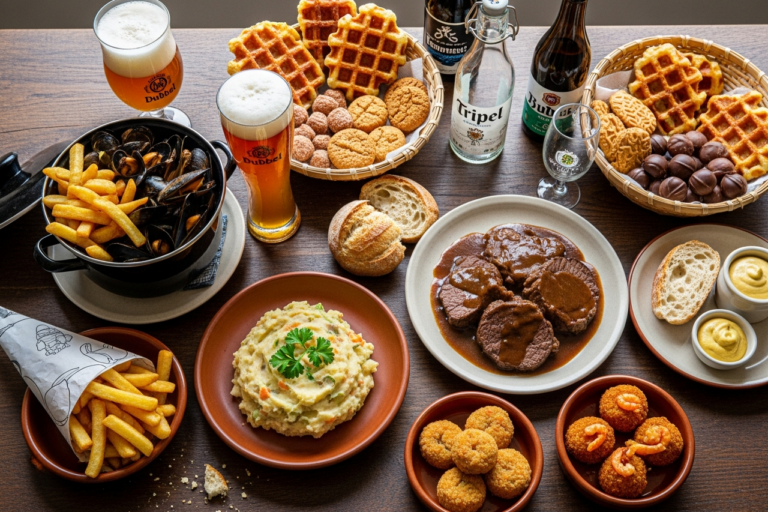
Some people in Belgium get a filled baguette called a “broodje” if they need to eat on the run. Still, many folks in Belgium like to sit down for a warm lunch. You will see classic Belgian food at these meals. The dishes are big and full of flavor, and they really show off the best food Belgium has to offer. Expect to see belgian fries with just about any main course, too!
Here are some popular lunch dishes:
-
Moules frites (mussels and fries), especially near the coast
-
Stoofvlees (a rich beef and beer stew)
-
Waterzooi (a creamy chicken or fish stew)
-
Meatballs in a flavorful sauce
-
Steak with a side of fries
-
Croque-monsieur (a toasted ham and cheese sandwich)
Lunch Hours: Workdays vs. Weekends
The rhythm of lunch in Belgium changes significantly between workdays and weekends. During the week, lunch is often a more practical affair, constrained by work schedules. While many still aim for a proper break, the meal might be quicker, like a sandwich or the “plat du jour” at a local café.
On weekends, however, lunch becomes a more leisurely and social event. Families and friends gather for a longer, more elaborate meal, sometimes making it the main meal of the day. This is when Belgians might take the time to prepare or go out for a multi-course lunch, enjoying the food and company without the pressure of time.
This difference highlights how meal times adapt to the structure of the week, preserving tradition while accommodating modern life.
|
Day Type |
Typical Lunch Time |
Meal Style |
|---|---|---|
|
Workdays |
12:00 PM – 1:30 PM |
Often a quick, practical meal like a sandwich or “plat du jour”. |
|
Weekends |
12:30 PM – 2:30 PM |
A more relaxed, social, and often substantial meal with family or friends. |
Belgian Dinner: Evening Meals and Family Time
Dinner has now become an important evening meal for many families in Belgium. In the past, lunch was the main meal. Now, most families get together in the evening. They sit down, share stories about their day, and feel close to each other. People eat all kinds of dishes at this time. Some meals are very simple and light. Other times, the evening meal can be bigger and warm, and there may be rich sauces.
If you compare Belgium with other European countries, Belgians usually eat dinner earlier in the evening. Having this evening meal together helps families in Belgium feel connected. It is a good time for everyone to relax and wind down. Let’s see when Belgians normally eat dinner and what dishes they like at their evening meal.
When Do Belgians Eat Dinner?
The evening meal in Belgium usually takes place between 7 PM and 8 PM. Families come together after work and school during this time. Dinner is an important part of the daily routine. It is a bit earlier than in some other European countries like Spain or Italy. But it looks the same as the dinner time in France and Germany.
If you eat out in Belgium, restaurants start serving dinner at around 7 PM. In smaller towns, kitchen staff begin to finish up by 9:30 PM or 10 PM. So you should not plan for a late meal unless you are in a big city.
Belgians follow this dinner time because they care about having regular work hours and spending time with family at night. Whether you have your evening meal at home or in a good restaurant, people in Belgium see dinner as a special part of their day.
Classic Dinner Recipes and Variations
Belgian dinner tables often have a nice mix of classic dishes, with bold flavors and rich sauces. The recipes usually use local food like Belgian beer, fresh seafood, and food from the Ardennes. These meals are warm and filling. They are good for your evening main course.
Dishes in Belgium might be simple stews, or more careful cooking. Wallonian dishes use strong sauces, while Flemish food gives you simpler recipes. Each family may have their own twist on these classic dishes.
Here are some classic dinner recipes you will find:
-
Carbonnade Flamande: This is a stew made of beef and onion with Belgian beer.
-
Konijn met pruimen: A dish from the Flemish area. It is rabbit cooked with prunes.
-
Fricadelles à la bière: Meatballs cooked in a sauce made with beer.
-
Truite à l’Ardennaise: Trout from the Ardennes, cooked in a wine sauce.
-
Paling in ‘t groen: Eel cooked in a bright green sauce with spinach and herbs.
-
Chicorées gratinées au four: Chicory wrapped in ham and baked with a cheesy sauce.
Snacks and Small Bites Between Meals
Snacking is both fun and important in Belgium. Many Belgians like to eat small snacks between meals, especially in the late afternoon. This time is called the “goûter.” It is a special break in the day for kids and grown-ups to enjoy.
The afternoon snack is a big part of Belgian cuisine. It lets people try some of the best snacks and pastries from Belgium. You can find sweet treats and tasty snacks everywhere. Belgian snacks come in many kinds. Let’s look more into the snack culture and some favorite treats in Belgium.
Mid-Morning and Afternoon Snack Culture
The culture of snacking in Belgium is strong. In the afternoon, people look forward to a snack, often around 4 PM. It is common to stop what you are doing for a sweet treat at this time. This little break gives people a bit more energy and is nice before the night comes.
The afternoon snack is not just for children who have come back from school. Adults in Belgium also join in. They may pick up a cup of coffee and a pastry. People do not usually have a morning snack, but almost everyone enjoys the afternoon snack. It is the perfect time to eat something sweet. Belgium is well-known for great pastries and chocolate, so there are many good things to pick from.
This habit shows how people in Belgium enjoy simple things in life. It is normal in their culture to slow down and enjoy a tasty treat. Because of this, afternoon snack time is a big part of life in Belgium.
Favorite Belgian Snacks and Treats
Belgians have a lot of snacks to choose from. The country is known for the many tasty treats you can have any time of day. Snack time is big in Belgium. You can pick from famous sweets or good savory street food. There is a snack for everyone.
Belgian fries, also called frites, are the most well-known savory snack. They come in a paper cone and usually have mayonnaise on top. If you want something sweet, the options do not stop. You can walk into a patisserie and find yummy pastries. Chocolatiers make some of the best chocolate you will get anywhere. Brussels waffle is another popular snack. It is light, crispy, and a favorite for many.
Here are some snacks people in Belgium love:
-
Gaufres (waffles), served hot with toppings like cream, fruit, or chocolate
-
Frites (Belgian fries) from a local “frituur”
-
A piece of high-quality Belgian chocolate
-
A selection of pastries from a patisserie
-
Savory snacks like worst (sausage) or bloedworst (black pudding)
Regional and Cultural Differences in Meal Times
Belgium has many kinds of people and ways of life. You can see this in their meal times. There is a big difference between the part called Flanders in the north, where people speak Dutch, and Wallonia in the south, where they speak French. This is not just about language. These groups also have different ways of cooking and eating food.
You will see changes from place to place, too. Life in the city goes faster and this can change when people eat. In the country areas, like in the Ardennes, things use to be slower and meal times may follow old habits. Let’s look at how these ways of life and places show up at the dinner table in Belgium.
Variations Between Flanders and Wallonia
The way people in Flanders and Wallonia eat and the times they eat are shaped by their cultural neighbors. In Flanders, which is the Dutch-speaking part of Belgium in the north, people eat more like the Dutch. The meal times and dishes are simple, and the food is often plain.
Wallonia, down in the south, speaks French and takes its food style from France. The meals here feel a bit more formal. People put a lot of care into their food, and rich sauces are popular. The eating schedule here is closer to France, but dinner in Wallonia is usually earlier than in France.
Of course, these are broad ideas, not strict rules. When you travel through Belgium, you can see these little differences. If you eat a meal in Ghent, it might feel a bit different than a meal in Liège. This shows how flanders and wallonia both have their own way of eating and living. It makes the country’s meal times and food styles interesting for people to try and enjoy.
Urban vs. Rural Meal Schedules
The daily meal schedule in parts of Belgium can look very different if you compare big cities to the countryside. In big cities like Brussels or Antwerp, people have busy jobs. This makes lunch quick for many. They eat dinner a little later after they get home from work.
In rural parts of Belgium, people hold on to old meal times. Lunch here stays the main meal of the day. It is a good break and often a big meal for those who work in farming or many local trades. Dinner in the country is lighter. People use fresh food from their garden or the local market to make dinner, keeping things simple.
This split between city and country shows that how we live shapes when and what we eat. People in the cities must change for work all over the world. But people in rural areas stick to the meal times that have been in Belgium for years. They keep the old way of having meals.
Dining Out in Belgium: Restaurants and Cafés
Eating out is something many people in Belgium love to do. There are lots of good restaurants and cafés in the country. You can find the right spot for a quick coffee or sit down to have a big meal. These places are at the heart of social life in Belgium. When you go out, you get to taste real Belgian cuisine and try a glass of well-known Belgian beer.
Knowing a few things about how people eat out in Belgium and the hours when restaurants are open can help you enjoy your food even more. You can read ahead to see when to arrive, what you should know, and what to do. A little bit of information can make your time with Belgian food better. Up next, you will find out more about restaurant hours and some tips about how to act when eating out in Belgium.
Restaurant Dining Hours and Customs
If you want to eat out in Belgium, it helps to know when most people go out to eat. Many restaurants serve lunch from about noon to 2 PM. This is when you can try the “plat du jour.” It costs less and gives you a good meal in the middle of the day.
Dinner at restaurants in Belgium usually begins around 7 PM. Some places do serve food earlier, but most open for dinner at this time. If you are in a small town, be careful. The kitchens might close by 9:30 PM, so try not to arrive too late. Also, many restaurants close for one day each week. This day is often Monday or Tuesday.
It’s a good plan to book a table, especially on weekends or in busy places. This way you will get your spot and can relax as you enjoy your meal. You can also try a Belgian beer, which goes well with the food.
Belgian Table Etiquette and Dining Out Tips
When you eat out in Belgium, it is good to follow basic table rules. The setting can be relaxed, but knowing the customs helps. For example, people keep their hands on the table, not their elbows, while eating. You use your fork in your left hand and your knife in your right.
About paying, the bill will not come to your table until you ask for it. A service charge is often included, so you do not have to leave a tip. Still, many people round up their bill, or leave a small extra tip if they get very good service.
These tips make your time at a restaurant better:
-
Make reservations if you want to eat dinner or if you go out on weekends.
-
Wait until the host tells you where to sit.
-
Say “bon appétit” or “eet smakelijk” before you eat.
-
You can ask for tips for good food or for what Belgian beer to try with your meal.
Conclusion
To sum up, knowing about meal times in Belgium gives you a good look at the country’s way of life. The people in Belgium care about eating together, and you can see this in everything from how they eat breakfast to the many ways they have lunch. All of these ways to eat show the long history and special ways people live in Belgium. People like to sit down for a slow dinner with their family, and they also sometimes have a quick snack during the day. Each of these habits comes from the area and from the connection people have with each other. When you start to follow these food habits, you not only enjoy Belgian cuisine but you also see why the food and the traditions are so special. If you want to know even more about belgian cuisine, meal times, or ways of eating in Belgium, look into the food scene there for yourself!
Frequently Asked Questions
Do Belgians have different meal times on weekends?
Yes, meal times in Belgium can change on weekends. On weekdays, people plan meals around work. But on weekends, lunch often takes more time and becomes a time for people to talk and enjoy each other’s company, especially in the countryside. Dinners can also be fancier as people have more time to cook and get together with their family and friends.
meal times, belgium
Is lunch typically the main meal of the day in Belgium?
Lunch used to be the main meal of the day in Belgium. This is still true in some country areas now. But, life has changed for most Belgians, and many have a smaller lunch instead. They have a bigger dinner, which is more like what people do in other northern European countries.
Are there any special meal times for holidays or festivals?
During holidays and festivals in Belgium, meal times are a big deal. On Christmas and Easter, families often have long lunches or dinners with many courses. These meals go on for hours. The special meal times are a big part of what brings families together in Belgium. They help make the holidays feel warm and full of joy for everyone.