TL;DR: Wigilia is the Polish Christmas Eve supper, celebrated by Poland’s large diaspora across the UK. Families wait for the first star before eating, share the opłatek wafer with heartfelt wishes, and serve twelve meatless dishes symbolising the twelve apostles. For Polish Britons, Wigilia is a way of keeping tradition alive while building a sense of home far from Poland.
Christmas looks different in every household, but few traditions carry as much meaning as Wigilia, the Polish Christmas Eve celebration. With over 700,000 Polish-born residents living in the UK according to the Office for National Statistics, Wigilia has become a familiar fixture in towns and cities across Britain, from Polish community halls in Manchester to family kitchens in London.
For many Polish families abroad, Wigilia isn’t just a meal. It’s an evening built around patience, symbolism, and togetherness. Understanding its customs offers a glimpse into how cultural identity survives and adapts, generation after generation, even thousands of miles from home.
This guide walks through the key traditions behind Wigilia, why they matter, and how Polish communities across the UK continue to celebrate them today.

What is Wigilia and when is it celebrated?
Wigilia takes place on 24 December, the evening before Christmas Day. The word itself comes from the Latin “vigilare,” meaning “to watch” or “to keep vigil.” Traditionally, families fast throughout the day and gather at dusk to begin the evening’s rituals together.
Unlike a typical Christmas dinner, Wigilia is structured around a precise sequence of customs. Each step carries its own significance, from the first course to the final prayer.
Why do Polish families wait for the first star before eating?
One of Wigilia’s most distinctive customs is waiting for “pierwsza gwiazdka,” the first star to appear in the night sky, before the meal begins. The tradition symbolises the Star of Bethlehem and marks the formal start of the celebration.
Children are often tasked with watching the window for the star’s appearance, adding anticipation to the evening. Once spotted, the family gathers at the table and the meal can finally begin. For Polish families in the UK, this moment often becomes a small ritual of its own. Dimming the lights, checking the sky together, and treating the search as part of the celebration rather than a formality.
What is opłatek and why is it shared before the meal?
Before any food is eaten, families take part in the sharing of opłatek, a thin, unleavened wafer similar to a communion host. Each person breaks a piece from another’s wafer while exchanging good wishes for the year ahead.
This exchange is considered the emotional heart of Wigilia. It’s a moment for reconciliation, gratitude, and connection, often accompanied by heartfelt words exchanged between generations. Many Polish families in the UK describe it as the point in the evening when distance from Poland feels smallest, since the ritual is identical whether celebrated in Kraków or in Birmingham.
An extra place is often left at the table during this part of the evening, reserved for an unexpected guest or in memory of a relative who cannot be present. For Polish Britons separated from family in Poland, this gesture has taken on added meaning over the years.

Why does the Wigilia supper have twelve dishes?
Tradition calls for twelve dishes to be served at Wigilia, one for each of the twelve apostles. The number also loosely echoes the twelve months of the year, giving the meal a sense of marking time as well as faith.
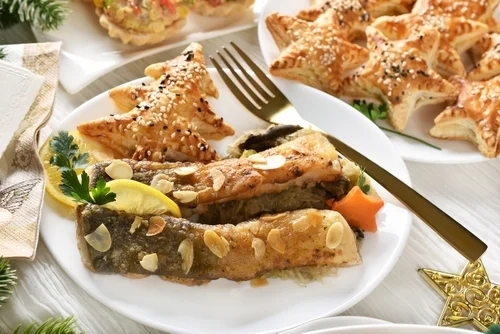
Crucially, the meal is meatless. This reflects the Catholic custom of fasting before Christmas Day and shapes the entire character of the supper. Common dishes include:
- Barszcz z uszkami – a clear beetroot soup served with small mushroom-filled dumplings
- Karp – carp, traditionally fried or served in aspic
- Pierogi – dumplings filled with cabbage, mushrooms, or fruit
- Kutia – a sweet dish of wheat berries, poppy seed, honey, and dried fruit, more common in eastern Poland
- Makowiec – a poppy seed roll served as dessert
- Kompot z suszu – a dried fruit compote, often served warm
Sourcing these ingredients outside Poland was once a challenge for the diaspora. Today, Polish delicatessens are a regular feature of UK high streets, particularly in cities with large Polish populations such as London, Manchester, and Southampton, making it far easier for families to recreate an authentic Wigilia table.
How does the UK’s Polish community celebrate Wigilia today?
Polish parishes, cultural centres, and community organisations across the UK frequently host public Wigilia events, inviting both Polish nationals and the wider community to take part. These gatherings often combine the traditional supper with carol singing, known as kolędy, and sometimes a visit from Saint Nicholas for younger guests.
For second and third-generation Polish Britons, these community events play an important role in passing the tradition on. Even where English has become the first language at home, Wigilia customs such as the opłatek exchange and the twelve-dish supper tend to remain closely followed, acting as a tangible link to heritage.
Midnight Mass, known as Pasterka, typically follows the Wigilia supper, rounding off the evening with a service that many Polish families in the UK attend together, sometimes travelling to the nearest Polish Catholic parish to do so.

Keeping tradition alive, wherever home is
Wigilia endures in the UK because it offers something simple and powerful: a shared evening built on patience, symbolism, and connection. Whether it’s a quiet family supper in a flat in Leeds or a packed community hall in East London, the same rituals play out year after year, linking families to their roots and to each other.
For anyone curious about Polish culture, or for Polish families in Britain looking to pass the tradition on, Wigilia is a reminder that some celebrations grow richer, not fainter, with distance from home.
Frequently asked questions
What date is Wigilia celebrated on?
Wigilia takes place on 24 December, Christmas Eve, beginning at dusk once the first star appears in the sky.
Why is no meat served during Wigilia?
The meal is traditionally meatless in observance of the Catholic fasting custom practised before Christmas Day.
What is the significance of the empty place setting at the table?
An extra place is left for an unexpected guest or in memory of a family member who cannot attend, reflecting the evening’s themes of hospitality and remembrance.
Do Polish communities in the UK celebrate Wigilia publicly?
Yes. Many Polish parishes and cultural centres across UK cities host communal Wigilia suppers, often paired with carol singing and, for children, a visit from Saint Nicholas.
Is Wigilia only celebrated by Polish Catholics?
While rooted in Catholic tradition, Wigilia is widely observed by Polish families as a cultural event, regardless of how closely individual households practise religion.