Quick answer: Hogmanay is Scotland’s traditional New Year’s Eve celebration, held every 31 December. It blends centuries-old customs like first-footing and the singing of “Auld Lang Syne” with modern street parties, most famously in Edinburgh. For many Scots and those with Scottish heritage around the world, Hogmanay is just as significant as Christmas, if not more so.
Scotland doesn’t do New Year by halves. While much of the world raises a toast at midnight and calls it a night, Hogmanay stretches the celebration across several days, rooted in traditions that predate written record. Understanding where these customs come from—and how they’re still practised today—offers a window into Scottish identity itself.
This guide explains the history behind Hogmanay, the traditions that define it, and how the celebration has evolved into one of the world’s most recognised New Year events.

Where Does the Word “Hogmanay” Come From?
The exact origin of the word “Hogmanay” is debated among historians, but most trace it to Norse or French roots. Some link it to the Scandinavian word “hoggo-nott,” referring to the feast preceding Yule, brought to Scotland through Viking settlement. Others point to the French “hoguinané,” a term once used for a New Year’s gift, reflecting the Auld Alliance between Scotland and France during the medieval period.
Whatever its linguistic origin, Hogmanay’s prominence in Scotland has a more practical explanation. From 1640 until 1958, the Church of Scotland discouraged the celebration of Christmas, viewing it as too closely tied to Catholic ritual. As a result, New Year became the primary winter festival in Scottish culture, carrying the weight and warmth that other countries reserve for Christmas Day. That historical imbalance is part of why Hogmanay still carries such cultural importance today.
What Are the Traditional Customs of Hogmanay?
Several customs define a traditional Hogmanay celebration, many of which are still practised in households across Scotland.
What is “first-footing” and why does it matter?
First-footing refers to the tradition of being the first person to cross a household’s threshold after midnight on New Year’s Eve. The first-footer is believed to set the tone for the year ahead, so certain customs govern who should do the honours and what they should bring.
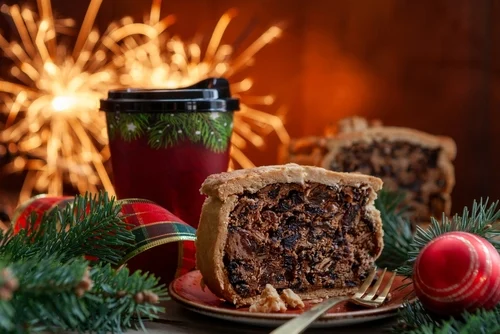
Traditionally, a tall, dark-haired man is considered the luckiest first-footer, a superstition some historians trace back to the Viking invasions, when fair-haired visitors at the door were rarely a welcome sight. First-footers typically arrive bearing symbolic gifts: coal for warmth, shortbread or black bun for prosperity, and whisky to share a toast. Arriving empty-handed, by contrast, is thought to invite bad luck for the year ahead.
Why is “Auld Lang Syne” sung at midnight?
No Hogmanay celebration is complete without “Auld Lang Syne,” the poem written by Robert Burns in 1788 and set to a traditional Scottish folk melody. The title translates roughly to “for old times’ sake,” and the song is traditionally sung at the stroke of midnight, with everyone present crossing their arms and joining hands in a circle.
The song has since spread far beyond Scotland, becoming a New Year’s Eve standard in countries including the United States, Canada, and across much of the English-speaking world. Few people singing along outside Scotland realise its Scottish origins, a testament to how deeply Hogmanay traditions have embedded themselves into global New Year culture.

What other customs are associated with Hogmanay?
Beyond first-footing and “Auld Lang Syne,” several other traditions are closely tied to Hogmanay:
- Saining: An old Highland custom involving blessing the house and livestock with water from a local stream, followed by the burning of juniper branches to purify the air.
- Redding the house: Thoroughly cleaning the home before midnight, including clearing debts, to start the new year with a clean slate.
- Fireball swinging: Practised in Stonehaven, this involves swinging giant fireballs on long poles through the town streets, symbolising the sun and the cleansing of the old year.
How Is Hogmanay Celebrated Today?
While many families still observe Hogmanay’s older customs at home, the celebration has also grown into one of the largest public New Year events in the world.
What happens at Edinburgh’s Hogmanay celebrations?
Edinburgh hosts one of the most famous Hogmanay celebrations globally, drawing visitors from across the UK and beyond. The city’s street party typically includes a torchlight procession through the Old Town, live music across multiple stages, and a fireworks display over Edinburgh Castle at midnight. In recent years, the event has drawn tens of thousands of attendees, making it one of the largest organised New Year’s celebrations in Europe.
Stonehaven’s fireball ceremony and various Highland gatherings also attract visitors who want a more traditional, community-rooted experience of the festival, away from the scale of the capital’s street party.
How many days does Hogmanay last?
In Scotland, 1 January and 2 January are both public holidays, a distinction not shared by the rest of the United Kingdom. This reflects how significant the New Year period remains in Scottish culture, giving people time to celebrate, recover, and continue visiting family and friends well into the new year.

Why Does Hogmanay Still Matter to Scots at Home and Abroad?
For many Scottish families, Hogmanay represents more than a countdown to midnight. It’s a point of connection—to history, to community, and to loved ones, wherever in the world they may be. Scottish communities from Canada to Australia to the United States mark the occasion with their own versions of first-footing and ceilidh dancing, keeping the tradition alive across generations and borders.
That sense of connection is part of what makes Hogmanay worth understanding, whether you’re planning to join Edinburgh’s street party for the first time, hosting your own first-footing at home, or simply curious about the customs behind a song you’ve sung every New Year’s Eve without quite knowing why.
Keep the Tradition Going
Hogmanay endures because it gives people a reason to gather, reflect, and look ahead together. Whether you’re drawn to the symbolism of first-footing, the communal singing of “Auld Lang Syne,” or the spectacle of Edinburgh’s fireworks, the celebration offers something rare: a tradition that feels both ancient and alive.
If you’re planning your own Hogmanay this year, start small. Clean the house, pick your first-footer carefully, and keep a bottle of whisky by the door. The rest of the tradition tends to take care of itself.

Frequently Asked Questions
What date is Hogmanay celebrated?
Hogmanay falls on 31 December, Scotland’s New Year’s Eve, with celebrations often continuing into 1 and 2 January, both public holidays in Scotland.
What is the meaning of “first-footing” at Hogmanay?
First-footing is the tradition of being the first visitor to enter a home after midnight on New Year’s Eve. The first-footer traditionally brings symbolic gifts, such as coal, shortbread, or whisky, to bring good luck for the year ahead.
Why do people sing “Auld Lang Syne” on Hogmanay?
“Auld Lang Syne,” written by Robert Burns in 1788, is traditionally sung at midnight on Hogmanay as a way of honouring old friendships and reflecting on the year gone by.
Is Hogmanay only celebrated in Scotland?
Hogmanay originated in Scotland, but Scottish communities around the world, including in Canada, Australia, and the United States, continue to mark it with traditional customs like first-footing and ceilidh dancing.
What’s the difference between Hogmanay and New Year’s Eve?
Hogmanay refers specifically to Scotland’s New Year’s Eve celebration, distinguished by unique customs like first-footing, saining, and multi-day public holidays not observed elsewhere in the UK.