Quick answer: Guru Nanak Gurpurab marks the birth of Guru Nanak Dev Ji, the founder of Sikhism, and is one of the most important dates in the Sikh calendar. In the UK, Sikh communities mark the occasion with nagar kirtan processions through town centres, continuous prayer readings at the gurdwara, and langar—a free community meal open to everyone, regardless of faith or background.
Every autumn, towns and cities across Britain come alive with colour, music, and the smell of warm food drifting from gurdwara kitchens. For the UK’s Sikh community—one of the largest outside India—Guru Nanak Gurpurab is far more than a date on the calendar. It’s a celebration of faith, generosity, and belonging that brings families, neighbours, and strangers together in equal measure.
If you’ve ever walked past a gurdwara during this time and wondered what the celebrations are about, or if you’re simply curious about how faith traditions find new expression far from where they began, this guide explains how Guru Nanak Gurpurab is marked across Britain today.

What Is Guru Nanak Gurpurab?
Guru Nanak Gurpurab, sometimes called Guru Nanak Jayanti, commemorates the birth of Guru Nanak Dev Ji in 1469. Guru Nanak Dev Ji founded Sikhism and is revered as the first of the religion’s ten Gurus. His teachings centred on equality, honest living, and selfless service—values that continue to shape how Sikh communities organise their celebrations today.
Because the date follows the lunar calendar, Guru Nanak Gurpurab typically falls in November, though the exact day shifts slightly from year to year. In 2025, for example, the festival falls in early November, drawing thousands of participants to events across the UK.
How Do Nagar Kirtan Processions Work in the UK?
One of the most visible parts of the celebration is the nagar kirtan, a procession that moves through local streets ahead of the main Gurpurab day. Nagar kirtan translates roughly to “town hymn-singing,” and that’s exactly what it looks like in practice.
The procession is led by five people dressed in saffron robes, representing the Panj Pyare, or “Five Beloved Ones”—a reference to the first five Sikhs initiated into the Khalsa. Behind them, the Guru Granth Sahib, Sikhism’s holy scripture, is carried on an elaborately decorated float. Participants sing hymns, play traditional instruments, and often perform gatka, a form of Sikh martial arts, as they move through the streets.
Cities with significant Sikh populations, including Southall in West London, Birmingham, Leicester, and Wolverhampton, host some of the largest nagar kirtan processions in the country. Local roads are often closed to accommodate thousands of attendees, and the events have become recognised community occasions that draw spectators well beyond the Sikh community itself.

What Happens Inside the Gurdwara During Gurpurab?
In the days leading up to Guru Nanak Gurpurab, many gurdwaras hold an Akhand Path—a continuous, unbroken reading of the entire Guru Granth Sahib. This reading typically takes 48 hours and concludes on the morning of the Gurpurab itself.
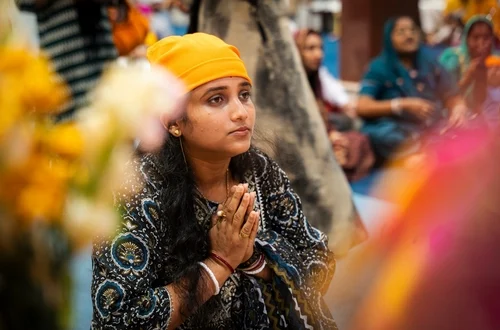
On the main day, gurdwaras hold special prayer services known as kirtan, where hymns from the scripture are sung, often accompanied by tabla and harmonium. Attendees sit together on the floor of the prayer hall, a practice known as pangat, which reflects the Sikh principle that no one is above another, regardless of social status, wealth, or background.
Many UK gurdwaras also host evening programmes featuring lectures on Guru Nanak’s teachings, aimed particularly at engaging younger members of the community who may be more familiar with life in Britain than with Sikh history in Punjab.
Why Is Langar Central to Gurpurab Celebrations?
No description of Guru Nanak Gurpurab would be complete without langar, the free community kitchen found in every gurdwara. Langar is open to absolutely everyone—Sikh or not, visitor or regular attendee—and serves vegetarian meals prepared and served entirely by volunteers.
The tradition dates back to Guru Nanak Dev Ji himself, who established langar to demonstrate that all people should eat together as equals, breaking down the caste and class divisions he witnessed in 15th-century India. During Gurpurab, langars across the UK scale up significantly, with volunteers preparing food for thousands of visitors over several days.
For many Sikh families in Britain, volunteering in the langar kitchen during Gurpurab is considered an act of seva, or selfless service, and is one of the most meaningful ways to mark the occasion. Choose to join the volunteering shifts if you want to experience the celebration from the inside rather than as an observer—most gurdwaras welcome help from anyone, Sikh or not, particularly during the busiest serving hours.
How Has Gurpurab Evolved for Britain’s Sikh Diaspora?
Sikh communities have lived in Britain for well over a century, with significant growth following migration from Punjab in the mid-20th century. Over that time, Guru Nanak Gurpurab has become something distinct in the UK context: a celebration rooted in Sikh tradition but shaped by British civic life.
Local councils in areas with large Sikh populations now frequently support nagar kirtan logistics, and some town centres incorporate the procession into wider community calendars. Younger generations, many of whom were born in Britain, often take active roles in organising events, blending traditional practices with activities that resonate with their own experience growing up in the UK—from social media coverage of the procession to multilingual programming inside the gurdwara.
This evolution reflects a broader pattern among diaspora communities: traditions are preserved, but they’re also adapted to fit new surroundings, creating celebrations that feel both authentically rooted and distinctly local.

Keeping the Spirit of Gurpurab Alive
Guru Nanak Gurpurab offers a window into values that resonate well beyond any single faith: generosity, equality, and community. Whether it’s the sight of a nagar kirtan procession moving through a British high street or the quiet hum of volunteers serving langar to hundreds of strangers, the festival demonstrates how tradition can thrive and adapt across generations and borders.
If you live near a gurdwara, consider attending an open event during Gurpurab. Most welcome visitors warmly, and the experience offers a genuine window into one of Britain’s richest cultural and spiritual traditions.
Frequently Asked Questions
When is Guru Nanak Gurpurab celebrated in the UK?
Guru Nanak Gurpurab follows the lunar calendar, so the date shifts each year, typically falling in November. Local gurdwaras publish exact dates for processions and services ahead of time.
Can non-Sikhs attend Gurpurab celebrations?
Yes. Nagar kirtan processions take place in public streets and are open to everyone. Gurdwaras also welcome visitors of all faiths to attend prayers and share langar, provided they observe basic customs such as covering their head and removing their shoes.
What should I wear or do if I visit a gurdwara during Gurpurab?
Visitors are asked to cover their head (scarves are usually provided), remove their shoes before entering the prayer hall, and dress modestly. Alcohol, tobacco, and meat are not permitted on gurdwara premises.
What is the difference between nagar kirtan and the main Gurpurab service?
Nagar kirtan is the public procession held in the days leading up to Gurpurab, while the main service takes place inside the gurdwara on the day itself, featuring continuous prayer readings and kirtan singing.
Why is langar offered to everyone, not just Sikhs?
Langar reflects Guru Nanak Dev Ji’s teaching that all people are equal, regardless of religion, caste, or background. Serving free meals to anyone who attends is a practical expression of that belief.