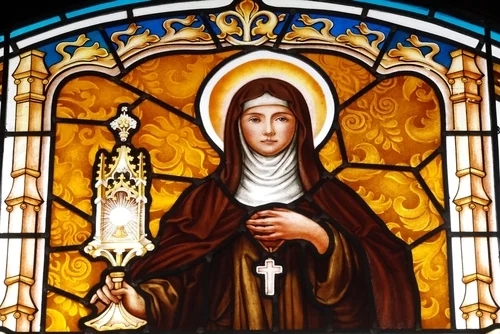
Quick answer: St Clare of Assisi’s feast day falls on 11th August each year. In 2026, it honours the founder of the Order of Poor Ladies — the Poor Clares — a devoted follower of St Francis of Assisi whose commitment to poverty, prayer, and community continues to shape Franciscan life across the United Kingdom today.
Each August, a quiet but meaningful observance takes place in convents, parishes, and Franciscan communities across the UK. It does not make the national headlines. There are no bank holidays attached to it, and no street parades. Yet for thousands of Catholics and Franciscan faithful, the Feast of St Clare of Assisi is a moment of genuine spiritual significance — a day to reflect on a woman whose radical simplicity transformed religious life in the 13th century and whose influence endures to this day.
This post explores who St Clare was, what her feast day means for UK communities in 2026, and why her legacy continues to resonate — particularly in an era that often struggles to find meaning in simplicity.
Who Was St Clare of Assisi?
Born in 1194 in Assisi, Italy, Clare Offreduccio came from a wealthy noble family. By all accounts, she was on a path to a comfortable, conventional life. That changed when she heard Francis of Assisi preach. Moved by his message of poverty and devotion to God, she left her family home in 1212 — at just 18 years old — and placed herself under Francis’s spiritual guidance.
She founded what would become known as the Order of Poor Ladies, later called the Poor Clares. The community she established at San Damiano in Assisi was built on an uncompromising commitment to communal poverty: no personal property, no communal endowments, and a life entirely sustained by charitable donations. This was radical for women’s religious life at the time. Clare fought for decades to have her Rule — known as the Rule of St Clare — formally approved by the Pope. She succeeded just two days before her death in 1253.
Pope Alexander IV canonised her in 1255, just two years after she died. In 1958, Pope Pius XII declared her the patron saint of television — a quirk of Catholic sainthood tied to a story in which Clare reportedly witnessed a Christmas Mass through a vision projected onto her wall when she was too ill to attend.

What Is the Feast of St Clare of Assisi and When Is It in 2026?
The Feast of St Clare of Assisi is observed on 11th August each year. In 2026, this falls on a Tuesday.
As a liturgical feast within the Roman Catholic calendar, it is celebrated with Mass, prayer, and community reflection. It is not a public holiday in the UK, but it holds a fixed place in the Catholic liturgical year, observed by parishes affiliated with the Franciscan tradition and communities of Poor Clare sisters.
How Is St Clare’s Feast Day Observed in the United Kingdom?
The UK has a quiet but well-established Franciscan presence. Poor Clare monasteries operate across England, Scotland, and Wales, including communities in Arundel, Woodchester, and Ellesmere. On 11th August, these communities celebrate a solemn liturgy in honour of their founder.
In parishes with Franciscan connections, the feast is often marked by:
- A special Mass dedicated to St Clare, sometimes followed by a communal gathering
- Readings and homilies focused on her spirituality and the Franciscan charism of poverty and joy
- Prayer vigils in monastic communities, particularly those of the Poor Clares
- Educational events in Catholic schools, where St Clare’s story is used to explore themes of faith, courage, and simplicity
For lay Franciscans — members of the Secular Franciscan Order — the feast is a day to renew their commitment to Franciscan values in everyday life.
Why Does St Clare’s Legacy Still Matter Today?
There is something strikingly countercultural about St Clare’s life. She chose poverty not as deprivation but as freedom. She believed that owning nothing created space for everything that mattered: prayer, community, and service to others.
This message has not faded. In fact, for many people navigating a culture saturated with consumption and digital distraction, Clare’s example offers a different kind of clarity.
Her insistence on the “Privilege of Poverty” — her term for the right to own nothing — was not passivity. It was a bold, sustained campaign that lasted decades. She wrote to Pope Gregory IX, Pope Innocent IV, and others, defending her Rule with patience and conviction. She was, by any measure, a determined reformer.
For UK Franciscan communities, she represents both the origins of their tradition and a living challenge: to live lightly, love generously, and resist the pull of accumulation.

How Do Poor Clare Communities in the UK Differ from Other Monastic Orders?
The Poor Clares are a contemplative order, meaning their primary vocation is prayer rather than active ministry such as teaching or nursing. Life inside a Poor Clare monastery centres on the Liturgy of the Hours — structured prayer at set times throughout the day — alongside manual work, silence, and communal life.
Unlike some other orders, Poor Clare monasteries in the UK typically observe enclosure, meaning the sisters do not leave the monastery grounds except in specific circumstances. Their connection with the wider world comes through prayer and occasional correspondence rather than direct outreach.
This distinguishes them from, say, Franciscan Friars or the Sisters of St Francis, who engage more actively in parish ministry, education, and social work.
What Can People Outside the Franciscan Tradition Take From St Clare’s Story?
St Clare’s story does not require a religious framework to carry meaning. Her life raises questions that anyone might find worth sitting with.
What does it look like to commit fully to something? How do we hold onto our convictions when institutions push back? What is the relationship between simplicity and fulfilment?
She spent 41 years as leader of her community, never wavering from the principles she had adopted as a teenager. That kind of consistency — tested repeatedly by illness, opposition, and circumstance — is worth reflecting on regardless of one’s faith.
A Day Worth Marking in 2026
The Feast of St Clare of Assisi on 11th August 2026 will pass quietly for most people in the UK. But in monasteries, parishes, and Franciscan communities up and down the country, it will be a day of genuine celebration — honouring a woman who changed the shape of women’s religious life and whose message of joyful simplicity remains as clear as her name suggests.
Whether you are part of a Franciscan community, exploring the Catholic tradition, or simply curious about the figures behind these feast days, St Clare’s story is worth knowing.

Frequently Asked Questions
When is St Clare of Assisi’s feast day in 2026?
St Clare of Assisi’s feast day is on 11th August. In 2026, this falls on a Tuesday.
Who was St Clare of Assisi?
St Clare of Assisi (1194–1253) was an Italian saint and close follower of St Francis of Assisi. She founded the Order of Poor Ladies — now known as the Poor Clares — and is celebrated for her lifelong commitment to poverty and contemplative prayer.
Is St Clare of Assisi’s feast day a public holiday in the UK?
No. The Feast of St Clare of Assisi is not a public holiday in the United Kingdom. It is a liturgical observance within the Catholic and Franciscan tradition, marked by Mass and prayer in religious communities.
Where are Poor Clare monasteries located in the UK?
Poor Clare communities in the UK include monasteries in Arundel (West Sussex), Woodchester (Gloucestershire), and Ellesmere (Shropshire), among others. Each community observes the feast of their founder on 11th August.
What is St Clare of Assisi the patron saint of?
St Clare is the patron saint of television, eye disease, embroiderers, and laundry workers. She was declared patron saint of television by Pope Pius XII in 1958, based on the tradition that she once witnessed a distant Mass through a miraculous vision.
What is the Rule of St Clare?
The Rule of St Clare is the governing document of the Poor Clare order, written by Clare herself. It emphasised strict communal poverty with no property ownership. It was formally approved by Pope Innocent IV in 1253 — just two days before Clare’s death.