Quick answer: Rosh Hashanah 2026 begins at sundown on Wednesday, 9th September and ends at nightfall on Friday, 11th September. It marks the Jewish New Year, a two-day holiday observed with prayer, family gatherings, festive meals, and the sounding of the shofar.
The Jewish New Year is one of the most meaningful occasions in the Jewish calendar. Rosh Hashanah 2026 offers a moment to pause, reflect, and celebrate—whether you’re observing for the first time or continuing a lifelong tradition.
This guide covers everything you need to know: when Rosh Hashanah 2026 falls, what it means, how it’s celebrated, and how you can mark the occasion, wherever you are in the world.

When Is Rosh Hashanah 2026?
Rosh Hashanah 2026 begins at sundown on Wednesday, 9th September 2026 and concludes at nightfall on Friday, 11th September 2026.
Like all Jewish holidays, Rosh Hashanah follows the Hebrew calendar, which is lunar-based. That’s why the date shifts each year on the Gregorian calendar. The holiday always falls on the first and second days of Tishrei, the seventh month of the Hebrew year. In 2026, that corresponds to Rosh Hashanah marking the start of the Hebrew year 5787.
Why Does the Date Change Every Year?
The Hebrew calendar is based on the cycles of the moon, with periodic adjustments to align with the solar year. This means Jewish holidays fall on different Gregorian dates annually, but always within a predictable seasonal range. Rosh Hashanah typically occurs between early September and early October.
What Is Rosh Hashanah?
Rosh Hashanah translates directly from Hebrew as “head of the year.” It is the Jewish New Year, but it carries a deeper significance than a simple calendar change.
Rosh Hashanah marks the anniversary of the creation of the world, according to Jewish tradition. More importantly, it opens a ten-day period of reflection and repentance known as the Days of Awe (Yamim Noraim), which culminates in Yom Kippur—the Day of Atonement. Together, these days are considered the holiest period in the Jewish year.
Rosh Hashanah is a time to take stock. To think about the past year, acknowledge mistakes, and set intentions for the one ahead. It’s both solemn and celebratory—a combination that makes it unlike most New Year traditions around the world.

How Is Rosh Hashanah 2026 Celebrated?
The Sounding of the Shofar
The most distinctive element of Rosh Hashanah is the blowing of the shofar—a ram’s horn—during synagogue services. The shofar produces a series of specific calls, each with its own name and pattern:
- Tekiah: A single, long blast
- Shevarim: Three shorter, broken blasts
- Teruah: Nine rapid, staccato notes
- Tekiah Gedolah: One extended, unbroken blast
The sound of the shofar is meant to awaken the spirit, signal the New Year, and call the community to reflection. It’s one of the most recognisable sounds in Jewish life.
Synagogue Services
Rosh Hashanah synagogue services are among the longest of the year. They include special prayers, Torah readings, and the Musaf Amidah—a prayer unique to Rosh Hashanah that includes themes of God’s sovereignty, remembrance, and revelation. Many synagogues hold both evening services (beginning at sundown on 9th September) and morning services on the 10th and 11th.

Festive Meals and Symbolic Foods
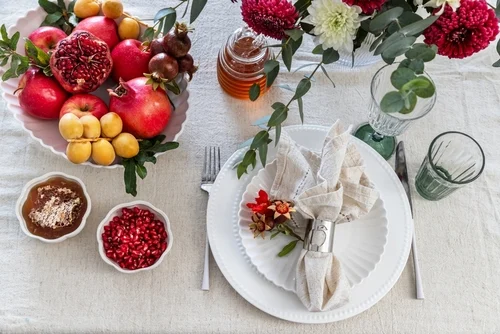
Food plays a central role in Rosh Hashanah. Families gather for festive meals filled with dishes that carry symbolic meaning. The most well-known tradition is dipping apple slices in honey, representing hopes for a sweet new year.
Other traditional foods include:
- Round challah bread – symbolising the cycle of the year
- Pomegranate – its many seeds represent the hope for a year full of good deeds
- Fish or lamb’s head – symbolising the wish to be at the “head” rather than the “tail” in the year ahead
- Dates, leeks, and beets – each paired with a Hebrew blessing and wordplay
A common greeting during this time is “Shanah Tovah” (שנה טובה), meaning “a good year,” or the longer “L’Shanah Tovah Tikatevu”—”May you be inscribed for a good year.”
Tashlich
One of the most poignant Rosh Hashanah customs is Tashlich, typically performed on the afternoon of the first day. Communities gather near a body of flowing water—a river, stream, or sea—and symbolically cast away their sins by throwing breadcrumbs or small stones into the water. The practice comes from the Book of Micah: “You will cast all their sins into the depths of the sea.”

What to Wear and How to Prepare
Dress for the Occasion
Many Jewish communities wear white clothing on Rosh Hashanah, symbolising purity and a fresh start. Others simply dress in their best attire, reflecting the significance of the occasion.
Greet People Respectfully
If you have Jewish friends, colleagues, or family members, a warm “Shanah Tovah” goes a long way. It’s a thoughtful and inclusive gesture that shows respect for the holiday.
Sending Greetings from Abroad
For many Jewish families, Rosh Hashanah is a time to connect across distances. If you’re sending money home to support a family celebration—whether to help cover a festive meal, a gift, or synagogue dues—timing matters. Sending funds in advance of 9th September 2026 ensures your loved ones can prepare without stress.
Rosh Hashanah Around the World
Rosh Hashanah is observed by Jewish communities across the globe, from Tel Aviv to Toronto, London to Buenos Aires. While the core traditions remain consistent, local customs and foods vary by community.
Ashkenazi communities (with roots in Eastern Europe) often serve honey cake, tzimmes (a sweet carrot dish), and round challah. Sephardi communities (with roots in Spain, North Africa, and the Middle East) may hold a Seder plate—similar in concept to Passover—featuring symbolic foods, each accompanied by a blessing.
In Israel, Rosh Hashanah is a national public holiday. Schools, businesses, and government offices close for the duration of the holiday. In the diaspora, observance varies, but many Jewish people take time off work to attend services and be with family.

The Days of Awe: What Comes After Rosh Hashanah?
Rosh Hashanah opens the Ten Days of Repentance, a period of introspection that ends with Yom Kippur on 21st September 2026. These ten days are considered a time when individuals can reflect on their actions, seek forgiveness from those they’ve wronged, and make amends before the year is “sealed.”
The tradition holds that on Rosh Hashanah, God opens the Book of Life, and on Yom Kippur, it is sealed. How a person lives and behaves during these ten days can influence that judgment.
For many Jewish people, this period is taken seriously—not with fear, but with purpose. It’s a structured opportunity for personal growth that has few equivalents in other traditions.
A Final Word on Rosh Hashanah 2026
Rosh Hashanah is a time of meaning, community, and hope. Whether you’re observing the holiday yourself or simply looking to understand it better, knowing what it represents helps you connect more genuinely with those who celebrate it.
Rosh Hashanah 2026 runs from sundown on 9th September to nightfall on 11th September. Mark it in your calendar, share a greeting with someone you care about, and—if the occasion calls for it—make sure any support you’re sending to loved ones arrives in time to be part of the celebration.
Shanah Tovah.
Frequently Asked Questions About Rosh Hashanah
When does Rosh Hashanah 2026 start and end?
Rosh Hashanah 2026 begins at sundown on Wednesday, 9th September 2026 and ends at nightfall on Friday, 11th September 2026.
What Hebrew year does Rosh Hashanah 2026 begin?
Rosh Hashanah 2026 marks the beginning of the Hebrew year 5787.
Is Rosh Hashanah a public holiday in the UK?
Rosh Hashanah is not a public bank holiday in the UK. However, many Jewish employees take personal leave to observe the holiday, and schools with significant Jewish populations may acknowledge the occasion.
What is the difference between Rosh Hashanah and Yom Kippur?
Rosh Hashanah is the Jewish New Year—a celebratory and reflective holiday. Yom Kippur, which falls ten days later (21st September 2026), is the Day of Atonement, observed with fasting and prayer. Together, they form the holiest period in the Jewish calendar.
What do you say to someone celebrating Rosh Hashanah?
The most common greeting is “Shanah Tovah,” meaning “a good year.” A longer version, “L’Shanah Tovah Tikatevu,” means “May you be inscribed for a good year.”
Can non-Jewish people attend Rosh Hashanah services?
Many synagogues welcome guests, though it’s best to check with the specific synagogue in advance. Dress modestly and arrive early, as services can be long and well-attended.
What foods are traditionally eaten on Rosh Hashanah?
The most iconic Rosh Hashanah food is apple dipped in honey. Other traditional dishes include round challah bread, pomegranate, fish or lamb’s head, and various sweet foods that symbolise hopes for a good year ahead.