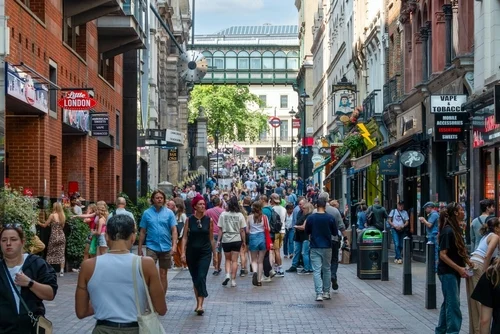
London’s population in 2026 is estimated at approximately 9.8 million people, based on the Greater London Authority (GLA), or 9.15 million according to Office for National Statistics (ONS) mid-year estimates covering the 32 London boroughs plus the City of London. The exact figure depends on how you define “London” and whether short-term residents are counted.
If you’re thinking of moving to the city, or you’re simply curious about how it’s changed, this Remitly guide walks through where the figure comes from, why different sources report different numbers, and what London’s growth means for housing, transport, and daily life.
Quick answer: London’s population is about 9.8 or 9.15 million in 2026, according to The Greater London Authority or ONS 2025 mid-year estimates covering Greater London’s 32 boroughs and the City of London. Figures vary between sources because 2026 falls between the 2021 and 2031 Censuses, and because “London” can mean different things depending on the boundary used.

London’s population in 2026: the current estimate
Two organisations publish the figures most people rely on. The Office for National Statistics (ONS) releases mid-year population estimates for local authorities, building on the 2021 Census. The Greater London Authority (GLA) produces its own projections, which it uses to plan services such as housing, schools, and transport across the capital. The GLA puts the figure at 9.8 million, while the ONS estimates 9.15 million, though the exact figure shifts slightly depending on publication date and methodology.
Because 2026 falls between the 2021 Census and the next one due in 2031, every figure you see for this year is an estimate rather than a full count. The ONS and GLA update their estimates each year using birth, death, and migration data, so the number naturally moves as new information comes in.
How London’s population has changed over time
Back in 2011, London’s population sat at around 8.1 million. By the 2021 Census, that figure had grown to 8,796,628 — a rise of roughly 8.6% over the decade, or just under 1% a year on average. While the 2026 GLA projection says 9.8 million people live in the UK capital. Even with a slight dip during the COVID-19 pandemic, the numbers have continued to move upwards since. Despite lockdowns, rising costs, and ongoing housing shortages, newcomers haven’t been deterred from coming to London, which remains a beacon of hope for people around the world looking for opportunities.
Whether London reaches 10 million before the 2031 Census will depend on future migration and birth trends. GLA’s long-term population projections, published through the London Datastore, are the most reliable way to track this as new figures come out.
Why different sources give different population figures
How you define “London” changes the number significantly. Here’s what each term actually covers:
- City of London: the historic financial district at the city’s core, with a resident population of only around 9,000, even though hundreds of thousands more work there each day.
- Inner London: the boroughs closest to the centre, including Camden, Islington, and Tower Hamlets, generally the most densely populated part of the city.
- Outer London: the ring of boroughs further from the centre, from Croydon to Harrow, covering most of the city’s land area and home to over half its residents.
- Greater London: all 32 boroughs plus the City of London combined — the figure most people mean when they ask how many people live in London, currently around 9.8 million.
- The London metropolitan area: Greater London plus surrounding commuter towns across the South East, which adds several million more people who work in the city but live outside its boundary.
The UK carries out a full census only once every ten years, with the next one due in 2031. In between, the ONS and GLA rely on estimates. These figures also count only usual residents, so the number of people in London during the day can swell significantly once commuters, students, and short-term migrants are added in, and estimates can undercount these floating groups.
The floating population: students, commuters, and short-term residents
London is home to a large number of universities and higher education colleges, and its international student population remains one of the largest of any UK city, approximately 500,000 to 600,000 in 2024, adding demand for housing and transport that doesn’t show up in resident figures. Estimates suggest that somewhere between 400,000 and 500,000 people commute into Greater London each day from outside the city, adding further to its daytime population without appearing in resident estimates at all. The number of people seeking asylum in the UK also changes from year to year; the most current figures are published by the Home Office and are worth checking directly if you need an exact count for London specifically. None of these groups show up in the ONS resident population estimate, but they still affect demand for housing, transport, and public services across the city.

What’s driving London’s population growth?
Three main forces shape London’s population each year, in order of scale:
- Net international migration. People moving to London from outside the UK remain the single biggest driver of growth, a pattern the ONS has confirmed consistently in its Population Estimates for Local Authorities bulletins.
- Natural population change. The difference between births and deaths in London adds a smaller but steady number of residents each year, reflecting the city’s relatively young population.
- Net internal UK migration. More people typically move out of London to other parts of the UK than move in, which slightly offsets growth from migration and births, particularly among families looking for more space.
Which London boroughs are growing fastest?
Growth isn’t even across London’s boroughs. Areas going through large-scale regeneration and new housing development, such as Tower Hamlets, Islington, and Camden, have seen some of the fastest population increases in recent years, while outer boroughs including Barnet, Croydon, Bromley, and Havering continue to attract families drawn by more space and comparatively lower housing costs. Many of these areas are also among some of the UK’s most diverse neighbourhoods, which is part of what continues to draw newcomers to them. For the most current borough-by-borough breakdown, the GLA’s own population projections and ONS local authority estimates are the most reliable sources to check.

What London’s population means for housing, infrastructure, and daily life
Greater London covers around 1,572 square kilometres, which at roughly 9.8 million residents works out to about 6,300 people per square kilometre — among the most densely populated areas in the UK.
Housing costs and rents in London are higher than almost anywhere else in the UK, according to ONS Private Rental Market Statistics, the average London rent is £1,495 per month. It’s worth checking HM Land Registry’s UK House Price Index or ONS’s Private Rental Market Statistics directly for the most current numbers in your borough of interest. Our guide to budgeting for the cost of living can help you plan around whatever the current figures show.
More residents also mean more pressure on services—from the Tube to GP surgeries. NHS waiting lists in London, as in the rest of the country, have grown longer in recent years, and peak-time journeys on the Underground are only getting busier, even with newer links like the Elizabeth line easing some of the strain. If you’re new to the city, it’s worth understanding how the NHS and the UK’s wider healthcare system work before you need them.
Living in a growing city: practical considerations
If you’re weighing up a move to London, a few practical points are worth keeping in mind:
- Think about the long term. Lower rent in an up-and-coming area can be appealing, but it’s worth considering how population growth might affect property values, commute times, and future rental agreements before you commit.
- Stay flexible on location. New developments can transform a neighbourhood within a few years, sometimes bringing new transport links and amenities that weren’t there when you first looked.
- Weigh up all your options, including shared housing. Living further out and commuting a little longer can be more affordable than living centrally, and for many newcomers, shared living accommodation is a practical way to keep costs down while you settle in.
- Factor in transport zones. Travelcard and Oyster costs rise the further out you go from Zone 1, so it’s worth weighing this against any savings on rent before choosing where to live.
- Keep an eye on the data yourself. The GLA’s London Datastore and the ONS both publish updated population and housing figures throughout the year, which can help you track how your borough is changing over time.
For more general guidance on settling in beyond London specifically, our tips for moving to the UK cover the basics of getting started.

Frequently asked questions about London’s population
What is London’s population in 2026?
London’s population in 2026 is estimated at approximately 9.8 million people, based on GLA estimates. This covers Greater London’s 32 boroughs plus the City of London; other definitions of “London,” such as the wider metropolitan area, produce a higher number.
What’s the difference between Greater London and other definitions of London?
Greater London refers to all 32 boroughs plus the City of London, and it’s the figure most population statistics use. Inner London, Outer London, and the City of London are smaller subsets of that area, while the London metropolitan area also includes surrounding commuter towns outside Greater London’s boundary.
Is London’s population still growing?
Yes. London’s population has grown fairly steadily since the 2011 Census, aside from a temporary dip during the COVID-19 pandemic. Net international migration remains the biggest driver, though more people typically move out of London to other parts of the UK each year than move in.
Which London boroughs are growing the fastest?
Boroughs undergoing large-scale regeneration, such as Tower Hamlets, Islington, and Camden, have seen strong population growth in recent years. Outer boroughs like Barnet and Croydon are also growing as families look for more space. The GLA publishes updated borough-level projections regularly.
How does London compare to other major European cities?
London is one of the largest cities in Europe by population, generally ranked among the continent’s most populous urban areas. Exact rankings shift depending on whether you compare city boundaries or wider metropolitan areas, which is part of why direct city-to-city comparisons can be tricky.
Why is it hard to get an exact population count for London?
London’s population is estimated rather than directly counted, except once a decade during the Census. Estimates also have to account for commuters, students, and short-term residents who live in the city for part of the year but aren’t captured as usual residents.
Key takeaways
- London’s population in 2026 is estimated at around 9.8 million people, based on GLA mid-year estimates covering Greater London’s 32 boroughs and the City of London.
- Net international migration is the largest driver of London’s growth, consistently identified as such in ONS population data.
- Boroughs undergoing regeneration, including Tower Hamlets, Islington, and Camden, have seen some of the strongest recent population growth.
- Population figures vary between sources mainly because of differing geographic boundaries, and because 2026 falls between the 2021 and 2031 Censuses.
- The next full Census is due in 2031, when current estimates will be replaced with an official count.
London’s population isn’t likely to stop growing any time soon. GLA’s long-term projections point to continued growth over the next decade, shaped mainly by international migration and the city’s ongoing appeal as a place to study, work, and build a life.
Whether you’re moving to London for the first time or you’ve called it home for years, understanding these numbers can help you plan more confidently — from choosing where to live to budgeting for the years ahead. Many of the people who move here each year are settling into a new financial life at the same time, which is something we help customers with every day. We hope this guide has helped make sense of a number that looks simple on the surface but rarely is.