How immigrants celebrate their culture in the UK
Immigrants celebrate their culture in the UK through major public festivals such as the Notting Hill Carnival, Diwali, Eid, Vaisakhi, and Chinese New Year, alongside everyday practices like food, faith, language, and music. Observed by millions of people each year, these traditions are now woven into the fabric of British cultural life.
This guide covers South Asian, Caribbean, Chinese, African, and Eastern European communities, with examples from London, Leicester, Birmingham, Bradford, Glasgow, and Cardiff, grounded in the Office for National Statistics 2021 Census, Migration Observatory research at the University of Oxford, and named community organisations rather than general impressions.
At Remitly, we see this in the communities we work alongside every day, and we hope this guide helps you feel more connected to the celebrations shaping life across the UK, whether you’re new here or exploring a culture close to home.

The biggest cultural festivals celebrated by immigrant communities in the UK
These are some of the largest annual celebrations, each shaped by the community that brought it to Britain:
- Notting Hill Carnival (London): Europe’s largest street festival, held each August bank holiday weekend in west London. The Royal Borough of Kensington and Chelsea reports hundreds of thousands of visitors following steel bands, calypso, and masquerade troupes past stalls selling jerk chicken and rum punch.
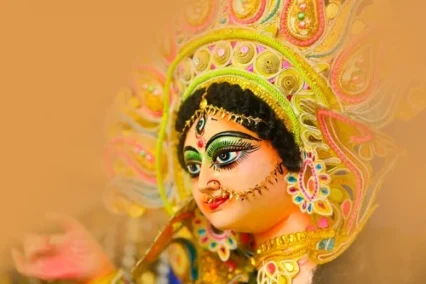
- Diwali (Leicester and nationwide): The five-day Hindu, Sikh, and Jain ‘Festival of Lights’ fills homes and streets with candles, rangoli patterns, and fireworks each autumn. Leicester’s Belgrave Road hosts one of the largest Diwali celebrations outside India (Leicester City Council reported around 20,000 people at its lights switch-on alone).
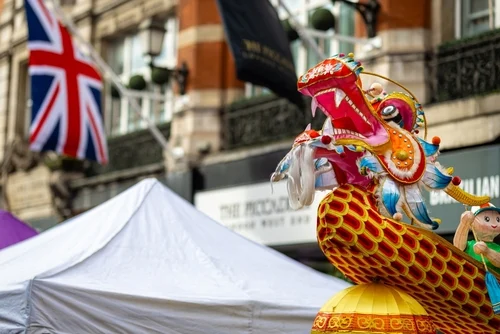
- Chinese New Year (London, Manchester, and Liverpool): Lunar New Year brings lion dances, red lanterns, and food stalls to Chinatowns across the UK, marking a tradition that Chinese communities here have kept alive for generations.
- Eid al-Fitr and Eid al-Adha (nationwide): These mark the end of Ramadan and the annual Hajj pilgrimage for Muslim communities, who number around 3.9 million people in England and Wales according to the 2021 Census. Families gather for prayers, share festive meals, and give to charity, with major celebrations in Birmingham, Bradford, and London.
- Africa Oyé (Liverpool): Held in Sefton Park each June, Africa Oyé is described as the UK’s largest celebration of live African music and culture, drawing more than 50,000 people in recent years with international artists, food stalls, and crafts representing the African diaspora.
- Vaisakhi (Birmingham, Leicester, and Glasgow): Sikh communities mark the founding of the Khalsa each spring with processions, community meals, and traditional dress, drawing large gatherings across cities with significant Sikh populations.

Everyday cultural practices: how immigrant heritage lives beyond the festival calendar
Culture isn’t only expressed at annual festivals. For many immigrants, it’s part of daily life — in what they eat, how they worship, the languages they speak at home, and the art they create.
Food and cuisine

British food culture has been reshaped by immigrant cooking, from halal butchers on high streets to the South Asian takeaways that dominate the UK’s curry houses. Caribbean, West African, and Middle Eastern grocers stock ingredients once hard to find outside major cities and now common in supermarkets nationwide. Fusion dishes, like chicken tikka masala, jerk-spiced Sunday roasts, halal Chinese takeaways, show immigrant and British cooking blending into something distinctly new.
Faith and worship
Mosques, temples, gurdwaras, synagogues, and churches share the UK’s streets, and do far more than host prayer. Around 3.9 million people in England and Wales identify as Muslim, according to the 2021 Census, and places of worship across faiths often run English classes, welfare support, food banks, and rite-of-passage ceremonies such as naming days and weddings; community hubs as much as places to pray.
Language and identity

According to the 2021 Census, 5.1 million people in England and Wales reported a main language other than English, and nearly 80% said they could speak English well or very well. Many families keep their first language alive at home and through weekend mother-tongue schools, even as English dominates public life. In London, this mix has helped shape Multicultural London English, a distinct way of speaking documented by researchers at the University of York and Queen Mary University of London, now heard well beyond its original communities.
Art, music, and creative expression

Immigrant communities have shaped entire genres of British music. Grime and UK drill grew out of London’s Caribbean and West African diaspora, bhangra fused Punjabi folk rhythms with British club culture, and jungle and drum and bass drew heavily on Jamaican sound-system traditions. Companies such as Tara Theatre, the UK’s first British Asian theatre company, and Kiln Theatre in north-west London continue to stage work rooted in immigrant experience, while community exhibitions elsewhere give younger generations a way to tell their own stories.
Rites of passage and family ceremonies

Major life events often blend heritage with British context. A British-Pakistani couple might hold a nikah alongside a UK civil registry ceremony; West African families sometimes mark a baby’s arrival with an outdooring ceremony in a UK home; and Caribbean and South Asian weddings often stretch across several days of ritual. These blended ceremonies aren’t a compromise; they let families honour where they came from while building a life fully rooted in Britain and help pass identity on to children born here.
How immigrant communities have shaped British culture
Britain’s cultural identity is inseparable from its immigrants. Around 16% of people in the UK — about 10.7 million — were born abroad, according to the Migration Observatory at the University of Oxford. After the Second World War, the Windrush Generation and other arrivals filled critical shortages in the NHS, public transport, and manufacturing, laying groundwork for industries the UK still relies on today.
Sport tells a similar story: Mo Farah, who arrived in the UK as a child refugee from Somalia, went on to become one of Britain’s most decorated Olympians. Sociologist Steven Vertovec uses the term ‘super-diversity’ to describe how the UK’s mix of nationality, ethnicity, religion, and migration history has grown more layered than in earlier decades — and it’s this complexity, not one wave of arrivals, that continues to shape modern Britain.

Organisations and spaces that support cultural preservation in the UK
- Black Cultural Archives (Windrush Square, London): holds the national collection on Black British history and culture.
- Migration Museum (London): tells the story of migration to Britain through a changing programme of exhibitions.
- Migrant Voice: trains immigrants in media skills so they can share their own experiences in the press.
- Refugee Action and Migrants’ Rights Network: campaign for fair treatment for immigrants and coordinate local cultural projects.
- The Well Multi-Cultural Resource Centre (Govanhill, Glasgow): supports the area’s more than 50 nationalities with advice and language help.
- Tiger Bay and the World (Cardiff): preserves the history of Butetown, one of the UK’s oldest multi-heritage dockside communities.
These centres often combine English classes, benefits guidance, and cultural events, a practical first stop when settling into a new part of the UK.

Navigating dual identity: challenges and opportunities for immigrant communities in the UK
Growing up between two cultures often means holding both at once, rather than choosing one. Many second-generation Britons speak one language at home and another at school, follow family traditions alongside British ones, and build an identity that draws on both without needing to pick a side.
Events like Black History Month and South Asian Heritage Month give this everyday reality a public stage, celebrating heritage while affirming it’s fully compatible with British identity. Research from bodies such as the Runnymede Trust points to community networks, faith groups, and mentors as some of the most effective supports for young people navigating both worlds at once.

FAQs
How do immigrants celebrate their culture in the UK?
Immigrants in the UK celebrate through public festivals such as Notting Hill Carnival, Diwali, and Eid, and through daily practices including food, faith, language, and music. These traditions are visible in local businesses, places of worship, and community centres across cities including London, Leicester, Birmingham, and Glasgow.
What are the biggest cultural festivals celebrated by immigrant communities in the UK?
The largest include Notting Hill Carnival in London, Diwali in Leicester, Chinese New Year in London and Manchester, Eid al-Fitr and Eid al-Adha nationwide, Africa Oyé in Liverpool, and Vaisakhi in cities with large Sikh communities such as Birmingham and Glasgow. Each combines music, food, and public gatherings.
How has immigration shaped British culture?
Immigration has reshaped British food, music, and language, from curry houses and Caribbean grocers to genres such as grime and bhangra. Around 16% of the UK population (about 10.7 million people) was born abroad, according to the Migration Observatory at the University of Oxford.
Which immigrant communities are largest in the UK?
According to the 2021 Census, South Asian, Black African, Black Caribbean, and Eastern European communities are among the largest immigrant groups in England and Wales. Around 3.9 million people identified as Muslim, reflecting the scale of South Asian and Middle Eastern communities in particular.
How is immigrant heritage preserved in the UK?
Organisations such as the Black Cultural Archives, the Migration Museum, and regional groups like The Well in Glasgow and Tiger Bay and the World in Cardiff document and celebrate immigrant history. Community centres, weekend language schools, and cultural festivals also help pass heritage on to younger generations.
Does multiculturalism work in the UK?
Immigrants work in large numbers in key sectors like the NHS, logistics, public transport, farming, education, the care sector and construction, helping fill ongoing labour shortages. Cultural exchange happens daily through food, faith, and shared celebrations, and organisations such as the Runnymede Trust continue to track how integration and identity develop across the UK.
What role does food play in immigrant culture in the UK?
Food is one of the most visible ways immigrant culture shows up in daily British life, from halal butchers and South Asian takeaways to Caribbean and West African grocers now common on UK high streets. Fusion dishes like chicken tikka masala show how immigrant and British cooking have blended into something new.
Key takeaways: celebrating culture as an immigrant in the UK
- Immigrant culture in the UK isn’t confined to festivals, it shows up in food, faith, language, and family life every day.
- Notting Hill Carnival, Diwali, and Eid now draw hundreds of thousands of people well beyond the communities that started them.
- Around 16% of people in the UK were born abroad, a history embedded in everything from British music genres to the NHS workforce.
- Second and third-generation Britons increasingly hold both identities at once, supported by community organisations, faith groups, and heritage months.
- Cities beyond London (Leicester, Birmingham, Bradford, Glasgow, and Cardiff among them) host some of the UK’s richest immigrant cultural life.
If you’re building a life between two countries, we hope these traditions feel like one more sign that you belong here.
Last reviewed: 27 August 2026