Key Highlights
-
The feast day of Saint Mary Magdalene is on 22 July each year.
-
The Catholic Church marks the feast of Saint Mary Magdalene for her loyalty to Christ.
-
Mary Magdalen is one of the main women in the New Testament. She was the first witness to the Resurrection.
-
In 2016, her liturgical rank changed from memorial to feast.
-
This day shows her witness, her repentance, and how she shared the good news.
-
In the UK, churches honour her feast day with prayer, readings, and a liturgical celebration.
Introduction
The feast of Saint Mary Magdalene is one of the most important days in the Christian year. The Catholic Church celebrates it on 22 July. The day honours mary magdalene as a loyal follower of Jesus. She was the first sent to tell people about His Resurrection.
For many in the UK, this day is more than just remembering a saint. It brings thoughts of mercy, courage, and being a witness to what is real.
To see what the feast of saint mary magdalene means, it is good to learn about the woman herself.
Who Was St Mary Magdalene?
Mary Magdalene, also known as Mary Magdalen, is one of the most well-known women in the New Testament. Christian tradition shows this woman as a close follower of Jesus. She was healed by Him and changed by His kindness. People link her with deep sorrow for past wrongs, staying loyal, and having strong trust.
Some traditions say she is the same as the sinful woman and Mary of Bethany, but the Bible does not make every detail clear. What stands out is her lasting place among the Lord’s followers and those who saw what He did.
Her Role in the Life and Ministry of Jesus
Mary Magdalene is known as a disciple of the Lord. She was close to Jesus as he carried out his work. Luke tells us she was one of the women who went with him, and many say she was a devoted follower. Her life changed after Christ drove evil spirits out of her, and this change is important in how Christians see her story.
When others ran away, she stayed near the foot of the cross during the Passion. This fact matters because it shows courage, loyalty, and love, even with pain. She did not leave in the darkest time in the life of Jesus. Her faithful support makes her a good example for all believers.
On Easter morning, Mary Magdalene was the first to witness the risen Christ. She was told to take the good news to the Apostles. Because of this, she is often called “Apostle to the Apostles” and the title shows the special place she holds in Christianity.
Major Biblical Accounts of Mary Magdalene
The New Testament tells us about many big moments in the story of Mary Magdalene. In Luke 8:2, she is shown as a woman who had seven demons driven out from her. This story about evil spirits is key because it starts her life as one of Jesus’ followers.
Mary Magdalene is also there in the stories about Jesus’ suffering and death. The Gospels say she was with other women at the Crucifixion and the tomb. Her being there shows how steady and loyal she was. Although some stories later link her with the woman at the feet of Christ, the Bible does not clearly say this.
The Gospel of John shares perhaps the best-known story about her. In John 20, Mary stands and cries outside the tomb, sees Jesus alive in the garden, and then tells the disciples, “I have seen the Lord.” This is an important part in the story of Mary of Magdala and tells us about her in the New Testament.
Origins and History of the Feast
The feast day of mary magdalene takes place on 22 July during ordinary time. On this day, the church marks her role as the first to see the Resurrection and as the one who gave the message to the apostles. The day comes from early christian tradition and later became an important part of the general roman calendar.
The story behind this day also shows how people began to see her as important in the bigger story of faith. The next sections tell how Vatican support helped the feast day become more important in liturgical celebration.
From Memorial to Feast: Vatican Recognition and Liturgical Importance
A major change came on 10 June 2016, when Pope Francis approved the elevation to feast of Mary Magdalene’s celebration in the General Roman Calendar. Before that, it had been observed as a memorial. This decision placed stronger emphasis on her witness to the Resurrection and her mission to announce it.
The liturgical importance of that step was clear. Church leaders highlighted her as the first witness to the empty tomb and the first to tell the Apostles that Christ had risen. From 2020, a new preface, Apostle to the Apostles, was added for use at Mass on her feast.
|
Change |
Liturgical effect |
|---|---|
|
Memorial raised to feast in 2016 |
Gave her celebration a higher rank in the General Roman Calendar |
|
Recognition under Pope Francis |
Highlighted her role as witness and evangeliser |
|
New preface introduced from 2020 |
Strengthened the theology of her feast in the Mass texts |
The Significance of 22 July in Christian Tradition
Why 22 July? In the Christian faith, 22 July is special. On this day, people honour Mary Magdalene’s important role in the story of Easter. The feast is not about the Resurrection, which is remembered at Easter. Instead, it focuses on the woman who was the first to spread the message of the resurrection of Jesus.
On Easter morning, Mary Magdalene went to the tomb. She met the risen Christ there and took the message of the resurrection back to the disciples. That is why 22 July is set each year by the Church. It gives people time to look back at her witness and to thank her for her faithfulness.
In the early Church, people valued testimony from those who had seen the risen Christ. Mary Magdalene was the first recorded to hear and share this big news. This strong link to the resurrection of Jesus is why 22 July still holds special meaning now.
St Mary Magdalene’s Influence on Christianity
Mary Magdalene has had a big impact on Christian memory. She is known for her story of turning her life around, following Jesus, and telling what she saw. The Catholic Church honours her as someone who stayed close to Jesus. She was also the first recorded witness to the Resurrection.
For the early Church, what she saw and told others was very important. Her story helped connect the empty tomb to the fact that Jesus is alive. This is why her influence is not just for one single feast day. It is still found in Christian teaching, prayer, and symbols. The Catholic Church shows her patronage and the good example of her life to everyone even now.
Patronage and Symbolism in the Catholic Church
In the Catholic Church, the patronage of Mary Magdalene shows how Christians understand her life. People connect her to great sinners who have repented, to those who live a thoughtful life, and to jobs such as hairdressers and people who make perfumes. This comes from what Christians know of her story as a great sinner changed by grace, and as a woman who’s strong in her love for Christ.
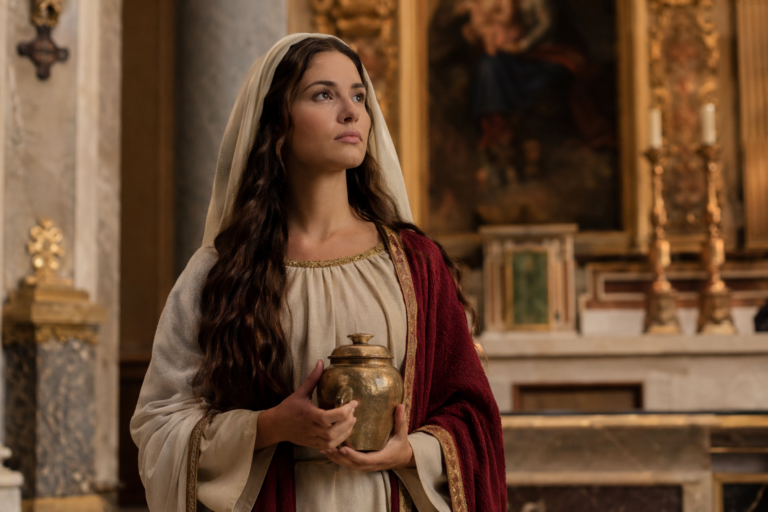
Mary Magdalene has symbols that tell us more about her. Artists and those who pray often show her with things linked to prayer, saying sorry for sins, and being a good witness. Some of these ideas come from Western tradition, where people connect her with the woman who brought an alabaster box of ointment to the Lord.
-
The alabaster box of ointment means love, saying sorry for mistakes, and thinking about burial.
-
Her long hair makes people think of later religious art and saying sorry for the past.
-
A skull or a book means thinking about death, God’s mercy, and having faith.
-
Sweet spices remind us of her work at the tomb and the blood of Christ after the Passion.
These symbols help people not just look at her old life, but also think about her change and how she kept her faith.
The Role of Mary Magdalene in Women’s Spirituality and Church Teachings
Mary Magdalene holds a special place in women’s spirituality. Her story brings together being weak, healing from pain, staying true, and having a mission. In the Catholic Church, people often talk about her as a good example of a follower who met mercy up close. She then answered this by being brave. This idea means a lot to women who want to look at the Bible for ideas on how to pray and speak about their faith.
Church teachings say she loved Christ very much, did not leave him at the cross, and told others He had risen. What she shows is that talking about faith in the Church starts when you meet Jesus yourself. Mary did not talk because she had power or a title, but because she had seen the Lord for herself.
Her special day also points to how the Holy Spirit brings up people to act as witnesses. In this way, Mary Magdalene still helps women live their faith out loud, serve others, and have a strong love of Christ.
Mary Magdalene, the Catholic Church, Holy Spirit, and love of Christ all play a part in this message.
Celebration of the Feast in the United Kingdom
In the United Kingdom, the feast of saint mary magdalene is a day for church services, prayer, and time to think. In western christianity, like the Roman Catholic and some Anglican churches, people mark the day with a liturgical celebration. They focus on how mary magdalene was there for the Resurrection and how she shared the good news.
People in each parish may celebrate in their own way, but the heart of the day does not change. On this day, they remember a woman who was changed by mercy and who went out to share the good news with others. If you want to know how this works in real life, it helps to look at what happens in church. This could be the services, readings, prayers, and other ways people join together for the feast of saint mary magdalene.
Liturgical Observances and Church Services
In the Roman Catholic Church, the feast to honour Mary Magdalene is kept on 22 July. This is set out in the General Roman Calendar. At the parish church, there can be a special feast-day Mass. This Mass has its own prayers, readings, and a preface that calls her Apostle to the Apostles. The main focus is still on the story of the Resurrection.
In the UK, some Anglican churches also keep a day for St Mary Magdalene. They follow the Book of Common Prayer or newer prayer books. The way these churches do it may change, but the main order stays the same. There is prayer, Bible reading, a sermon, and time to think about her role as a follower of Jesus.
Common ways these churches mark the day are:
-
A Mass or Eucharist that centres on John 20:11-18
-
Mary Magdalene is often named in the prayers and the sermon
-
There are special prayers and short feast songs for the day
-
There is time to talk about witness, saying sorry, and telling others about Jesus
These church services help people see her life and link it with their own trust in God.
Special Prayers, Readings, and Local Traditions
The feast of Saint Mary Magdalene has prayers and readings that focus on when she met the risen Lord in the garden. In Catholic churches, the Collect asks God to help believers share the living Christ with other people. They ask this through her example and her prayers. The Gospel reading is often taken from John 20:11-18, where she says, “I have seen the Lord.”
There are other prayers and texts used, too. The entrance antiphon brings to mind Christ’s call to her to go and tell His brothers. The Communion antiphon talks about the love of Christ. The newer preface thanks her for being the first to worship Him after He rose from the dead.
In the United Kingdom, people keep to simple, local customs. These can be:
-
Praying a Litany of Saint Mary Magdalene
-
Using feast-day readings at a weekday Mass
-
Preaching on repentance and being a witness to the Resurrection
-
Having quiet prayer times or holy hours
-
Sharing teaching on her role in Scripture
These ways all help people to mark the feast of saint mary magdalene and remember the love of christ.
Conclusion
To sum up, the Feast of St Mary Magdalene on 22 July is very important in the Christian tradition, especially in the UK. The day is special because it remembers mary magdalene as a loyal follower of Jesus and a sign of change and new beginnings. This feast brings people together through church events and local customs. It is also a time for us to think about her role, not just in the Church but in talks about women’s faith and leadership too. As you get ready to mark this day, think about how you can join in with your community and pass on the lessons of mary magdalene. Take this chance to grow in your faith and connect with others as you remember her.
Frequently Asked Questions
How do different Christian denominations in the UK commemorate St Mary Magdalene?
In the UK, the Roman Catholic Church celebrates her feast day on 22 July. There is a special Mass on that day, and the church uses proper texts. Anglican groups may remember the day. They might do this with prayers and readings. The Orthodox Church and Eastern Orthodox Church also respect her. But how calendars and services look in western Europe can be different.
What changes were made when Mary Magdalene’s memorial was elevated to a feast?
In 2016, Pope Francis made Mary Magdalene’s memorial more important in the General Roman Calendar. Now, her liturgical celebration in Ordinary Time has a higher rank. A new preface called Apostle to the Apostles was added later. This new preface helps to put more focus on the meaning of the Mass.
Why is St Mary Magdalene considered such a significant figure in Christianity?
Mary Magdalene is important because she was the first witness to see the risen Christ. She then told the disciples what she saw. Her part in the gospel of Jesus puts her at the centre of the message of the resurrection. Many Christians look up to her for the way she showed love, did not give up, and had courage. They also respect her choice to turn back to good ways.