Quick answer: The Dedication of St Mary Major is a Catholic feast day celebrated on 5 August each year. It commemorates the founding of the Basilica of Santa Maria Maggiore in Rome — the oldest church in the Western world dedicated to the Virgin Mary — and remains one of the most significant Marian observances in the Catholic liturgical calendar.
Every August, millions of Catholics around the world mark a feast day that most people in Britain have never heard of. It doesn’t have the cultural weight of Christmas or Easter, nor the widespread recognition of Assumption Day on 15 August. Yet the Dedication of St Mary Major carries deep historical and spiritual significance — and its origins are rooted in one of Rome’s most extraordinary buildings.
Whether you’re Catholic, curious about religious history, or simply interested in the traditions that have shaped European culture for over 1,600 years, the story behind this feast day is well worth knowing.
What Is the Dedication of St Mary Major?
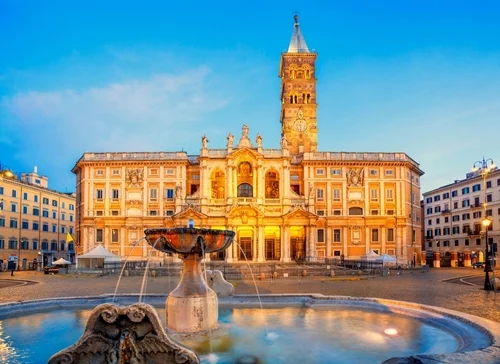
The Dedication of St Mary Major is a liturgical feast celebrated on 5 August each year. It marks the anniversary of the dedication of the Basilica of Santa Maria Maggiore in Rome — one of the four major papal basilicas and the oldest church in the Western world dedicated to the Virgin Mary.
The feast is observed within the Roman Catholic Church and appears in the General Roman Calendar. For many Catholic communities, particularly those with strong Marian devotions, it is a meaningful day of prayer and reflection.

The Legend of the August Snow
The basilica’s founding is tied to one of the most enduring legends in Church history: the Miracle of the Snow.
According to tradition, in the year 352 AD, Pope Liberius and a Roman nobleman named John both experienced the same vision on the night of 4–5 August. The Virgin Mary appeared to each of them, instructing them to build a church on Rome’s Esquiline Hill — a site that would be marked by a miraculous snowfall.
The following morning, despite it being the height of summer, snow had fallen on the Esquiline Hill. Pope Liberius took this as a divine sign and traced the outline of the future basilica in the snow himself. Construction soon began on what would eventually become Santa Maria Maggiore.
Historians note that the origins of the basilica are somewhat more complex than the legend suggests. The current structure dates largely to the pontificate of Pope Sixtus III (432–440 AD), who commissioned a major rebuilding following the Council of Ephesus in 431 AD — a council that formally proclaimed Mary as Theotokos, or “God-bearer”. The basilica was, in part, a theological statement in stone.
Still, the miracle legend has endured. To this day, on 5 August each year, a shower of white flower petals is released from the ceiling of the basilica during Mass — a beautiful recreation of that legendary snowfall.
Why Is Santa Maria Maggiore So Significant?
The Basilica of Santa Maria Maggiore is not simply old — it is extraordinary in scope and historical importance.
Located on the Esquiline Hill, one of Rome’s seven hills, the basilica has been continuously used for Christian worship since the 5th century. That makes it one of the oldest functioning churches in the world. Its nave mosaics, dating to the reign of Pope Sixtus III, are among the finest examples of early Christian art in existence.
The basilica holds the title of one of Rome’s four major papal basilicas, alongside St Peter’s Basilica, the Basilica of St John Lateran, and the Basilica of St Paul Outside the Walls. This status reflects its importance to the Catholic Church as a whole, not merely to the city of Rome.
Inside, the basilica houses what tradition identifies as relics of the manger from Bethlehem, preserved in a golden reliquary beneath the high altar. It is also the burial place of several popes, including Sixtus V and Clement VIII, and the Renaissance architect Gian Lorenzo Bernini.
How Is the Feast Celebrated?
On 5 August, the feast is marked primarily through liturgical observance. Catholics attend Mass, and in Rome, the ceremony at Santa Maria Maggiore includes the famous flower petal shower — a spectacle that draws pilgrims and tourists from across the world.
For Catholics observing the feast outside Rome, celebrations are typically more modest: a votive Mass, personal prayer and devotion to Mary, or parish events tied to the feast. In countries with strong Marian traditions — such as Italy, Poland, and parts of Latin America — the day carries considerable cultural weight alongside its religious significance.
In the UK, the feast is observed within Catholic parishes but does not carry public holiday status. It is, for many British Catholics, a quieter day of personal devotion rather than communal celebration.

What Makes 2026 Significant for This Feast Day?
The Dedication of St Mary Major in 2026 falls on Wednesday, 5 August. That year also coincides with a Jubilee Year — the Catholic Church’s Holy Year, declared by Pope Francis to begin on 24 December 2024 and continue through 2025 into 2026. Jubilee Years typically see a significant increase in pilgrimages to Rome, and the major papal basilicas — including Santa Maria Maggiore — are central to those pilgrimages.
For Catholics planning a pilgrimage to Rome in 2026, attending the feast at Santa Maria Maggiore on 5 August offers a particularly meaningful experience, combining the Jubilee indulgence with one of the Church’s most historically resonant Marian celebrations.
The Broader Significance of Marian Feast Days in the Catholic Calendar
The Dedication of St Mary Major sits within a broader tradition of Marian feasts that punctuate the Catholic liturgical year. August alone contains two major observances: the Dedication on 5 August and the Assumption of Mary on 15 August — the latter being a Holy Day of Obligation for Catholics in England and Wales.
Together, these feasts reflect the centrality of Mary in Catholic theology and devotion. The Dedication of St Mary Major, in particular, connects that devotion to a specific place and a specific moment in history: the decision, made in the 5th century, to honour Mary with one of Rome’s greatest churches.
Frequently Asked Questions
What date is the Dedication of St Mary Major in 2026?
The feast is celebrated on Wednesday, 5 August 2026. The date is fixed annually on 5 August in the Roman Catholic liturgical calendar.
Is the Dedication of St Mary Major a public holiday in the UK?
No. The feast is a religious observance within the Catholic Church and is not a public or bank holiday in the United Kingdom.
Where is the Basilica of Santa Maria Maggiore located?
The basilica is located on the Esquiline Hill in Rome, Italy. It is one of four major papal basilicas in the city and the oldest church in the Western world dedicated to the Virgin Mary.
What is the Miracle of the Snow, and how is it connected to this feast?
The Miracle of the Snow is the legendary founding story of Santa Maria Maggiore. According to tradition, the Virgin Mary appeared to Pope Liberius and a Roman nobleman in 352 AD, instructing them to build a church where snow would fall on the Esquiline Hill in August. The basilica was built on that site. Each year on 5 August, white flower petals are dropped from the basilica’s ceiling during Mass to recreate the miracle.
Is this feast observed by non-Catholic Christians?
The feast is specific to the Roman Catholic Church. It does not appear in the liturgical calendars of the Church of England, the Eastern Orthodox Church, or most Protestant traditions.
Why is 2026 a particularly significant year for Catholic observances in Rome?
2026 marks the continuation of the Catholic Jubilee Year proclaimed by Pope Francis, which began on 24 December 2024. Jubilee Years draw large numbers of pilgrims to Rome and to its major basilicas, making feast days like the Dedication of St Mary Major especially significant for those visiting the city.