Key Highlights
-
British meal times can confuse people because the meal of the day, like “dinner” and “supper”, may change by region or social class.
-
The UK has three main meals. These are breakfast, lunch, and an evening meal. The names for these meals often change in different parts of the country.
-
People in Britain also have special breaks like “elevenses”, a snack in the morning, or afternoon tea, which is a more formal break.
-
In some places, “dinner” is the midday meal. In other places, it means the evening meal. It just depends on where you are in the UK.
-
Knowing all this is helpful if you want to get around the social side of British dining.
-
The largest meal of the day may come at noon or in the evening. This shows that British eating habits have a lot of variety.
Introduction
Welcome to the world of British meal times. It can be wonderful, but also a bit confusing. If you are from Canada and travel to the UK, you may see that planning meal times is not always the same as in North America. One person may say “dinner,” someone else might call it “tea,” and another person could use the word “supper.” This guide will help you understand British meal times. Then, you will know what to expect when you are asked to join a meal in the UK.
Overview of Typical UK Meal Times and Their Names
In the United Kingdom, most people follow the same pattern for eating during the day. There are three main meals of the day. People eat breakfast between 6 a.m. and 9 a.m. Then they have lunch, sometimes called dinner, from 12 p.m. to 2 p.m. The evening meal is usually served between 5 p.m. and 7 p.m. The number of meals can go up if you include snacks or small breaks that people have during the day.
But the names for these meal times can be hard to understand. What is the main meal of the day? The answer depends on the time of day, where you are, and the words people use. In some places, the evening meal is also called dinner, and in other places it is called tea or supper. Let’s talk about the words used for the main meal and show what they mean to different people.
Breakfast, Lunch, Dinner, and Supper: What’s in a Name?
When it comes to UK meal names, context is everything. The first meal of the day is consistently called breakfast. After that, things get interesting. For many, especially in the North of England, the midday meal is called “dinner,” and the evening meal is “tea.” This can be surprising if you’re used to “dinner” being the last meal of the day.
For others, particularly in the South or among middle and upper classes, the midday meal is “lunch,” and the evening meal is “dinner.” The term “supper” also comes into play, sometimes referring to the main evening meal or, alternatively, a small, light snack eaten just before bed. These terms can mean different things to different people, making the main meal of the day a shifting concept.
Here is a simple breakdown of how the names can change:
|
Meal Time |
North of England (Working Class) |
South of England / Middle & Upper Classes |
|---|---|---|
|
Midday |
Dinner |
Lunch |
|
Evening |
Tea |
Dinner or Supper |
Unique Meals: Elevenses, Afternoon Tea, and Other Traditions
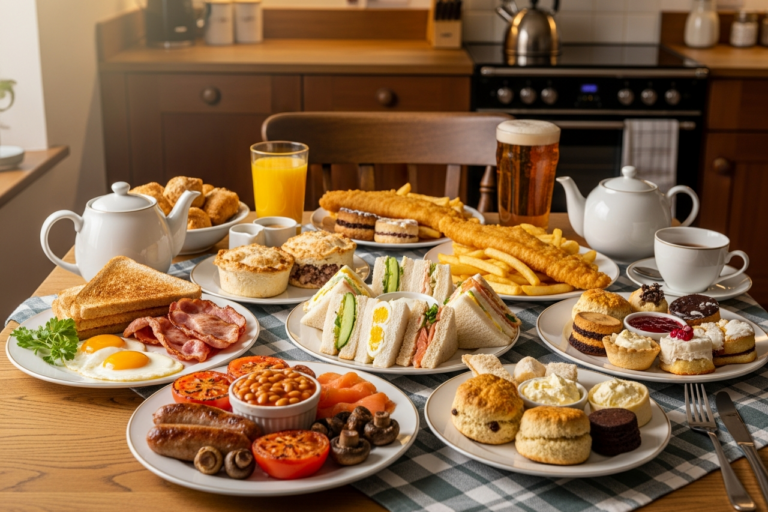
Besides the three main meals, the British are really good at taking a snack break. These snack breaks are more than just a quick bite, they are real traditions. One of the best known is “elevenses.” This short break is around 11 a.m. It is a time for a cup of tea or coffee with a biscuit or small cake. People who had a light breakfast often take this break to get a bit more energy.
Another snack break you might know is afternoon tea. It is not just a cup of tea. This light meal will be served between 3 p.m. and 4 p.m. People will have sandwiches, cakes, and a pot of tea at this time. For most people, afternoon tea is a treat and not something they do every day. The story goes that the Duchess of Bedford first started this to fill the long gap between meals.
There are some other meal breaks that you might come across:
-
Elevenses: A mid-morning tea or coffee short break.
-
Brunch: A meal in the late morning, mixing breakfast and lunch.
-
Afternoon Tea: A formal, light meal served in the late afternoon.
-
Supper (No. 2): A small snack before going to bed.
Conclusion
To sum up, looking at meal times in the United Kingdom shows how different foods and ways of eating are an important part of life there. From a big breakfast to the well-known afternoon tea, there is something for everyone. These times to eat help you get to know British culture and the way people live. Learning about meal times will not only make eating more fun, but it will help you see how life goes on every day in the UK. If you want to travel there or are just interested in how people do things differently, knowing about these traditions will help you enjoy British food even more. If you want more information or need help with meal etiquette during a trip, you can always reach out!
Frequently Asked Questions
Is there a difference between ‘dinner’ and ‘supper’ in the UK?
Yes, there is often a difference. The words you use can depend on your social class and where you live. For some people, “dinner” means the main meal they have in the evening. For others, mainly in upper-class groups, “dinner” is more of a formal event. “Supper” is seen as a more casual evening meal.
When is afternoon tea typically served in the United Kingdom?
Afternoon tea is usually in the late afternoon. Most people have it between 3 p.m. and 4 p.m. The Duchess of Bedford started this because there was a long gap from lunch to dinner. Now, afternoon tea is a nice treat for people, not something they do every day.
Are meal times the same throughout the UK, or do they vary by region?
Meal times and what people call them can change a lot by where you are in England. In the north of England, many people call the midday meal “dinner.” They say “tea” when they talk about the evening meal. In the south of England, people mostly use “lunch” for the midday meal. They call the evening meal “dinner” instead. Meal times and the words for them are not the same from one place to another.