Key Highlights
-
Discover that meal times in Spain are special. People eat two or three hours later than in Canada.
-
Lunch, called la comida, is the biggest meal of the day for Spanish people. It happens from 2:00 PM to 4:00 PM.
-
Know that a late lunch is key in the Spanish way of life. It shapes how the day goes for them.
-
There are two breakfasts in Spain. The first one is small, and the second comes on mid-morning.
-
To really enjoy Spain’s food scene, go with the local dining schedule.
-
Dinner is not so heavy. People in Spain eat it very late, sometimes after 9:00 PM.
Introduction
Are you planning to go to Spain? If you are, you will see the big cultural differences in meal times there. Many people from Canada might go out for dinner at 6:00 PM. They get a surprise when they find all the restaurants empty. Spanish people have a different meal schedule. It is a big part of their daily lives. Learning to eat at these later meal times is important if you want to get the most out of your trip. This will help you feel like you fit in with the local way of eating. This guide will show you when to eat, what to eat, and why meal times are special for Spanish people.
Comparing Canadian and Spanish Meal Schedules
If you are used to meal times in the United States or Canada, eating in Spain will feel very different. In places like the United States, dinner is the main meal and most people have it around 6:00 PM. But in Spain, and in many parts of Europe, people are on another schedule.
There are real cultural differences when it comes to when people eat. What you think is dinnertime in Canada is still the late afternoon for Spanish people. So, to get the most out of your time in Spain, it helps to let go of the way you think meal times should be. Be open to new habits and understand what shapes people’s food traditions in other places.
Let’s take a closer look at these meal times and see how and why they are not the same in Spain, the United States, and Europe.
Typical Meal Times in Spain vs. Canada
The main meals of the day in Spain are breakfast, lunch, and dinner, but their timing is quite different from what you’re used to in Canada. Breakfast is often a small, early affair, followed by a mid-morning coffee break. Lunch is the main event, happening in the mid-afternoon, while dinner is a lighter meal enjoyed late at night.
This schedule contrasts sharply with the Canadian routine, where lunch is typically a quicker meal around noon and dinner is the largest meal, served in the early evening. The Spanish dinner time can be as late as 10:30 PM or even midnight on weekends, a time when most Canadians might be winding down for the night.
Here’s a simple comparison of the time of day for each meal:
|
Meal |
Typical Time in Canada |
Typical Time in Spain |
|---|---|---|
|
Breakfast |
7:00 AM – 9:00 AM |
Before 10:00 AM (First) & 10:30 AM – 12:00 PM (Second) |
|
Lunch |
12:00 PM – 1:00 PM |
2:00 PM – 4:00 PM |
|
Dinner |
6:00 PM – 8:00 PM |
9:00 PM – 10:30 PM |
How Cultural Traditions Shape Dining Habits
The dining habits of Spaniards show the way of life in Spain. These cultural differences are not random. They happen because of traditions like the midday break. The famous “siesta” does not always mean people go for a nap. It means there is a time when businesses close. Office workers and others go home for a big family lunch. This long lunch break is a loved part of the day for social time and family time.
Spanish restaurants change their hours because of this. Many do not open for dinner until after 8:00 PM. For lunchtime, a popular option is the menu del dia. It is a set menu that gives people a complete and affordable meal. This also shows that lunch is important. Things in the middle of the day happen at a slower pace, so people can enjoy their meal.
You may see some regional changes to this across Spain. But, the main idea stays the same. There is a late lunch that is big, and later on, a smaller, light dinner. Knowing these things helps you see the way people live, and why Spaniards eat this way.
Breakfast in Spain: Early and Late Options
Breakfast in Spain is split into two parts. Many Spanish people start with a very light meal. It is often just a cup of coffee. This helps them get going before they leave home. When people have a typical Spanish breakfast, they can eat toast or a pastry.
Later on, between 10:30 AM and noon, it is time for the second breakfast. Workers often gather for this at local cafés. They will have another morning coffee and a small snack. Let’s look at what Spanish people like to eat for these morning meals and what makes each one different.
What Spaniards Eat for Breakfast
A typical Spanish breakfast is not big or heavy. It is small and simple. People often start the day with only a cup of coffee before going to work. This light meal helps get the day going without feeling too full.
If you want something more, you can still find good choices, but they will be simple. Many people like to eat toast in the morning. One favourite is pan con tomate. This dish is made when you spread a tomato and olive oil mix on top of bread. Some people also enjoy sweet pastry with their coffee.
Here are some typical Spanish breakfast items:
-
Pan con tomate: Toast with a simple mix of tomato and olive oil on top of bread.
-
Toast with butter and jam.
-
A croissant or another kind of pastry.
-
Churros dipped in thick hot chocolate, which many like to eat on weekends.
Difference Between First and Second Breakfast
The idea of having two breakfasts can be something new for people visiting. The first breakfast happens not long after you wake up. It is usually before 10:00 AM. Most times, it is simple. You may have a morning coffee, or a small pastry with it. This meal helps start the day, but you do not get too full.
The second breakfast takes place mid-morning. This is between 10:30 AM and noon. It is more like a social coffee break, and it is part of the workday for a lot of people. People often go out of their office to a nearby café. They meet with coworkers for another coffee and a bigger snack than the first breakfast.
This second meal can be a small sandwich, some toast, or light tapas. It fills the gap until late lunch. That way, no one gets too hungry while they wait for the main meal, which comes much later in the day.
Spanish Lunch: The Main Event
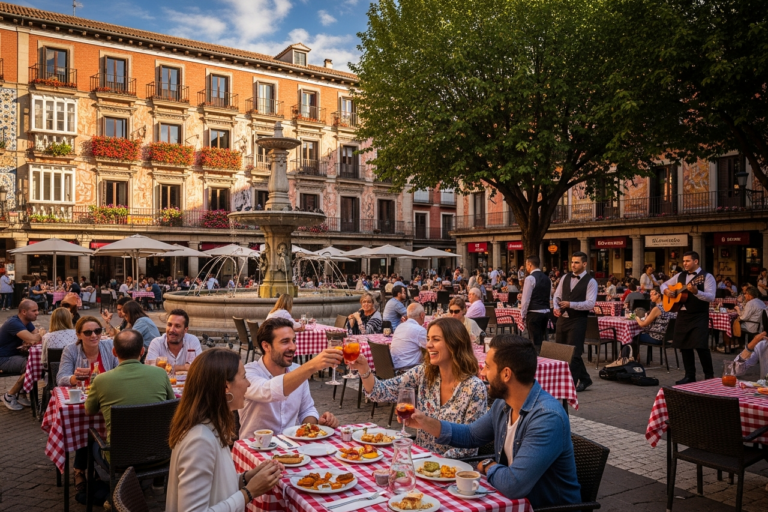
The Spanish lunch, called la comida, is the biggest meal of the day. It happens between 2:00 PM and 4:00 PM. Families meet up then. Office workers also take a long break at this time. This lunch is not just a quick bite. It is a social time. People enjoy food together.
Many places have a menu del dia. This is a set menu with many courses. The meal comes with a drink, bread, and dessert. This makes lunch feel like the biggest event of the day. Let’s see why la comida matters so much to people. You can also look at some tasty dishes you will find there.
When Is Lunch Served and Why Is It So Important?
Lunchtime in Spain is very special. It happens between 2:00 PM and 4:00 PM each day. This late lunch is the main meal for most people, and it is a big part of the Spanish way of life. Meal times here are late because of the country’s past and the daily routine many follow, including a break in the middle of the day.
The break during lunchtime is not only for eating. Spaniards use this time to take a break from work, go home, and have time with their families. Schools and businesses often change their own schedules so office workers and others can take this long pause. Places close in the afternoons and open again later. This gives everyone time to enjoy a good, slow meal without any need to hurry.
This practice makes lunch the most important meal and the main social time in a Spanish day. Everyone gets together, relaxes, and connects with people close to them. Because of this, people only want dinner much later in the evening, since they are not hungry again until then.
Popular Lunch Dishes and Regional Variations
A typical Spanish lunch, especially when you pick a menu del dia, is made up of several courses. The set menu often includes a first course, a second course, a dessert, and a drink. The first course is light. This could be a salad, soup, or veggies. The second course is more filling and has meat or fish.
Meal times are similar all over Spain, but what you eat can change. The dishes show the rich mix of regions. In the coastal places, like Andalucia, you will get lots of fresh seafood. Inland parts have more roast meat or stews. From Barcelona in Catalonia to Madrid, each place offers its own favourite meals. For example, San Sebastian is well-known for pintxos, goat cheese, and cured ham that comes from top quality ingredients.
Here are some things you might see:
-
First Course: A green salad, vegetable soup, or cured ham on a plate.
-
Second Course: Grilled fish, roast chicken, or stew you can really dig into.
-
Regional Specialties: Paella in Valencia, grilled seafood in Galicia, or roast suckling pig in Castile.
Conclusion
In short, knowing the meal times in Spain helps you see the country’s culture and daily life. The different Spanish meal times for breakfast, lunch, and dinner show more than just what people like to eat. They show old habits where spending time with people and enjoying food is very important. If you visit Spain from Canada, you get more out of your trip when you follow these customs. You get to meet and talk with others. So, when you try those long lunches or get used to eating dinner later at night, jump into the Spanish meal times and enjoy the food. Happy eating!
Frequently Asked Questions
Why is dinner so late in Spain?
The reason people have a late Spanish dinner is because lunch is so big and it happens late in the day. Lunch is the biggest meal of the day, and you will see people eat it in the middle of the afternoon. So, people do not get hungry again until much later in the evening. This way of life and the late lunch shape the Spanish daily routine. The late Spanish dinner is just a normal part of their lives.
How do Spanish meal times impact daily routines?
Spanish meal times guide how the whole day is set up. Many office workers and businesses stop for a long lunch break called la comida. This break goes from 2:00 PM to 4:00 PM. The siesta time in Spain does not always mean people nap. Shops close, and work stops. This break shapes the way people and businesses plan their day around the main meal.
How can Canadians adapt to Spanish eating customs when visiting?
Canadians can get used to a new way of life by following how things are done in Spain. Have a small breakfast in the morning. At lunch, eat a bigger meal by choosing the menu del dia at Spanish restaurants. In the afternoon, enjoy some tapas to keep you going until the late dinner time. This will help you get used to when people eat in Spain and enjoy the Spanish dining experience even more.