Key Highlights
Here are the key things you need to know about Russian meal times:
-
Russian people usually have breakfast early, around 7 to 7:30 in the morning. This helps them get ready for their work or school day.
-
Lunch, called ‘obed’, is the main meal of the day for them. Russian lunch is usually between 1 and 2 in the afternoon.
-
Dinner in Russia is a lighter meal and is often eaten late, about 8 in the evening.
-
The Russian lunch can be quite big. It often has a few courses such as soup and one main dish.
-
Russian cuisine likes to serve hearty and filling foods during the main meals of the day.
Introduction
If you want to travel to Russia or you are just curious about Russian culture, it can be good to know what people do every day. Food is a big part of life in any country. The way people eat and the way they see food says a lot about them. For russian people, meals happen at set times in the day. These can be different from what we do in Canada. This short guide will show you when russian people eat, what kinds of food they have, and how they go about it. You will get a look at daily life for people in russia.
Understanding Russian Meal Times
In Russian homes, people eat meals of the day at set times. Russian families usually have breakfast, lunch, and dinner. This is done at almost the same time each day, and each meal is important in its own way. This way of eating is a big part of Russian life.
When you know these meal times, it is easy to see how the day goes in Russian homes. If you are visiting, or just spending time in a Russian city, this helps you understand what people do. Let’s look at when these meals of the day usually happen, and see how this is different from what you might know.
Typical Hours for Breakfast, Lunch, and Dinner
Russian meal times are quite distinct. Breakfast, or ‘zavtrak’ in Russian, is typically eaten early, between 7:00 and 7:30 a.m. This allows people to get energized for the workday or school day, which often starts around 9:00 a.m.
Lunch, called ‘obed’, is the most substantial meal and usually takes place between 1:00 and 2:00 p.m. It’s a dedicated break in the day. Dinner, or ‘uzhin’, is a lighter meal enjoyed later in the evening, around 8:00 p.m., in many Russian homes. There’s also an afternoon snack called ‘poldnik’ around 4:00 or 5:00 p.m., especially for children.
Here’s a simple breakdown of typical Russian meal times:
|
Meal |
Russian Word |
Typical Time |
|---|---|---|
|
Breakfast |
Zavtrak |
7:00 a.m. – 7:30 a.m. |
|
Lunch |
Obed |
1:00 p.m. – 2:00 p.m. |
|
Dinner |
Uzhin |
8:00 p.m. |
How Meal Schedules Differ from Canadian and European Norms
The way people in Russia eat each day is not the same as in Canada or some other European countries. In Canada, most people see dinner as the main meal of the day. In Russia, the main meal of the day is lunch. This is the biggest and most important one.
There is a strong focus on having a big lunch in Russia. This makes them different from a lot of Western places. For example, many people in Canada just have a sandwich or something small for lunch. But russian families and workers in Russia often sit down for a big lunch with more than one course. Because of this, the evening meal is lighter. It also happens later than what most people in Canada are used to.
Here is the way the meal times are not the same:
-
Lunch is the main meal: For people in Russia, lunch is the most filling meal, not dinner like it is for many in Canada.
-
Later dinner: It is normal to have the evening meal at around 8 p.m. in Russia. This is later than many Canadian families, who often eat between 6 p.m. and 7 p.m.
-
Structured schedule: There is also a strong tradition among russian families to eat meals at set times in Russia.
Morning Traditions – Russian Breakfast
A Russian breakfast, called ‘zavtrak’, is not just something small you grab fast. The meal is meant to give everyone in the house enough strength to start a long, cold day. In many Russian homes, people eat warm and cooked foods instead of something cold like cereal.
There is a focus on foods that will fill you up and be comforting. You will often see a type of porridge, eggs, and some sandwiches on the table. Let’s look at which foods and customs are common for a Russian breakfast and how these things make the morning meal special.
Common Russian Breakfast Foods
For a traditional Russian breakfast, people like to have many kinds of food that can fill you up. You will not see someone just grab a quick piece of toast and leave. Most people sit down to a big meal with warm food.
A popular dish for breakfast is kasha. This is a type of porridge. Many eat oatmeal, but buckwheat and semolina cereals are also used for this meal. Another loved breakfast item is syrniki. These are small pancakes made with cottage cheese. People enjoy eating them with sour cream or jam.
Here are some other Russian breakfast foods:
-
Fried eggs, and sometimes there is ham or sausage on the side.
-
Sandwiches with rye bread, butter, and “doctor’s sausage.”
-
Porridge dishes like buckwheat, oatmeal, or semolina served hot with butter.
-
Cottage cheese pancakes (syrniki) with jam or sour cream.
Breakfast Habits and Social Customs
In Russian families, breakfast is usually a simple and calm part of the day. There are some traditions that many people still follow. Most of the time, people think breakfast is a very important meal. Because of that, they do not often skip it. The family comes together before they go to school or work. This helps set a good mood for the day.
Older people sometimes say a Russian expression: “When I eat, I am deaf and dumb!” This means when you sit down to eat, you should be quiet and focus on your food to help with eating and your body’s work. Many do not follow this strictly anymore. However, it does show how mealtime used to be thought of in the past.
After breakfast is over, people in many Russian families like to enjoy a cup of tea. It’s normal to sit at the table and talk with each other after the food is finished. This time is different from the meal itself. It is for sharing, connecting, and talking before the day gets busy. A cup of tea makes it easy to move from breakfast into your plans for the day.
The Heart of the Day – Russian Lunch (‘Obed’)
Lunch in Russia, called ‘obed’, is not just a small snack at noon. It is the main meal of the day for people in Russia. Most of the time, you get this meal between 1 and 2 p.m. There will be more than one course. It is a big meal and gives people most of the food they need for the day. In many Russian homes and workers’ places, taking lunch is important and you will find that almost everyone takes a break at this time.
This custom of having a large lunch helps shape the schedule for the day. It lets people stop, rest, and get more energy before going back to work. Here, we talk about the big part that ‘obed’, or lunch, has in their day. We also look at what makes up a usual russian lunch. You will see the main dish people eat and what the meal could cost.
Importance of Lunch in Russian Daily Life
For Russian people, lunch is the main meal of the day. This is not just a part of Russian culture. It is how the day is set up in places like Moscow, St. Petersburg, and all over Russia. Many businesses and schools give people a hot lunch in their canteens.
You can see how important this meal is in a Russian expression: “Our meal is soup and porridge.” These simple dishes are at the heart of russian cuisine. Having lunch helps people keep up their energy for the rest of the day. At this time, people sit down together. They eat a full meal and do not just take a fast snack.
This care for a big lunch means dinner is usually light. Russian people make lunch the biggest meal to stay full and have energy for their daily work. For many russian people, lunch is a key part of their day. It shows how important food, soup, and porridge are in russian cuisine and culture.
What Locals Eat and Typical Meal Costs
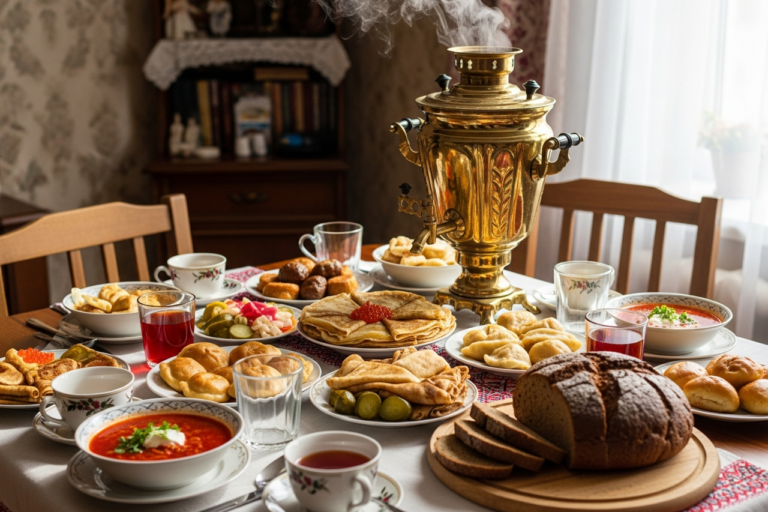
A usual Russian lunch has three courses, even when you have it on a workday. You start with appetizers called ‘zakuski’. These can be salads or small bites. The first course for lunch in Russia is almost always a hot soup. People see soup as an important part if you want a proper lunch.
The second course is the main dish. This will often be meat or fish, and you get a side like potatoes, pasta, or buckwheat with it. After this meal, people sometimes have dessert, along with tea. You might know about Russian vodka, but people in Russia usually save vodka for parties and not for the middle of the day.
The price of a meal can change, but there are many low-cost ways for you to get lunch in Russia.
-
Business Lunch: Lots of places have what they call a “business lunch.” It’s a deal where you get two or three courses for a good price.
-
Canteens: At work or at university, canteens are popular. These canteens serve meals that are not costly, and staff or students often use them.
-
Restaurant Costs: If you eat a full meal at a mid-range restaurant, it will likely cost less in Russia than what you pay for the same main dish in Canada.
Conclusion
To sum up, knowing meal times in Russia helps you enjoy your food more and understand their culture better. Every meal, from big breakfasts to important lunches during the day, shows what life is like in russia. This can also help you feel closer to people there and make your trip better. If you know about these things, your time around russian people can be really special. Want to know more about russian culture and cuisine? You can get a free meeting with our travel experts any time!