Key Highlights
-
Get to know how people in Iran spend their days by watching when they eat.
-
Breakfast (sobhāné) is light. People like to eat it early when the day starts.
-
Lunch (nāhār) is bigger. In Iran, it is served from noon to about 3 PM, and it is the main meal.
-
Iranians like an afternoon snack called asrooné. This snack has tea and some small things to eat.
-
Dinner (shām) is lighter. Iranians eat it in the evening, and it is a good time for families to be together.
-
Being kind and generous is part of iranian culture. If you visit, you will always get some food or a drink.
Introduction
Are you interested in iranian culture? One great way to get to know a place is by trying its food. In iran, the time for eating may not be the same as in Canada. In the middle east, especially in iran, meals are not just for feeding the body. They are special times for people to be with family and friends. Learning when people eat will help you see more of the rich ways behind iranian food and life in iran.
Overview of Iranian Meal Times
Iran has its own schedule for meal times during the day. It is not like in Canada, where dinner is usually the biggest meal. In Iran, lunch is the largest and most filling meal. There are often many main dishes during that time, and these are at the heart of Iranian cuisine.
The people start the day with a light Persian breakfast. After that, there is a bigger lunch. Later in the day, they enjoy a small afternoon snack. The last meal is dinner, and it’s lighter. This type of eating lets people get together. Many use lunchtime and supper as a way to spend good time with their loved ones. Now, let’s take a closer look at these daily food traditions in Iran’s cuisine.
Typical Breakfast Time and Morning Customs in Iran
In Iran, the day starts with breakfast. It is called sobhāné or sobhooné. People eat this meal early in the morning. This helps set a gentle start for the day. The traditional Iranian breakfast is light and simple. But it still makes people feel full and happy. It is a short time for families to sit together before work or school.
A classic Persian breakfast has fresh bread, known as noon. People like to eat it with different things. It is easy to find noon o paneer at the table. This is bread with feta cheese. People often add walnuts (gerdoo), honey (asal), or jam (morabā) to this. The mix of feta cheese, nuts, and jam gives a nice taste that many enjoy in the morning.
Most days, the Iranian breakfast is not heavy. But on special days, people might eat a rich stew for breakfast. One well-known stew is called kaleh pacheh. It is enjoyed very early. This meal is seen as something special and gives people a new kind of breakfast to remember.
Common Lunch Hours and Midday Traditions
Lunch, or nāhār, is the biggest meal of the day in Iran. It usually starts between 12 PM and 3 PM. People spend time to make it, and the food is often hearty and filling. This break at noon is important, and sometimes people rest after it.
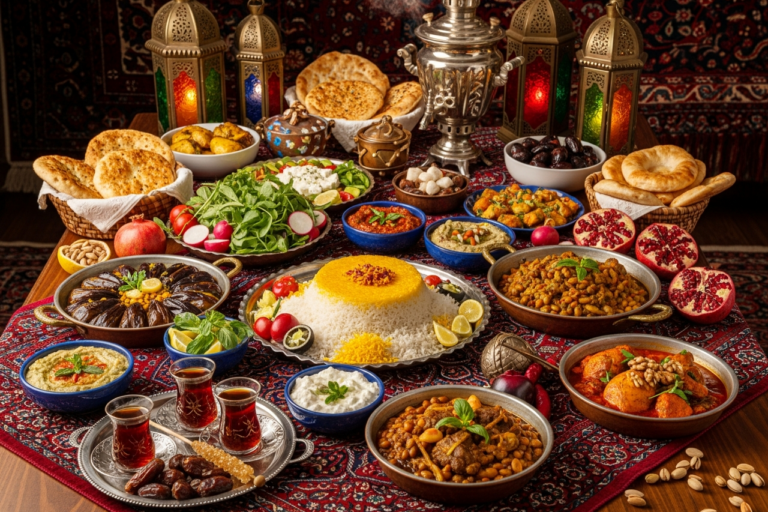
When it comes to iranian food for lunch, rice, called berenj, is almost always on the table. The rice is fluffy, smells good from saffron, and goes well with different kinds of stew or kebabs. Most lunch plates have this rice. Often, it is a kind of polo (pilaf), and is served next to a rich stew, or khoresh.
Some classic iranian food you will find at lunchtime are:
-
Chelo kebab: This Plate is steamed rice with grilled kebabs.
-
Khoresh-e Ghormeh Sabzi: This stew is full of fresh herbs, kidney beans, and meat.
-
Baghali Polo va Gusht: This is fava bean rice served with soft, cooked meat.
This way, people in iran enjoy lunch using good rice, saffron, stews, their own fresh herbs, and tasty kebabs or meat in every meal.
Dinner Timing and Evening Gathering Habits
Dinner, or shām, in Iran is typically a lighter and more casual meal compared to lunch. It’s usually eaten later in the evening, anywhere from 8 PM onwards, and serves as a time for family to reconnect after a long day. The focus is less on heavy, complex dishes and more on simple, shared plates.
The evening meal is an important part of Iranian culture, emphasizing social connection. It’s common for families to gather and share stories over their meal. After dinner, it’s customary to enjoy Persian tea (chai) along with fruits or sweets. This period of relaxation and conversation is a key part of the evening routine.
A typical dinner might consist of leftovers from lunch or lighter fare. A medley of fresh herbs called sabzee, which can include basil, mint, parsley, and cilantro, is often served with meals, along with yoghurt and salad.
|
Meal Component |
Description |
|---|---|
|
Main Course |
Often lighter dishes, leftovers from lunch, or simple preparations like soups or kuku (frittata-style dish). |
|
Side Dishes |
Fresh herbs (sabzee), cucumber and yoghurt dip (mast-o-khiar), salads. |
|
Beverage |
Persian tea (chai) is the customary drink served after the meal. |
What Do Iranians Eat at Each Meal?
There are many different kinds of Iranian dishes, with certain foods for each time of the day. Iranian cuisine comes from fresh and flavourful ingredients. You will see a lot of choices, with many meals to enjoy from morning to night.
Each meal in Iran is special in its own way. Breakfasts are light and fresh. Lunch is usually a big meal with rice. By dinner, the food is more simple and lighter. Now, let’s look at some of the foods that help make each part of the day in Iranian cuisine special.
Popular Breakfast Foods and Their Significance
The traditional Persian breakfast is simple and elegant. It puts fresh food at the centre. Bread is the main item at breakfast, and it’s hard to miss. People often have a choice of flatbread like barbari or taftoon. Many pick up this bread fresh from the local bakery each morning while it is still warm and smells good. The bread is perfect for enjoying with spreads or cheese.
At most Iranian breakfast tables, a famous favourite is noon o paneer ba gerdoo. This means you eat bread with feta cheese and walnuts. The soft flatbread, salty cheese, and crisp walnuts are always good together. Some people also add honey or jam to make the taste sweet. This mix can give you a fresh and clean start to the day.
Some well-loved breakfast items are:
-
Noon o Paneer: Warm flatbread with feta cheese.
-
Gerdoo: Walnuts that go nicely with cheese.
-
Morabā: Jam for some sweet taste.
-
Asal: Honey, which is also a popular way to make things sweet.
The iranian breakfast is simple but full of good flavours. Whether you want cheese, walnuts, honey, jam, or just soft barbari bread, there is always something to like in a traditional persian breakfast.
Staple Lunch Dishes and Regional Variations
Lunch is the main meal in Persian cuisine. It is the time when people enjoy the best and most detailed food. Rice is the main part of lunch. It is made with special care so it is light and smells good. The rice comes with many side dishes. These sides can be rich stews or kebabs cooked just right. Chelo Kebab is loved by many and is known as the national dish of Iran. It is a popular lunch food.
The stews, called khoresh, play a big role in iranian culture and food. One famous stew is Khoresh-e Ghormeh Sabzi. It is made with herbs, meat, and kidney beans. Another stew people enjoy is abgoosht. This is a filling lamb and chickpea stew, and is also called dizi. These dishes cook for a long time, so all the flavours mix very nicely.
You will see a lot of different versions of food in persian cuisine. If you go to Lavassan, which is up in the mountains, you can find restaurants that serve the best abgoosht. In southern Iran, people eat more dishes made of fish, like halva fish. These meals are often made with bergamot instead of lemon. The many ways food is prepared show just how deep iranian cuisine and its traditions can be.
Typical Dinner Menus and Light Evening Options
Dinner in Iran is more relaxed than lunch. Most times, people eat leftovers from lunch. This helps make sure the food is not wasted, and it is easy to have. If there are no leftovers, the dinner is made simple. The meal is quick to make.
You will see bread, cheese, and fresh herbs on the table. There are soups, salads, and some light dishes. One known dish for dinner is kuku. It is made with eggs, and it looks like a frittata. People can put different vegetables and fresh herbs in it. Yoghurt, called māst, is always there. It is served plain or in a dish, like the cucumber-yoghurt dip (mast-o-khiar) covered with dried mint.
Borani is another good choice for a light dinner. This dish starts with yoghurt and can be mixed with spinach (borani-e esfenaj) or other vegetables. These yoghurt dishes are tasty, easy to eat, and good for you. They are great before people relax for the night with a cup of tea.
Social and Cultural Customs Around Eating in Iran
In Iranian culture, meals are much more than what you eat. Meals be about kindness and showing care. When someone invites you to eat with them in Iran, they treat you like family. They say every guest is a “gift from God.” This feeling is easy to see in homes and in Iranian restaurants.
The idea of hosting, or pazeerāyee, is very important in Persian culture. Hosts always try to make their guests feel safe and full. They put time and effort for good food and good times. It is not just eating. It is about sharing and doing things together. Eating in Iran turns into a special part of their life.
Etiquette and Politeness at the Iranian Table
When you get asked to share some persian food in Iran, it helps to know a few things about manners. Being a good host is very important, and people in Tehran or other places will do a lot to make you feel like one of their own. One thing you see often is ta’arof. This is a way of being polite. You might say no when you are first offered food. But don’t be surprised when your host says you really should take it.
After the meal, it’s good to thank the cook. Many people use the phrase “dastetoon dard nakoneh“. This means “may your hands not hurt.” It’s a nice way to show you liked their hard work on the persian food. You can use this phrase for other kind actions too, not just cooking.
Here are a few simple tips about being polite:
-
Accepting Food: Try to take the food offered, even if you say no once or twice as part of ta’arof.
-
Thanking the Host: It’s important to say thank you for the food and everything else.
-
Leaving a Gathering: When you leave, do it slowly. A nice way to say goodbye is “bāyad yavāsh yavāsh beram” (“I must slowly, slowly go”), so you don’t seem like you are rushing.
The people of Iran want your time to be good, and these ideas help you fit
The Role of Tea, Snacks, and Hospitality Between Meals
Between the main meals of the day, Iranians have a cherished tradition called asrooné, which is an afternoon snack. Typically enjoyed around 4 PM, asrooné is a delightful break that bridges the gap between lunch and dinner. It’s a perfect example of how hospitality extends beyond formal mealtimes.
The centrepiece of asrooné is often Persian tea, or chai. This hot black tea is a staple of daily life in Iran. It’s served with various light snacks. The snacks can be savoury, like bread with feta cheese and walnuts, or sweet, such as pastries, fruits like blood oranges, or a handful of pistachios. During celebrations like the Persian New Year (Norooz), the assortment of snacks can be even more elaborate.
This afternoon ritual is about more than just food; it’s a moment to pause, socialize, and enjoy a small treat. It demonstrates the constant thread of hospitality woven throughout Iranian culture.
|
Afternoon Snack Element |
Examples |
|---|---|
|
Beverage |
Hot black tea (chai) |
|
Savoury Snacks |
Bread with feta cheese and walnuts, fresh vegetables |
|
Sweet Snacks |
Pastries, fruits, nuts (like pistachios) |
Conclusion
Understanding meal times and dining customs in Iran gives you a look into the nation’s rich culture. From early breakfast habits to evening meals shared by many, you can see each meal mixes tradition and warmth. Iranians take pride in their food. They value the taste and the time spent together around the table. If you learn about these ways of eating, you get more than good food. You also see the strong social links they have.
No matter if you want to visit, or are just curious about iranian culture, trying their eating ways will help you see the wide world of cuisine better. If you want to know more about iranian cuisine, feel free to ask any questions!
Frequently Asked Questions
Do meal times in Iran change during Ramadan or other holidays?
Yes, meal times in Iran be very different during Ramadan. People fast from early morning until sunset. They have two main meals. One is iftar, which is when they break the fast after sunset. The other is suhoor, a meal before the sun comes up.
During holidays, like the Persian New Year (Norooz), people in Iran eat at different times. Meal times be more open and happy. Families and friends get together, share iranian food, and enjoy the day.
How does eating schedule in Iran compare to Canada?
In Iran, lunch is the main meal of the day. People in Iran eat a lot at lunch and have a lighter dinner. In Canada, dinner is the heaviest meal. Iran also has asrooné, where people sit down for a snack in the afternoon. This is not common in Canada.
Are there special traditions for welcoming guests at meals?
Yes, that is true. Hospitality is a big part of Persian culture. In Iran, people work hard to serve lots of good Persian food when they have guests. They feel it is an honour to welcome people and always give the best that their home can offer. This shows how much they value being generous in their culture.