Key Highlights
-
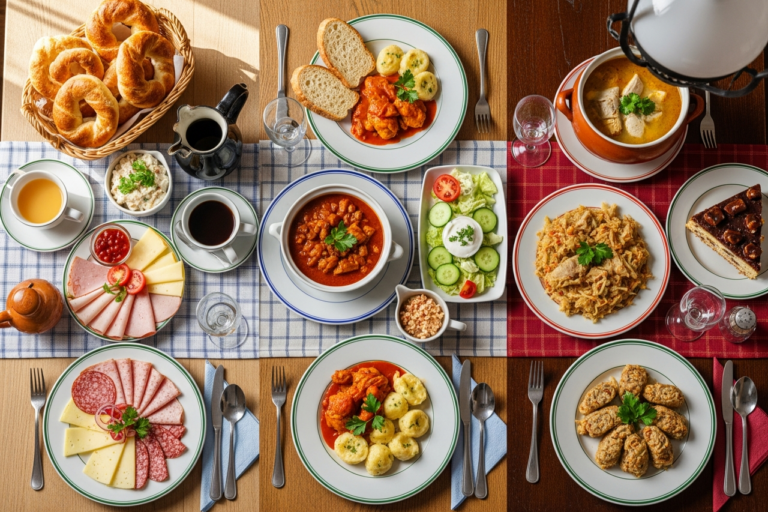
In Hungary, meal times have a long history, and lunch is usually the main meal of the day.
-
Hungarian cuisine stands out for how much people use paprika, cooking big stews like goulash, and baking rich pastries.
-
Family eating times are very important in Hungarian culture. People spend time together and share food at the table.
-
Breakfast is often light. Dinner is usually not as big as lunch, which is the main meal of the day.
-
When you eat out in Hungary, the restaurant hours fit the local custom. Places are often open for the main meal times.
-
People love to have tasty snacks like lángos or chimney cakes. These treats are popular in between the main meals.
Introduction
Welcome to the tasty world of Hungarian food! If you are a Canadian in Central Europe, you may want to know more than the best places to see. You might be wondering about the local ways, and that includes eating times. This guide will let you know about the usual meal times in Hungary. It covers everything from early breakfast to late dinner. You will see how Hungarians plan their day around food, and you will notice how their habits are not the same as what you might know in Canada. This is your chance to find out more about Hungarian food and eating in Europe.
Understanding Hungarian Meal Culture
Hungarian meal culture is tied to the past and togetherness. In Hungary, people do not rush eating like some do in other parts of the world. Instead, meals are about spending time with family and friends. People here care about fresh ingredients and recipes handed down in the family.
Family meals are key to this culture. Sitting at the table with loved ones is part of the daily life in Hungary. It helps people feel closer and happy while eating good Hungarian food. Eating together is at the heart of life in Hungary. It shows how important sharing and community are in the country, shaping how people live with each other.
The Influence of History on Daily Meal Schedules
Hungary’s daily meal schedule comes from a long history. Long ago, most people in Hungary worked on farms. For them, lunch was the biggest and most filling meal. They needed a good lunch to keep working for the rest of the day. Many in Hungary still have lunch as the main meal, not dinner like you see in other European countries.
Neighbouring countries like Austria and Italy have also influenced Hungarian food. In the 16th century, Hungarian paprika became important. This popular spice changed how people cook in Hungary. Hungarian dishes often use this pepper along with onions and sour cream to give their meals a special taste.
All these pieces—the country’s past and nearby cultures—have shaped how people in Hungary eat today. Things are changing because of how people live now, but the structure of meals is still a big part of Hungary’s history and life. Traditional Hungarian dishes with paprika, onions, and sour cream still show what Hungarian cuisine is about.
Social Traditions and Family Dining in Hungary
In Hungary, meals are about more than food. They are a big part of social life and tradition. Sharing food is a strong way to keep good ties with family, friends, and people you work with. Family dining is very special in Hungarian culture.
Many Hungarian families try to have meals together. They often sit down at dinner during the week and on weekends. This time lets them talk and connect with each other. It helps them get closer as a family. Grandparents are also important, as they share recipes and the old ways of cooking with the younger ones.
This feeling of togetherness is clear during special days and big holidays. Food plays a main role in these events. At Christmas and Easter, having a big meal is a loved part of these days. It brings people close, building their sense of community through the taste and style of Hungarian cuisine.
Breakfast in Hungary: Early Riser or Leisurely Start?
When it comes to breakfast in Hungary, people often keep it small and simple. They do not eat the big, hot breakfasts that some places have. Breakfast is more of a light meal that gets you to lunch, which is usually the main meal of the day. Most times, you will see fresh food with clear, easy tastes instead of the heavier Hungarian dishes.
This is not like in Canada, where many people like to eat filling breakfasts to start the day. In Hungary, the morning meal is not a big thing. It is more of a calm way to begin. You will find things like pastries, bread with different toppings, and easy dairy foods like cottage cheese.
Typical Breakfast Foods and Beverages
A typical Hungarian breakfast is simple. But it can be very tasty. The meal starts with fresh bread or pastries from a local pékség (bakery). You can eat these with many toppings. Some are sweet and some are salty. Breakfast is lighter than lunch. Still, it gives you a good start for the day.
Common foods for breakfast are:
-
Fresh bread with butter, jam, or honey.
-
Cold cuts like ham or salami, and slices of cheese.
-
Savoury pastries such as pogácsa, or sweet ones like kakaós csiga (cocoa snail).
-
Spreads made with cottage cheese, mixed with paprika and black pepper.
-
Sliced veggies like peppers and tomatoes.
To drink, many people enjoy coffee. They usually drink it strong and black, or sometimes with milk. Tea and fruit juice are also popular in the morning. It is common to see someone eat a sausage with their bread.
What Time Hungarians Usually Eat Breakfast
In Hungary, most people eat breakfast early, between 6:00 AM and 9:00 AM on weekdays. This gives them time to have a meal before going to work or school. Breakfast is fast, especially when mornings are busy. It helps start the day.
People may eat at different times based on the way they live and how old they are. Kids and people who work will eat earlier. Older adults or those who can choose their own schedule may enjoy breakfast later in the morning. On weekends, everyone is more relaxed. Families often come together and have a bigger or later meal.
Hungarian cuisine is direct when it comes to breakfast. It is not long like brunch in some other places. If you know about this timing, you better understand how life and cuisine work each day in Hungary.
Comparing Hungarian Breakfast Routines to Canadian Habits
When a person from Canada goes to Hungary, they will see that breakfast is not the same. In Canada, you can have many choices. Some people eat cereal or just grab coffee when they leave. Other people like to make a big meal with eggs, bacon, and pancakes, especially on weekends. All the options are different.
Hungarian food at breakfast is more simple and not so sweet. In Hungary, you will find more bread with cold cuts, cheese, or spreads. Sweet pastries are there, but most people pick savoury food. A big, hot breakfast happens more on special days or at hotels where they want to make tourists happy.
Still, there are some things that are the same. Both in Canada and Hungary, people love to start their day with coffee. If a Canadian wants to eat like people in Hungary do for breakfast, they should try fresh bread, savoury toppings, and eat a quick meal to begin the day.
Lunchtime Rituals Across Hungary
In Hungary, lunch is more than just a quick break in the middle of the day. It is often the main meal of the day for many people. This is common across the country. Families, students, and workers all sit down together to eat a big meal. Usually, there are many courses. This is something special about hungarian cuisine and sets it apart from other Western countries.
The lunch meal usually starts with soup. After, there is a main course with meat and a side, and sometimes, people have dessert. It is a filling meal and uses seasonal vegetables often. Let’s talk about when people in Hungary have their lunch and the classic dishes that make hungarian cuisine known for its main meal of the day.
When Do Hungarians Take Lunch Breaks?
Hungarians typically eat lunch between 12:00 PM and 2:00 PM. This window is widely respected, with schools and workplaces structuring their schedules to accommodate this important meal. Since lunch is often the largest meal, it’s eaten earlier in the day, providing energy for the afternoon. This makes it distinct from dinner, which is usually a lighter meal eaten in the evening.
This timing is fairly consistent across different groups. Students in school cafeterias, employees in office canteens, and families at home all tend to adhere to this midday mealtime. It’s a cherished ritual in Hungary that punctuates the day.
While the 12-2 PM window is standard, there can be slight variations between urban and rural settings, reflecting different paces of life.
|
Setting |
Typical Lunch Time |
|---|---|
|
Urban (e.g., Budapest) |
1:00 PM – 2:00 PM |
|
Rural Areas |
12:00 PM – 1:00 PM |
Classic Lunch Dishes and Regional Variations
A typical Hungarian lunch is big and has a few different parts. The meal almost always starts with soup. The soup can be a light broth, or a hearty soup like goulash. Goulash, with its rich taste, is often seen as the main course on its own.
The main course is usually made of meat. It is served with a good-sized side dish.
Some top Hungarian dishes you might see on a lunch plate are:
-
Töltött Káposzta: These are cabbage rolls stuffed with minced pork and rice. Sour cream is often served on the side.
-
Chicken Paprikash: This is a creamy chicken stew made with paprika. The dish is usually paired with nokedli, which are small dumplings.
-
Fisherman’s Soup (Halászlé): It is a spicy fish soup that uses plenty of paprika. It is very popular near rivers and in every part of Hungary.
Different parts of Hungary have their own way of making these dishes. For example, Fisherman’s Soup can taste quite different depending on the area. All these classic lunch dishes show off the rich and comforting flavours of Hungarian cuisine.
Urban Versus Rural Lunch Schedules
While having a big lunch is common in every part of Hungary, you can see some small changes in lunch times when you go between cities and the countryside. In busy cities like Budapest, life can move faster. Many people eat lunch a bit later, usually between 1:00 PM and 2:00 PM. This happens because their work hours can be long and jobs are busy. People in the city can get their lunch from restaurants or canteens, and even if they eat fast, the meals are still big.
In the rural part of Hungary, life is more easy-going and follows old ways. People usually eat lunch earlier, most often around noon. This goes back to the time when many people worked on farms and needed a big meal in the middle of the day to keep their energy up. These lunches are often cooked at home and the family sits together for them.
You can see this difference in many parts of Europe. People’s lives in cities often change old customs a little to keep up with busy days. Still, no matter where you are in Hungary, having a good lunch is always a big part of life.
Hungarian Dinner: Evening Gatherings and Traditions
As the day ends in Hungary, people turn their thoughts to dinner. Dinner is usually lighter than lunch, which is the main meal of the day. At this time, many eat food left from lunch or pick easy things to cook. Dinner helps people relax after a long day.
Still, with life in the city being busy, things are changing. These days, working families may use dinner as the main chance to enjoy a cooked meal together. So let’s talk about when dinner happens, and what hungarian foods are eaten for it.
Standard Dinner Times in Hungarian Households
In most homes in Hungary, dinner happens between 6:00 PM and 8:00 PM. This is after work and school are done for the day. The family gets to sit together, relax, and enjoy some time before the night starts.
In the past, lunch was the main meal of the day in Hungary. Dinner was not heavy and was often a cold meal. Dinner in Hungary used to be earlier than in other places. But now, in cities and with new work hours, some families enjoy their main cooked meal at night. This change means dinner in Hungary is becoming more like in other countries.
Still, in Hungary, people think lunch is meant to be the main meal of the day. So, if you get asked for dinner in Hungary, it might be at an earlier time than you expect. This shows how the old habit of a lighter meal in the evening is still important.
Popular Dinner Foods and Meals
The kind of Hungarian dinner you have depends on what you ate for lunch. If lunch was big, dinner can be easy. You may have an open-faced sandwich, a bowl of soup, or just some leftovers. When dinner is the main meal for the family, you get something more warm and rich.
A cooked dinner often has similar Hungarian dishes that you might see at lunch, just in smaller portions. The food brings comforting flavours and tastes. Here are some examples:
-
A nice stew or pörkölt. It can be made with pork or beef and seasoned with paprika.
-
Meat dishes. These are served with a side dish like potatoes, rice, or pasta.
-
Főzelék. This is a special Hungarian vegetable stew and it sometimes comes with a fried egg or sausage.
-
These dishes often have a spoon of sour cream on top or pickles on the side.
These meals are a good way to finish the day. You get the rich flavours that are part of Hungarian cuisine, especially those comforting dishes made with meat, paprika, and side foods.
How Meal Times Shift During Weekends or Holidays
On weekends and holidays in Hungary, people often relax their meal times and make them feel more special. During the week, it’s common for the day to revolve around work or school. But on weekends, families usually eat lunch together. The meal is bigger, has more parts, and can last for a few hours. There is lots of talking and good food.
For big days like Christmas and Easter, people in Hungary follow certain food traditions. Families get ready for the holiday by making a large meal. Christmas often has stuffed cabbage, while Easter usually means eating smoked ham. It’s common for many relatives to gather, making these meals a real event. The meal can go on for several hours.
All these changes in the family routine show how important food is to the people of Hungary. The way meals happen marks what day it is, and the food brings people together. At Christmas or Easter, when special Hungarian cuisine like cabbage and ham are made, these meals help keep family ties strong. They also show how meals unite the whole community through good food and time shared.
Restaurants and Eating Out: Aligning with Hungarian Meal Times
When you eat out in Hungary, you will find that most restaurants open and close based on when people like to eat. Places that offer local cuisine get busy at lunch and dinner. This is really the case in areas outside the main tourist spots in Budapest.
If you are visiting, it helps to know when people usually go out to eat. Try to plan your meals to match the Hungarian way. It makes it easier to get a seat, and you can enjoy the good mood in the restaurant.
Below, you can see the usual operating hours and some tips you should know.
Common Operating Hours for Restaurants and Cafés
In Hungary, most restaurants open for lunch around noon. They serve lunch until 3:00 PM. Then, restaurants open again for dinner from 6:00 PM to 10:00 PM or 11:00 PM. These times match when locals eat. The kitchens get busy from 12:30 PM to 2:00 PM for lunch. Dinner is busiest after 7:00 PM.
Cafés, called cukrászda, have more open hours. They start early in the morning. You can get coffee and pastries then. Cafés stay open all day. They are a good spot if you want a snack in the morning or a treat in the afternoon. In big cities like Budapest, you can find places open late. In smaller towns, it’s better to eat during normal hours.
Many restaurants close between lunch and dinner, often from 3:00 PM to 6:00 PM. If you want to eat late lunch or early dinner, you may have to go to places the tourists use or a café.
Dining Out Etiquette and Reservation Practices
When you eat out in Hungary, you just need to know a few rules to fit in. People usually leave a tip, about 10-15% of the bill. But first, look to see if there is a service charge. If there is, you do not need to add more. When you raise your glass, try to look at the person and say “egészségedre” to mean “to your health.” People will like this and feel happy you did it.
It is always a good idea to book a table before you go out, especially if you are having dinner in a popular spot or have a bigger group. This is true for Friday, and Saturday nights, when many people go out. At lunch, you may not need to book ahead for a small and simple meal. But if you really want to go to a certain place, booking time is the best way to make sure you get in and do not miss out. That is how to be safe and sure.
Most Hungarian families eat together at a table at the same time every night. But when you go out to eat, you get over this rule. You can pick any time to eat in a spot. Still, do not go in very late at night if you did not book ahead. The kitchen might be about to close. If you plan out your meal, you will have more fun and no stress. If you want to enjoy your time in hungary, knowing these small steps is the
Budapest Compared to Other Hungarian Cities
Meal times in Budapest are a bit different from other cities or country areas in Hungary. Budapest is an active capital, and it is very international. The city has many places to eat, and their hours are much longer. This is appealing to locals and people visiting from around the world. You will see that it is simple to find food outside the usual lunch and dinner hours.
Smaller cities and the countryside in Hungary stick close to old meal times. Lunch is always served around noon. At night, you may not find many spots to have dinner very late. Most people love home-cooked food, and there is a big focus on local cuisine and traditional Hungarian dishes.
Even though Budapest offers many modern choices, people in Hungary still like to have a big lunch. If you are in Budapest or another part of the country, it helps to understand how people eat each day so you can enjoy real Hungarian cuisine.
Snacks, Coffee Breaks, and Between-Meal Habits
Hungarians often take time during the day for snacks and coffee breaks. These breaks help people relax and enjoy some tasty food. You will find both sweet pastries and savoury bites in Hungarian cuisine, and they are a big part of what makes this food culture special.
Hungarian coffee breaks are especially important. People have loved them for many years. Old coffee houses can be found across the country. They offer nice places where you can sit, drink coffee, and eat cake in a calm setting. Let’s find out more about popular snacks and why the afternoon coffee break means so much in Hungarian cuisine.
The Role of Snacks in Daily Life
Snacking is a big part of life in Hungary. People love to have something to eat between meals, and it is a great way to try more Hungarian food. You will find that snacks in Hungary can be sweet or savoury, and people eat them at many different times of the day.
Most people in Hungary have a snack in the late morning or in the afternoon. It is easy to see people reaching for a pastry at the bakery or picking up a savoury snack at a market stall. This habit is not only for kids. Adults like to enjoy these treats, too.
Some snacks that are well-liked in Hungary are:
-
Lángos: This is deep-fried dough that has garlic, sour cream, and cheese on top.
-
Kürtőskalács (Chimney Cake): This snack is a sweet, spiral pastry. It is rolled in sugar, cinnamon, or nuts.
-
Pogácsa: These are small, savoury scones. Each may have a different flavour.
-
Strudels (Rétes): This is a flaky pastry with filling. People use things like apple, cherry, or cottage cheese inside.
No matter if there is sun and you want some ice cream, or it is a cool day and you hope for a warm pastry, there will be a snack for you in Hungary.
Coffee Culture and Afternoon Treats
Hungary is known for its old and rich coffee culture. In Budapest, the elegant coffee houses are famous. People have used these places to meet and talk for many years. Having coffee in the late afternoon is a loved part of the day. Many people there take a break with coffee between 3:00 PM and 5:00 PM.
This break is about more than just a cup of coffee. There is almost always a sweet treat as well. You will see the counters at a cukrászda—a hungarian confectionery—full of amazing cakes and pastries. Some favourites are the Dobos Torta, which has lots of chocolate cream and a crunchy caramel top. Another well-loved pastry is the light and flaky krémes.
Having strong coffee with a pastry is a classic hungarian joy. It gives you a good lift to help with the rest of your day before you have a light supper. This is a big part of the daily life in Hungary and makes any day in Budapest special.
Conclusion
To sum it up, knowing when people eat in Hungary helps you see more about the country and its food. Hungarians like to take it slow in the morning. They also have strong family dinner customs. Each meal tells us something about the values and story of life in Hungary. When you learn more about these habits, you start to enjoy Hungarian cuisine even more. You may also pick up some new ideas for your meals at home. If you want to know more or get tips about hungarian cuisine and meals, you can ask for a free consultation. Enjoy your time learning about food in Hungary!
Frequently Asked Questions
Are meal times different between Budapest and rural Hungary?
Yes, there are a few small differences. In Budapest, people move fast so lunch can be a bit later. Restaurants in the city also stay open for more hours. When you go outside Budapest to other parts of Hungary, people stick to old ways. Lunch is usually earlier there, and families eat more home-cooked Hungarian food. They put a lot of focus on real Hungarian cuisine in these places.
Do Hungarian families eat meals together at specific times?
Family dining is important in Hungary. People there see it as a strong tradition. In the past, lunch was known as the main meal of the day. Now, many families choose to eat a cooked dinner together between 6:00 PM and 8:00 PM. On weekends and holidays, it is even more special. That is when extended families often come together for meals.
Is snacking common between meals in Hungary?
Yes, people in Hungary like to snack. You can find many types of treats there between meals. Some people enjoy savoury pastries such as pogácsa. Others may pick sweet snacks like kürtőskalács (chimney cake) or strudels. Having coffee with cake in the afternoon is also one of the favourite Hungarian food customs.