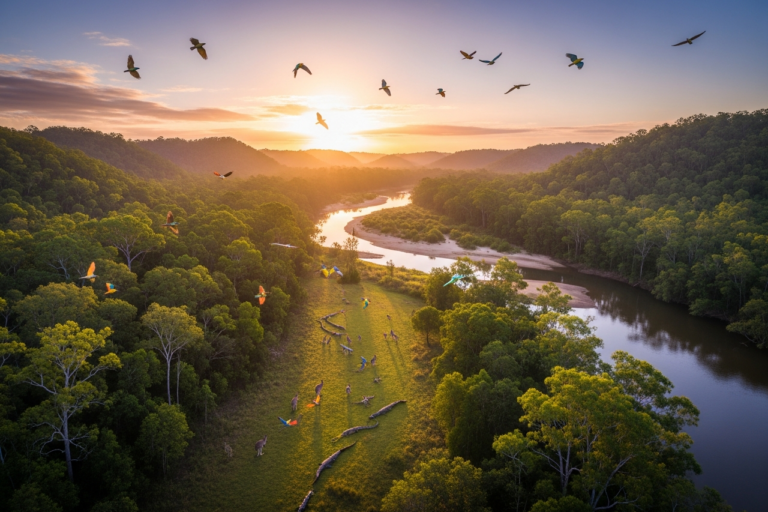
Key Highlights
-
The International Day of the Tropics is held on June 29. The United Nations General Assembly started this day to shine a light on the unique challenges and the chances in the tropics.
-
This day is all about the extraordinary diversity of the tropics. It shows how important it is for us to look after these places and think about sustainable development.
-
Tropical Australia has a big role in the tropics. It faces many climate change problems, with the Great Barrier Reef right at the front line.
-
The tropics make up 40% of the world’s surface. But they have 80% of everything living in the world and almost half the people.
-
Australia works hard to protect the diversity of the tropics. It uses the State of the Tropics Report to help make good choices about the tropics and climate change.
Introduction
Welcome to our journey into the International Day of the Tropics! Every year, on June 29, we think about the lively, rich, and important tropical regions on our planet. The day is not just a time for fun—it’s there to make us act. The tropics face many unique challenges, like climate change and more people moving into these places. There is a real need for us to think about sustainable development in these regions. As we head to 2026, it’s clear: the tropics, including our own corner in tropical Australia, matter a lot for a good, healthy future for everyone around the world.
Understanding the International Day of the Tropics
The International Day of the Tropics comes around every year. It’s backed by the United Nations. This day shines a light on the tropics and how important and varied the world’s tropical zone can be.
People around the world are asked to look at the issues the tropics face and the big chances there to make things better. The day brings our attention to things like economic growth and looking after the environment. It’s set up to help us know more and try to make progress across a range of development indicators. Next, we will look at why the day of the tropics matters and how the United Nations started it.
Purpose and Significance of the International Day of the Tropics
The main aim of this day is to get people to celebrate the diversity of the tropics and to help others learn about the challenges and chances found there. The tropics play an important role in the journey toward sustainable development goals. But they have big hurdles to jump, like dealing with climate change, deforestation, and fast city growth—all of which can slow down progress.
There has to be global awareness, because what happens in the tropics affects everywhere else too. These areas hold about 80% of the world’s land-based biodiversity and almost 95% of its mangrove forests. Keeping these ecosystems safe isn’t only a local thing. It’s there for the health of the whole planet and for future generations.
By putting these areas in the spotlight, the International Day of the Tropics gets governments, organisations and everyday people to join together. They work as a team to find ways that will be good for the long run, so they can keep the special natural and cultural side of the tropics safe while helping the people who live there.
How the Date Was Established and What It Represents
The journey to establishing one of the newer international days began with a significant report. On June 29, 2014, the inaugural State of the Tropics Report was launched. This comprehensive report was the result of a collaboration between twelve leading research institutions and was spearheaded by Australia’s James Cook University.
Recognising the report’s importance, the United Nations General Assembly adopted a resolution in 2016 to officially designate June 29 as the International Day of the Tropics. This date was chosen to commemorate the anniversary of the report’s launch. The day represents a global commitment to understanding and supporting the region of the Earth between the Tropic of Cancer and the Tropic of Capricorn.
It’s a day to take stock of progress, celebrate achievements, and address the ongoing challenges within tropical nations.
|
Key Milestone |
Description |
|---|---|
|
State of the Tropics Report |
Launched on June 29, 2014, providing a benchmark for the world’s tropical zones. |
|
UN Resolution |
Passed in 2016 by the UN General Assembly to create the official observance. |
|
Annual Celebration |
Occurs every year on June 29 to mark the report’s anniversary and raise awareness. |
Tropical Australia’s Global Role
Tropical Australia covers parts of Western Australia, the Northern Territory, and Queensland. It is a key area in the world’s tropical zone. This place has lush rainforests and vibrant coral reefs. The region is important because it makes up a good share of the country’s exports.
When you look at the potential of the region, it is clear that tropical Australia helps in global efforts for conservation and better ways of living. The area deals with its own set of problems, but it also finds new ways to solve them. Tropical Australia is known for how it works with the land and water, and its vibrant coral reefs show just how much can be done to protect nature.
Unique Environmental Challenges Faced by Tropical Australia
Tropical Australia faces some unique challenges. Its spot on the map makes the problems bigger. Climate change is the biggest issue right now. It affects some of the world’s best natural spots. It also hurts the countless species of plants and animals that live there. Everything in the region gets pushed from all sides.
The Great Barrier Reef is one of the most famous examples. It has been hit with heat stress and big bleaching events. But it’s not just the reef. There are many other challenges in tropical areas in the north, which put the world’s biodiversity in danger. These threats include:
-
Stronger weather systems, with harder tropical cyclones.
-
Invasive species that shake up the local ecosystems.
-
Land damage from different things, affecting both homes for animals and farming.
There must be quick and focused work to fix these problems. Saving these places does more than keep well-loved landscapes safe. It protects the web of life tied to them. It also matters for how the climate works around the world.
Australia’s Leadership in Conservation and Sustainable Development
Australia is known for working hard to solve the problems that are happening in the tropics. The country leads the way in the tropics, with James Cook University being one of the top places doing research. This work helped get the first State of the Tropics Report started.
The State of the Tropics Report helps people learn where things stand in the tropics. It gives a clear look at how much progress there is and shows what more can be done for nations in the tropics. In Australia, the Day of the Tropics is marked by the sharing of tropical stories, bringing attention to the work happening in research, and reminding everyone about why we need to care for the environment.
Australia shows its promise to the planet and a new way forward with this push for science-based answers and working with other countries. By backing research at the Australian Institute of Marine Science, the country learns more about how climate change will shape the future. This helps Australia find ways to keep the tropics safe and grow in a way that lasts.
Conclusion
To sum up, the tropics in Australia face a big moment. Climate change and damage to the environment are some of the main problems here. As we mark the day of the tropics, it is good to see how important this part of the world is. The tropics help a lot with looking after nature all over the globe. If we use ways to care for the land and talk about the big problems the tropics deal with, we can help the area be strong for many years to come. Let’s use this special day to look after our lands and promise to keep our dear natural places safe. If you want to join in or learn more about what you can do, you can always ask for more info!
Frequently Asked Questions
Which countries are located within the tropical region?
The tropical region is found between the Tropic of Cancer and the Tropic of Capricorn. This place covers around 40% of the world’s surface area. The United Nations says there are many tropical countries and territories here. Countries like Brazil, Indonesia, Nigeria, Mexico, and the northern part of Australia are in this area.
How is International Day of the Tropics celebrated in Australia?
In Australia, people use the Day of the Tropics to show the work done in research and keeping our land safe. Groups and communities share tropical stories, hold talks, and set up events for education. There are many discussions about the tropics and how to have good, sustainable development. The day is about showing the culture and nature you find only in tropical Australia. It is also a time to say again how we will look after it.
Why is the International Day of the Tropics especially important for Australia?
This day is really important for Australia. A big part of the country is in the tropics. This is an important feature of the tropics. Australia faces unique challenges because of this. Climate change hits hard here, especially when you look at the Great Barrier Reef. The day shows us we need both local and global action. We have to protect these vital places.