Key Highlights
- Jagannath Rath Yatra 2026 will likely be celebrated in the UAE on 16 July by the Indian community.
- This rath yatra marks the holy journey of Lord Jagannath with his brothers and sister, following the chariot festival tradition.
- The event helps worshippers in the UAE feel close to the old Jagannath Temple traditions of Puri.
- Devotees get together to pray, sing hymns, and join in community meetings.
- The yatra stands out for its large wooden chariots, lively chariot processions, and the strong devotion that brings people together.
- The festival calls families, believers, and anyone interested in the culture to join in.
Introduction
Jagannath Rath Yatra is one of the most loved festivals for people from India who live away from home. This chariot festival is to honor Lord Jagannath and the journey he makes with Lord Balabhadra and Goddess Subhadra. In the UAE, many families and groups in the community come together on this day. They pray, sing songs, and show their devotion.
If you want to know what the rath yatra is, when it happens, and how people in the UAE celebrate Lord Jagannath’s festival, this guide is for you. It will help you learn more about the special day when the Lord, his brother Balabhadra, and his sister, Goddess Subhadra, start their yatra.
Jagannath Rath Yatra 2026 Date and Timing in the UAE
Jagannath Rath Yatra is a yearly event based on the Hindu lunar calendar, and the main rath yatra in 2026 will be celebrated on 16 July. If you are living in the UAE or are part of the Indian community here, the 2026 yatra is also likely to follow this sacred calendar and the yearly temple updates.
During this time, people in the UAE celebrate with the spirit you see at Jagannath Temple and during the big festival of chariots. Many in the community come together for prayer, bhajans, and procession on or around the rath yatra day. Before you plan to join in or visit, it is good to know the main dates and how the rath yatra and events usually go.
Key Festival Dates for Indian Community Residents
If you are planning around Jagannath Rath Yatra, the main point to remember is this: in 2026, the festival of chariots will be celebrated on Thursday, 16 July. The festival falls on the Dwitiya tithi, or second day of the bright fortnight, in the month of Ashadha.
The wider sequence begins before the main day and continues after it. This helps worshippers follow the full spiritual journey rather than only one event.
| Festival observance | Date |
|---|---|
| Snana Purnima | 29 June 2026 |
| Main Jagannath Rath Yatra | 16 July 2026 (Thursday) |
| Hera Panchami | During the festival sequence |
| Bahuda Yatra (return journey) | 24 July 2026 |
| Suna Besha and Niladri Bijay | Around 25 July 2026 |
For Indian community residents in the UAE, these dates act as a useful guide when local gatherings are planned around the same sacred cycle.
Timings and Event Schedule for the Rath Yatra
In Puri, the rath yatra follows an old routine that goes on for many days. The deities leave the main temple, get placed on separate raths, and then start the yatra as a chariot procession to Gundicha Temple. Many worshippers line up along the path, with music, chanting, and dancing going on the whole way.
The road is only about three kilometres long, but it takes around two hours to go from the main temple to Gundicha Temple. The crowd gets very big, so it takes more time. The deities stay at Gundicha Temple for nine days before making their way back.
- The rituals start with earlier events, like Snana Purnima, and getting the temple ready.
- The king of Puri cleans before the chariots using a gold broom.
- Devotees pull each chariot with ropes. They do this to show piety and real devotion.
For the UAE, local events inspired by this tradition usually change the timings, but the main idea of devotion and celebration stays the same.
Spiritual Significance of Jagannath Rath Yatra
At its heart, the festival is about love for Lord Jagannath and his walk outside with all the devotees. In Puri, the big part of this event is seeing Lord Jagannath, taking part in worship together, and having the belief that being in the procession or touching the ropes gives you blessings.
For many believers, this is about their spirituality, their piety, and being humble. It is a way to feel close to the Lord. This also shows that faith does not have to stay inside a temple.
Religious Meaning Behind Rath Yatra
People celebrate Rath Yatra because it marks the start of the journey of Lord Jagannath with his brother and sister to Gundicha Temple. Devotees know Lord Jagannath as an incarnation of Lord Vishnu. Many connect him with Lord Krishna too, which gives the festival a lot of meaning for all worshippers.
This journey means much more than just going from one place to another. It is about divine closeness, strong family ties, and the wish of the lord to be close to all devotees. Many people feel pulling the chariot of Lord Jagannath is a good way to show devotion. They say it brings blessings and good things for their spirit.
There is a strong message about togetherness in this yatra. People from all walks of life gather with one goal: to give honour to the lord. Through prayer, chanting, and by pulling the chariot together, the festival turns from an old story into a real show of faith today.
Symbolic Importance for Devotees Abroad
For the Indian community in the UAE, this festival means a lot. The festival helps people stay close to Hindu mythology, family customs, and old memories of how things were done in India. Even if the yatra is smaller here, the meaning stays strong when people join with true feeling.
It can be hard for many to celebrate festivals when you live away from India. Rath Yatra helps make that gap smaller. It gives people a way to share stories, music, and values with young ones and lets adults connect in a place that feels known and close to their hearts.
- The rath yatra brings believers together no matter what state or language they are from.
- The yatra makes any get-together a show of rath, devotion, and remembering the past for all to share.
Story and Origins of the Rath Yatra Festival
The Puri Rath Yatra remembers the journey of Lord Jagannath from his main temple to the Gundicha Temple. He goes on this journey with Lord Balabhadra and Goddess Subhadra. This chariot festival has taken place for more than one thousand years. Today, it is one of the most well-known public religious events in India.
Legendary Tales Associated with Lord Jagannath
One famous story says that Lord Jagannath, Lord Balabhadra, and Goddess Subhadra go every year to Gundicha Temple. People often call this place the aunt’s house. This special trip is the main moment in the Rath Yatra. It is what makes the yatra so warm and close to people’s hearts.
There is another tale, too. This one connects the yatra with Lord Krishna. It shows how much the devotees want to bring Lord Krishna back to Vrindavan. In this story, as the chariot is pulled, you can feel love, longing, and the will to get close to the Lord once more.
How the Rath Yatra Began and Its Historical Roots
The story of Rath Yatra starts long ago in Puri. The festival is an important part of Puri’s temple tradition. The King of Puri takes part in the main ritual. He starts the yatra by throwing flower petals on the rath and clearing the path with a gold broom. He also puts sandalwood water on the way to clean it. When he does this, it shows the king’s respect to the deities.
During the rath yatra, there are other rituals too. People celebrate Hera Panchami, watch the deities’ stay at Gundicha Temple, and then see them come back to the main temple. These show that rath yatra is not just one procession. There is a full set of rituals that have been kept going with deep respect and faith in Puri.
Celebrating Rath Yatra in the UAE: Indian Community Experience
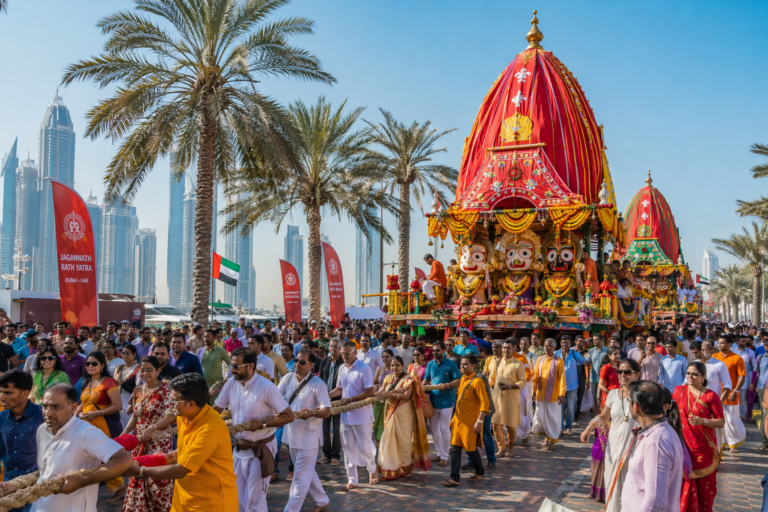
In the UAE, Rath Yatra is a time when the Indian community comes together in a special way. Families, worshippers, and cultural groups join in to pray, sing, and show their devotion. The yatra here is not as big as it is in Puri, but the feeling of rath and devotion stays strong.
Traditional Rituals and Customs Observed Locally
Local events in the UAE often follow the same steps as the ones held at the main temple in Puri. Worshippers come together to pray, show respect to the deities, sing hymns, and join in a chariot procession if there is space for it. Even though it does not match the big processions in Odisha, the main aim stays the same.
- Group chanting, bhajans, and singing hymns
- Darshan of the deities and simple puja work
- A small chariot procession or pulling as a ceremony
Events, Processions and Gathering Spots in the UAE
If you want to attend Rath Yatra in the UAE, the best approach is to follow local temple groups and Indian community organisers. Because local arrangements can change, devotees usually rely on announcements from organisers closer to the date.
| What to check | Why it matters |
|---|---|
| Local temple notices | They may share prayer times and festival details |
| Indian community groups | They often organise gatherings and updates |
| Event schedules near the festival date | Timing and procession plans may vary |
| Social media pages of organisers | Useful for latest announcements and photos |
The Chariots and Main Attractions of Rath Yatra
One of the main draws of the chariot festival is when the wooden chariots carry the deities through the streets. Each one is a sacred symbol, and it means a lot to the worshippers and people who come to see this event.
Names and Features of the Rath Yatra Chariots
The three deities move in different wooden chariots, each known by a special name. In the procession, each chariot is placed in a set order.
- Taladhwaja — the chariot of Lord Balabhadra, approximately 45.6 feet tall with 14 wheels
- Darpadalana (Devadalana) — the chariot of Goddess Subhadra, approximately 44.6 feet tall with 12 wheels
- Nandighosha — the chariot of Lord Jagannath, the largest, approximately 45 feet tall with 16 wheels
Each chariot has long ropes tied to it. The devotees pull the chariots with these ropes as a part of their devotion.
Activities and Highlights at UAE Celebrations
- Devotional singing, drumming, and hymns
- Symbolic procession and ceremonial rope-pulling
- Cultural events that bring families and community groups together
Participation and Festive Atmosphere
Rath Yatra is well known for the joy it brings and how people from all walks of life come together for the yatra. For the Indian community, this festival is about faith and also spending time with others. You often find elders, young people, children, and regular devotees, and each one takes part in their own way.
Who Joins the Rath Yatra in the Emirates
In the Emirates, Rath Yatra can bring together many types of people. The Indian community leads the yatra, but there are always others too. People come for prayer, some come for the culture, and some just want to see what the festival is about.
- Families who want to keep up their religious ways
- Worshippers, people volunteering in the community, and those visiting for culture
How Families, Groups and Temples Come Together
Families do not see rath yatra as just one outing. For many, it is about visiting the temple together, praying as a group, and sharing what they know about Lord Jagannath, Lord Balabhadra, and Goddess Subhadra with their kids.
Groups from the community are also key for the yatra. These groups help by setting up singing, taking care of procession planning, and making sure people know what is happening. When a temple is a part of this, it becomes the heart for the yatra.
Visuals and Memories of Rath Yatra in the UAE
Photos and videos help keep memories of the Rath Yatra. In the UAE, pictures from a local chariot festival show prayer, bright colours, families taking part, and many special moments. These memories stay with people, even after the yatra ends.
Many people want to see photos after the festival. If you want to look for pictures from the rath yatra, you can check the event pages of the community and updates from the organisers.
Some images stay in your mind because they show the true feeling of the event — a family standing with the deities, or a child looking at the procession. These pictures show what community spirit is all about. They highlight devotion, and also show how people care, and how traditions keep going to make everyone feel they belong.
Conclusion
To sum up, the Jagannath Rath Yatra in the UAE is more than just a festival. It is a lively yatra that brings together the Indian people. The event is strong in faith and follows traditions that have been around for many years. During rath yatra, people get a chance to connect with their roots, no matter where they live. The bright chariots and happy processions are a big part of this time. Every bit of the rath yatra shows what the community shares and values. It does not matter if you have joined before or are new. This is a special time to see what this yatra means to so many devotees. The Jagannath rath yatra is full of faith, unity, and history. If you want to be a part of the fun, do not wait. Go and see the local events and take part in this much-loved tradition.
Frequently Asked Questions
How Different is Rath Yatra in the UAE Compared to Puri?
The UAE version of the rath yatra is often smaller. It is made to fit in local venues. But in Puri, the Puri rath yatra is a huge public event that is tied to the Jagannath Temple. Still, the Indian community in the UAE keeps the spirit of the chariot festival alive. They do this with prayer, hymns, and processions that are symbolic.
Can Non-Indians Attend or Take Part?
Yes, the festival feel is open to all. People love to join Rath Yatra, not just the devotees and worshippers. Many cultural visitors and those not from India also join local yatra events if the organisers let the public take part. In many places, you will see the Indian community welcome their guests in a good way.
Where Can I Learn More About Local Rath Yatra Events?
To know more in the UAE, look for temple notice boards, Indian community groups, and organiser pages on social media before the chariot festival. These are the best places to get details about where people will meet, timings, and updates about the chariot festival procession. Each chariot festival and procession can be different each year, so it’s good to check these sources.