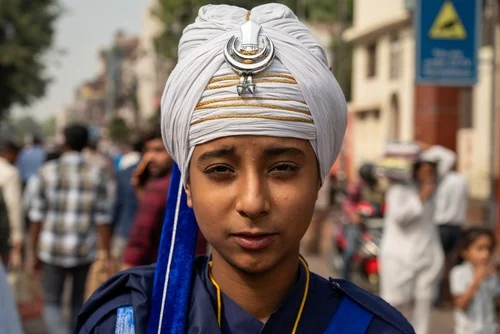
Quick answer: Guru Nanak Gurpurab, the celebration of Guru Nanak’s birth, is marked in the UAE primarily at Guru Nanak Darbar in Jebel Ali, Dubai’s purpose-built Sikh temple. Celebrations typically include an Akhand Path (continuous scripture reading), devotional singing known as kirtan, a Nagar Kirtan procession, and a free community meal called langar, open to people of all backgrounds.
For thousands of Sikhs living in the United Arab Emirates, Guru Nanak Gurpurab is one of the most meaningful dates on the calendar. It marks the birth of Guru Nanak Dev Ji, the founder of Sikhism, and it draws together a close-knit diaspora community that has built a genuine spiritual home far from Punjab, the religion’s birthplace. At the centre of these celebrations sits Guru Nanak Darbar in Jebel Ali, a gurdwara that has become a landmark not only for Sikhs but for the wider multicultural population of Dubai.
Understanding how this festival is observed in the UAE offers a window into the country’s broader identity: a place where expatriate communities don’t just visit for work, but put down roots, build institutions, and preserve traditions that span generations.

What is Guru Nanak Gurpurab and why does it matter?
Guru Nanak Gurpurab, also called Guru Nanak Jayanti or Prakash Utsav, commemorates the birth of Guru Nanak Dev Ji, who founded Sikhism in the 15th century in the Punjab region of South Asia. The date is considered one of the holiest in the Sikh calendar, alongside the Baisakhi festival and the martyrdom days of the Sikh Gurus.
Guru Nanak’s teachings emphasised equality, humility, honest work, and service to others regardless of caste, religion, or background. These values still shape how the festival is observed today, wherever Sikh communities live. The emphasis on shared meals, open doors, and inclusion is not incidental; it’s a direct reflection of the Guru’s core message.
Where is Guru Nanak Gurpurab celebrated in the UAE?
The focal point of celebrations in the UAE is Guru Nanak Darbar, located in Jebel Ali, Dubai. Opened in 2012, the gurdwara is recognised as one of the largest Sikh temples in the Middle East and has become a central gathering place for the UAE’s Sikh population, many of whom are long-term residents working across construction, trade, healthcare, and small business sectors.
Guru Nanak Darbar’s presence in Dubai reflects the UAE’s wider approach to religious tolerance, which allows places of worship for multiple faiths to operate within designated areas of the city. For the Sikh community, having a dedicated, accessible gurdwara means Gurpurab can be marked with the same scale and devotion seen in Sikh communities elsewhere in the world.

How is Guru Nanak Gurpurab typically observed?
Celebrations at Guru Nanak Darbar generally unfold across several days and follow traditions practised by Sikh communities globally, adapted to life in the UAE.
Akhand Path: the continuous scripture reading
In the days leading up to Gurpurab, an Akhand Path takes place. This is an unbroken, 48-hour recitation of the Guru Granth Sahib, the central religious scripture of Sikhism. Volunteers take turns reading so the recitation continues without interruption until the text is complete.
Kirtan: devotional singing
Kirtan, the singing of hymns from the Guru Granth Sahib, forms a major part of the celebrations. Musicians and members of the congregation lead devotional songs that reflect on Guru Nanak’s life and teachings, creating an atmosphere of reflection and community worship inside the gurdwara.
Nagar Kirtan: the community procession
Many Gurpurab celebrations include a Nagar Kirtan, a procession through the local area featuring hymn singing, the carrying of the Guru Granth Sahib, and participation from community members of all ages. These processions are a visible, public expression of faith and are often one of the most anticipated parts of the festival.
Langar: the community meal
Perhaps the most recognisable tradition associated with any gurdwara is langar, a free communal meal served to all visitors regardless of their religion, nationality, or background. During Gurpurab, langar at Guru Nanak Darbar draws large numbers of people, including many non-Sikhs curious to experience the tradition of hospitality that sits at the heart of Sikh practice.

Why does Guru Nanak Darbar matter beyond the Sikh community?
Guru Nanak Darbar in Jebel Ali has become more than a place of worship. It functions as a cultural landmark that many residents and visitors in Dubai, regardless of faith, choose to visit, particularly during langar service. Its presence speaks to the UAE’s status as home to one of the world’s most diverse expatriate populations, where communities from South Asia, Southeast Asia, the Middle East, Africa, Europe, and beyond coexist and maintain their own traditions.
For the Sikh diaspora specifically, Gurpurab celebrations in the UAE serve a dual purpose. They provide spiritual continuity for those who have moved far from the Punjab, and they create a space for younger generations, many of whom have grown up entirely in the Gulf, to connect with their heritage.
Guru Nanak Gurpurab and life as part of a global diaspora
Festivals like Gurpurab highlight something true for migrant and expatriate communities everywhere: distance from home doesn’t have to mean distance from identity, family, or faith. Communities find ways to recreate meaningful traditions wherever they settle, whether that’s through a gurdwara in Jebel Ali, a church congregation, a temple, or a mosque.
For many in the UAE’s Sikh community, celebrations like Gurpurab are also a reminder of family and friends back home, people they call, message, and support from afar. Staying connected across borders, whether through shared festivals, phone calls, or sending support to loved ones, is part of what makes life as part of a global diaspora workable and meaningful.

Frequently asked questions
When is Guru Nanak Gurpurab celebrated?
Guru Nanak Gurpurab falls on the full moon day of the Hindu lunar month of Kartik, which typically places the celebration in October or November, depending on the year.
Where can I attend Guru Nanak Gurpurab celebrations in the UAE?
The main celebrations take place at Guru Nanak Darbar in Jebel Ali, Dubai, which is open to visitors of all backgrounds, particularly for the langar community meal.
Is Guru Nanak Darbar open to non-Sikhs?
Yes. Gurdwaras, including Guru Nanak Darbar, welcome visitors of any faith or background. Visitors are generally asked to cover their heads and remove their shoes before entering, in line with Sikh tradition.
What is langar and can anyone take part?
Langar is a free communal meal served at gurdwaras to all visitors, regardless of religion or nationality. It reflects Guru Nanak’s teaching of equality and is open to everyone who wishes to take part.
What makes Guru Nanak Darbar significant in the region?
Guru Nanak Darbar is recognised as one of the largest gurdwaras in the Middle East, making it a central hub for Sikh worship and community life not just in the UAE, but for Sikh residents across the wider Gulf region.