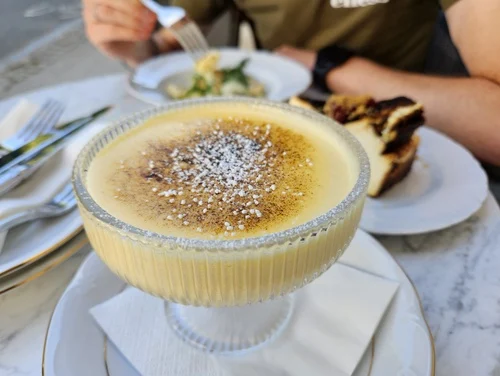
Quick answer: Kogel-mogel is a traditional homemade dessert enjoyed in Poland and across Central and Eastern Europe. Cooks make it by beating raw egg yolks with sugar until the mixture turns pale, thick, and creamy. Some families add cocoa or vanilla for extra flavor. The Polish name traces back to Yiddish, according to Poland’s National Centre for Culture.
If a Polish grandparent or family friend has ever mentioned “kogel-mogel,” you’ve stumbled onto a dessert with deep roots and a surprisingly short ingredient list. This simple treat has comforted generations of families across Poland, often appearing at the kitchen table when a craving for something sweet strikes and the pantry looks bare. Understanding kogel-mogel offers a small window into Polish home cooking and the food traditions that travel with families wherever they go.
Below, we’ll break down what kogel-mogel tastes like, where its name comes from, and how it’s traditionally made.

What Does Kogel-Mogel Taste Like?
Kogel-mogel delivers a sweet, rich flavor with a surprisingly light and creamy texture. That texture comes entirely from technique: beating egg yolks and sugar together transforms the mixture from a deep yellow liquid into something pale, fluffy, and almost mousse-like. Watching that color shift happen is part of the appeal for home cooks who grew up making it.
While the classic recipe only calls for two ingredients, many families put their own spin on kogel-mogel. Adding cocoa powder turns the dessert into a chocolate-flavored treat, while a splash of vanilla changes its aroma entirely. These variations aren’t formal recipes passed down from professional kitchens—they’re household adaptations, shaped by whatever a family had on hand and what their kids liked best, according to the Milltown Heritage Group community archive.

Where Does Kogel-Mogel Come From?
Kogel-mogel is a familiar name in Polish kitchens, but it belongs to a broader food tradition shared across Central and Eastern Europe. Poland’s National Centre for Culture (Narodowe Centrum Kultury) traces the Polish name itself to Yiddish, and connects related versions of the dessert to Ashkenazi Jewish communities. The exact place and date the dessert was first made remain unclear, and no single origin story has been definitively established.
What is clear is how personal this dessert feels to the families who make it. Many people in Europe recall their grandmother making kogel-mogel for them whenever they wanted something sweet and there weren’t any treats in the house. That kind of memory is common among people with Polish heritage: kogel-mogel isn’t just dessert, it’s often tied to a specific person, a specific kitchen, and a specific moment of comfort.

How Is Kogel-Mogel Made?
Before trying kogel-mogel at home, it’s worth understanding one important detail: the classic version is uncooked. Because raw egg yolks are the base of the dessert, the FDA recommends using pasteurized shell eggs or a pasteurized egg product designed for uncooked recipes. This step matters for food safety, especially since the eggs in kogel-mogel are never heated.
Once you have pasteurized yolks ready, the method itself is simple. Whisk the yolks together with sugar, continuing until the mixture turns pale, thick, and creamy—the same transformation described earlier. If you’d like to add cocoa powder, mix it in for a chocolate flavor. A few drops of vanilla will change the dessert’s aroma without altering its texture. Because kogel-mogel is such a personal, family-driven recipe, exact measurements tend to vary from household to household, with each cook adjusting the ratio of yolks to sugar based on taste and memory.

Frequently Asked Questions About Kogel-Mogel
How do you pronounce kogel-mogel?
Kogel-mogel is pronounced “KOH-gel MOH-gel.” The hyphenated spelling is the standard way to write the dessert’s name in English.
Is kogel-mogel the same as eggnog?
Not quite. Kogel-mogel and eggnog are both sweet, egg-based preparations, but they serve different purposes. Classic kogel-mogel is a thick, spoonable dessert made from whipped egg yolks and sugar, while eggnog is a drink, often served chilled and flavored with spices like nutmeg.
Can you make chocolate kogel-mogel?
Yes. Chocolate kogel-mogel is one of the most common variations on the classic recipe. Cooks add cocoa powder to the whipped yolk-and-sugar base, creating a richer, chocolate-flavored version of the traditional dessert.
A Dessert Worth Asking About
Kogel-mogel proves that a dessert doesn’t need a long ingredient list to hold meaning. Two simple ingredients, whipped into something creamy and sweet, have connected generations of Polish families—often during quiet moments when nothing else sweet was around.
If you have a relative with ties to Poland or Central and Eastern Europe, consider asking them if they remember kogel-mogel. You might learn a family detail you’d never heard before, from how they liked it flavored to who in the family always made it best.