
An ABA number is a 9-digit routing number used in the US to identify a bank or other financial institution during payment or transfer. You may need it to set up direct deposit, make an ACH payment, process a check, or send or receive a domestic wire transfer. Because some banks use different routing numbers for different payment types, it’s important to confirm that you have the right number for the transaction you’re making.
Quick Answers
- An ABA number is a 9-digit US routing number used to identify a bank or financial institution during a payment.
- You may need it for direct deposit, ACH transfers, checks, or domestic wire transfers. Your bank may use different routing numbers for different payment types.
- Find your routing number on a check, through your bank’s app or online banking, or by contacting your bank or credit union.
- Always verify the routing number before submitting a payment, especially if you’re new to US banking or setting up a payment for the first time.
What is an ABA number? (Quick answer)
“ABA number,” “ABA routing number,” “routing number,” and “routing transit number” (RTN) generally refer to the same 9-digit identifier used to route payments to a US financial institution. The American Bankers Association developed the routing-number system and it was originally used for check processing. Now routing-numbers are also used for electronic payments like ACH transactions.
ABA routing number vs account number vs debit card number (don’t mix these up)
Routing numbers and account numbers often appear together, but they identify different things.
| Number | What it identifies | Where you may find it | Common uses |
| Routing number (ABA number) | Your bank or financial institution | Check, bank app, online banking | ACH, direct deposit, checks, domestic wires |
| Account number | Your individual bank account | Check, bank app, online banking | Identifying the account receiving or sending funds |
| Debit card number | Your specific payment card | Front or back of the card, or digital wallet | Card purchases and other card transactions |
Common mistakes to avoid
If you’re setting up a US bank account or making a payment for the first time, there are a few simple mistakes that often cause delays, a return of the funds, or even result in a lost payment.
- Using your debit card number instead of your account number.
- Using your account number as your routing number.
- Copying the number from an old document without checking it.
- Assuming one routing number works for every type of payment. Your bank may use different numbers for ACH and wire transfers.
- Choosing a routing number based only on your current location.
If you’re providing banking information for direct deposit, a bill payment, or another legitimate transaction, use the organization’s official form or secure portal whenever possible. Avoid posting your banking details publicly.
If you notice an unfamiliar transaction after sharing your information, contact your bank or credit union right away.
How ABA routing numbers are used
Your ABA routing number helps direct a payment to the correct financial institution. The specific way it’s used depends on the type of transaction.
Checks
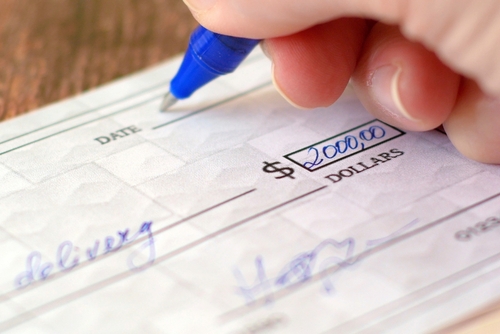
Routing numbers were originally developed to help financial institutions process checks. On a paper check, the 9-digit routing number is generally the first number along the bottom MICR line. The account number follows it.
ACH transfers

ACH stands for Automated Clearing House. It’s an electronic payment network used for transactions between banks and credit unions. ACH transactions are processed by one of two operators: the Federal Reserve, through its FedACH service, and The Clearing House, through its Electronic Payments Network (EPN). Common examples include direct deposits, recurring bill payments, and other electronic transfers. ACH payments generally use a routing number to identify the receiving financial institution.
Direct deposit

When you set up direct deposit with an employer or another organization, you’ll typically provide your bank’s routing number and your account number, along with the type of account you’re using.
Direct deposit can be used for more than a paycheck. For example, the IRS allows taxpayers to provide routing and account information to receive a tax refund by direct deposit.
Wire transfers

Routing numbers can also be used for domestic wire transfers. However, the routing number used for a wire transfer may be different from the one used for ACH transactions. Our guide to bank transfer vs. wire transfer walks through how domestic and international transfers differ.
For an international wire transfer, you may also need a SWIFT/BIC code or other international banking information. Follow the instructions from your bank or transfer provider to determine which details are required for your specific transaction.
When might you be asked for your ABA number?
You may need your routing number when:
- Setting up payroll direct deposit.
- Receiving certain government payments or a tax refund.
- Setting up an automatic payment from your bank account.
- Making or receiving an ACH transfer.
- Sending or receiving a domestic wire transfer.
Rule of thumb: If a form asks for a routing number, first identify the type of payment. Then use the routing number your bank provides for that payment type.

How to find your ABA routing number
1. Check a paper check
If you have paper checks, look along the bottom of the check. The routing number is generally the first 9-digit number on the left, followed by your account number and then the check number.
2. Check your bank’s mobile app
Many US banks display your routing and account numbers in the app’s account details. The exact menu names can change as banks update their apps, so look for sections such as Account details, Routing and account numbers, Direct deposit, or Account information.
3. Check your bank’s website
If you use online banking, sign in through your bank’s official website and look for your account details. Your bank may also provide a routing-number page with information about which number applies to your state, account type, or payment method.
4. Contact your bank or credit union
If you’re still unsure, contact your financial institution through the phone number or secure messaging option on its official website or app.
If you don’t have a checkbook, you can find your routing number through your bank’s mobile app or online banking account. You can also contact the bank directly.
The American Bankers Association provides an official routing-number lookup tool that lets you search for a routing number by financial institution and location, or verify a known routing number. Before submitting a payment, compare the routing number with the information provided by your bank and confirm the name of the financial institution.
ACH routing number vs. wire routing number
Some financial institutions use different routing numbers for ACH payments and wire transfers. A bank may also have different routing numbers based on region, account history, or changes such as mergers.
| ACH | Wire Transfer | |
| Common uses | Direct deposit, recurring payments, electronic transfers | Sending or receiving a domestic wire |
| Routing number | Use the ACH/electronic payment routing number provided by your bank | Use the wire routing number provided by your bank |
| Other information | Usually account number and account type | May require account number, bank address, recipient details, and other information |
| International transfers | Follow the provider’s instructions | International transfers may also require a SWIFT/BIC code |
Financial institutions can have multiple routing numbers, and routing information can change as banks merge, reorganize, or update their payment arrangements. NACHA notes that routing information needs to be kept current because outdated routing numbers can cause payments to fail or be rejected.
If you’re unsure of the routing number, use this three-step check:
- Identify the payment type. Is it an ACH, direct deposit, domestic wire, check, or international transfer?
- Check your bank’s instructions. Look in your app or online account, or contact the bank.
- Verify before submitting. Confirm the 9 digits and the name of the financial institution.
Frequently Asked Questions (FAQs)
Is an ABA number the same as a routing number?
Yes. An ABA number, ABA routing number, routing number, and routing transit number (RTN) generally refer to the same 9-digit identifier used to identify a US financial institution.
Where can I find my ABA routing number without a checkbook?
You can usually find your ABA routing number by:
- Going to your bank’s mobile app and opening your account details.
- Signing in to online banking and looking for routing or account information.
- Contacting your bank or credit union and asking for the routing number for your specific payment type.
Do routing numbers change if I move to a different state?
Not necessarily. Some routing numbers are associated with a particular state or region, while others may remain the same when you move. Your routing number can also be affected by changes such as a bank merger. If you’ve moved or opened an account in another state, check your current bank account information before setting up a payment.
What happens if I enter the wrong routing number for direct deposit or ACH?
- Rejected or returned: The payment may be rejected or returned if the routing number is invalid or doesn’t match the financial institution.
- Delayed: Incorrect information can delay a payment while the issue is corrected.
- Misdirected: In some cases, funds may be sent to the wrong account.
If you entered the wrong number, contact your bank and the organization sending the payment as soon as possible. They can tell you whether the payment can be corrected, returned, or resubmitted.
Is it safe to share my ABA routing number?
A routing number by itself isn’t generally considered secret because it appears on checks and is used to identify financial institutions. However, your routing number combined with your account number can be used to initiate certain payments. Share these details only with trusted organizations when there’s a legitimate reason to provide them, and monitor your account for unfamiliar activity.
Do prepaid cards or payment apps have ABA routing numbers?
Some prepaid products and payment services provide customers with a routing number and account number for features such as direct deposit or ACH transactions. These numbers aren’t necessarily the same as the number printed on the payment card. If your provider supports direct deposit, look at its current account or direct-deposit instructions to find the routing and account numbers assigned to you.
Is an ABA routing number used for international transfers?
An ABA routing number can be part of payment instructions for a US bank, particularly for domestic transfers. International transfers may also require a SWIFT/BIC code or other information used to identify the receiving bank internationally. Follow the instructions provided by your bank or transfer provider for the specific international transfer you are trying to complete.
Key Takeaways
- An ABA number is a 9-digit US routing number that identifies a financial institution.
- Your routing number isn’t the same as your account number or debit card number.
- Banks may use different routing numbers for ACH and wire transfers.
- You can find your routing number on a check, bank app, online banking account, or through customer service.
- Before sharing your banking information, verify the payment type and routing number with your bank or another trusted organization.
Next step: Confirm the right routing number before you transfer money
Before you submit your information:
- Confirm what type of payment you’re making.
- Find the routing number through your bank’s official app or website.
- Check whether your bank uses a different number for ACH and wire transfers.
- Compare all 9 digits carefully and confirm the bank name.
For people who are new to the US banking system, these steps can make unfamiliar banking terminology a little easier to navigate. If you’re also sending money internationally, Remitly‘s guides to bank transfers, IBANs, and sort codes cover the equivalent details used outside the US.
Last reviewed: August 2026