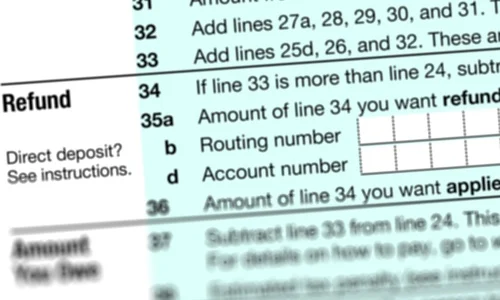
Quick answer: In U.S. banking, an ABA number is another name for a routing number—the nine-digit code that identifies a financial institution. However, your bank may use different routing numbers for ACH payments and wire transfers. Always check your bank’s instructions for the specific type of payment you’re making.
You’re filling out a payment form, and it asks for your “ABA number.” But when you open your banking app, the field is labeled “routing number.” Which one does the form want?
This mix-up trips up a lot of people, and it’s completely understandable. Banking terminology isn’t always consistent across forms, apps, and institutions. The good news: you’re probably not missing anything. These terms usually point to the same thing. The real question worth asking isn’t “which number is correct,” but “which number does this specific transaction require.”
This guide breaks down what ABA numbers and routing numbers actually mean, when your bank might use more than one, and how to find the right number for your transaction.

Are ABA numbers and routing numbers the same?
Yes. ABA number, ABA routing number, and routing transit number (RTN) all refer to the same nine-digit system used to identify U.S. financial institutions. ABA stands for American Bankers Association, the organization that created and maintains this numbering system.
The American Bankers Association describes its routing-number system as the identifier financial institutions use to process payments across the U.S. banking system. In practice, this number tells a receiving bank which institution a payment is coming from, so funds can be routed to the correct place.
Here’s a quick reference for the terms you might come across:
| Term readers may see | What it means |
| Routing number | A nine-digit identifier for a U.S. financial institution |
| ABA number or ABA routing number | Another name for the routing number |
| Routing transit number or RTN | Another term for the routing number |
| ACH routing number | The routing number your bank specifies for ACH payments |
| Wire routing number | The routing number your bank specifies for wire transfers |
These terms overlap, but that doesn’t mean every routing number works for every transaction. The number you need can depend on the type of payment you’re making.

Why might your bank show different routing numbers?
Banks can assign different routing numbers for different purposes. A single bank might use one number for electronic payments, another for paper checks, and a separate one for wire transfers. In some cases, the routing number tied to your account can even depend on the state or region where you opened it.
Bank of America’s guidance illustrates this directly: it notes that some banks use different routing numbers for wire transfers and ACH transfers, and recommends confirming the wire routing number with your recipient before submitting a wire transfer. Using the wrong number can delay, reject, or misdirect a transfer.
The takeaway: just because two numbers both qualify as “routing numbers” doesn’t mean they’re interchangeable. Always check your account’s official instructions for the transaction you’re completing rather than relying on a number you’ve used before or found through a general search.
ACH routing numbers
ACH stands for Automated Clearing House, the network that processes many everyday electronic payments. If you’ve set up payroll direct deposit, scheduled a recurring bill payment, or received a tax refund electronically, your ACH routing number made that transaction possible.
Wire routing numbers
A domestic wire transfer may call for a different routing number than the one used for ACH payments. Bank of America, for example, instructs customers to confirm the wire routing number with their recipient before sending, specifically because this number can differ from the one used for other payment types. When you’re setting up a wire, don’t assume the number you used for direct deposit will work. Confirm it first.
A practical scenario: Say your employer asks for your routing number to set up direct deposit. A few months later, you need to send a wire transfer to pay for a large purchase, and the recipient asks for your wire instructions. Rather than copying the same number you gave your employer, check your bank’s app or statement for the routing number specific to wire transfers. The two numbers may match, or they may not. Confirming ahead of time saves you from a delayed or failed transfer.

Where can you find your ABA or routing number?
Finding your routing number is usually a quick process:
- Sign in to your bank’s official app or website.
- Open the checking or savings account you’re using for the transaction.
- Look for a section labeled account details, routing information, or transfer instructions.
- Check whether the number is specifically labeled for ACH payments or wire transfers.
- Contact your bank directly if the labeling isn’t clear.
If you have a physical checkbook, your routing number typically appears at the bottom left of each check, followed by your account number and check number. U.S. Bank confirms this is the fastest way to locate your routing number if you have a check on hand.
Keep in mind that exact menu names vary by bank, so your app may use slightly different wording than another institution’s.

Can you look up a routing number online?
Yes. The American Bankers Association’s official routing number lookup tool lets you confirm which institution a specific routing number belongs to, or look up a routing number by institution name, city, and state. This tool is useful for verification, but you should still get transaction-specific instructions directly from your bank before sending or receiving funds.
How is a routing number different from an account number?
These two numbers serve different purposes, and payment forms often ask for both:
- Routing number: Identifies the financial institution. According to U.S. Bank, this number is the same for everyone who banks at that institution.
- Account number: Identifies your specific account at that institution.
A simple way to remember this: the routing number identifies the bank, and the account number identifies your account there.

Is an ABA number the same as a SWIFT code?
No. These are different identifiers used for different purposes. An ABA number identifies a U.S. financial institution for domestic transactions. A SWIFT code (also called a BIC, or Business Identifier Code) identifies a bank for international wire transfers.
Bank of America’s guidance distinguishes between the two: domestic wires require the recipient’s wire routing number (ABA), while international wires require bank information such as a SWIFT code and, depending on the destination country, additional identifiers like an IBAN, a Transit Code, or an IFSC code. An ABA number alone isn’t enough for every international transaction. What you’ll need depends on the destination country and the receiving bank’s requirements.
If you’re sending money internationally, check the required details for your specific destination and delivery method rather than assuming one identifier covers every scenario.
Frequently asked questions (FAQs)
Is an ABA number always nine digits?
Yes. The standard electronic ABA routing number format used across U.S. banking is always nine digits long.
Can I use my ACH routing number for a wire transfer?
It depends on your bank. Some banks use the same number for both; others assign a separate number specifically for wires. Confirm your wire routing number with your bank before sending funds.
Does my bank have more than one routing number?
It might. Banks can assign different routing numbers for ACH payments, wire transfers, and paper checks, and the number may also vary based on where you opened your account.
Is my debit card number my routing number?
No. Your debit card number is a separate identifier tied to your card, not your bank account. Don’t enter it into a routing-number field.
What if a form asks for an ABA number instead of a routing number?
It’s asking for your routing number. The terms are interchangeable. Just double-check which payment type the form concerns, since that can affect which specific number you should enter.