
Quick answer: Some debit cards charge fees abroad, while others waive certain charges. Possible costs include foreign transaction fees, bank ATM fees, ATM operator charges, and currency-conversion costs. International acceptance doesn’t guarantee fee-free use. Start by checking your card’s fee schedule and reading the payment screen at checkout.
One dinner abroad. One cash withdrawal at an unfamiliar ATM. Then, days later, a surprise line item on your statement that doesn’t quite match what you expected to pay.
This happens more often than people realize, and it’s rarely because something went wrong. It’s because a single purchase or withdrawal can quietly stack up several separate costs: a foreign transaction fee here, an ATM operator charge there, maybe a currency-conversion markup you didn’t notice at the register.
The amount you actually pay depends on several things working together: your specific card, your account’s terms, the type of transaction, the ATM or merchant involved, and whether you accept or decline a currency-conversion offer. None of these are universal. Two travelers with different debit cards can have completely different experiences at the very same ATM.
This guide breaks down each fee you might encounter, shows you how to tell purchases apart from withdrawals, and gives you a practical checklist to review before your next trip or transfer abroad.

What is an international debit card?
The term “international debit card” gets used loosely, and that’s part of the confusion. Generally, it describes a debit card that works for transactions outside its issuing country. It isn’t a certification of fee-free spending, and it isn’t a standardized product category with guaranteed terms.
International network acceptance and account pricing are two separate issues. A card can be widely accepted overseas and still charge several types of fees when you use it there. Cards marketed specifically for travel, everyday bank debit cards, and multicurrency products can all carry different terms, even if they’re all technically usable abroad.
It’s also worth separating prepaid travel cards from standard bank-account debit cards. They’re not interchangeable products. Prepaid travel cards typically load a fixed amount in a specific currency, while a bank-account debit card draws directly from your checking account and follows your bank’s fee schedule. Don’t assume the rules for one apply to the other.

What fees can debit cards charge abroad?
Several types of charges can apply to international debit card use, and they come from different sources. Here’s a breakdown:
| Potential cost | Who may charge it | When it may apply |
| Foreign transaction fee | Your card issuer | Qualifying overseas or foreign-currency transactions |
| Overseas or out-of-network ATM fee | Your bank or account provider | Cash withdrawals outside an included network |
| ATM operator fee | The ATM owner | Using that particular machine |
| Dynamic currency conversion cost | Merchant or ATM conversion provider | Accepting conversion into your home currency |
| Other account charges | Your account provider | Depending on account terms and activity |
It’s possible for several of these to apply to a single withdrawal. According to the Consumer Financial Protection Bureau, using another institution’s ATM can involve fees from your bank and the ATM operator, meaning you could be charged twice for one transaction.

Do overseas purchases and ATM withdrawals have different fees?
Purchases and withdrawals are not treated the same way, and it’s worth understanding why before you travel.
Paying at a shop or restaurant
A purchase made abroad may involve currency conversion and an issuer’s foreign transaction fee, depending on your specific card. Some merchants will also offer to convert the price into USD at checkout—a separate decision from any fee your card issuer might charge.
Withdrawing cash
An ATM withdrawal can involve several layered costs at once:
- The amount withdrawn
- Currency conversion
- An issuer’s international transaction charge
- A separate bank ATM fee
- An ATM operator charge
Here’s an important distinction: “free card purchases abroad” doesn’t automatically mean “free overseas withdrawals.” An issuer’s fee schedule may apply international transaction charges to both purchases and ATM withdrawals, while also allowing separate ATM fees on top of that. Bank of America’s fee schedule is one example of how a provider discloses this distinction clearly—shown here only as an example of disclosure wording, not as a product recommendation.

What is dynamic currency conversion?
If you’ve ever been asked at checkout, “Would you like to pay in euros or US dollars?”—that’s dynamic currency conversion, or DCC, in action.
DCC lets the merchant or ATM provider convert your transaction into your home currency on the spot. The catch is that this conversion includes its own exchange rate, and it may also include additional fees or markup on top of that rate. Visa requires that the screen display the relevant amounts in both currencies, the exchange rate used, and any conversion charges, so you can make an informed choice before confirming the transaction.
Importantly, you can decline DCC without canceling your purchase or withdrawal. According to Visa, merchants and ATMs must give you a real choice and cannot select the currency on your behalf.
Should I choose local currency or US dollars?
Choosing local currency simply declines the merchant’s or ATM’s offered conversion and leaves the currency conversion to your card’s standard processing arrangements instead. It does not automatically remove any issuer fees that might still apply.
Rather than assuming a USD price is cheaper, take a moment to read the displayed offer and check your own card’s terms. The cheaper option depends on your specific card and the rate being offered at that moment, not a universal rule.

How much could debit card fees add to a transaction?
These are hypothetical, clearly labeled examples meant to illustrate how fees can stack, not typical or guaranteed charges. They exclude DCC and other possible costs, and actual fee calculation methods depend entirely on your provider’s terms.
Example purchase
| Item | Hypothetical amount |
| Purchase after conversion to USD | $100 |
| Foreign transaction fee at an assumed 3% | $3 |
| Total | $103 |
Example ATM withdrawal
| Item | Hypothetical amount |
| Cash withdrawn, expressed in USD | $200 |
| International transaction fee at an assumed 3% | $6 |
| Your bank’s assumed ATM fee | $5 |
| ATM operator’s assumed charge | $4 |
| Total | $215 |
Notice how the ATM example stacks up costs from three separate sources. That’s the layering effect worth watching for, even though your actual fees will depend entirely on your card and the ATM you use.

Does “no foreign transaction fee” mean no fees at all?
No. “No foreign transaction fee” describes one specific category of charge, not a blanket guarantee against every possible cost.
Even with a card that waives this particular fee, you should separately check for:
- ATM fees
- Third-party charges
- Reimbursement conditions
- Conversion arrangements
- Monthly account charges or eligibility requirements
For example, Schwab’s Investor Checking account notes that ATM fee rebates exclude dynamic currency conversion charges and certain other transaction types, even though the account advertises no foreign transaction fees and unlimited ATM fee rebates. This example is meant to show how exclusions can work within a single account, not to rank or recommend any specific product.

How can I reduce avoidable debit card costs abroad?
A little preparation goes a long way. Before you travel, work through this checklist:
- Read your current fee schedule. Search specifically for the terms “foreign transactions,” “international transactions,” “ATM withdrawals,” and “currency conversion.”
- Check eligible ATM networks. Confirm which charges are waived through your bank’s partner networks and which may still apply.
- Read the ATM screen before agreeing to anything. Review any operator charges and conversion offers displayed before you confirm the transaction.
- Understand the currency choice. A displayed USD total may already include a DCC markup.
- Check rebate conditions. Confirm which transactions are eligible, whether there are limits, and when reimbursements are processed.
- Plan your access to money. Check withdrawal limits, where your card is accepted, and whether you have a backup payment method.
One more thing worth weighing: avoiding repeated fixed ATM charges by withdrawing larger amounts at once needs to be balanced against the risks of carrying more cash. The FDIC recommends checking your payment options before you travel and avoiding carrying large sums of cash, regardless of how tempting it is to minimize ATM visits.

What should I ask my bank before using my card overseas?
A quick call or chat with your bank before you travel can clear up most of the uncertainty. Ask about your specific account and destination, not your bank’s debit cards in general:
- Can I use this card in my destination?
- Which purchase and withdrawal fees apply to my account?
- Are any partner ATMs included in my network?
- Does a waiver cover my bank’s fee, the operator’s fee, or both?
- What are my daily withdrawal limits?
- How do I access support if my card is blocked or lost?
- Can I receive verification messages while abroad?
- Does moving overseas change my account’s eligibility or terms?
When might an international money transfer be useful?
A debit card and an international money transfer solve different problems. A transfer moves money into a supported account or to a recipient abroad—it isn’t a stand-in for everyday card spending at restaurants or shops.
A transfer can be useful when someone needs funds deposited directly into a local account, or when you want to support family living overseas. Costs and availability depend on the specific transfer, so it isn’t accurate to claim a transfer always costs less than a debit card purchase or ATM withdrawal. Each has its place.
Check your options with Remitly
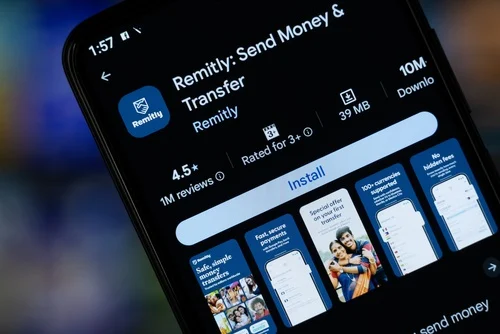
If sending money abroad is part of what you’re planning, it’s worth reviewing your options directly. With Remitly, you can check:
- Supported sending and receiving locations
- Available delivery methods
- The applicable fee and exchange rate
- The amount your recipient will receive
- Estimated arrival time
Costs and delivery speeds vary by transfer, so review the details for your specific route before sending. Explore your options for sending money abroad.
Card fees, exchange rates, ATM charges, and reimbursement policies vary by provider, account, location, and transaction. Review your current account terms and any charges displayed before proceeding. Hypothetical examples in this article are for illustration only.
Frequently asked questions (FAQs)
Do all debit cards charge foreign transaction fees?
No. Some issuers charge a foreign transaction fee on purchases or ATM withdrawals made in a foreign currency, while others waive this fee entirely. Check your card’s fee schedule to see where your account stands.
Can I be charged by both my bank and an overseas ATM?
Yes. According to the Consumer Financial Protection Bureau, using an ATM outside your bank’s network can trigger a fee from your own bank and a separate fee from the ATM operator, meaning one withdrawal can involve two different charges.
Does paying in US dollars avoid international card fees?
Not necessarily. Choosing to pay in USD at a foreign merchant or ATM often means accepting dynamic currency conversion, which includes its own exchange rate and potential markup. It doesn’t automatically eliminate your card issuer’s international transaction fee.
Does choosing local currency mean there are no fees?
No. Choosing local currency declines the merchant’s or ATM’s currency-conversion offer, but your card issuer’s own fees, such as an international transaction fee, may still apply.
Do ATM fee refunds cover currency-conversion charges?
Not always. Some accounts that offer ATM fee rebates specifically exclude dynamic currency conversion charges from those rebates. Review your account’s terms to see exactly what’s covered.
Can an online purchase involve a foreign transaction fee?
Yes. If a merchant processes your transaction in a foreign currency, even for an online purchase made from the US, your card issuer may apply a foreign transaction fee to that charge.
Where can I find my debit card’s overseas fees?
Check your card’s fee schedule or account disclosure documents, usually available through your bank’s website or mobile app. You can also call your bank directly and ask about fees for your specific account and destination.
Before your next trip or transfer, take a few minutes to pull up your debit card’s fee schedule, read through the currency-conversion prompt you’re likely to see at checkout, and review what ATM charges might apply at your destination. A little homework now means fewer surprises on your statement later.
How we researched this article
This guide draws on publicly available information from U.S. regulators, a card network, and bank disclosures. We reviewed:
- Consumer Financial Protection Bureau guidance on how to avoid ATM fees, including how your bank and an ATM operator can each charge a fee on the same withdrawal.
- Visa guidance on dynamic currency conversion, including what must be displayed at checkout and your right to decline the conversion.
- FDIC travel tips on checking your payment options before you travel.
- Published fee schedules and account disclosures from Bank of America and Charles Schwab, used only as examples of how providers disclose international fees and rebate exclusions. We didn’t evaluate or rank any provider’s products.
The fee examples in this article are hypothetical. We chose the percentages and amounts to show how charges can stack, and they aren’t averages or typical fees. Card fees, rebates, and conversion practices vary by provider, account, and location, and they change over time, so check your own account’s current terms.
Last reviewed November 6, 2026