Key Highlights
-
Jagannath Rath Yatra is a popular chariot festival focused on Lord Jagannath, Balabhadra, and Subhadra.
-
This rath yatra is the annual journey from the main temple to the gundicha temple.
-
The meaning behind it is about being devoted, showing mercy, and asking Lord Jagannath into your heart.
-
This festival started in Puri but now is seen across the world through ISKCON.
-
On rath yatra day, people pull the chariots, sing kirtan, and get prasadam.
-
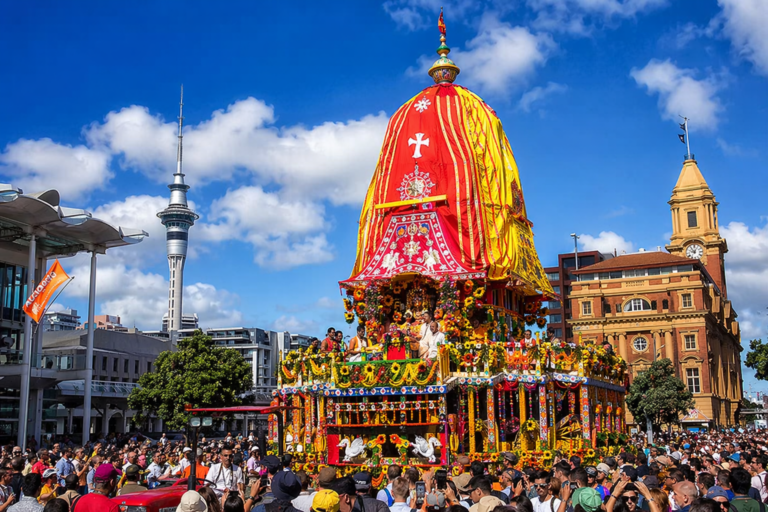
In New Zealand, these events may bring local people together at a jagannath temple or mandir.
Introduction
Jagannath Rath Yatra is one of the most joyful Hindu festivals you can see. People call it the festival of chariots. This is when Lord Jagannath comes out to bless all people, even those who can not get to the temple. The open and welcoming feeling is the reason why the festival means so much to many around the world. If you want to know more about Jagannath Rath Yatra 2026 in New Zealand, start with what it means, where it comes from, and the rath yatra traditions that make it so special for people.
Understanding the Jagannath Rath Yatra Festival
The Jagannath Rath Yatra festival is a very old event that honours Lord Jagannath and how much he loves his followers. The rath yatra festival is important because the Lord shows kindness, love, and lets people see him in public view. During this time, Lord Jagannath steps out from the temple and is with the people.
Every year, the rath yatra happens again to remember this annual journey and how deep it feels. This rath yatra festival takes place every year because it remembers a special story about the Lord. The rath yatra gives people a chance to pull the chariot, sing, help out, and welcome Lord Jagannath back into their lives.
Historical Origins and Evolution of the Rath Yatra
The story of this tradition starts with old tales from the Puranas and the worship of Jagannath in the city of Puri. Many stories in this history talk about King Indradyumna, Nila Madhava, and later show how the gods came to be in wooden form. People often talk about the Skanda Purana when they explain this tradition.
As time went on, the Puri Rath Yatra became the most famous part of the festival in the city of Puri. During the bright fortnight of Ashadha, on the second day, the god forms move from the main temple to the Gundicha temple. One striking scene is when the ground in front of the chariots is swept as a ceremony before the gods start their travel. This uses a golden broom to show how even royals can show humility.
The Jagannath Rath Yatra in Puri is held every year in the bright fortnight of Ashadha. In 2026, the big day for this Puri rath yatra will be on 16 July, following the old ways. Over the years, this festival has spread from Puri to all parts of the world, especially from 1967 onwards, with help from ISKCON.
Significance and Symbolism of Lord Jagannath’s Chariot Journey
At its core, this chariot festival is about longing, love, and coming together again. The main story joins the trip with the wish of the gopis to bring Krishna from Kurukshetra back to Vrindavan. In this way, lord jagannath’s chariot shows how loving devotion can move and get to people.
For all who follow, the bright fortnight of Ashadha is not just another date. This time of year is a reminder that the supreme lord draws near to people with care and kindness. When you pull the chariot, it is both an act of help and a way to remember the lord.
-
It shows how you invite the Lord back into your heart.
-
It shares the Lord’s kindness with everyone, not just those at the temple.
-
It lifts up the idea of serving and showing devotion in a public way.
-
It is not only about going forward but also the journey back, which is called bahuda yatra.
Main Deities and Sacred Traditions
The presiding deities at this festival are Lord Jagannath, Lord Balabhadra, and their sister Subhadra. At the time of the big procession, these three leave the main temple and move out together with great respect. Their shared trip is at the heart of what this event is all about.
There are special customs that go on around them, such as public darshan, pulling chariots, singing, music, and service given by the people who follow them. Well-known rituals like Snana Purnima, Pahandi Bije, Hera Panchami, and their return are key parts that shape the feel of this time. To get what they mean, we can look closer at the deities and the customs.
Who Are Lord Jagannath, Balabhadra, and Subhadra?
Lord Jagannath is known to be a kind Lord. He comes out to bless people at the Rath Yatra. During this festival, his elder brother Balabhadra and sister Subhadra come with him. All three are the main gods prayed to at the event.
Brother Balabhadra goes on his own wooden chariot in this festival. Goddess Subhadra rides her own chariot as well. People look at their raths and spot them by colours, wheels, and signs. This way, everyone in Puri knows the chariots during rath yatra.
The god’s travel starts at the temple and ends at Gundicha temple. There is music, drum beats, and conch sound as the wooden chariots roll. Many people pull the chariots and make the festival feel special and big. This is how rath yatra at Puri happens, and why it looks sacred to us all.
Major Rituals and Customs Performed During the Festival
The festival has a series of different rituals that many people look forward to every year. These customs help make the celebration special and give it order, starting with getting ready, then going on the procession, and at last, coming back. There are lakhs of devotees who gather to watch and take part in these holy events.
One main act here is when the ruler or a senior person uses the golden broom to sweep. This stands for being humble in front of the Lord. Moving the deities, taking them on their trip to Gundicha, and bringing them back are all big parts of the yatra and its structure.
-
Snana Purnima is when the deities have a special bath.
-
Pahandi Bije is the grand event of bringing out the deities.
-
The golden broom act shows service and humble behaviour.
-
Hera Panchami is about Goddess Lakshmi’s visit and her being upset.
-
Niladri Bije means the Lord goes back and comes inside again.
These various rituals and so many devotees help make the festival what it is.
Rath Yatra Celebrations in New Zealand for 2026
Yes, the Rath Yatra festival is held in places outside of Puri. The information here shows that people now mark this festival all over the world. Jagannath Rathyatra spread to many other countries through ISKCON. Because of this, you can now find the festival of chariots in many cities far from India.
If people in New Zealand want to join the celebrations in 2026, they can do so at a jagannath temple, an ISKCON centre, or even at a shri jagannath mandir. For most communities, the rath yatra is about pulling the chariot, singing kirtans, getting darshan, and having prasadam together. The next part will talk about important dates for the event based on the details found here.
Confirmed Dates, Procession Routes, and Event Details
The compiled material does not provide confirmed New Zealand event listings, procession routes, or venue notices for 2026. So, it would not be accurate to invent a local route or announce a New Zealand Rath Yatra Mahotsav as confirmed. What we can say is that the global festival follows the Puri model and often includes public processions.
For date references in the material, one source mentions 16 July 2026 for a major observance based on the Puri tradition, while another event note mentions 27th June for a 2025 temple celebration. In Puri, the chariots traditionally move from the main temple along the grand avenue to Gundicha temple.
|
Detail |
Information from compiled material |
|---|---|
|
New Zealand 2026 confirmed date |
Not provided |
|
27th june |
Mentioned for a 2025 temple celebration, not New Zealand 2026 |
|
Puri route style |
Main temple to Gundicha temple via the grand avenue |
|
2026 major observance mention |
16 July 2026 |
Community Participation and Cultural Activities Across New Zealand
Even though there are not details for each city, you can still see how people come together for the rath yatra festival around the world. The way people join with great enthusiasm for kirtan, darshan, pulling the chariot, and enjoying prasadam is the same. This is likely how it will be in New Zealand as well.
The information shows that the festival is open to everyone. Lord Jagannath comes out to give blessings to all, even if they do not go to or visit a temple. This makes it a friendly event. It means numerous devotees, families, visitors, and locals who are interested can join with respect.
-
People join the march and help pull the chariot.
-
There are cultural programs like kirtan, dancing, and singing devotionally.
-
Giving out prasadam is a big part of the sharing for everyone.
-
The jagannath rath yatra festival creates an environment where the wider community joins in.
-
Even those who are not Hindu can be part of the public celebration if they join with care.
Conclusion
The Jagannath Rath Yatra is more than just a festival. It’s a big and bright gathering of culture, people, and deep feeling that brings everyone together. As we wait for the 2026 celebrations in New Zealand, it is nice to see local people take part and show respect for this rath yatra. They share the rich story and meaning behind it. The rituals are detailed, and the processions are full of life, which shows how strongly connected people feel to their faith and history. It does not matter if you have always joined in before or if this will be your first time. You will find something special in this event. Mark the date on your calendar. Bring your family and mates along. Every year, coming together for Lord Jagannath’s journey is a great way to feel good and close to others. Celebrate with us, welcome the spirit of the rath yatra, and make new and special memories.
Frequently Asked Questions
How do New Zealanders celebrate Jagannath Rath Yatra?
New Zealanders take part in Rath Yatra with the same energy seen in other parts of the world. People show their devotion in public. There is singing. Chariot pulling is a highlight, and everyone shares prasadam. The festival of chariots can be run by a jagannath temple, an ISKCON centre, or at a shri jagannath mandir event. All of these times, there is great enthusiasm and many join in openly.
Are there differences between celebrations in Puri and New Zealand?
Yes. The city of Puri, which is in the coastal town of Puri, is known for its big original rath yatra. The rath yatra here is done with royal customs, temple-specific ways, and the whole journey to Gundicha temple. In respective places like New Zealand, people hold Jagannath Rathyatra or a Rath Yatra Mahotsav in the same spirit. But it is done on a local scale.
Can non-Hindus join the Rath Yatra festivities in New Zealand?
Yes, the Rath Yatra festival welcomes everyone. People know it for being open and letting everyone join in. During the festival, Lord Jagannath comes out to see all people and give blessings. Non-Hindus can also join countless devotees in the processions, kirtan, prasadam, and different cultural programs. The great festival is famous for this open spirit, and it brings many people in the community together.