Key Highlights
-
Vassa is the yearly rains retreat in the Theravada Buddhist tradition. People often call it Buddhist Lent.
-
It is a three-month time when Buddhist monks stay in one place to keep up study and practice. This goes with the rainy season.
-
In 2026, the first day of Vassa will be Friday, 11 July. It goes on until Tuesday, 7 October.
-
The retreat runs with the same pattern as the rainy season. It also follows the dates in the lunar calendar and is linked to the full moon day.
-
For the monastic community, Vassa helps with deeper monastic life. It gives time for more meditation and good discipline under the Vinaya.
-
Lay people join as well. They support the Sangha by showing devotion, making visits, giving dana, and being there for the monks during the rains retreat.
Introduction
If you want to know what Vassa means in Buddhism, it is called the rains retreat. Buddhist monks follow this each year during the rainy season. The rains retreat is a time when the monastic community will stop in one place. They use this time to work on their practice and to think deeply about the Dhamma.
For many Buddhists, this is one of the most important times of the year. The rains retreat brings together discipline, meditation, teaching, and support from people who help the monks. To see why the rainy season and this retreat mean so much, it helps to learn what it is and where it comes from.
Understanding Vassa: The Buddhist Rains Retreat and Its Significance
Vassa is a rainy season retreat in the Buddhist tradition. During this time, Buddhist monks do not move around much. They stay in one place for a set time. This helps keep their monastic life steady. It also lets them do regular meditation and pay close attention to their training. Vassa is not a time for usual travel and movement. Buddhist monks put in more effort during the rainy season retreat.
The period of Vassa begins after Asalha Puja, which many people also call Dhamma Day. On this day, people remember the Buddha’s first teaching. In Southeast Asia, this retreat is still an important part of every year in Theravada practice. You can see why this Buddhist tradition has lasted so long when you look at how and where it started.
Origins and History of Vassa in the Buddhist Tradition
The story of Vassa goes all the way back to the time of the Buddha. He started this annual retreat and said that all fully ordained bhikkhus must take part in it. This rule, along with many others for monastic life in Buddhism, is written in the Vinaya.
When the rainy season came, everyone in the monastic community had to stay in one place. They were not to travel widely at this time. This helped to give a calm setting for their practice, study, and discipline work. On the first day, the monks say out loud that they will stay in their chosen monastery or home for the whole retreat.
Vassa follows a set pattern. It lasts for three months, starting just after the full moon day in July and ending on the full moon day in October. This timing has helped shape how the annual retreat works for many generations of disciples. Because of the high rainfall, many people also call this time the rains retreat or even Buddhist Lent.
Why Vassa Is Also Known as Buddhist Lent or Rains Retreat
Vassa is often called the rains retreat because it happens in the rainy season. The name works well for what goes on during this time. Buddhist monks mostly stay in one place. They do not travel as much and spend more time on meditation, study, and learning the Dhamma.
It is also called Buddhist Lent by many people. This name shows it is a time of restraint, discipline, and more focus in monastic life. Under the Vinaya, this retreat is not just an option for fully ordained buddhist monks. It is a set part of buddhist tradition and has clear rules.
For lots of people, the term Buddhist Lent is an easy way to talk about this annual retreat. Vassa still has its own meaning in buddhism. It is about practice, keeping the community strong, and real dedication for three months. That is why it is helpful to look at how people take part in the 2026 rains retreat in New Zealand.
Observing Vassa in New Zealand for 2026
In New Zealand, Vassa in 2026 will follow the same three-month rains retreat like in the Theravada tradition. The main aim is for the monastic community to stay in one place. Buddhist monks make this their time for regular training and good daily routine.
The rains retreat also helps the connection grow between the Sangha and the people who give support. During Vassa, people come together for chanting, meditation, Buddhist teachings, and different ways to help each other. When the retreat will start and finish in 2026 is important, so the next part will give those dates.
When Does Vassa Begin and End in New Zealand?
For 2026, the first day of Vassa is Friday, 11 July, and the retreat continues until Tuesday, 7 October. This gives the full three-month period of Vassa. In Theravada Buddhism, the observance is tied to lunar timing rather than a fixed civil schedule every year.
Traditionally, the retreat begins from the day following the full moon of July and continues until the full moon day of October. This pattern reflects the rainy season cycle linked with the monsoon season. Formal determination of the retreat takes place on the opening evening.
|
Vassa detail |
2026 calendar dates |
|---|---|
|
Asalha Puja / Dhamma Day |
Thursday, 10 July 2026 |
|
First day of Vassa |
Friday, 11 July 2026 |
|
Formal determination by monastic community |
Evening of 11 July 2026 |
|
End of Vassa |
Tuesday, 7 October 2026 |
This month of July beginning and October close shape the annual Dharma rhythm for many communities.
Key Vassa Rituals, Practices, and Community Participation
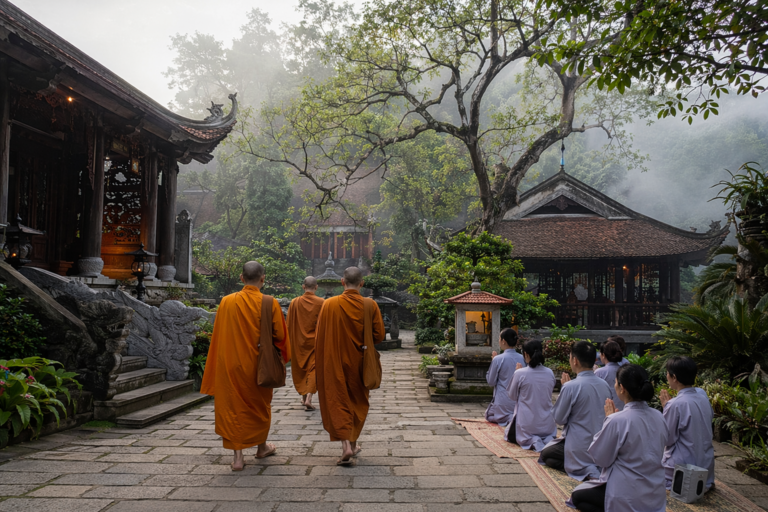
Vassa is a time where the monastic community follows more rules and the whole community joins in together. The monks formally enter the retreat and stay where they are for intensive practice. This lets them have more quiet time for meditation and study. They can also get better training and follow the daily rhythm in the Sangha.
The season starts with Asalha Puja or Dhamma Day. People take part in chanting, sitting meditation, and candle-lit walking around the hall. In the first week after retreat starts, there is often group practice with sitting and walking meditation all day. Noble silence helps everyone keep focus and devotion.
Lay people get to join in as well. They help by being there, showing respect, and giving dana. Usual Vassa practices are:
-
A formal start for the monastic community as they enter the retreat
-
Doing puja, chanting, and meditation for Asalha Puja
-
Daily sitting and walking meditation during intensive practice
-
Support from lay people through dana and taking part in the community
-
Listening to Dhamma talks and being more careful with precepts
With all these practices, the retreat comes to a natural close. The final ceremonies follow once the time is over.
Conclusion
In the end, Vassa is a time for you to slow down and think, and to feel close to others in the Buddhist tradition. The Rains Retreat is an important time for spiritual growth and strong focus. In New Zealand, people will follow this in 2026. The rains retreat is not just for monks. Lay Buddhists can also take part and get more out of their spiritual life. When you know why Vassa is so important, it can help you and those around you feel more connected and have real purpose. As you get ready for this special time, you may want to learn about its main rituals and how people take part in them. This season is a chance to follow the Buddhist teachings of kindness and being mindful, both on your own and together with others.
Frequently Asked Questions
How Do Monastics Observe the Vassa Retreat Season?
During the rainy season retreat, the monastic community comes together to begin Vassa. They stay mostly in one place during this time. Under the Vinaya, Buddhist monks spend more time on their monastic life. They do more meditation, study, and take part in intensive practice. They do not travel much, except for short trips if they need to go. Even then, they plan to return quickly to continue in the monastic community. The rainy season helps them focus on being Buddhist and keeps them steady in their practice.
What Is the Importance of Vassa for Lay Buddhists?
For lay people, Vassa is a good chance to join with others and help support the Sangha. They can do this by giving dana, being part of teachings, and showing respect. These actions help them get better at their spiritual practice in Buddhism. It can bring lay life closer to the way monks live. It also helps with steady devotion for these three months.
What Happens at the End of Vassa, and What Is the Kathina Ceremony?
At the end of the rains, monks take part in a ceremony called Pavarana. In this Buddhist tradition, they ask others if there are any faults to talk about from the retreat. After this, the Kathina ceremony is held. It is an important event for Buddhists. At this time, people in the community offer a robe to the Sangha. This is an act of dana, showing the devotion they have. It marks when Vassa ends, and people come together.