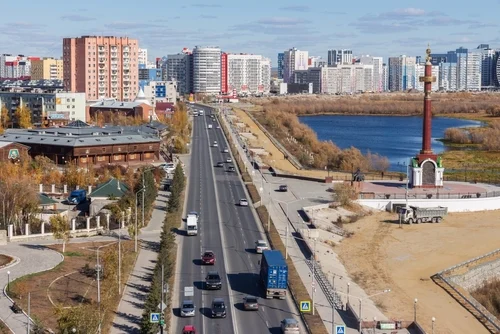
Yakutsk is one of the coldest permanently inhabited cities in the world, in eastern Siberia, Russia. Winters regularly fall below −40°C, while summer temperatures can rise above 30°C. British visitors need a Russian visa and should check current FCDO advice before making travel plans.
At a glance
- Location: Yakutsk is the capital of the Sakha Republic (Yakutia) in eastern Siberia, Russia.
- Climate: Winters regularly fall below −40°C, while summer temperatures can rise above 30°C.
- UK travel advice: The FCDO currently advises against all travel to Russia, including Yakutsk.
- Visa: British citizens need a Russian visa before travelling.
- Getting there: There are no direct UK–Russia flights, so reaching Yakutsk requires indirect international travel and onward connections within Russia.
- Paying: UK-issued Visa and Mastercard cards will not work in Russia, so you’ll need to plan how you’ll access money before travelling.
- When to visit: Summer offers easier access to attractions such as the Lena Pillars, while winter brings the extreme cold and frozen landscapes Yakutsk is known for.

What Is Yakutsk? A Direct Answer for Travellers
Yakutsk is the capital of the Sakha Republic (also called Yakutia), a vast region of eastern Siberia within the Russian Federation. The city sits on the Lena River and is one of the world’s largest cities built on continuous permafrost.
For a British traveller, Yakutsk isn’t a typical bucket-list stop. It’s a serious undertaking: complicated flight connections, a Russian visa, and a destination the UK Foreign, Commonwealth & Development Office (FCDO) currently advises against all travel to. This guide cross-checks climate information, travel logistics, and current UK government advice so you have a realistic picture before deciding whether a trip makes sense for you.
If you do visit, the experience is unlike most city breaks. Soviet-era apartment blocks and traditional wooden buildings sit on permanently frozen ground, while winter brings extreme cold and summer can be surprisingly warm. It’s a striking counterpoint to the more familiar names on lists of capital cities of the world.
Yakutsk Weather and Climate: What to Expect
Yakutsk has an exceptionally continental climate, with extremely cold winters and warm summers. The city is built on continuous permafrost, which has shaped local construction methods. Many buildings use pile foundations designed to reduce the transfer of heat from the building into the frozen ground below.
Winter in Yakutsk (November–March)
January temperatures regularly fall below −40°C, making winter conditions extreme even by Siberian standards. Rather than relying on a single record-low figure, it’s more useful for travellers to plan for sustained temperatures that can make exposed skin, unsuitable clothing, and inadequate footwear dangerous.
At these temperatures, frostbite can develop quickly on exposed skin, batteries lose charge faster, and ice fog can reduce visibility. Winter also transforms the landscape around the city, with the Lena River freezing and long, dark nights creating opportunities to see the aurora when weather and solar conditions cooperate. Standard British winter clothing may not be adequate, so check the temperature ratings of boots, gloves, and outerwear carefully.
Summer in Yakutsk (June–August)
Summer can feel surprisingly warm after Yakutsk’s severe winter. July is the warmest month, and daytime temperatures can rise above 30°C during hot spells. For a few months, the frozen landscape becomes a green river environment with long daylight hours.
Summer is also the main season for visiting the Lena Pillars by river, while the Ysyakh festival takes place around the beginning of the Sakha summer. Mosquitoes can be particularly noticeable during the warmer months, especially around wetlands and areas of standing water, so insect repellent and protective clothing are useful additions to your packing list.
How to Get to Yakutsk from the UK
There’s no direct flight between the UK and Russia, and travelling to Yakutsk currently requires considerably more planning than it did before 2022.
- Start with the visa. British citizens need a visa before travelling to Russia. UK residents aged 12 or over must attend a visa application centre in London, Manchester, or Edinburgh to submit fingerprints. Your passport’s expiry date must be at least six months after your Russian visa expires. Foreign visitors must also register biometric details, such as fingerprints and photographs, on arrival. Check the latest FCDO entry requirements before applying.
- Check current flight routing. Direct flights between the UK and Russia are not operating. Current restrictions mean journeys require an indirect connection, with limited commercial options through places such as the Middle East, Serbia, Azerbaijan, Central Asia, Georgia, or Turkey. Routes can change at short notice, so check current airline and FCDO information.
- Check the onward connection to Yakutsk. Yakutsk is served by domestic flights from other Russian cities. All airlines certified by Russian authorities are on the UK Air Safety List and are banned from operating commercial services to, from, or within the UK. This does not mean domestic flights within Russia do not operate, but British travellers should check the operating airline and current FCDO guidance before booking.
- Allow plenty of time. Reaching Yakutsk from the UK can involve several flights and lengthy connections, so avoid planning around a fixed total journey time. Yakutsk uses UTC+9 throughout the year, putting it nine hours ahead of the UK when the UK is on GMT and eight hours ahead during British Summer Time.
- Plan how you’ll pay. Mastercard and Visa cards issued outside Russia will not work at Russian shops or ATMs. Roubles can also be difficult to obtain from UK high-street banks. Current FCDO guidance says travellers who want to buy roubles in Russia must take US dollars or euros to exchange and should use banks, hotels, or exchange bureaux rather than street traders. Check current cash and sanctions rules before travelling.

Top Things to Do in Yakutsk
Most visitors build a Yakutsk trip around a handful of attractions rather than trying to see everything. If Yakutsk has you thinking about a wider itinerary, browse our international city guides for ideas beyond Yakutsk itself.
Kingdom of Permafrost
This unusual attraction uses naturally frozen underground spaces to introduce visitors to Yakutia’s permafrost environment. Ice sculptures and displays help explain how the region’s climate has shaped local life and culture. Current 2026 admission prices could not be reliably verified, so verify opening arrangements and the latest rouble price before publication or travel, and add a GBP conversion if the brief requires one.
Mammoth Museum
Yakutia’s permafrost has preserved an unusually large number of woolly mammoth and other Ice Age remains, and the Mammoth Museum, part of the North-Eastern Federal University in Yakutsk, displays some of the best-known finds, including preserved soft tissue rather than just bone. It’s a small museum, but a genuinely unique one: this is one of relatively few places in the world where remains this well preserved are on public display.
Lena Pillars Nature Park
A UNESCO World Heritage Site since 2012, the Lena Pillars are a spectacular series of natural rock formations along the Lena River, with some pillars reaching around 100 metres high. Summer is generally the most practical season for visiting by river, when the Lena is navigable. Excursions can take much of the day, so check current operators, schedules, and access arrangements before travelling.
Ysyakh Festival
Held every June, Ysyakh is the Sakha people’s midsummer festival, marking the start of the pastoral year with traditional dress, horse racing, wrestling, and the ceremonial drinking of kumiss (fermented mare’s milk). If your visit lines up with it, it’s one of the most authentic cultural experiences on offer in the region, and a natural counterpart to the winter extremes most visitors come for.
Yakutsk City Centre
Away from the big-ticket attractions, the city centre itself is worth a slow walk: wooden houses built on stilts sit alongside Soviet-era apartment blocks, and the area around Ordzhonikidze Square and the Sakha Republic’s government buildings gives a real sense of everyday life in a city built entirely on permafrost. It’s also the easiest way to get a feel for Yakutsk without arranging transport out to the Lena Pillars or the Kingdom of Permafrost.

Yakutsk Food and Local Cuisine
Yakut cuisine makes a lot more sense once you understand the climate that shaped it: in a place with barely any growing season and brutally cold winters, traditional food leans heavily on preserved fish and meat, fermented dairy, and dishes designed to be eaten frozen or nearly so.
Stroganina: thin, shaved slices of raw frozen fish, usually whitefish or muksun: is probably the dish most associated with the region; it’s eaten straight from the freezer, dipped in salt and pepper. Kholodets is a savoury meat jelly made by slow-cooking meat until the natural collagen sets as it cools, traditionally served at celebrations. Salamat is a simple, warming porridge made from flour fried in butter and thinned with cream, often served as a starter. Indigirka is a cold salad of frozen fish, onion and oil, similar in spirit to stroganina but chopped rather than shaved. And kumiss, fermented mare’s milk, is a traditional Sakha drink with a mildly alcoholic, tangy flavour that features heavily at the Ysyakh festival.
These dishes reflect how people have adapted to the region’s climate and food traditions over generations. You’ll also pick up a handful of Russian language basics along the way, which can be useful in local restaurants.
Where to Stay in Yakutsk
Yakutsk has a smaller accommodation market than cities such as Moscow or St Petersburg, and winter conditions make reliable heating particularly important. Check recent reviews and confirm heating, availability, and payment arrangements directly with your accommodation before booking.
Tygyn Darkhan Hotel appears in current Yakutsk hotel listings, but its 2026 international-booking availability and GBP price range still need to be verified before publication. We could not reliably verify the same current details for Polar Star Hotel, so its operating status, international-booking availability, and current rates should also be checked before it is presented as a recommendation.
Payment also requires advance planning. Mastercard and Visa cards issued outside Russia will not work at Russian shops or ATMs, so don’t assume you’ll be able to pay for or extend accommodation using your usual UK bank card. Check the latest FCDO guidance on money and payment arrangements before travelling.
Guesthouses and smaller accommodation options may also be available in and around Yakutsk. Availability can be more difficult to establish remotely, so confirm the property’s current status and payment requirements before committing to a booking.

What to Pack for Yakutsk
Winter gear here needs to work at temperatures well below anything most UK packing lists are built for, while summer calls for the opposite: light layers and serious mosquito protection.
Clothing
- A proper three-layer system for winter: a moisture-wicking base layer, an insulating mid-layer (down or synthetic fill), and a windproof, waterproof outer shell.
- A hat that covers your ears, plus a scarf or balaclava for exposed skin in extreme cold.
- Insulated, windproof gloves or mittens, ideally rated well below −30°C.
- For summer, lightweight, breathable layers plus one long-sleeved layer for evenings and mosquito protection.
Footwear
- Arctic-rated boots for winter: valenki (traditional Russian felt boots) or an equivalent commercially rated to at least −40°C: standard UK winter boots aren’t built for this.
- Thick, moisture-wicking socks, ideally more than one pair worn together in the coldest conditions.
- Comfortable, breathable footwear for summer walking.
Technology
- Cold drains batteries fast: keep phones and cameras in an inner jacket pocket, close to your body, rather than in an outer pocket or bag.
- Pack a portable charger, and expect battery percentage to drop faster than usual in extreme cold.
- Screens can become unresponsive in deep cold, so gloves with touchscreen-compatible fingertips are worth having.
Documents
- Your passport, Russian visa, and printed copies of both, kept separately from the originals.
- Travel insurance that explicitly covers Russia and any activities you’re planning: not all standard UK policies do, given the FCDO’s current advice, so check the wording carefully before you buy.
- A printed itinerary and accommodation confirmation, since UK mobile data and some apps may not work reliably once you’re there.

Safety, Health, and Practical Information for British Travellers
The UK’s Foreign, Commonwealth & Development Office (FCDO) currently advises against all travel to Russia, including Yakutsk. Travelling against FCDO advice can affect travel insurance, and British consular assistance may be limited. Check the FCDO’s current Russia travel advice before booking and again shortly before any planned departure.
Extreme cold creates additional health risks. Frostbite can begin with numbness and changes in the colour or texture of exposed skin, particularly on the fingers, toes, nose, and ears. Move somewhere warm, remove wet clothing, and seek medical help for suspected frostbite rather than rubbing the affected area.
For emergencies in Russia, 112 is the general emergency number. You can also use 101 for fire and rescue, 102 for police, and 103 for ambulance services. Russian is widely used in Yakutsk alongside Sakha, and English-speaking assistance shouldn’t be assumed, so keeping important addresses and emergency details available offline can be useful.
Before you go, it’s worth understanding what a travel warning actually means and how it can affect insurance and the support realistically available to you.
Frequently Asked Questions About Visiting Yakutsk
Is Yakutsk safe for British tourists?
The FCDO currently advises against all travel to Russia, which includes Yakutsk, so any visit carries risks beyond the everyday: limited consular support, insurance complications, and unpredictable local conditions. Anyone still considering the trip should read the current FCDO advice closely and understand what it means for their cover before booking.
What is the best time to visit Yakutsk?
The two realistic windows are June to August, when temperatures are mild and the Lena Pillars and Ysyakh festival are accessible, and January to February, for the deepest winter cold, ice landscapes, and the best chance of seeing the Northern Lights. Spring and autumn offer little beyond mud and transitional weather.
How do you get to Yakutsk from the UK?
There are no direct UK–Russia flights. Current journeys require indirect international connections followed by onward travel within Russia. Routes can change because of airspace restrictions, sanctions, and security-related disruption, so check current FCDO guidance and airline schedules rather than relying on a fixed route or journey time.
Do British nationals need a visa for Yakutsk?
Yes. Yakutsk is part of the Russian Federation, so British citizens need a Russian visa before travelling. UK residents aged 12 or over must attend a visa application centre in London, Manchester, or Edinburgh to submit fingerprints. Foreign visitors must also register biometric details on arrival. Check current FCDO entry guidance before applying.
Can you see the Northern Lights in Yakutsk?
Yes, on clear nights during the winter months, away from the city’s lights. Visibility depends heavily on weather and solar activity, so it’s never guaranteed on any single night, but winter (roughly November to March) gives you the best odds.
What is the coldest temperature ever recorded in Yakutsk?
Yakutsk experiences exceptionally severe winters, with temperatures regularly falling below −40°C. Historical sources report even lower extremes, but record-temperature figures can vary depending on the weather station and dataset used. For practical travel planning, sustained extreme cold matters more than a single historical minimum.
Planning Your Trip to Yakutsk: Key Takeaways
Yakutsk isn’t a destination to book on a whim. Current travel restrictions, extreme weather, complicated transport arrangements, and the FCDO’s advice against all travel to Russia mean careful research is essential before making any plans.
Key Takeaways
- Yakutsk has an exceptionally continental climate, with winter temperatures regularly below −40°C and summer temperatures that can rise above 30°C.
- The FCDO currently advises against all travel to Russia, including Yakutsk.
- There are no direct UK–Russia flights, so reaching Yakutsk requires indirect international travel followed by onward connections within Russia.
- Mastercard and Visa cards issued outside Russia will not work at Russian shops or ATMs. Check current FCDO guidance on cash, currency exchange, and access to money before travelling.
- Summer offers easier access to attractions such as the Lena Pillars, while winter provides the extreme cold and frozen landscapes for which Yakutsk is known.
Wherever your next trip takes you, we hope this guide has given you a clearer picture of what visiting Yakutsk involves.
Last reviewed: September 2026