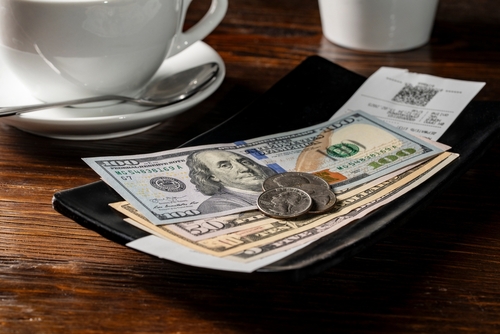
You finish a wonderful dinner in New York or a quick lunch in Florida, and the waiter hands you the bill. You scan the receipt for a service charge, but it is completely missing. Instead, there is a blank line waiting for you to write in a tip. For many UK travellers visiting the United States for the first time, this is a very common and highly confusing moment.
The tipping system in the US works very differently from what we are used to in the UK. British restaurants often add an automatic service charge, making voluntary tipping an occasional bonus for exceptional service. In America, tipping is a deeply ingrained part of daily life and forms a major part of a worker’s income.
Understanding these differences matters. Knowing exactly when, where, and how much to tip helps you avoid awkward interactions, prevents under-tipping hardworking staff, and keeps you from overspending your holiday budget.
This guide explains the rules of American tipping culture clearly and simply. Based on real travel experiences across US restaurants, hotels, and transport services, it outlines exactly what is expected. By the time you board your flight, you will feel completely confident handling any tipping situation during your trip.
Do You Have to Tip in the US?
The short and honest answer is yes. Tipping is heavily expected in many situations across the United States. This is particularly true in restaurants, bars, and personal service roles.
While leaving a tip is technically voluntary from a legal standpoint, it is a strict social requirement. In the US, tipping is not just a bonus for a job well done. It is often a fundamental part of how service workers are paid.
Why Tipping Is Different in the US
The main difference between the UK and the US comes down to minimum wage laws. In the UK, hospitality workers receive a standard minimum wage, and tips act as a supplementary bonus.
In the United States, federal law allows employers to pay a “tipped minimum wage” to workers who regularly receive gratuities. This base rate can be incredibly low—sometimes just over two dollars an hour. Workers rely on customer tips to make up the rest of their living wage. This economic reality is why tipping is viewed as mandatory by locals.
How Much Should You Tip? A Quick Reference
Keeping track of percentages can feel overwhelming. Here is a clear, easy-to-scan guide for standard tipping situations:
- Restaurants (table service): 15% to 20% of the pre-tax bill.
- Bars: $1 to $2 per drink, or 15% to 20% of the total tab.
- Taxis and ride services: 10% to 20% of the fare.
- Hotel housekeeping: $2 to $5 per night.
- Hotel porters: $1 to $2 per bag.
- Food delivery: 10% to 20% of the order total.
Tipping in Restaurants: The Golden Rules
Restaurants are where you will encounter tipping the most. When you sit down for full table service, the standard expectation is a tip of 15% to 20%.
You can adjust this amount based on your experience. If the service is genuinely exceptional, leaving 18% to 20% is common practice. If the service is basic but adequate, 15% is perfectly acceptable. If the service is exceptionally poor, you might leave a lower percentage, but it is still highly unusual to leave nothing at all.
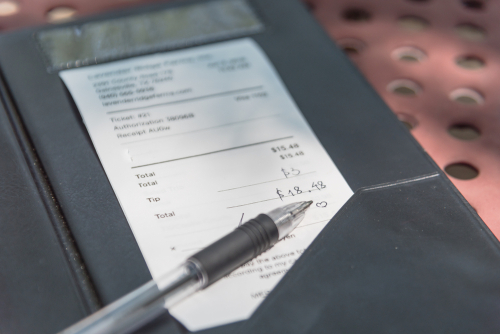
When it is time to pay, the server will bring your bill. If paying by card, they will take your card, swipe it, and return it with a receipt that has a blank line for you to write the tip amount and a new total.
Always check your receipt carefully before writing in a number. Some restaurants add an “automatic gratuity” to the bill, especially for groups of six or more. If you see a charge labelled “gratuity” or “service fee,” you do not need to add an additional tip unless you want to.

Tipping in Bars and Cafés
Bar culture in the US moves quickly. If you are ordering drinks directly from a bartender, a standard tip is $1 or $2 per drink. If you are running a tab and paying for multiple drinks at the end of the night, leaving 15% to 20% of the total bill is the safest approach.
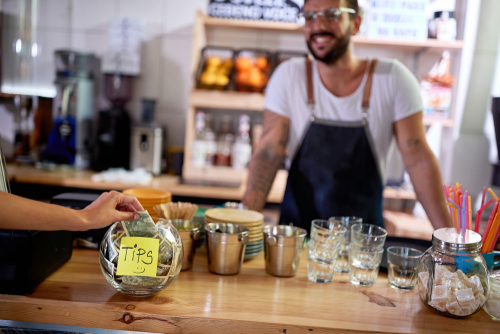
Cafés and counter-service venues are slightly different. You are not strictly expected to tip when simply ordering a takeaway coffee. However, modern payment screens will often prompt you for a tip (usually 10%, 15%, or 20%). Leaving a small tip or dropping spare change in a tip jar is always appreciated, but it remains entirely optional.
Tipping for Transport and Taxis
Whether you hail a classic yellow cab or use a ride-hailing app, tipping your driver is standard practice. A tip of 10% to 20% of the total fare is expected. Ride-hailing apps make this process incredibly easy, as they will prompt you to select a tip amount on your phone after the journey ends.
If you use a complimentary hotel shuttle, it is polite to give the driver a small cash tip, usually $1 or $2 per person, or more if they help you load heavy bags.
Tipping Hotel Staff
Hotels involve several services where small tips are expected. Keep small cash notes handy for these interactions.
- Housekeeping: Leave $2 to $5 per night on the desk or pillow. It is best to tip daily rather than at the end of your stay, as different staff members may clean your room on different days.
- Porters: If a bellhop helps you carry luggage to your room, tip $1 to $2 per bag.
- Concierge: If the concierge provides a standard map or basic directions, no tip is required. If they secure hard-to-get restaurant reservations or arrange complex tours, a tip of $5 to $20 is appropriate.

Other Situations Where Tipping Is Expected
You may use other personal services during your trip. Hairdressers, barbers, and spa therapists typically expect a 15% to 20% tip. Tour guides also rely heavily on tips. For a short group tour, giving the guide $5 to $10 per person at the end of the excursion is standard practice.
When You Do Not Need to Tip
You do not need to tip for absolutely everything. Tipping is not expected at fast-food chains or entirely self-service restaurants. You also do not need to tip retail workers in clothing shops, supermarkets, or convenience stores.
How to Actually Leave a Tip
Paying by card is simple. After the server runs your card, they will hand you a merchant copy of the receipt. You write the tip amount on the designated line, calculate the final total, and sign it. The restaurant will process the tip later.
If you prefer to pay the tip in cash while settling the main bill on a card, simply write “Cash” on the tip line of the receipt and leave the notes clearly visible on the table.
Common Tipping Mistakes Brits Make
UK travellers often make a few predictable errors when adapting to the US system.
The most common mistake is assuming a service charge is already included in the menu price. Another frequent error is simply “rounding up” the bill. In the UK, rounding a £47 meal up to £50 is a nice gesture. In the US, leaving a $3 tip on a $47 meal will be seen as an insult to the server. Finally, many tourists feel pressured by digital payment screens at bakeries or self-service kiosks. Remember that you can confidently select “No Tip” in non-service retail environments.
Practical Tipping Tips for Your Trip
Preparing for the US tipping system does not have to be stressful. Follow these practical steps to make it seamless:
- Carry small notes: Ask for a stack of $1 and $5 bills when you exchange your money. Having small cash makes tipping hotel staff and bartenders incredibly easy.
- Check receipts: Always look for automatic gratuities to avoid paying twice.
- Calculate easily: To quickly figure out a 20% tip, move the decimal point on your bill one place to the left, and double that number.
- Stay calm: Hospitality workers know you are a tourist. If you make a small mistake, they are usually very understanding.
Frequently Asked Questions About US Tipping
Is tipping legally required?
No, tipping is not a strict legal requirement. However, it is a firm social contract. Refusing to tip for table service is considered highly offensive.
What happens if I don’t tip?
If you do not leave a tip at a restaurant, the server or manager may actually stop you before you leave to ask if something was wrong with the service. It creates an uncomfortable situation for everyone involved.
Can I tip in cash instead of using a card?
Absolutely. Service workers often prefer cash tips because they receive the money immediately at the end of their shift.
Do locals always tip 20%?
Tipping habits vary, but 20% has become the modern standard for good service in major US cities. Many locals consider 18% to 20% the baseline for a normal dining experience.
Is it rude to tip too much or too little?
Tipping too little is considered rude, as it directly impacts the worker’s take-home pay. Tipping generously is never considered rude and will always be met with genuine gratitude.
Mastering American Tipping Culture
Tipping is a completely normal and expected part of life in the United States. While the system feels foreign compared to the UK, it is highly straightforward once you learn the baseline percentages.
In restaurants, transport, and hotels, tipping is essentially non-negotiable. By carrying small notes, double-checking your receipts, and aiming for the 15% to 20% standard, you will navigate your holiday with ease. Once you understand these basic rules, calculating tips quickly becomes second nature, leaving you free to simply enjoy your travels.