What does right-hand drive mean? (Quick answer)
Right-hand drive (RHD) means the steering wheel sits on the right, built for driving on the left. Left-hand drive (LHD) is the reverse: wheel on the left, driving on the right. The two are often confused, but the UK is unambiguously RHD, along with roughly 75 other countries, including Australia, India, and Japan.
TL;DR
- RHD = steering wheel on the right, driving on the left.
- Around 75 countries and territories are RHD, about a third of the world’s population, per the RAC.
- The UK is RHD, along with Ireland, Australia, India, and Japan.
- Check ahead whether you’ll need an International Driving Permit and, in parts of Europe, a UK sticker.
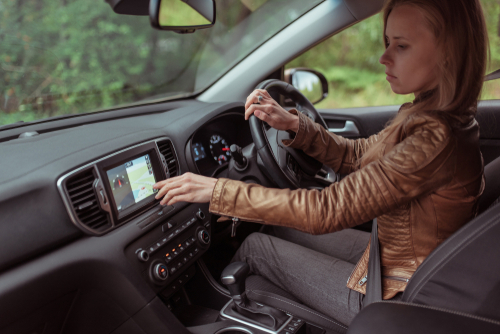
Right-hand drive vs left-hand drive: what’s the difference?
At Remitly, we work with people moving between countries every day, so here’s what changes behind the wheel of an LHD rental car and what doesn’t.
| Right-hand drive (UK) | Left-hand drive (most of Europe, US) | |
| Steering wheel | Right side | Left side |
| Indicator & gear lever | Indicator right, gears left-hand | Indicator left, gears right-hand |
| Foot pedals | Same. Clutch, brake, accelerator, left to right | Unchanged from an RHD car |
| Roundabouts | Clockwise, giving way to the right | Anticlockwise, giving way to the left |
| Overtaking | Usually on the right | Usually on the left |
Most drivers find the switch manageable within a day, though it’s worth staying alert at roundabouts and junctions throughout the trip.
Why do some countries drive on the left?
Most countries that drive on the left adopted the practice through British colonial influence or adopted road conventions.
One long-running theory traces this to ancient Rome, where riders on horseback are said to have kept left so their right hand, most people’s sword hand, stayed free against oncoming threats. A related claim, that Pope Boniface VIII ordered pilgrims to keep left in 1300, has no documented basis and is best treated as folklore.
Britain passed its General Highways Act in 1773 to tackle congestion, advising travellers to keep left. This practice spread with the British Empire, which is why it is so common in regions such as Africa, Oceania, and the Caribbean.
Pennsylvania introduced a keep-right law in 1792, and much of the rest of the US, as well as Canada, followed its example. The custom also spread across much of Europe through Napoleon’s conquests.
Cars added a mechanical push toward the right: once steering wheels became standard around 1898, drivers sat for the best view on the right, a layout the Ford Model T made standard in the US from 1908, per the US Federal Highway Administration.

Why didn’t the UK switch?
Sweden made the switch from RHD to LHD in 1967, followed by Iceland in 1968, both aligning with the rest of mainland Europe. The UK investigated this in the 1960s, but the cost of redesigning roads, moving traffic lights, and replacing car designs was considered too high.
Full list of right-hand drive countries by region
Around 75 countries and territories drive on the left today, roughly a third of the world’s population, according to the RAC, mostly places once under British administration.
Many countries that drive on left are in regions with a history of British rule or influence, strongest across Africa, South Asia, the Caribbean, and Oceania, while mainland Europe and the Americas are almost entirely left-hand drive.
| Region | RHD countries & territories |
| Europe | Cyprus, Gibraltar, Guernsey, Ireland, Isle of Man, Jersey, Malta, United Kingdom |
| Asia | Bangladesh, Bhutan, Brunei, Hong Kong, India, Indonesia, Japan, Macao, Maldives, Nepal, Pakistan, Singapore, Sri Lanka, Thailand |
| Africa | Botswana, Eswatini, Kenya, Lesotho, Malawi, Mauritius, Mozambique, Namibia, Saint Helena, Seychelles, South Africa, Tanzania, Uganda, Zambia, Zimbabwe |
| Americas & Caribbean | Anguilla, Antigua and Barbuda, Bahamas, Barbados, Bermuda, British Virgin Islands, Cayman Islands, Dominica, Falkland Islands, Grenada, Guyana, Jamaica, Montserrat, Saint Kitts and Nevis, Saint Lucia, Saint Vincent and the Grenadines, Suriname, Trinidad and Tobago, Turks and Caicos Islands, United States Virgin Islands |
| Oceania | Australia, Cook Islands, East Timor, Fiji, Kiribati, Malaysia, Nauru, New Zealand, Niue, Papua New Guinea, Pitcairn Islands, Samoa, Solomon Islands, Tokelau, Tonga, Tuvalu |
Worth flagging for UK travellers: Ireland, the Channel Islands, the Isle of Man, Gibraltar, and the Falkland Islands are all RHD, so your licence and habits carry over directly, as do Cyprus and Malta, popular short-haul spots. Ireland is a quick RHD getaway by ferry or a short flight; our guide to airports in Ireland can help with planning that trip.

What UK drivers need to know before driving abroad
Driving in Europe after Brexit
Post-Brexit, UK drivers no longer need a Green Card for most of Europe: GOV.UK confirms none is required for the EU (including Ireland), Andorra, Bosnia and Herzegovina, Iceland, Liechtenstein, Montenegro, Norway, Serbia, or Switzerland, though it’s still needed outside that list, for example Turkey or Morocco. Your UK insurance covers this automatically, but check your policy extends to where you’re going. A UK sticker isn’t needed if your plate already shows the UK identifier with the Union flag, but Spain, Cyprus, and Malta require one regardless, and Ireland never does. Your UK photocard licence remains valid across the EU, Switzerland, Iceland, and Liechtenstein without an International Driving Permit; paper licences, and those from Gibraltar, Guernsey, Jersey, or the Isle of Man, may need one for some EU countries and Norway.
International driving permits: when do you need one?
An International Driving Permit (IDP) is an official translation of your UK licence for countries where it isn’t otherwise recognised. The UK issues permits under three conventions: 1926, 1949 and 1968, and destinations vary in which they accept, so it’s worth checking before you travel. A 1926 or 1949 permit lasts 12 months; a 1968 permit lasts three years or until your licence expires. You can get one in person from PayPoint shops for £5.50, according to GOV.UK. If you’re still working through the basics of UK licensing yourself, our guide to driving in the UK covers tests and rules for new residents.
Taking your own car abroad vs renting
Taking your own RHD car into a left-hand drive country is legal, though visibility is reduced. Overtaking and toll booths both take extra care from the right-hand side of the car. Bring your log book (V5C) and insurance certificate, and fit headlamp converter stickers, which GOV.UK recommends since UK headlights can dazzle oncoming drivers on the right. Renting is simpler: pedals and the gear pattern stay the same, only the hand you use for each one changes, and most car hire companies offer automatic cars if you’d rather not juggle both. Either way, check your passport still meets the 10-year passport rule before you book anything.

Other country-specific rules worth knowing
There are a few country-specific rules that can catch UK drivers out:
- France no longer requires a breathalyser kit, the rule was scrapped, though some drivers still carry one.
- Spain requires a high-visibility vest kept inside the car, not the boot, with fines of up to €200 for driving without one to hand.
- Minimum tyre depth treads vary by country, so check yours meet local rules before a long drive.
- Speed camera detectors are illegal to use in several European countries, including France, even where they’re legal to own.
GOV.UK’s Foreign Travel Advice pages are the most current source for full country-by-country rules.
FAQs
Which countries drive on the left?
Around 75 countries and territories drive on the left, including the UK, Ireland, Australia, India, Japan, South Africa, and most of the Caribbean and Oceania, many of which have historical ties to Britain. Mainland Europe, the Americas, and most of Asia drive on the right instead.
Is Japan a right-hand drive country?
Yes. Japan drives on the left, like the UK. Japan’s practice of driving on the left is often linked to British influence during the Meiji era, when Japan’s early railways were built to British standards. A popular samurai-sword story is often repeated but isn’t well documented.
Do I need an International Driving Permit for Europe?
Usually not. GOV.UK confirms you don’t need an IDP to drive in the EU, Switzerland, Iceland, or Liechtenstein with a UK photocard licence. You may still need one with a paper licence, a licence from Gibraltar, Guernsey, Jersey, or the Isle of Man, or in Norway.
What documents do I need to drive in France?
You’ll need your driving licence and, for your own car, the V5C log book and insurance certificate, France no longer requires a Green Card. A UK sticker isn’t compulsory if your plate shows the UK identifier, and a headlamp converter helps avoid dazzling oncoming drivers.
How many countries drive on the right?
Most of the world drives on the right, including mainland Europe (bar a handful of islands), the Americas, and much of Asia and Africa. Right-hand traffic spread partly through Napoleon’s conquests and, in the US, from Pennsylvania’s 1792 turnpike law.
Why did Sweden switch from driving on the left?
Sweden drove on the left until 1967, switching to align with Norway, Denmark, and the rest of mainland Europe. The change, known as Dagen H, aimed to reduce accidents at land borders where traffic previously had to swap sides.

Key Takeaways
- Right-hand drive (RHD) means the steering wheel is on the right and the car is built for driving on the left, around 75 countries, including the UK, use this system.
- Post-Brexit, UK drivers don’t need a Green Card for most of Europe, but Spain, Cyprus, and Malta require a UK sticker no matter what your number plate shows.
- A UK photocard licence is valid for driving across the EU, Switzerland, Iceland, and Liechtenstein without an International Driving Permit; paper licences may still need one.
- Whether you take your own car abroad or rent one, foot pedals and the gear pattern stay the same, only the hand you use for each one changes.
Planning to drive abroad is one more thing to sort before you go, alongside travel money and paperwork. If you’re flying out to start your road trip, our guide to airports in England can help you compare options closer to home.