Key Highlights
Here are the key highlights of Turkish wedding traditions:
-
Pre-wedding customs are the heart of turkish wedding traditions. Family visits happen first, then there are formal talks and an engagement party (Söz & Nişan).
-
The henna night is big in turkish culture. It is an emotional time for the bride, her mother, and the women in her family.
-
All through the wedding day, you see family in the middle of it. They help out from the start, right from the proposal up to the big wedding.
-
There is a lot of meaning in things like red ribbons, gold coins, and clothes in a turkish wedding. Turkish people use these to show love, luck and hope.
-
The wedding day is all about the fun of music, folk dances, and a jewelry and gold coins ceremony.
-
So you see, a Turkish wedding is not just a simple event. It’s a big lively time filled with family, friends, and the best things about their culture.
Introduction
Are you going to a Turkish wedding soon, or do you just want to know more about how people celebrate around the world? Turkish wedding traditions show us a mix of deep history, strong family ties, and lots of fun. A Turkish wedding is not just about one big day. It’s about a series of special customs that help bring two families together.
It starts with the first proposal and goes all the way to the big party at the end. Each part is a big part of Turkish culture. These steps bring old wedding traditions and new ideas together, making the turkish wedding an event that people do not forget.
Overview of Turkish Wedding Traditions
A Turkish wedding has many parts, and it starts before the wedding day. Some popular wedding traditions in Turkey are formal meetings, an engagement party, the well-known Henna Night, and the wedding ceremony.
These special events honour family, celebrate the people around the couple, and help get the couple ready for their new life. Every step, like when salty coffee is served or when gold coins are pinned on the newlyweds, has a meaning that is part of Turkish culture.
The Cultural Importance of Marriage in Turkey
In Turkish culture, a wedding is more than just two people joining together. It is the coming together of two families. Many people see it as one of the main parts that hold their society together. The focus is on family bonds, getting support from others, and showing respect to elders. A Turkish wedding is not just for the couple, but for everyone to enjoy. People all come together to celebrate love and lasting promises.
From the start, families play a big role in wedding traditions. It is common for the groom’s family to visit the bride’s family at the beginning. This visit is done to formally ask the bride’s family if the groom can marry their daughter. This first step opens the door for all that comes next in a turkish wedding and brings the two families closer.
Respect for family and love for tradition show at every step of a Turkish wedding. Every part, from engagement to the final party, means something special and is enjoyed by all. Weddings in Turkey are also a time to share values and help each new generation grow stronger ties with the ones that came before them.
Regional Differences Across Turkey
While many Turkish wedding customs are widespread, you’ll find fascinating regional differences across the country. Turkey is a vast nation with diverse local cultures, and this is reflected in how weddings are celebrated. From the music played to the specific foods served, each region adds its own unique flavour to the festivities.
For example, in some rural areas, celebrations might be more traditional, involving the entire village and lasting for several days. In contrast, urban weddings in cities like Istanbul or Ankara might blend these traditions with more modern, Western-style elements. The attire, dances, and even some pre-wedding rituals can vary significantly.
These regional variations highlight the rich and diverse tapestry of Turkish traditions. Here’s a look at some general distinctions:
|
Region/Area |
Common Wedding Characteristics |
|---|---|
|
Aegean/Mediterranean |
Often features outdoor celebrations with lighter cuisine and lively, upbeat folk dances. |
|
Black Sea |
Known for unique folk dances like the Horon and specific musical instruments. |
|
Eastern Anatolia |
Celebrations can be more traditional, with a strong emphasis on community and longer festivities. |
|
Urban Centres (e.g., Istanbul) |
A blend of modern and traditional, often with large, formal receptions and Western-style wedding dresses. |
Family Involvement and Pre-Wedding Customs
Family is very important in Turkish pre-wedding life. In Turkish traditions, families do a lot from the start. This is not like many places in the West, where the couple does most things on their own. The groom’s family has a key part in starting the marriage process.
This strong family role brings both families close. It makes sure the couple has help from a strong group. Let’s go over the main customs that start the wedding path. We will talk about how families help set people up and the big engagement event.
Arranged Introductions and Family Visits
The journey to a Turkish wedding often starts with a special visit. The groom’s family will go to the bride’s family home to ask if she will marry him. This is a way to show respect and an important part of wedding traditions. It lets everyone see that the groom is serious about getting married, and that his family is ready to support him.
At this visit, the future bride will usually make and serve Turkish coffee to the people gathering in the room. Sometimes, as a joke, she puts salt instead of sugar in the groom’s coffee. If he drinks it without saying anything, it shows he is a good person and has patience, which means a lot to her and her family.
If the bride’s family says yes, the couple gets a promise of marriage. This is called “Söz” in Turkish, and it’s the first big step toward a wedding. It brings both families together. Many see this moment as the start of more wedding traditions, getting everyone ready for the real engagement and then the big day when they will be married.
The Engagement Ceremony (Söz & Nişan)
After the first “Söz” or promise, the next big step is called “Nişan.” This is the official engagement ceremony and it is much bigger than the first family meeting. The couple can choose to have this event at home with just close family, or they can have a big wedding party at a hall. It is a happy time. The couple tells more family and friends about their commitment.
The ring exchange happens during the Nişan. The couple’s engagement rings are given to them, and in a turkish tradition, both rings are tied together using a red ribbon. Someone respected from either family cuts the ribbon as a way to show their union. This act wishes the couple a good and happy life. The ring exchange is a special moment of the event.
The bride will often get gold jewelry, like bracelets and necklaces from the groom’s family. The Nişan is full of music, food, and fun. It is a big step on the way to the wedding day.
The Henna Night (Kına Gecesi)
One of the most well-known and emotional Turkish wedding customs is the Henna Night, or “Kına Gecesi.” This part of a turkish wedding is usually held one day before the big day. Only women are invited. It is for the bride. Henna Night is when the bride says goodbye to her old life in her family home. She is getting ready to start a new life as a wife.
The night is both fun and touching. There is singing, dancing, and many games with deeper meaning wrapped in these turkish wedding customs. Women wear special outfits and take part in different rituals. Family members join in, making this henna night a moment everyone will remember. Next, we will talk about the main traditions, what people wear, and how families join together to celebrate henna night and turkish weddings.
Rituals, Symbolism, and Traditional Attire
The Henna Night is full of meaning. Each part of this night stands for something special. There is a deep purpose in the night, which is to get the bride ready for her new life. The henna shows blessing, fertility, and helps keep all evil away from her. The bride often wears a beautiful old-style gown called a “bindallı.” It is most often red or burgundy, and it is usually covered with lots of gold thread. There is a red veil over her face to show her move into married life.
One main thing people do in the Henna Night is put henna on the bride’s palms. At first, the bride closes her fists tight. People sing a sad song, which is meant to make her cry. This means she is sad to leave her family. Her new mother-in-law gives her a gold coin in her hand as a gift. This is when the bride opens her hands so her family can place the henna.
This ceremony brings lots of feelings. It is lively, with both sadness and fun. The most important parts are:
-
The Red Veil: It shows the bride’s modesty and that she is stepping into a new life with the groom.
-
Henna Application: People use this to give blessings, luck, and wish for fertility for the couple starting their new life.
-
Gold Coin: The gold coin is from the groom’s mother and is a sign to welcome the bride to
Participation by Family and Friends
The Henna Night is a very close, social event. The women in the family and friends of the bride have a big role in this night. They come together to show love and give good wishes to the bride while she is going through big feelings. There are old songs, dances, and other moments shared that make the women feel even closer to each other.
The bride will sit in the middle of the room. As she sits, her friends and family walk around her, holding candles and singing songs that are part of Turkish culture. It helps make a nice feeling in the room. Henna Night is usually just for women. Some people now also invite the groom and his male friends close to the end of the night to join in for a short time.
After the henna is put on, the event gets more lively. Everyone starts dancing and singing even more, wishing the bride good things as she starts her new life. The people who come make this day strong and hard to forget. Henna Night shows that Turkish families use this night to come together, have fun, and support each other before the wedding day.
Key Ceremonies and Rituals on the Wedding Day
The wedding day in Turkish traditions is the big finish to all the things that happen before. The day comes with its own special ceremonies and moments. It starts at the bride’s home with an emotional goodbye. Then, there is a lively convoy that takes her to the venue. The wedding day is full of events that mean a lot to the bride, the groom, and their families.
These things at a Turkish wedding are not just for fun. They are old customs that have a deep meaning. People in the community come together on this day to be happy for the couple. Here, you can see some important parts of the Turkish wedding day, like when the bride leaves her family’s home and other gestures that show what these traditions are all about.
The Bride’s Farewell and Leaving Her Family Home
One of the most touching parts of the wedding day is when the bride says goodbye at her home. The groom and his family come to the bride’s home with a convoy of cars to pick her up. Drums and pipes (davul-zurna) often play, and this makes it feel like a big celebration.
Before she goes, there is an important custom. The bride’s father or brother takes a red ribbon, also called a red belt, and ties it around her waist. This red ribbon shows her purity. It also means her male relative is giving her his blessing and protection as she starts this new life. The family sees this as a special moment.
Saying goodbye is a time full of emotion. Many tears are shed, and there are lots of goodbyes before the bride leaves her childhood house and steps into her new house with her husband. This sweet goodbye shows the start of her new journey and is a big part of her wedding day.
Unique Customs, Superstitions, and Symbolic Gestures
Turkish weddings are full of fun customs and simple ways to wish the newlyweds a happy marriage. People add these small acts and a bit of humour to the wedding day, making it more meaningful and fun for all. One old belief is that the bride writes the names of her single friends on the sole of her shoe. At the end of the wedding day, the name that is worn off most is said to show who will get married next.
There is also the moment when the groom and his group reach the bride’s home. A brother or a close man in the family will often stand at the door and stop them. He will ask for a small gift before letting the groom take the bride. This funny part of the day gives everyone a good laugh.
These kinds of customs make the wedding day stand out. Here are more simple gestures you will often see:
-
Stepping on the foot: In the civil ceremony, people say that whoever steps on the other’s foot first will be the one who gets their way in marriage.
-
The car convoy: A convoy of cars moves across town with lots of horn-honking to let everyone know about the wedding.
-
The red ribbon: Besides the red ribbon on the bride’s belt, you may see a red ribbon on the groom’s car too.
A Turkish wedding brings people together, full of laughs, belief and memories for all.
Attire, Jewellery, and Symbolism
Attire and gold jewelry are a big part of Turkish wedding traditions. These are not just for show. They have deep meaning and come from years of history. The bridal clothes change from the red gown worn for Henna Night to the white dress for the wedding day. Each outfit shows a step in the bride’s life and keeps the story going.
Gold jewelry is important too. It is easy to see and has a main role in Turkish weddings. The bride wears it, but it is also given as a gift. This gold stands for wealth, good luck, and blessings for the newlyweds. We’ll take a closer look at these symbols in Turkish wedding traditions, from Henna Night to the wedding day.
Traditional Bridal Outfits and Accessories
One of the most known wedding traditions in Turkey is about what the bride wears at different points in the celebration. For the Henna Night (Kına Gecesi), the bride will wear a “bindallı.” This is a rich gown that is often red or burgundy and covered with gold or silver designs. The dress shows the beauty and style from the old Ottoman days and is seen as an important part of Turkish traditions.
On the wedding day, a lot of Turkish brides go with a white wedding dress, much like what you see in the West. But they usually add in something traditional because they want to honour where they come from. There is the red belt, or “bekaret kuşağı,” which gets put around the bride’s waist by her father or brother before she leaves the house.
This mix of old and new lets the bride show who she is but also stays true to deep Turkish wedding customs. What the bride wears, whether it is all traditional or a mix with modern, is a key part of the whole wedding day look and story.
Special Role of Gold and Wedding Gifts
In Turkish wedding traditions, gold is very important. It is the most common wedding gift that people give. Gold stands for wealth, security, and good times for the couple. Family and friends give gold to help the couple start their new life.
At the wedding reception, there is a ceremony called “takı merasimi.” The guests line up and pin gold coins, banknotes, or gold jewelry on sashes the bride and groom wear. It is one of the best parts of the wedding day and shows everyone’s kindness towards the newlyweds.
This tradition gives the couple something they can use right away for their new life. The most liked gold gifts in Turkish weddings are:
-
Gold Coins: The couple gets these pinned to their clothes and it is the most popular gift.
-
Gold Bracelets: The bride often receives more than one gold bracelet from the family.
-
Gold Necklaces: This is a lovely gift that the bride wears on her wedding day and keeps after.
-
Jewelry Sets: The closest relatives sometimes give full gold jewelry sets.
These shows of support help the bride and groom feel cared for as they start their new life together. Gold coins and gold jewelry will stay as a big part of Turkish wedding traditions.
Music, Dance, and Festivities at the Reception
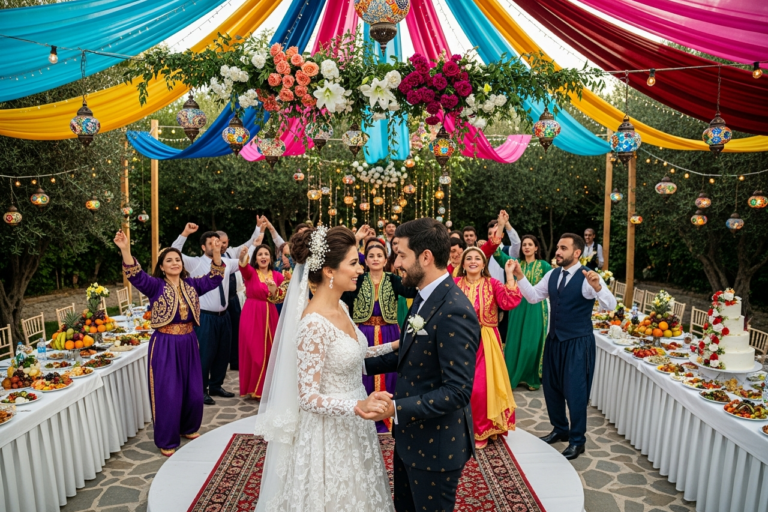
No Turkish wedding party is done without loud music, lots of dance, and happy times. The reception is where everyone feels the excitement and joy. The whole community comes together to celebrate the new couple. You hear both old and new songs that invite all people to join the fun.
People do folk dances that are from old times and share great wedding food. The reception is full of things to see, hear, and taste. Then, we will look at what songs, dances, and foods help make a Turkish wedding party so full of life and one to remember.
Folk Dances and Celebration Songs
Music and dance are at the centre of a Turkish wedding. They show the joy of the day. They help bring people together. Music and dance also honour Turkish culture. On the wedding day, you can hear the “davul,” which is a big drum, and the “zurna,” a pipe. Their strong sounds start the party right away.
One favourite tradition is the “halay.” This is a folk dance where people join hands in a line or circle. Sometimes they link their fingers too. The dance is fun and open to all. It shows unity and the idea of community. Different parts of Turkey have their own styles of halay. There are also other dances, like the “Horon,” which comes from the Black Sea area.
Music covers both old folk songs and new Turkish pop. It keeps everyone—young or old—dancing. Mixing the wedding day traditions with modern tunes makes every Turkish wedding both lively and memorable. The day shows off the bright and happy spirit of Turkish festivities.
Signature Wedding Foods and Sweets
A Turkish wedding is full of tasty food and desserts. These dishes show off the country’s long history in cooking. At new-style weddings, guests often eat many courses like people do at Western weddings. Still, some old favourites are always there. One classic is soup made with wheat or barley, which means there will be plenty for everyone.
After the main course, there is a big wedding cake. The couple cuts it together. This is their first job as husband and wife. But the treats keep coming. Guests enjoy more Turkish desserts, like baklava, which are liked for their sweet and rich taste.
Food at the reception is very important at a Turkish wedding. It helps everyone feel close and makes the day feel happy. Many old customs during the party are about food and sharing.
-
Wedding Soup: This is usually a soup made with barley or lentils. It comes first in the meal.
-
Lavish Main Course: This is often grilled meats, rice pilaf, and different mezes for starters.
-
The Wedding Cake: This big cake is the main display at the party and is fancy and pretty.
-
Dessert Buffet: At the end, there are well-known Turkish sweets like baklava, künefe, and many other pastries.
Frequently Asked Questions
Are you curious about what happens at traditional Turkish weddings? Many people ask about henna night, also called kina gecesi. This is when the bride gets pretty henna designs on her hands. It shows joy and marks a big step in her new life.
Another question people often have is why the groom or the bride gets gold jewelry at the ceremony. The answer is that gold jewelry is a loved gift. It shows that people wish the newlyweds good times and wealth together.
People also talk about the car convoy at these weddings. There is a big group of cars that goes out and shows off the bride and groom. This convoy is loud, it’s full of laughs, and it’s a fun part that brings both families closer. It marks the new life of the couple in a fresh and happy way.
How do Turkish weddings differ from Canadian celebrations?
Turkish wedding traditions are not the same as Canadian ones. In Turkey, people put a lot of focus on pre-wedding events, like the Henna Night. Family plays a big part right from the beginning. The Turkish wedding party is usually bigger too. When it comes to gifts, people in a Turkish wedding like to give gold and cash. They pin these onto the couple during the celebration. This is not something you see often in Canada.
What symbolic rituals happen when the bride leaves home?
When the bride leaves her home, her father or brother ties a red ribbon around her waist. This is one of the most special wedding traditions in a Turkish wedding. The red ribbon in Turkish wedding traditions shows her purity. It also gives her blessings for her new life. This is the last time she leaves the house as a single woman.
What traditional gifts are given at Turkish weddings?
The most common gifts you will see at a Turkish wedding are gold and money. On the wedding day, there is a special moment when guests pin gold coins, gold jewelry like bracelets, and cash onto the bride and groom. This is a way for their family and friends to help the couple start their new life with some money and support.
Conclusion
To sum up, knowing about Turkish wedding traditions helps you better understand and enjoy other cultures. Each part, from the way family gets involved to the different customs and party moments, lets you see what Turkish life is all about. Things like the Henna Night or the lively wedding party show the happiness and togetherness that come with a Turkish wedding. Taking part in these traditions can also help you bond with your friends and family during this special time. If you are getting ready for a Turkish wedding or just want to know more about these wedding traditions, you can ask for tips or advice to make everything go more smoothly.