Key Highlights
-
Find out about Dutch wedding traditions that might surprise you, like the civil ceremony. This is the part where the couple gets married by law.
-
See some rituals that are different, such as how the ‘ceremoniemeester’ keeps the wedding day on track.
-
Notice how the wedding ceremony is not the same as in Canada. The rules for getting married are different.
-
Try classic Dutch wedding foods and desserts. They can have bitterballen, and also a special wedding cake.
-
Learn how the happy couple and all their wedding guests enjoy the whole day. Dutch wedding traditions help make it a day they will always remember.
Introduction
Have you ever thought about what a wedding in the Netherlands is like? Many Canadians might picture tulips and canals when they hear about a Dutch wedding. But a Dutch wedding is about much more. The wedding traditions in the Netherlands are unique. They mix legal rules with real, joyful moments. This mix can be very different from the weddings we know. Let’s see what makes a Dutch wedding day special for the happy couple and their guests.
Exploring Dutch Wedding Traditions Through a Canadian Lens
When you look at Canadian weddings and a Dutch wedding, you can see some clear differences. Both places have wedding traditions, but a Dutch wedding always starts with a civil ceremony. This is something you have to do to make the wedding legal. It is not part of the church or any other personal celebration. That is one thing that makes a Dutch wedding different from many in North America.
If you pay attention, you will see how wedding traditions are important for the whole day, from the wedding invitations right up to the party. There are certain ways of doing things that make a Dutch wedding ceremony special for the couple and for the wedding guests. Let’s look at some of those customs that set a Dutch wedding apart.
1. The Civil Ceremony: Legal Foundations of a Dutch Wedding
In the Netherlands, the civil ceremony is the most important step of a dutch wedding. Unlike in Canada, where you can be married by a religious or secular officiant at many places, in the Netherlands, every couple must first have a civil ceremony to make their marriage legal. This is the only way a wedding ceremony is recognized by the law. The civil ceremony often takes place at the town hall, called the gemeentehuis, which acts as the official wedding venue.
Having a wedding at the town hall gives the dutch wedding ceremony extra formal meaning. The service is carried out by a civil registry official. The couple needs two to four witnesses to sign the marriage paperwork. This legal part is at the heart of every dutch wedding. Any religious or personal wedding ceremony that comes after is seen as less important than the civil ceremony.
For people from Canada, this is pretty different. In Canada, you get to choose who performs your wedding and where the ceremony takes place. The Dutch way separates the main legal part from the personal celebrations. The civil ceremony must always come first for a legal marriage in the Netherlands.
2. Unique Dutch Engagement Announcements and Invitations
Dutch people have some charming wedding traditions for sharing their happy news. These are often different from what you see in Canada. While some couples may use social media now, a more traditional wedding invitation is unique and creative. This old way also helps show off the couple’s personality. It helps give the guests a feel for the wedding.
One fun Dutch tradition is the “A.B.C.” game. This game can even shape what goes on the invitations. The couple or the guests make a list with each letter of the alphabet. Every letter stands for something special about the couple. This playful idea sometimes finds its way onto the wedding invitation. You might see a small custom touch that connects to this game.
Here are a few ways Dutch couples might make their wedding invitation:
-
A classic card describes the civil ceremony, the party, and the reception. Sometimes, there are extra cards inside for people asked to join for certain parts of the day.
-
There can be a small detail that is personal, showing a hint about the wedding’s theme or a special thing that will happen.
-
The invitation might say who the ‘ceremoniemeester’ is. This person is the main contact for the guests.
These wedding traditions use the idea of a letter of the alphabet, the civil ceremony, and other fun Dutch tradition touches to give the wedding invitation a warm feel.
3. Traditional Attire and Dress Codes in the Netherlands
On the wedding day, the happy couple in the Netherlands dress a lot like those in other Western places. The dutch bride often wears a white dress. The groom will pick her up at her home and give her the bridal bouquet. This is a special time for both of them. Clothes for the wedding party often match, but the main focus is always on the couple.
For wedding guests, the dress code is usually smart casual. If there is something different the couple wants, it will say so on the invitation. Dutch wedding traditions are usually not as formal as in other places. People wear many styles. It’s a good idea for everyone to wear nice clothes, but things like black-tie are very rare unless the invitation asks for it. You just need to look neat and ready for a happy day.
There is not one set traditional outfit for modern dutch weddings that the whole country wears. Some couples may use clothes that show where they come from, but most people dress in styles that are popular now. This means the happy couple can let their own style come out on their wedding day.
4. Wedding Gifts and Their Meaning in Dutch Culture
In Dutch culture, there is a strong focus on giving useful wedding gifts or money to help the couple start their new life together. Many couples make a gift registry, or they just ask for cash. Guests can put money in a box or envelope for the couple at the wedding ceremony. The goal is to help them begin their journey, not to give fancy or decorative items.
Still, the Dutch have some wedding traditions for good luck. One important custom is letting white doves fly after the wedding ceremony. This gift is often from the parents and shows honesty and freedom. Another tradition comes from England but is now popular in the Netherlands too. At some weddings, the bride carries “Something old, something new, something borrowed, something blue” for good luck and happiness.
If you compare this to Canadian weddings, you will notice the difference. A Canadian wedding usually has a best man or maid of honour, and the couple often has a long list of things they want for their new house. In the Netherlands, it is more common to give cash as a gift. That is seen as a good way to support the couple with their honeymoon or buying a house. The best man or maid of honour, who is like the official witness for the wedding, might also help organise a group gift to wish the couple good luck.
Memorable Rituals and Customs at Dutch Weddings
A Dutch wedding is more than just a legal event. It is full of special wedding traditions that add joy and personality to the day. These traditions often ask wedding guests to take part in the ceremony and reception. This helps everyone feel close to the happy couple on their special day.
Dutch wedding traditions stand out because of the unique games and acts people do at the event. These customs bring more fun and meaning to a wedding ceremony. They make memories that stay with the couple and with others who come to share in the day.
Here are some of the most loved rituals you may see at a Dutch wedding in the Netherlands.
5. The Role of the ‘Ceremoniemeester’ (Master of Ceremonies)
One of the main people in Dutch wedding traditions is the ‘ceremoniemeester’, also called the Master of Ceremonies. This person is often a close friend or a family member. The ceremoniemeester is there to make sure that the wedding day goes well. They do a lot on the wedding day. Some things they do are work with vendors, help guests, tell people when speeches start, and keep the wedding on schedule.
This job is not the same as being a best man or maid of honour at a Canadian wedding. The wedding party in Canada offers some help, but the Dutch ceremoniemeester is the main contact for everyone. This lets the happy couple enjoy the wedding day, since the ceremoniemeester takes care of all the details. They truly direct the wedding ceremony and what goes on during the reception.
There is a lot of value to the role of ceremoniemeester in Dutch wedding traditions. They keep the wedding running smoothly by working behind the scenes. With this person helping, the couple and their families can just enjoy the day. They know the right person is keeping everything on track for their special day.
6. Popular Dutch Wedding Foods and Desserts
No Dutch wedding would be complete without delicious food. While dinner might be a formal, multi-course meal, the reception often features classic Dutch snacks. A guaranteed crowd-pleaser is ‘bitterballen,’ savoury deep-fried meatballs that are a staple at any celebration. These bites are perfect for mingling wedding guests.
The wedding cake moment is a cherished tradition. The couple cuts the first piece together and feeds each other a bite. A lovely superstition involves saving the top layer of the cake in the freezer to be eaten on their first anniversary. Another sweet treat you might find is ‘bruidssuikers’ or bridal sugar, which are sugar-coated almonds given as favours.
These foods are more than just snacks; they are part of the experience. Here are some popular options and their significance in Dutch wedding traditions:
|
Food/Dessert |
Meaning/Tradition |
|---|---|
|
Bitterballen |
A classic, comforting snack that brings guests together during the reception. |
|
Wedding Cake |
The couple’s first shared task; feeding each other symbolizes their promise to provide for one another. |
|
Saving the Top Layer |
A tradition meant to bring good luck and a sweet reminder of the wedding day on the first anniversary. |
|
Bruidssuikers (Bridal Sugar) |
Sugared almonds given as favours, symbolizing the bittersweetness of life and wishes for more sweetness than bitterness. |
7. Symbolic Decorations and Wedding Symbols
Symbolic decorations bring a warm, personal touch to a Dutch wedding. One well-loved tradition is the wish tree. Instead of a traditional guestbook, guests write down their wishes on small cards. Then, they hang these cards on a little tree. This gives the couple a nice and meaningful keepsake from their wedding day.
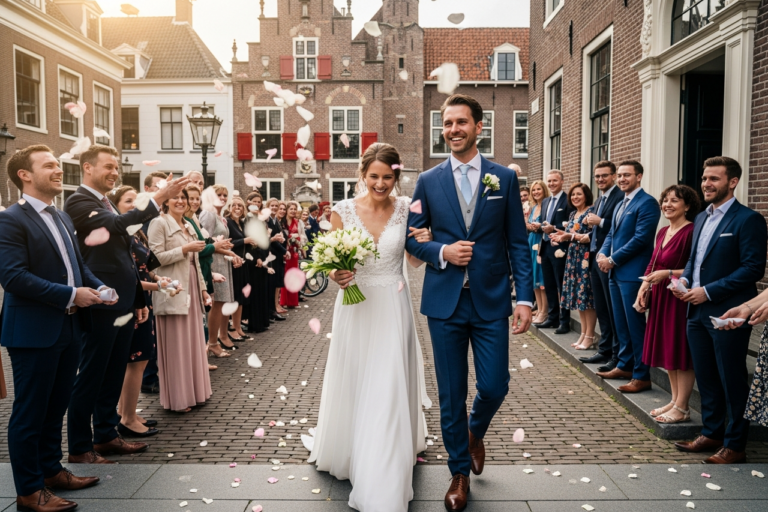
After the ceremony, the couple leaves while guests toss flower petals or rice. This is called an “erehaag” or honour guard. It’s meant to show a path full of good luck and happiness. These simple traditions add some magic to the wedding day. They also make good moments for photos.
There are other playful ideas as well. The shoe game, called ‘schoenenspel,’ invites the couple to answer questions about their life together. They do this by raising each other’s shoes. Activities like these display how Dutch weddings are personal and lighthearted.
Conclusion
To sum it up, looking at wedding traditions in the Netherlands from a Canadian point of view shows a lot of interesting customs and things people do together. Each part, like the role of the ‘ceremoniemeester’ or the wide choice of traditional foods, is special and adds to the story of Dutch weddings. These traditions are not just about the couple but about love and bringing people together. Getting to know these ways helps us see the beauty in different wedding traditions. It also lets us mix some of these things with our own culture. If you are thinking about your own wedding or just want to know about wedding traditions in the Netherlands, use these ideas to help and inspire you along the way!
Frequently Asked Questions
What are some unusual Dutch wedding traditions Canadians should know about?
Canadians may think the ‘ceremoniemeester’ is different because this person is like a manager for the wedding day. There are a few other Dutch wedding traditions. One is the wish tree, where people hang their wishes instead of writing in a guestbook. Another is the playful tradition called the shoe game, which happens during the reception. All these Dutch wedding traditions help make the big day personal and fun for everyone.
How do Dutch weddings differ from those in Canada or the US?
The main thing that stands out is the required civil wedding ceremony at the town hall. This is what makes the couple legally married. In the Dutch tradition, this is different from any church or party service you may have after. There is often a ‘ceremoniemeester’ too. He makes sure everything goes well for the wedding guests. This kind of role is not as common in North America.
Are there any special dances or music typically played at Dutch weddings?
At a Dutch wedding, it’s common to have a first dance. This is like what you see at Canadian weddings. You might also see the guests get up and do a rehearsed song or a little sketch for the happy couple. The music played at these events is a mix of international hits and Dutch pop. This keeps the dance floor busy all the time during the party.