Key Highlights
-
A Polish wedding is a big event that goes on for more than one day. It often begins on a Saturday and does not end until Sunday. There is an after-party called Poprawiny.
-
There are many unique Polish wedding traditions. You will see the Parents’ Blessing, “gates” set up as roadblocks, and a welcome with bread and salt.
-
The wedding day has a lot of food. There are hot meals every few hours and a big “country table” with different dishes.
-
Polish wedding traditions like Oczepiny, where the bride throws her veil, are something all wedding guests look forward to.
-
There are fun games for everyone, lots of dancing—mostly to Disco Polo music—and people sing the famous “Sto Lat” song to celebrate.
Introduction
Have you ever thought about what it’s like to go to a real European wedding? A Polish wedding stands out. It mixes a serious ceremony with a fun, long party that goes on for days. From the start of the wedding day, you get pulled into the world of Polish wedding traditions. These polish wedding traditions are full of meaning and joy. This closer look, seen from a Canadian point of view, will show you the main customs. You will learn about the sweet blessings and the big party that goes late into the night.
Getting to Know Polish Wedding Traditions from a Canadian Perspective
Looking at polish wedding traditions from a Canadian view feels like walking right into a lively and rich story. There is both Catholic style and open-hearted fun at these weddings. In Canada, most weddings last for one day, but a polish wedding can go for two days.
The parts before the big day also stand out. The engagement ceremony and the wedding invitation are both given a personal touch here. For polish brides, picking a wedding dress is just a start. The wedding day has many big traditions and lots to do. You will get to see what makes polish wedding celebrations so special. You’ll also see what things are not the same as weddings at home.
Why Polish Weddings Fascinate Canadians
A Polish wedding is special for a Canadian because it’s full of tradition and big celebrations. There is more to it than just a party. You feel a lot of joy, eat a lot of food, and see family come together in a way that stands out. The whole wedding day is filled with little actions that people have shared in their families for many years.
One of the best wedding traditions is called the “gates” or bramy. Here, neighbours set up funny blocks on the way to the church. The wedding party must give them vodka so they can go forward. This Polish tradition is a fun game that brings everyone together, and you hardly ever see something like this in Canada.
There is also something called Oczepiny. At midnight, the bride changes from a girl to a married woman when her veil is taken off and changed. With all these customs, non-stop dancing, and good food, the wedding day is packed with polish wedding magic. It lets everyone jump into culture, and the memories you make there are exciting and will stay with you for a long time.
Key Differences Between Canadian and Polish Wedding Celebrations
When comparing a Polish wedding celebration to a Canadian one, the differences are quite striking, starting with the duration. A Polish tradition often involves a two-day event, whereas Canadian weddings are typically single-day affairs. The level of formality and the specific customs involved also vary greatly between the two cultures.
The role of the wedding guests and their interaction with the married couple is also distinct. In Poland, there’s a strong emphasis on community participation, from the “gates” to the numerous games and toasts throughout the night.
Here’s a quick look at some key differences:
|
Feature |
Canadian Wedding |
Polish Wedding |
|---|---|---|
|
Duration |
Typically a single evening. |
Often a two-day event (Wesele and Poprawiny). |
|
Gifts |
Registry-based gifts are common. |
Money in an envelope is the standard gift. |
|
Food Service |
A single main meal, perhaps with late-night snacks. |
Hot meals served every few hours, plus abundant buffets. |
|
Reception |
DJ or band plays music for dancing. |
Includes music, dancing, and numerous organized games. |
A Beginner’s Guide to Experiencing a Polish Wedding
If you’re invited to a polish wedding, get ready for a great time. These weddings are full of energy, warmth, and you can count on amazing hospitality. The wedding day is busy and full of things to do, so it’s good to know what to expect before you get to the reception venue.
You will have good food, enjoy music, and be in the company of many good friends and family. There are special polish wedding traditions to see and a lot of dancing that doesn’t stop. This guide is here to help you get ready and enjoy every moment of the wedding day.
What You Need to Know Before Attending
First, make sure you read your wedding invitation carefully. At a polish wedding, couples like to give out the invitations in person, and they want you to let them know right away if you can come. You may also see some special asks in the invitation, like bringing a bottle of wine instead of flowers. Things like this add a nice, personal touch to the party and help set the mood for the big day.
For what to wear, go with a formal look. Most wedding guests wear nice cocktail dresses or smart suits. Many women also have their hair done by a pro for the event. You want to pick a wedding dress or other formal clothes that still feel good, because you will stand and dance a lot.
Here are a few things you should expect:
-
The party goes late. A polish wedding party usually runs all night, often until 4 or 5 in the morning.
-
The celebration continues. There can be a day two, called Poprawiny, where everyone gets together again for a more laid-back party.
-
Accommodation is often included. When the reception venue is a hotel, the couple often makes sure that the wedding guests have a place to stay overnight.
Essential Etiquette and Customs for Foreign Guests
As a wedding guest, knowing some polish wedding traditions can help you feel at home and show respect to the couple. One of the key moments is when you give well wishes to the bride and groom after their wedding. You can say “Wszystkiego najlepszego!” which means “All the best!” and they will really value it.
At the wedding party, you may hear other wedding guests shout “Gorzko, gorzko!” This means “bitter, bitter.” It is a sign for the bride and groom to share a kiss and make the moment sweet. Don’t be afraid to join in with them. It is fun and helps keep a feeling of good cheer in the room.
Here are some tips for you to keep in mind:
-
Bring a gift of money. The usual thing is to give some cash in an envelope for your place at the wedding.
-
Be prepared for vodka. People toast a lot. If you do not drink, just have a reason to share, but people see taking part as part of the fun.
-
Participate in the dances and games. Getting on the floor and joining the games shows good cheer, helps you mix with other wedding guests, and makes two people’s day extra special. It is a sign of good luck to take part.
Being part of polish wedding traditions will help you get more joy from the day. It will also bring good luck to you and the happy couple.
Step-by-Step Guide to Understanding a Traditional Polish Wedding
A polish wedding is not just one quick event. It is a long day shaped by old polish wedding traditions. The wedding day is full of little steps that are special to both family members and the whole community. When you know about this, you get to see how important a polish wedding is to the people taking part.
At first, family members have time to get ready. Next comes the wedding ceremony itself. After, there is a big reception with lots of fun. Each step means a lot. Let’s look at the main parts of a traditional polish wedding together.
Step 1: The Engagement and Wedding Preparations
The journey to a Polish wedding starts much earlier than you might think. It begins with the engagement. In the past, it was common for the man to talk to the bride’s father and ask for her hand. While you don’t see it as often now, many still find this small gesture sweet. Today, the engagement ceremony is more about what the couple wants, but family members are still a big part of these plans.
In a Polish wedding, parents often help out a lot. They are involved with planning many things and also pay for part of the wedding. There is a polish tradition where the parents of the two people getting married meet to talk about the wedding. They go over the venue, the guest list, and more. This helps get everyone involved right from the start and is a big part of wedding traditions in Poland.
Even the wedding invitation process is different. One thing that makes a polish wedding stand out is how the couple handles their invites. Instead of sending them by mail, they usually give wedding invitations out in person. Doing this shows how much they value their family members and friends, and makes it feel like a close group celebration. It’s also usual for the wedding to take place in the bride’s hometown, which ties back into family roots and adds more meaning to the day.
Step 2: The Ceremony – Rituals and Symbolic Moments
The wedding day starts with something very special. The Parents’ Blessing takes place at the bride’s home. Here, the married couple kneels as their parents make the sign of the cross on their foreheads. The parents wish them a happy and blessed life together. Only close family members are there for this moment. It happens before the church ceremony.
The Catholic church ceremony is at the center of the wedding day. One Polish custom is that the wedding rings go on the right hand. After the couple says their vows, they often stop to pray to the Virgin Mary. This gives them a short, quiet time to think before the celebration gets going.
When the married couple comes to the party, their parents welcome them with bread and salt. The bread shows that the hope is they will always have enough to eat. The salt is about life being hard sometimes, and how we all need to deal with tough times. The couple eats a piece of bread dipped in salt, which is a strong way to welcome them to their new life together.
Step 3: The Reception – Food, Music, Games, and Dancing
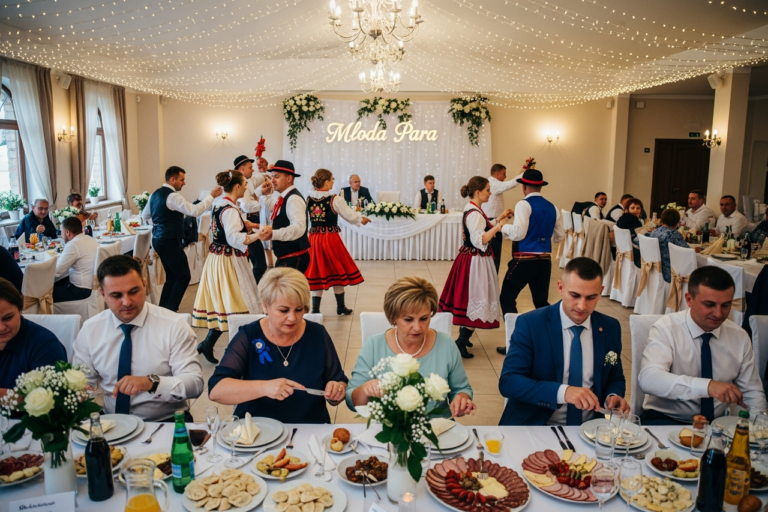
The Polish wedding reception is when the fun starts. After the first dance, which is usually planned ahead by the couple, the dance floor is full and stays that way all night long. The music is a lively mix of modern songs and traditional Disco Polo. It keeps the crowd going.
Food is at the heart of the good cheer at a polish wedding. The first course is almost always polish chicken soup called rosół. After this, you can expect a hot meal to show up every few hours. Also, there is often a wiejski stół (country table) with meats, sausages, and other tasty Polish treats.
All night, there are special moments:
-
The wedding cake, or kołacz, is cut a few hours into the party, with the couple sharing the first slice.
-
At midnight, you get the Oczepiny, where the bride tosses her veil.
-
The wedding party keeps going with games and dancing until the sun comes up. It is a polish wedding no one will forget.
Conclusion
To sum up, going to a Polish wedding lets you see many special things that the people really care about. You get the bread and salt, happy dances, and a lot of good food. These things go back many years and are part of what makes a Polish wedding so great. If you are from Canada, diving into these customs can help you learn more about Polish culture and give you memories that stay with you. Whether you are at the wedding or just finding out more, learning about these ways will help you feel close to the people there. If you ever get the chance to go to a Polish wedding, try everything. Let yourself have fun and enjoy each moment.
Frequently Asked Questions
What is the significance of the bread and salt ceremony in Polish weddings?
The bread and salt ceremony is a beautiful part of Polish wedding traditions. It happens right at the beginning of the reception. This is a sign of welcome from the parents to the married couple. The bread is to make sure they will never go hungry. The salt is about the hard parts of life and shows how they can get through these times together.
How long does a typical Polish wedding celebration last?
A Polish wedding goes on for a long time, not just a short burst of fun. On the wedding day, the party can last until 4 or even 5 in the morning. It does not stop there. The next day, many people get together again for something called Poprawiny. This event is more relaxed and can go into the evening. There will be more food, drinks, and at times more dancing. That is what makes a polish wedding stand out.
What are some unique customs or traditions that make Polish weddings special?
One special Polish tradition is called Oczepiny. At midnight, the bride takes off her veil and gets a cap instead. This shows she is now a married woman. There is also something called the “gates.” Neighbours stop people who are going to the wedding ceremony. To pass, you have to give vodka as a kind of toll. These Polish traditions make the wedding day very interactive and fun.
Are there traditional Polish songs and dances performed at weddings?
Yes! At a Polish wedding, the reception is lively with music and dancing. People sing “Sto Lat” (100 Years) to wish the happy couple a long life. The first dance is often a ballroom number that they practice before the big day. The band leader takes the lead by hosting games and dances. The band leader also gets everyone up and moving on the dance floor.