Key Highlights
-
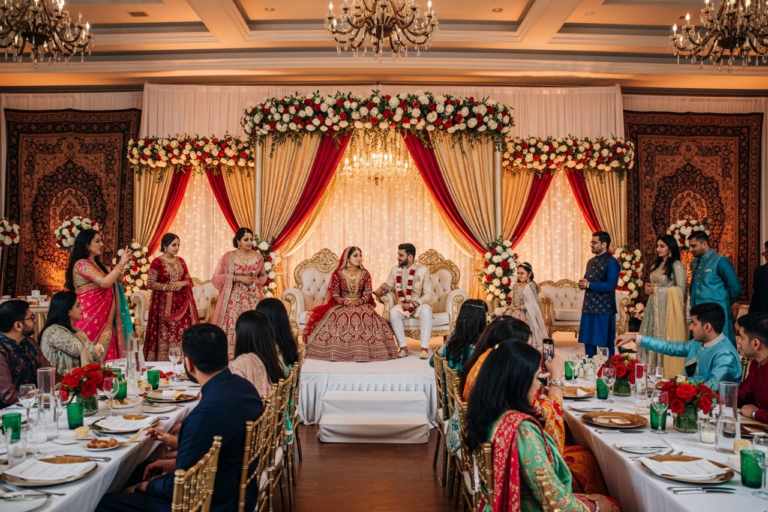
Pakistani weddings are big and lively. These celebrations can last up to ten days and are full of wedding traditions.
-
The fun starts with pre-wedding events. There is the Dholki and then the Mehndi ceremony, which is famous for intricate henna designs and lots of colour.
-
At the centre of every Pakistani wedding is the Nikah. This is the Islamic marriage contract ceremony where the couple say their vows.
-
The Baraat is when the groom arrives at the wedding venue. This is done in a joyful and lively way.
-
At the end of the celebrations is the Walima. The groom’s family hosts this final reception to celebrate the new union.
Introduction
Have you ever been asked to go to a Pakistani wedding? If you have, get ready for an amazing time. Pakistani weddings are full of life. They show the best of Pakistani culture with bright colours, music, and special wedding traditions. These weddings are not just one day, like many Canadian weddings. They can last for a few days. Each day means something different and has its own fun. This guide will tell you about the happy times and events at these pakistani weddings, so you know what will happen and can enjoy every moment.
Overview of Pakistani Wedding Traditions
Pakistani weddings are not just about two people getting married. They are about the family coming together. The wedding celebrations have many events. Each event shows pakistani culture and old wedding customs. Every part is important for the new couple as they start their life together. From pre-wedding traditions to the final party, every scene is a real feast for the eyes and ears.
The main wedding customs have a few big events. These are the mehndi, the nikah, the baraat, and the walima. Each part of the wedding celebrations gives the family a time to show love and send wishes to the couple. Knowing about these traditions makes you see the love and togetherness that stand out in all pakistani weddings.
Cultural Significance and Family Values
In Pakistani culture, the family is at the heart of life. This shows very clearly during pakistani weddings. The whole idea behind a pakistani wedding is that it is not just one person’s duty. It is about many family members coming together. The family of the groom and the bride work closely with each other. The elders of the family give help, advice, and blessings to everyone.
The elders of the family play a big part. They make sure that everything is done in a good way. Their support is important for the new life the couple will start. When there is a wedding in Pakistani culture, the family always tries to make it all come together as a big group. There is a spirit of love and unity, which helps everyone feel closer.
People in the family often start working on these pakistani weddings long before the event. They make plans many months ahead. The guest list, the new venue, and many other things are decided as a group. It shows what it means to be part of the family and how much everyone gives to the wedding.
From the first talk about the coming marriage to the last day at the big reception, it is clear. The family comes first in pakistani culture, and that sets the foundation. The wedding is not just about the bride and groom marrying each other. Both families join as one, and this makes it even more special for everyone.
Unique Elements Compared to Canadian Weddings
While Canadian and Pakistani weddings both honour love and commitment, there are clear differences in their wedding customs and cultural practices. One of the biggest differences is how long and how big the wedding celebrations are.
Pakistani weddings often last many days. This is not like most Canadian weddings, which usually happen in just one day. The longer time means there can be more than one event, each with its own meaning and traditions.
Here are some ways Pakistani weddings stand out:
-
Multiple Events: In Pakistani weddings, there are events like the Dholki, Mehndi, Baraat, and Walima, and each has its own rituals.
-
Vibrant Attire: The couple and guests wear bright and fancy clothes, with lots of detailed designs. Traditional attire is important.
-
Emphasis on Family: Family matters to everyone, but in Pakistani weddings, the extended family is deeply involved in every part of the celebration.
-
Length of Celebration: The festivities in these weddings can last a few days—or sometimes even more than a week.
In the end, both types of weddings make special days to remember. But the traditions in Pakistani weddings bring longer, lively celebrations full of colour, special attire, and family togetherness.
Pre-Wedding Customs and Rituals
Before the main wedding day, Pakistani weddings start with lively and joyful pre-wedding events. These wedding events help family members get together. They also make everyone more excited and set a happy mood. In Pakistani weddings, the celebrations start about one or two weeks before the wedding day. The first big event is often the Dholki. It brings fun and music right from the start.
These gatherings have a lot of singing, dancing, and laughter. People feel close and enjoy being together. One important pre-wedding event is the Mehndi ceremony. Here, the main focus is on the bride, and there is a lot of joy. Taking part in these rituals gives a good idea about what Pakistani weddings are like. Now, let’s look more at some of these wedding traditions.
Dholki, Mayoon, and Mehndi Explained
The pre-wedding festivities in a Pakistani wedding are bright and full of meaning. The Dholki is when close friends and family come together for some fun. They sing traditional songs and use a dholak drum. This event gets everyone excited for the big day.
The Mayoon is more peaceful. Turmeric paste is put on the bride’s skin. People believe it helps her get good fortune and a nice glow for her big day. This part shows she is getting ready for a new life. The Mehndi ceremony, also called henna night, might be the most well-known event before the wedding. It is a fun night with lots of colours, where intricate henna designs are drawn on the bride’s hands and feet.
These henna designs show love, beauty, and joy. Here is what makes the Mehndi ceremony stand out:
-
Intricate Henna: The bride gets beautiful and complex henna patterns on her hands and feet.
-
Hidden Name: The groom’s name may be hidden inside the henna for him to find.
-
Music and Dance: People enjoy lively music, dances, and traditional songs.
-
Family Participation: Both families join together, put on henna, and share sweets.
Customs of Engagement and Familial Gatherings
The journey to a Pakistani wedding starts with a formal engagement. This is a big event for both families. The ceremony shows that the couple will get married. Family members on both sides come together, exchange gifts, and get ready to celebrate.
At the engagement, the couple may give rings to each other. This is also a chance for close friends and families to meet and bond. The event proves how strong the commitment is. It also helps start all the wedding plans. Family values are very important in Pakistani weddings. Everyone, including the whole community, joins in to celebrate.
After the engagement, the families sit down to choose a wedding date. Then, they start to get ready for all the wedding ceremonies. This time is filled with excitement and teamwork. Pakistani weddings show how everyone in a family helps, and how family members work together to plan for something special.
The Nikah Ceremony – Heart of a Pakistani Wedding
The Nikah, or Nikkah, is the most important part of a Pakistani wedding. It is the marriage ceremony that makes the couple husband and wife in both legal and religious ways. The main event here is the signing of the marriage contract, called the Nikahnama, with people from both the bride’s family and the groom’s family as witnesses.
At this special marriage ceremony, the bride and groom say yes to be with each other as husband and wife. The Nikah ceremony is a big moment for the couple, full of faith and trust. It makes their bond strong, not just in the eyes of God but also for the whole community. In this article, we will talk about why this event matters, how the marriage contract is signed, and what each person has to do during the Nikah.
Religious Importance and Legal Process
The Nikah is deeply rooted in Islamic tradition and holds immense religious importance. It is a sacred contract between the bride and groom, conducted according to the teachings of Islam. The ceremony is typically officiated by an Imam or a learned religious scholar, who recites verses from the Quran and speaks about the responsibilities of marriage.
The legal process is integrated into the religious one. The signing of the marriage contract, the Nikahnama, is a key component. This document outlines the terms of the marriage, including the Mehr, a gift from the groom to the bride. Both the bride and groom must consent to the marriage by saying “Qubool hai” (“I accept”) three times.
This verbal and written agreement makes the marriage official. The key elements of the Nikah ceremony are summarized below:
|
Element |
Description |
|---|---|
|
Nikahnama |
The official marriage contract that details the rights and responsibilities of the bride and groom. |
|
Mehr |
A mandatory gift or payment from the groom to the bride, agreed upon before the Nikah. |
|
Witnesses |
Two male witnesses are required to be present for the signing of the marriage contract to validate the union. |
|
“Qubool Hai” |
The declaration of acceptance, repeated three times by both the bride and groom to finalize the marriage. |
Roles of the Bride, Groom, and Families
During the marriage ceremony, the bride and groom are in the spotlight. Still, the family members of both the bride and groom are also very important. For pakistani weddings, the bride’s family usually takes on the hosting of the Nikah and Baraat events. They work hard to greet the groom’s family with warmth and be sure the guests feel at home. The family also makes sure that all events go well without a problem.
The groom’s family brings the Baraat procession. They also host the Walima reception. The groom’s family then welcomes the bride with open arms, making her part of their family and celebrating the start of the new couple with the people who matter to them. The two families have to work together to make pakistani weddings a success.
In the end, the family on each side acts as support for the new couple. With their blessings and taking part, they help the couple move toward a happy and good life together. This is what makes pakistani weddings full of love and brings people together.
Baraat and Rukhsati: Main Wedding Day Celebrations
The main wedding day has two big moments: the Baraat and the Rukhsati. The Baraat is when the groom comes to the wedding venue. It is loud and full of energy. The Baraat is a real celebration of culture. There is music and dancing. People have a lot of fun as the groom goes to get his bride.
After all the main festivities, there is the Rukhsati. This part is more quiet and can be emotional. It is the time when the bride leaves her family home to start her new life with her husband. These two events show both the happiness of coming together and the start of something new for the couple.
The Arrival of the Baraat Procession
The arrival of the Baraat is one of the most exciting times on the day of the wedding. The groom, often wears a nice sherwani. Sometimes, he rides a decorated horse and leads his group of family and friends to the wedding venue. The sounds of dhol, traditional wedding songs, and people cheering fill the air.
When the groom arrives with the Baraat at the venue, the bride’s family greets them with open arms. They often toss petals and welcome the groom’s group to show that both families join together. This big entrance lets everyone know it will be a happy and fun night.
The Baraat ceremony means a lot because it shows the groom’s journey to get his bride and how their families become one.
-
The groom becomes the main part of the procession.
-
There is live music and dancing, which adds to this lively celebration.
-
The bride’s family gives a formal welcome to the Baraat at the wedding venue.
Rukhsati – Farewell and New Beginnings
The Rukhsati is the last big moment of the wedding day. It is when the bride leaves her parents’ home to join the groom and his family. There is often a lot of emotion during this time. Many people cry, and there are hugs and goodbyes as the bride says so long to her family.
When the bride leaves, she sometimes walks out while her father or another close man from her family holds the Quran over her head. This is meant to give her blessings and keep her safe in her new life. The groom’s family greets her with love. This shows that she is ready to join her new family.
The Rukhsati is a mix of happy and sad feelings. It is important because it shows a change and the start of something new. This ritual is touching, and it means a lot because it shows how strong family ties are. It marks the time when the bride leaves her home and starts life with the groom’s family.
Conclusion
Learning about Pakistani wedding traditions can really make the experience better for people in Canada who are part of these fun and lively weddings. The pre-wedding customs, like Dholki and Mehndi, are special. The Nikah ceremony is also very important. Each of these wedding customs shows the value of family and how close the people in the community are. The big Baraat and touching Rukhsati are not just about two people getting married. They also show how two families, and even two cultures, come together. If you join in and open your mind to these pakistani traditions, you will see how much joy and meaning they add to the wedding. No matter if you are part of the action or just watching, knowing about these special days, such as nikah, mehndi, and baraat, will help you feel even more connected with everyone there. If you have any questions or are not sure about anything when it comes to these lovely festivities, just ask for help.
Frequently Asked Questions
How long do Pakistani wedding festivities usually last?
Pakistani weddings have a lot of celebrations. These festivities often take place over three days or even longer. Some families in Pakistan may have weddings that last a week or more. Each day has special wedding customs. These moments give people time to enjoy different traditions as part of Pakistani weddings.
How do Pakistani wedding customs vary by region?
There are some customs that are the same in all of Pakistan. But you will also see special regional traditions at many Pakistani weddings. These different areas and groups bring their own style, clothes, rituals, and music to the mix. This shows how diverse the culture in Pakistan really is. Because of this, every region’s Pakistani weddings have their own special touch when it comes to attire, music, and traditions.
What modern trends are influencing Pakistani weddings in Canada?
In Canada, Pakistani weddings usually mix old customs with new ideas. Couples sometimes have fewer events. They might add Western touches, like a wedding cake or a first dance. Many also choose fun and new themes for their wedding celebrations. By doing this, the marriage ceremony becomes special. It brings together both pakistani traditions and modern life, making the day personal for the couple.