Key Highlights
-
Omani weddings go back a long way, with many steps before the main day. One main part is the formal proposal (Tulba).
-
The Malka, which means engagement, is another big moment. Here, the marriage contract gets signed, and an Imam is often there to help.
-
Family is important in omani weddings. Both the groom’s and bride’s families work hard getting things ready.
-
The ceremonies have their own traditions. There are special parties just for male guests and female guests.
-
What people believe shapes the omani wedding. There are readings from the Quran, and some rituals are at the heart of it.
-
Today, omani weddings mix old ways with new ones. This shows how the country’s culture is changing.
Introduction
Welcome to the colourful world of Omani weddings. Oman sits on the southeastern coast of the Arabian Peninsula. The country has deep roots in culture, and you can see that in their wedding day celebrations. Omani weddings mix Islamic faith, strong family values, and a lot of joy. Some modern Omani weddings might add Western touches, but the main traditions still shine through. Are you wondering what makes the wedding day in Oman stand out? Let’s look at some of these meaningful Omani customs together.
The Journey Begins: Pre-Wedding Traditions in Oman
The road to an Omani wedding day starts with a lot of important steps that help join two families. Before anyone thinks about a wedding planner, both the groom’s family and the bride’s family begin to meet and talk. They do this with a lot of respect, and there are old customs that they must follow. These first meetings matter a lot. They help start things off in a good way and set the stage for a strong future for the couple.
These early wedding traditions ask close family on both sides to get involved. There is a lot of group work, and they want to make sure all parts of the event fit with what is expected for their culture and faith. It kicks off when someone shares that they want to get married. After this, plans become more clear and promises are made. Now, let’s talk about what first needs to happen on the way to a wedding day.
Tulba and Engagement (Malka): Rituals of Intention and Agreement
In omani weddings, things start with the tulba. The groom’s family meets the bride’s family to ask for her hand. Close family is there for this important meeting. Everyone talks from the heart and there is a lot of respect shown.
After that, there is the malka. This is when both sides agree on the next step with a marriage contract. The marriage contract talks about what each person will do and what is expected. The imam helps with this part. It is a respected process in omani culture that shows trust and agreement. Once this is finished, everybody looks forward to the wedding ceremony.
Family Roles and Preparations Leading to the Wedding
In Omani culture, getting ready for a wedding is something the whole community does together. Both the bride’s family and the groom’s family have clear jobs to do. Today, a wedding planner might deal with the details, but the family’s part is still the most important. The elders in the family have a big job. They give advice and make sure that everyone follows the traditions. People see their guidance as a main part of having a good marriage.
Both sides of the family share a lot of the work. It is common for the groom’s family to start things by making a formal proposal. They might also pay for big parts of the wedding. The bride’s family holds many pre-wedding parties and helps the bride get ready for her new life. Close family members from both sides work together on who will come, where the wedding will be, and what food will be served.
Key things to get ready for the wedding often include:
-
Organizing the Malka, which is the engagement party.
-
Arranging the marriage contract ceremony, which sometimes takes place at a mosque.
-
Planning the parties for male guests and female guests separately.
-
Making sure all the details are set for the main wedding reception.
Signature Moments of the Omani Wedding Ceremony
The Omani wedding ceremony is made up of special moments. The official start is when the marriage contract gets signed. An Imam usually leads this event. This ceremony is called ‘Aqd Nikah.’ It can be held in a mosque, at home, or right at the wedding hall. This is what brings the couple together.
After the legal and religious steps, more rituals happen. The bride’s hands are often decorated with henna. This shows beauty and gives blessings. Another moment is when the couple switches rings from the right hand to the left. These steps show that the two are now married. Let’s look at what happens in these rituals.
Core Religious and Cultural Rituals
Religious beliefs are the foundation of an Omani wedding ceremony. The entire process is guided by Islamic principles, ensuring the union is blessed and recognized within the faith. The most crucial part is the ‘Aqd Nikah,’ or the signing of the marriage contract, which formalizes the marriage under Islamic law.
An Imam typically leads this ritual, beginning with a speech about the responsibilities of marriage as outlined in Islamic teachings. He offers guidance to the couple, drawing wisdom from the Quran. The father of the bride, or another male guardian, formally accepts the groom’s proposal on her behalf in front of witnesses.
The ceremony is steeped in religious significance. Key elements of the ‘Aqd Nikah’ include:
|
Ritual Element |
Significance |
|---|---|
|
Reading of the Fatiha |
The first chapter of the Quran is recited to bless the union and seek divine approval. |
|
Imam’s Speech |
Provides religious guidance and reminds the couple of their marital duties and rights in Islam. |
|
The Proposal and Acceptance |
A formal, verbal agreement between the groom and the bride’s guardian, making the contract valid. |
|
Signing the Contract |
The legal documentation of the marriage, signed by the couple and two male witnesses. |
Unique Customs and Their Significance
Omani weddings are special, even compared to others in the Arab world, because they have customs that are not found elsewhere. One thing that sets them apart is how the guests be kept apart. On the wedding day, there are often two parties. One is for men, and the other is just for female guests. The women’s party usually takes place in the bride’s house or a part of the wedding hall that is only for them.
This lets women enjoy the party freely. They wear their best clothes and dance. They can relax and have fun in a setting that feels right for them. Often, all the female guests celebrate with music and happiness around the bride. She gets the most attention. For the men’s celebration, things be more formal, but they have their own ways to enjoy the event. There is food and traditions as well.
Omani weddings have some customs that are unique, such as:
-
The “Henna Night”: This is held before the wedding day. The bride’s hands and feet be painted with detailed henna designs.
-
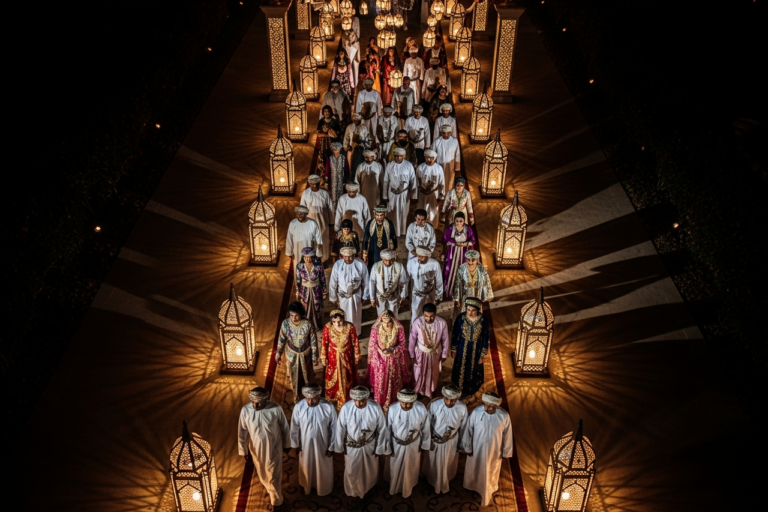
The Zaffa: A musical parade welcomes the bride when she comes to the main event.
-
Traditional Attire: The groom and bride both wear rich, Omani clothing to show their roots.
-
Serving Omani Halwa: This thick sweet is always served. It stands for warmth and celebration.
These traditions make omani weddings really stand out and help people feel happy and at home, whether in the wedding hall or
Conclusion
Omani wedding traditions are full of deep meaning and culture. They show the important values of family, faith, and joy. The Tulba engagement is full of feeling. The other celebrations mix music and traditional dance. Every part is made to respect the couple and their families.
When you look into oman customs, you can see how love and promise are honoured. You can enjoy and learn a lot from these rituals. Whether you want to use some omani traditions in your own wedding or just want to learn about oman, there is much to see.
If you want to talk about your wedding plans or need help with ideas, you can reach out for a consultation.
Frequently Asked Questions
What makes Omani wedding dresses and men’s attire distinctive?
In omani weddings, you see the bride in a bright dress. It is covered with a lot of embroidery, and there is plenty of colour in it. She may wear gold jewelry that comes from her family. The groom in an omani wedding wears a clean white dishdasha. This is a long robe. He also puts on a wizar, a turban with some embroidery, and a khanjar, which is a special dagger. These items show his place in the family and where he comes from.
How do music and traditional dance shape Omani wedding celebrations?
Music plays a big part in Omani weddings. At a wedding hall, a live band plays classic Arabic music. The female guests like to dance to this music in a private space. One special moment of the wedding day is the Zaffa. It is a loud and happy music parade that lets everyone know the couple has entered. This moment brings lots of energy and joy to the Omani wedding for all the guests.
Which foods are typically served at an Omani wedding?
An Omani wedding feast is big and full of joy. People who come can enjoy large buffets with tasty food like “shuwa,” which is lamb slow-cooked, and rice dishes called qabooli. There are many types of stews too. For dessert, Omani halwa is a favourite on the wedding day. This sweet treat is rich and often served with coffee. It shows warmth and kindness, making the Omani wedding day feel even more special.