Key Highlights
Here are the main things you need to know about mexican weddings and their wedding traditions:
-
Mexican weddings mix old local customs with catholic influences. This creates a bright and lively wedding day.
-
There are rituals like the wedding lasso (el lazo) and the wedding coins (las arras). These show unity and a wish for good things to come.
-
Family members are very important and have a crucial role to play. Los padrinos y madrinas or godparents help with planning and during the big moment.
-
Wedding parties are fun and full of mariachi music, traditional dances like the vibora de la mar, and a lot of delicious food.
-
These special customs focus on family, community, and strong cultural values. All of this makes weddings full of meaning and joy.
Introduction
Are you thinking about having a wedding day in Mexico that you and your guests will always remember? Mexican weddings have deep roots in mexican culture, filled with traditions that make the day stand out. Traditional mexican weddings are full of bright colours, music, and energy. The day is about the coming together of families, enjoying good food, and sharing fun with lively music. When you understand these customs, the day can mean even more. It does not matter if you are planning your own wedding, or if you will be there as a guest. At this kind of wedding, people feel like family.
Wedding Traditions in Mexico: What Canadians Should Know
If you want to have a destination wedding in Mexico, or bring some Mexican wedding tradition to your own celebration at home, it’s good to know what you might see or do. The wedding ceremony often follows many customs that come from the religious ceremony, but the big party after is just as important.
These traditions can add something special, whether you are at an inclusive resort or a beautiful old church. Now, let’s look at some of the key parts of a wedding ceremony in Mexico, from the different rituals to fun things at the reception.
1. The Catholic Church and Religious Ceremonies
A traditional wedding ceremony in Mexico is often a full Catholic Mass. This service can last for about one hour. The church service is very important and seen as a holy moment in this time. It is at the heart of the wedding celebration.
Depending on the family, the church service might be done in Spanish, or it could have some parts in English. This helps make it easy for all guests to follow along.
During the full Catholic Mass, you will notice things you have seen before, like communion. But this wedding ceremony also adds some unique traditions to honour the couple’s roots. The catholic church gives strong support for the marriage. There are blessings from the priest and prayers for the couple and their new life together. This is a good way to start a life as one.
One special part of the church service is when the couple gives a bouquet to the Virgin Mary. They ask her for her blessing and to help them in their marriage. This is a very big way that people show respect for their faith and where their family comes from.
2. El Lazo (The Wedding Lasso) Ritual
One of the most beautiful and meaningful wedding rituals is the el lazo, also called the wedding lasso ceremony. In this tradition, two people show their promise to stay together in love and marriage. The wedding lasso is a special item that many couples keep for a long time.
At the ceremony, after the couple says their vows, the padrinos (who are like godparents) put the lasso around the couple’s shoulders. They shape it like a figure eight. This shape shows that the couple has a close bond that cannot break apart. The lasso might be a large rosary, a silk cord, or a floral garland. Each material gives the wedding lasso its own style.
When people see this ritual, they see two people become one in the eyes of God and everyone there. The couple keeps the wedding lasso after the wedding. It reminds them both of their special promise.
3. Las Arras Matrimoniales (The Wedding Coins)
Another big tradition includes giving las arras matrimoniales, known as the wedding coins. This part shows the groom’s promise to look after his family. It also means the couple plans to share what they have and build a good life together. This is a special time full of meaning and trust.
The groom usually gives the bride 13 gold coins in an ornate box. The coins, called las arras, stand for Jesus and his 12 apostles. When the groom hands over the coins, it means he is ready to take care of her and their money. The priest will bless the coins during the wedding, which makes the ritual even more special.
When they exchange the wedding coins, the couple shows how much they care for one other and dream about their future. The ornate box and gold coins often become a family treasure that will be given to other people in their family for years to come.
4. The Importance of Los Padrinos y Madrinas (Godparents & Sponsors)
In Mexican wedding culture, family is at the heart of everything. Los padrinos y madrinas (godparents and sponsors) have a very crucial role. They are family members or close friends that offer guidance and give support. Sometimes, they also help with money. Their role is bigger than that of a maid of honor or best man.
The godparents are not just there for show. They get involved during the wedding and bring more meaning to the day. They may sponsor important things for the ceremony. For example, some padrinos help with the rings, the lasso (el lazo), and the coins (las arras). Their support is a sign of their love for the couple and their wish that they will have a good life.
This tradition shows that the community comes together for the couple. When los padrinos take part, it makes it clear how much Mexican traditions value family and mentorship. It also highlights how important it is to help the couple as they start their new life, keeping the family heritage alive from one year to another.
5. La Pedida: Asking for the Family’s Blessing
Before the wedding starts, there is a special event called la pedida de mano in Mexican culture. This happens when the groom’s family goes to see the bride’s family to ask for permission for the marriage. It is a big and important moment in the wedding plans.
This meeting is not just about asking a question. Both families often have a meal together, give gifts, and bring good wishes for the couple. It is a time to show the strong tie between the two families before the special day comes.
In Mexican culture, la pedida shows how family support matters and why it is good to have everyone involved. It helps to respect the parents and make sure both families stand together. This gives the couple a strong start for their life together.
6. Mariachi Bands and Traditional Wedding Music
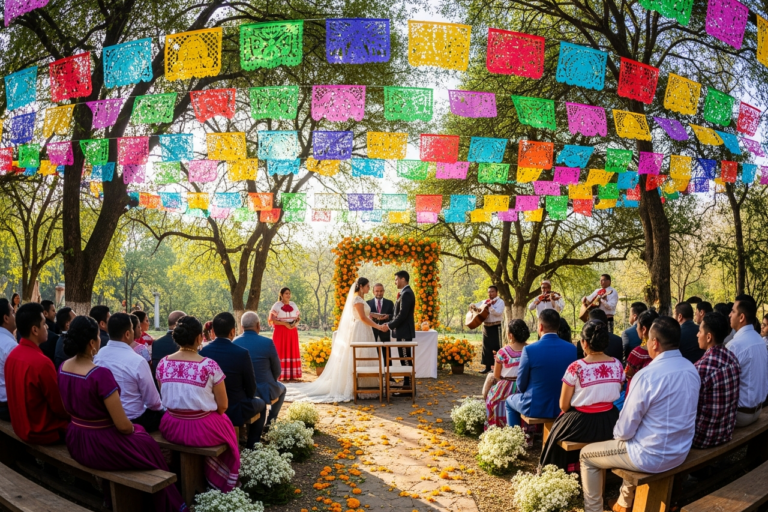
What’s a Mexican celebration without the lively music from mariachi bands? In mexican weddings, music is a big part of the day, and having live mariachi music often stands out. The bright and bold sounds bring so much energy and joy. People get in the mood to have fun.
At the wedding ceremony, if there is a Catholic Mass, you may hear mariachi bands play some traditional songs and hymns. Once the ceremony is done, they start to play fast and happy songs. They make people want to get up and dance on the dance floor. This is one thing people remember most from special events in Mexico.
Some common times when mariachi music is played at mexican weddings are:
-
Mariachi bands serenading the couple as they leave the church.
-
Playing during the cocktail hour or at the dinner.
-
Singing “Las Mañanitas” for the couple when the wedding day starts.
7. Signature Wedding Dances: El Vals, La Vibora de la Mar, and The Money Dance
The wedding reception is where the real party begins, and it includes several signature dances. The first dance is often el vals (the waltz), a classic and elegant moment for the newlyweds. This is followed by emotional dances with their parents, honouring the family bonds.
One of the most fun and unique traditions is la vibora de la mar (the sea snake dance). In this playful dance, the bride and groom stand on chairs and form an arch with their arms or a veil. Guests form a long conga line and dance through the arch, trying to “break” it while the music gets faster. It’s an energetic icebreaker that gets everyone on the dance floor.
Another popular custom is the money dance, or el baile del billete. Guests pin money onto the couple’s clothing in exchange for a short dance, offering their good wishes and financial support.
|
Dance |
Description |
|---|---|
|
El Vals |
The couple’s first dance, typically a classic waltz. |
|
La Vibora de la Mar |
The “sea snake” dance where guests weave through an arch formed by the couple. |
|
The Money Dance |
Guests “pay” for a dance with the bride or groom by pinning money on them. |
8. Festive Food and Drinks at Mexican Wedding Celebrations
A Mexican wedding reception is full of life, and the delicious food is always a big part of it. The menu often has traditional dishes that families in Mexico have loved for many years. Food is served on big plates to share with others or set out as a large buffet. You get flavours that are strong, real, and show a lot of culture.
Main courses at the wedding reception are usually filling and made with care. You can find more than one dish, and they all highlight the best of Mexican cooking. Every plate is made to be enjoyed with your friends and family.
Some delicious food and drink you might see at a Mexican wedding are:
-
Mole poblano: This is a rich sauce made from chillies and chocolate. People pour it over chicken or turkey.
-
Pork carnitas: Tender pork cooked slowly so it is soft and tasty.
-
Chiles rellenos: Peppers filled with cheese or meat, then cooked to make them warm and good.
-
Mexican wedding cookies: Soft cookies with a rich, nutty taste and rolled in powdered sugar.
9. The Wedding Parade: La Callejoneada
In some places in Mexico, there are wedding parades known as callejoneada. This happens a lot in old towns like San Miguel de Allende. After the wedding ceremony, the couple and all the guests walk together in the parade through the streets. They are on their way to the wedding reception. It is a great way for the couple to show their happiness with everyone in town.
The happy couple leads the parade. You will see people walking, singing, and dancing. There is often lively music with a mariachi band too. Many times, you will see a “mojiganga,” which is a big puppet made from paper and it looks like the bride and groom. These large puppets dance with the crowd and bring smiles to everyone.
This wedding parade makes the day feel like it’s a big party for the whole community. It becomes one of the most special events people will remember. The energy and fun from the parade make the wedding reception even better and more joyful. This is how Mexican weddings bring people together with lively music and celebration.
10. Traditional Wedding Attire and Symbolic Accessories
The wedding attire at a Mexican wedding brings together the modern and traditional elements in a lovely way. Many brides will wear a classic white dress. It often has detailed embroidery or lace that shows off Mexican skill and art. The groom can wear a tuxedo, or he may choose a traditional charro suit that is fancy and comes with a wide-brimmed sombrero.
On the wedding day, symbolic accessories are very important. The bride might hold two bouquets. One is for herself, and one is to give to the Virgin of Guadalupe. This is her way to pray for a good marriage and a happy new life with her partner.
All these parts of the wedding attire mean more than just clothes. They show culture, faith, and personal style. Each one has its own meaning and helps the couple honour their heritage while they celebrate.
Family, Heritage, and Symbolism in Mexican Weddings
Every Mexican wedding puts family heritage and tradition at the centre. The whole wedding is not just a fun time. It is a time where two families come together. This is also where people make a link to old ways. The religious ceremony and the party after are full of special moments for family members.
Parents give their blessing. The padrinos help out in many ways. Each part is there to show how much family members and the rest of the people mean to the couple. These wedding traditions help make an eternal bond for the pair, and for everyone who joins in. Let’s now look at how these customs honour family, and also the meaning behind them.
Honouring Family and Community Through Rituals
Mexican wedding traditions show how important family and community are. People see that in the special things done at the wedding, where family members take part and do not just watch. The whole community is there to see the couple say their wedding vows, and they give their support, too.
A big way that family is shown respect is by who the couple picks as their godparents, or padrinos y madrinas. These special people help guide the couple. Many times, they help pay for parts of the wedding. When the couple picks them, it shows how much they honour their elders and care about their wisdom.
These meaningful traditions help the couple begin their life together close to people who care about them. When family members and others join in the wedding, it turns it into a time where everyone can celebrate love, unity, and their shared history.
Meaning and Symbolism Behind Key Wedding Customs
Many wedding customs in Mexico are full of deep meaning. They show what both people hope for as they start a new life together. These acts make the wedding ceremony feel special and close to the heart. The items used in the ceremony are not just for looks. Each item has a strong meaning in the lives of the couple.
Take the lasso ceremony, for example. It gives everyone a clear view of the couple’s eternal bond. The rosary beads or cord make a figure-eight that sits over the couple’s shoulders. This shape stands for infinity and shows their bond will not break. There are also 13 coins, sometimes called arras. These stand for trust, taking care of each other, and the promise to share all the good things in life.
The main symbols you will see in a Mexican wedding ceremony are:
-
The lasso: Stands for unity and an eternal bond between two people.
-
The 13 coins: Show hopes for money, and tell that the groom will help and give support to his family.
-
The offering to the Virgin Mary: This is a prayer, asking for blessings and help from above as the couple steps into their new life.
Conclusion
To sum up, knowing and enjoying Mexican wedding traditions can make the wedding experience better for people in Canada who are having a wedding or helping plan one. Traditions like El Lazo, Las Arras, and Las Arras Matrimoniales, along with music from mariachi bands, all show how important family, good friends, and celebrating are to people. Each wedding tradition brings something special to the big day. This makes the wedding not just about two people, but also about their background and their love for each other. As you plan your own wedding or go to a Mexican wedding, think about these wedding traditions. They help you see just how bright and happy the culture is. If you want ideas just for you, think about booking a meeting where you can find out how to add these great traditions, like El Lazo, Las Arras, and mariachi bands, to your own wedding.
Frequently Asked Questions
Do Mexican wedding traditions differ by region?
Yes, mexican traditions do change a lot from one place to another. For example, weddings that happen by the coast in places like the Riviera Nayarit often feel more easy-going and are focused on the beach. Weddings in central Mexico may be more dressed-up and formal. Some areas also use special indigenous customs that have come down over many years. This makes every wedding special in its own way.
How are traditional rituals adapted in modern Mexican-Canadian weddings?
Many modern couples want to blend different wedding traditions to tell their own story. At a Mexican-Canadian wedding ceremony, you may see rituals like the lasso and coin ceremonies mixed with a new style for the event. Couples today pick the parts of the wedding ceremony that mean the most to them and their family members. This makes the day special and just right for them.
What are the most unique customs found at Mexican wedding receptions?
Mexican wedding receptions are full of lively music and fun. There are some unique things people do, like the sea snake dance, which is also called vibora de la mar. Another one is the money dance, known as el baile del billete or baile del billete. The fun does not stop there, as many couples have a tornaboda. This is an after-party, and it keeps the music and good times going late into the night.