Key Highlights
-
Jordanian weddings come with a lot of lively celebrations that may start days before the main wedding day.
-
One important pre-wedding event is when the marriage contract is signed at the courthouse. This is when the couple is legally married, before any party begins.
-
The wedding celebrations happen at both the bride’s family home and the groom’s house. People enjoy music, dancing, and lots of traditional food at these parties.
-
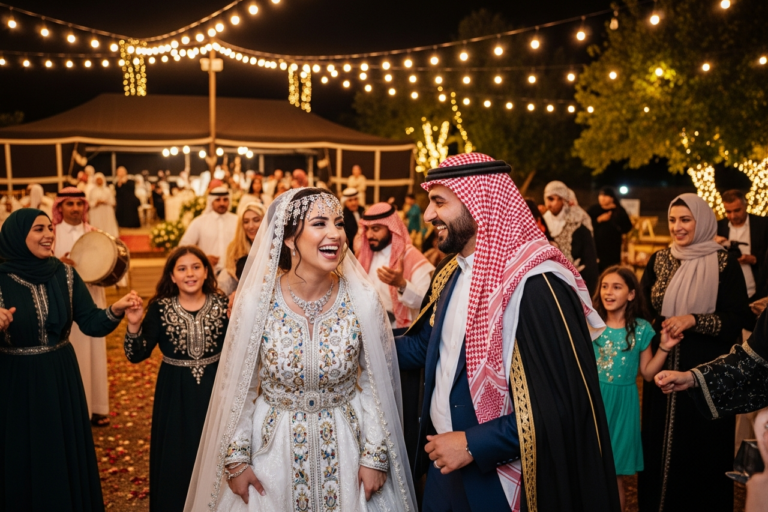
On the wedding day, there is a fun car procession. People have their own gatherings—one for men and one for women—before everyone joins together as one group.
-
Jordanian wedding celebrations are filled with tradition, but in recent years, some new ideas have been added. Now, there is a mix of old ways and modern things at many weddings.
Introduction
Are you wondering what a wedding day is like in Jordan? Jordanian weddings are full of life, love, and many old traditions. These weddings are not like some Western ones. In the Middle East, people often spend several days to celebrate. Families and friends all come together to make it special for the couple. There is a lot of meaning in every part, from the start with legal steps to the big party at the end. This guide will help you see the joy and beauty found in Jordanian wedding traditions.
Understanding Jordanian Wedding Traditions
Jordanian wedding celebrations are all about family and the people around you. These weddings are not just for the bride and the groom. The families also get together and become one at this time. At first, the bride’s family takes the lead. They welcome the groom’s family and give their blessing to the new life that the couple is about to start.
These wedding traditions help build a good start for the new couple. Each Jordanian tradition leading up to the wedding and on the big wedding day shows love, joy, and help from family and friends. Everything, from the small parties before the wedding to the main event, brings people together. Let’s look at some steps and ways people keep these customs going.
Key Steps and Rituals in a Jordanian Wedding Ceremony
One of the most clear steps in jordanian weddings is the legal process that happens before the main party. The couple, their two witnesses, and the judge meet to sign the marriage contract. This way, the couple is already married in the eyes of the law before the wedding day and the celebrations start. There is usually a serious talk with the judge to make sure both people want to go forward with this new life together.
Once the legal work is done, the wedding celebrations can begin. On the wedding day, the groom goes to pick up the bride. Then, everyone joins in for a car parade. Family and friends drive their cars, honk their horns, play loud music, and have fun on the drive through the streets.
The party reaches its highest point at a special place, like a big hall or at the groom’s house. At first, the men and women are in different rooms for dancing and wishes. Later on, the men come to join the women. All the guests give money to the newlyweds as gifts to help the couple as they start out in their new life.
Symbolism Behind Popular Customs
Many customs in Jordanian weddings have deep meaning. When the bride’s family invites the groom’s family, it shows they accept the marriage. This is the family’s way of blessing the couple and saying both families now join together. It is a warm and trusting welcome.
There is another loving tradition in jordanian weddings. Henna is put on the bride’s hands. This is more than just pretty art. The designs stand for happiness, beauty, and the start of a new life for her. People also believe these henna patterns bring the couple good luck and joy.
In a special moment, the father of the bride puts a Bedouin coat, called a ‘furwa,’ on his daughter’s shoulders. This shows that he gives her to the groom with his love and best wishes. He also offers her his support as she starts a new life with her husband.
Pre-Wedding Celebrations in Jordan
People get excited for Jordanian weddings long before the big day. About three days before the wedding, families start to have a few small parties and follow some traditions. These parties often take place at the bride’s house and also at the groom’s house. The rooms fill up with happiness and joy for the wedding that is coming soon.
These events are full of singing and dancing. At some, there may even be fireworks. It is a time for friends and family to come together and be happy about what is ahead. The groups enjoy these moments and look back at what marriage means to them. Here are some main pre-wedding things to know, from asking for the bride to the special plans the groom will make at his house.
The Bride’s Hand and Engagement Rituals
The groom’s family will visit the bride’s family to ask for her hand. This is a big and respectful step. It is the official start of the engagement. When the bride’s family says yes, the couple can move forward with their plans and really start their journey to be married.
Next comes the signing of the marriage contract. This is a key part of the pre-wedding rituals. It is a legal step, and it makes the engagement real. A few other important steps happen before the wedding day:
-
Henna Party: This is a party for the women. The bride’s hands and feet will get beautiful henna designs.
-
Family Parties: Both families will hold parties, one at the bride’s house and one at the groom’s.
-
Groom’s Shaving: The groom will get a shave from his friends and male family members in a fun gathering.
-
Dowry Agreement: The two families talk and agree on what the groom will give to the bride as a dowry.
These things help both families become closer. They also bring a lot of joy and help everyone get ready for the wedding day. Each step shows their commitment to each other.
Groom Preparation: Shaving and Family Gathering
On the morning of the wedding, there is a family gathering at the groom’s house. The big event at this time is the groom’s ceremonial shaving. It is not just a quick trim. The groom is with his friends and family. They sing, laugh, and support him while he gets ready for his big day.
This tradition shows that the groom is starting a new part of his life. The shaving makes him clean and ready to become a husband. It is a time for people to come together, have fun, and show that the groom is now ready for more in his life.
There is a lot going on at the groom’s house on the morning of the wedding. As he gets ready, his family is often busy in the kitchen. They cook food like traditional Mansaf. This food is for the people who are coming to celebrate the big day. Everyone helps out. This shows that the wedding is not just for the couple, but for the whole community too.
Wedding Day Traditions and Activities
The wedding day in Jordan is full of happiness and excitement. The big day is not calm or quiet. Instead, the focus is on loud and proud wedding celebrations. When the groom goes to pick up his bride, many people come to join the couple and share in their joy.
Jordanian wedding traditions on this special day are full of energy and colour. The wedding celebrations mix new ideas with old customs. This makes the experience very special for the couple and their guests. There are many unique ceremonies, and if you are a guest, there is a lot to look forward to on this big day.
Unique Ceremonies and Cultural Practices
Some of the most unique traditions in Jordanian weddings are designed to be a public display of joy. One of the most memorable is the ‘Zaffeh,’ or wedding procession. After the groom picks up the bride, they lead a parade of cars filled with friends and family. People honk horns, hang out of windows, and play loud music, creating a festive atmosphere throughout the town.
This procession is a highlight of Jordanian weddings and a spectacle to behold, showcasing the community’s excitement. It’s part of a collection of customs that make these celebrations stand out in the Middle East.
Another practice is the gifting of money instead of presents. Guests line up to congratulate the couple and give them cash to help them start their new life together. This practical approach helps the newlyweds establish their home after the honeymoon.
|
Tradition |
Description |
|---|---|
|
Zaffeh (Car Procession) |
A loud and joyful parade of cars following the bride and groom’s vehicle around town. |
|
Separate Parties |
Initial celebrations where men and women are in different rooms or areas before joining together later. |
|
‘Furwa’ Draping |
The bride’s father places a traditional Bedouin coat over her shoulders as a symbol of his blessing. |
|
‘Nuqoot’ (Gifting Money) |
Guests give the couple cash gifts to support their new life together instead of traditional presents. |
Foods, Dances, and What Guests Can Expect
As a guest at a Jordanian wedding, you will find a big, excited crowd. The mood is full of energy, and everyone is welcoming and open. There is lots of music and dance, and people give you warm wishes. You will feel included in the family because the hospitality is so strong.
Food is a big part of this Jordan wedding. Huge meals are made, sometimes for a hundred people or more. The most loved dish is Mansaf, which is the national meal of Jordan. Mansaf has lamb cooked in a yogurt sauce and is served with rice and bread. This meal is meant to bring everyone together, and people enjoy it as one group.
Dancing is also important at such jordanian weddings. You will get to see the ‘Dabke’ dance, which is a classic line dance done at many jordan events. Many men will start off in their own area, showing their moves with excitement, before everyone else joins in for the party. Here is what you can expect as a guest:
-
A large, lively crowd.
-
Upbeat music, with drums, flutes, and some times gunfire as people celebrate.
-
A big meal with loved foods from Jordan like Mansaf.
-
Fast and lively dances that are traditional, like Dabke.
Conclusion
To sum up, learning about Jordanian wedding traditions shows how rich and lively these customs are. The steps before the big day, with all the special rituals, mix family and culture in a way that makes each wedding feel full of life. The fun and unique ways people celebrate during the ceremony also highlight what is important to the Jordanian people and their history. If you join as a guest, knowing about these traditions will help you have a better time and get closer to the couple and their families. As you get ready for the big day, try to enjoy the local ways and jump into the happy mood. If you have questions or want to know more about going to a Jordanian wedding, just ask!
Frequently Asked Questions
How have Jordanian wedding traditions evolved recently?
In recent years, jordanian weddings have seen some change. Couples still keep core customs like bringing the family together and having big wedding celebrations. But some now choose DJs instead of traditional bands. They may add a few Western-style ideas. Even with these changes, community support for the couple as they start a new life is still very important. The heart of jordanian weddings stays the same.
What should Canadian guests wear or bring to a Jordanian wedding?
For guests who go to jordanian weddings, it is good to dress in formal clothes. Men can wear a suit for the big day. Women should pick a dress that is both modest and looks nice. You do not need to bring a gift from a list. Instead, it is normal to give the couple money in an envelope at the wedding celebrations.
How does a Jordanian wedding compare with other Arab celebrations?
Jordanian weddings are a lot like other weddings in the Middle East. There are big family get-togethers and things like the Zaffeh. Still, jordanian weddings also stand out. One thing that sets them apart is signing the marriage contract at a courthouse before the big party. Another way they are different is what happens at the groom’s house. These parts make a jordanian wedding special, even when compared to other weddings in the middle east.