Key Highlights
-
Iranian weddings are full of wedding traditions. These start with a formal proposal and an engagement ceremony. Both families be part of this.
-
The Sofreh Aghd is a big part of the Persian wedding. It is a wedding spread that has many symbolic items. The couple uses these to start their new life together.
-
The marriage contract, called Aghd, becomes official in a special ceremony. This marks the legal and religious union for both people.
-
Before the wedding day, the Henna Night, or Hanā Bandān, brings close friends and family together. There is music, dancing, and everyone celebrates.
-
Iranian weddings have vibrant music, dance, special foods, and deep family involvement. The part of the celebrations blend old traditions with new ways.
-
Poetry and music are part of these events. People use them to show love, joy, and what means most in their culture.
Introduction
Welcome to the bright and colourful world of Iranian weddings! If you have ever wanted to know about what happens at a Persian wedding, you are in the right place. These events are much more than just a time to party. They go deep into history, family, and meaning. This overview will show you all about wedding traditions in Iran. From the first time someone asks to get married to the last bit of the party, you will get a full look at what makes these days so special and happy.
The Foundations of Iranian Wedding Traditions
Iranian weddings are very special because they are based on Persian culture and a long history. These wedding traditions help make them stand out in the Middle East. The meaning runs deep, and they tie families, the community, and many customs together for a day to remember.
Family members play a big part in these celebrations. What they do is not just for show. It is the heart of the wedding. It means a lot that loved ones are there at each step, giving their help and care to the couple from the start. In this, we will look at the past of Iranian weddings, what these family values mean, and the key things that matter in these beautiful wedding traditions.
A Brief History of Persian Weddings
The Persian wedding we see today is a mix of old customs and new ideas. Over the years, different events and changes in religion and politics have shaped the way people do these weddings. But one thing that always stays the same is how the event celebrates love, family, and the people who come together for it.
Across the provinces of Iran, you will see special ways of doing things in each area. Still, some main parts always the same, like the marriage contract and the use of symbolic items. These pieces help the couple feel close to where they come from and link their past with their future. The wedding becomes a part of living history.
Even as new ways come in, many people in Iran and in places far away still keep honouring these old rituals. The mix of old and new means the Persian wedding is still full of life. It lets the couple tell their story and is a strong tradition in the Middle East.
Key Values and Symbolism in Iranian Marriage Customs
Iranian marriage customs come from values meant to help the couple have a good and happy marriage. The wedding ceremony has many symbolic items and traditions. These pieces and actions stand for things like loyalty, family, and good luck. These items do not just look nice; they have deep meanings that can help guide the couple’s life together.
Symbolism is at the heart of Iranian culture. Each object or act shows a special wish for the two people getting married. Here are a few important symbolic items you will often see in the wedding ceremony:
-
Sugar Cones: In the wedding ceremony, two sugar cones get rubbed together over a cloth held above the couple’s heads. This is to send sweetness and happiness to their new life together.
-
Prayer Rug: The wedding spread often includes a prayer rug. This stands for how important prayer is in their lives and shows that their path together is a spiritual one.
-
Honey: After the vows, the bride and groom give each other honey. This is to show hope for a sweet beginning in their marriage.
All these traditions are there to bless the new union and start the couple off in a good way. Paying attention to these values shows the community wants this couple to be happy and have a good life together.
Iranian Pre-Wedding Traditions and Rituals
Before the main wedding party, iranian weddings have many important events that happen before the big day. These pre-wedding rituals start with things like courtship and a formal proposal. Family members are very involved in each step. Every part helps bring the two families together and shows the couple are serious about being together.
These customs, such as the engagement ceremony and henna night, are much more than simple parties. Each one marks a special moment. They help make the couple and their families ready for the wedding day. These events build excitement and make family bonds stronger before the wedding party happens. Now, let’s see what makes these iranian wedding rituals so special.
Khastegari (Courtship and Proposal)
The first step in an Iranian wedding is called the Khastegari. It is a formal meeting where the groom’s family visits the bride’s family to ask for her hand in marriage. The groom’s parents usually come, and sometimes his grandparents or other elders do as well. They bring flowers and pastries to show respect.
During this meeting, the two families talk and get to know each other. Someone older from the groom’s family usually speaks for him. They clearly share their intention. This part of the ceremony brings the families together and helps them build a connection. It also lets them talk about the future of the young couple.
If the bride’s family says yes, it starts the engagement process. The Khastegari is much more than a proposal. It is a longtime tradition that shows how important family members and close relatives are. This moment, as a part of the ceremony, gives the blessing for the union from both families.
Baleh Boroon (Engagement Ceremony)
After a successful Khastegari, the Baleh Boroon ceremony is held. The name means “taking the yes.” It is the main engagement party. More family and friends are invited to this wedding party. At this event, the couple’s engagement is shared with everyone and the group comes together to celebrate.
During Baleh Boroon, the groom’s mother gives an engagement ring to the bride-to-be. This shows her son’s commitment. At this same event, both families talk about important things like the “Mehrieh.” The Mehrieh is a financial promise from the groom to the bride. Both sides also exchange wedding gifts. These gifts show the giving spirit and help bring support to the new couple.
This engagement ceremony brings both families together. Female relatives from each side are a big part of talking things over and taking part in the celebrations. The Baleh Boroon is a fun and special step before the wedding party. It shows that both the groom and the bride really want to get married.
Hanā Bandān (Henna Night Celebrations)
The Hanā Bandān, also called henna night, is a lively and joyful wedding celebration. It happens for both the bride and the groom, usually on the night before the wedding. The whole place feels festive. There is music, lots of dancing, laughter, and people come together to share this happy time with the couple. The main part of the ceremony is when henna gets put on the hands of the bride and the groom. People say this brings happiness and many blessings to their lives.
During this part of the ceremony, henna paste goes on the hands of the bride and also the groom. Many believe that this will bring good fortune and extra joy for their life together. The henna is said to come from heaven, so decorating their hands with it is another way of wishing for a happy life for them. Some people will take dry henna and give it to guests as a small memory to keep from the night.
At this part of the wedding celebration, there are mainly family and close friends, making it feel special and close-knit. A close friend of the bride often helps put on the henna. During this, female relatives stand around, singing and dancing. The henna night is a beautiful way to show the couple love, kindness, and good wishes for their life ahead.
Iranian Wedding Preparations
As the wedding day gets close, the preparations for the wedding party speed up. Both families be really involved and work together on every step. This makes everyone closer and helps build a lot of excitement. A big part of the wedding party is getting the bridal dowry ready and putting together symbolic items.
People make sure the sugar cones are set for the wedding day, and they help get gifts delivered to the right place. Each task is a part of the journey that shows how much everyone cares. In the next sections, you will see some key pre-wedding customs. These include sharing sweets and giving the dowry.
Shirini Khoran (Celebrating with Sweets)
Shirini Khoran means “eating sweets.” It is a special part of the wedding celebration. People do this to bring sweetness into the new life of the couple. After everyone makes their formal promises at Baleh Boroon, the wedding party shares sweets to mark the happy occasion. This is done to wish the couple a happy marriage full of joy and good things.
When it is time to celebrate, there will be many tasty treats to enjoy. These include traditional sweets that are not just good to eat but also important in the culture. Some things you may see are:
-
Rice cookies (Nan-e Berenji)
-
Light doughnut balls (Bamiyeh)
-
Specially baked bread (Nan-e Sangak)
-
Various other pastries and sweets
By sharing these treats, families show that sweetness is a big part of their good wishes. It is a way to show joy and hope for good times and a bright future for the couple. Having these sweets at each stage of the wedding party shows how much sweetness and joy matter in the tradition.
Jahāz Barān (Bridal Dowry Procession)
Jahāz Barān is a traditional event where the bride’s family brings wedding gifts to the couple’s new home. These gifts often be things like furniture, kitchenware, and many other useful items. The bride’s family gives these so the couple can start this new life in comfort.
This event is a happy time. The dowry items are nicely set up, and sometimes shown to all the people who come by. In some families, items are put in large flat containers or decorated boxes. Then, people carry them to the couple’s new home with music and a feeling of joy. Making all these gifts visible is a sign of support and love for the couple.
Relatives of the bride help move and arrange the wedding gifts when they arrive at the new home. Jahāz Barān brings everyone together. It is about more than just moving things—it is also about showing happiness and caring for the new family, making this practical step into a special celebration.
Attire and Accessories in Iranian Weddings
The clothing worn at an Iranian wedding ceremony is a mix of elegance, old customs, and each person’s style. You will find both old-style wedding dresses and more modern looks at these events. The outfit for the bride and groom is very important. Their choices have deep meaning, showing a lot about who they are. Wedding accessories also mean a lot at Iranian wedding ceremonies, and some of these even carry special messages or stand for something important.
The groom’s family may help choose certain items or may even gift some things for the wedding ceremony. The clothes show family traditions. What people wear can also show where they come from in Iran. You will see big differences in what the bride and groom wear depending on the part of the country they are from. Now, let us look more closely and see both the old tradition and the lovely local styles that are used in bridal fashion.
Traditional Wedding Dresses and Grooms’ Outfits
Traditional wedding dresses in Iran are often full of detail and look grand, showing how special the wedding ceremony is. The bride may choose a white dress these days, but the old styles change from one area to another. Many old wedding outfits use bright colours, nice fabrics, and a lot of embroidery. These clothes help people show off their culture and family history.
The groom’s outfit is picked with a lot of thought too. In some places, the groom wears a suit. In other areas, he goes with a local style that matches the bride’s look. The groom’s family also helps choose the wedding party’s clothes, so the couple looks the best at their wedding celebration.
The patterns and colours you see on wedding clothes can stand for good luck, being pure, or being happy. This great care with fashion makes sure the couple’s outfits are not just nice, but they also have a special meaning in the wedding ceremony.
Regional Variations in Bridal Fashion
Bridal fashion in Iran showcases incredible regional variations, with each province boasting its own unique style. These differences in wedding dresses are a vibrant reflection of local culture, history, and craftsmanship. The fabrics, colours, and accessories chosen for a bride’s attire can tell you a lot about where she comes from.
For example, in the northern provinces of Iran, bridal wear might feature lush, nature-inspired embroidery, while in the south, you might see influences from Arabic and Bandar cultures with shiny fabrics and bold patterns. These styles are often complemented by specific folk songs and local traditions during the wedding celebration.
These regional differences highlight the rich diversity within the country. The choice of attire is a proud display of heritage.
|
Region |
Bridal Fashion Characteristics |
|---|---|
|
Kurdish Regions |
Vibrant, multi-layered dresses with intricate beadwork and bright colours. Often paired with elaborate headpieces. |
|
Northern Iran (Gilan/Mazandaran) |
Dresses with rich embroidery, often in red or green, reflecting the lush landscape. |
|
Southern Iran (Hormozgan) |
Brightly coloured and shiny fabrics, sometimes with face coverings (burqas) that are ornate and colourful. |
|
Bakhtiari Nomads |
Handmade garments with bold, geometric patterns and heavy use of embroidery. Layering is common. |
The Persian Wedding Ceremony
The Persian wedding ceremony, called the Aghd, is the main part of the whole wedding celebration. At this ceremony, the couple signs the marriage contract. They become husband and wife in front of family and friends. The Aghd is full of signs and old customs.
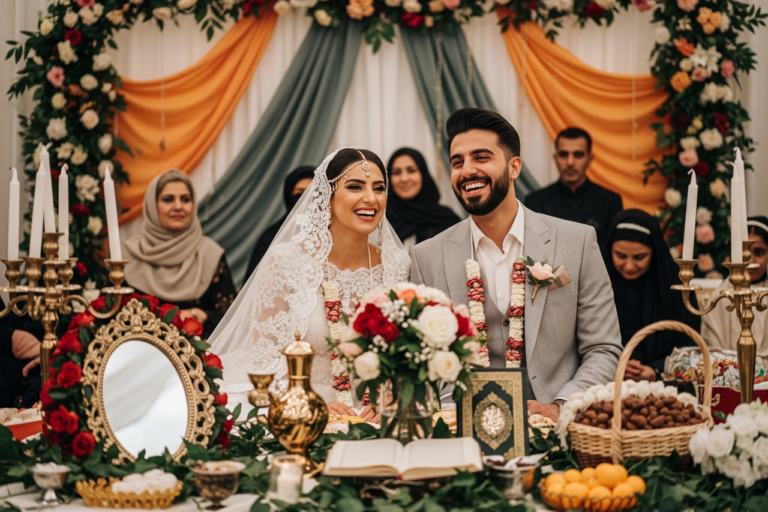
One important part of the Aghd is the Sofreh Aghd. This is a wedding spread with many symbolic items. You can see the holy book, mirrors, and candles on it. Each item has its own meaning for the couple and their life together. Next, we will look at what is on the Sofreh Aghd and talk about the key rituals in the Persian wedding ceremony.
The Sofreh Aghd Spread – Symbolic Table Setup
The Sofreh Aghd is the main part of a Persian wedding ceremony. This wedding spread is a special table or cloth set out on the floor. It is decorated and full of many symbolic items. Each thing on the Sofreh Aghd stands for a wish or blessing for the couple’s new life.
This arrangement is more than decoration. It is an important tradition for the wedding. Each object on it is carefully picked to show a piece of a happy and good marriage. Here are some must-have symbolic items you’ll see on the wedding spread:
-
Mirror of Fate (Aayeneh-ye Bakht): Stands for hope and clear choices in the couple’s future.
-
Candles (Shamdan): Show energy and light for their life with each other.
-
Holy Book: A sacred text, like the Qur’an or some poetry, is there for guidance and meaning.
-
Specially Baked Bread (Nan-e Sangak): Shows that there will be plenty to eat and well-being.
-
Gold Coins (Seke): Wish for money and security for the new family.
-
Honey (Asal): Means the couple will have a sweet life together.
The Sofreh Aghd is set up to be beautiful. It shows hope, love, and the help of friends and family. The way every item is put helps make a special place where the couple starts their life as
Rituals Performed During the Aghd (Marriage Contract)
The signing of the marriage contract, also known as Aghd, is the most important part of the Persian wedding ceremony. The couple sits in front of the Sofreh Aghd, and this is when many special rituals happen. The officiant reads some passages. He then asks for the bride’s approval three times. Usually, she stays quiet the first two times, which makes everyone wait in excitement until she says “Baleh,” or yes.
During the wedding vows, another part of the ceremony takes place. Female relatives hold a fine fabric or shawl over the couple’s heads. At the same time, women who are happily married rub two sugar cones together above this held fabric. This helps shower the couple with the hope of sweetness and happiness in their life together.
This part of the wedding ceremony is very deep in meaning. The fabric stands for unity and protection. The sugar that falls on the fabric means there will be lots of blessings and joy. When these rituals are done by family members with love, they help seal the couple’s future together and wish them a happy marriage.
The Role of Poetry and Music in the Ceremony
Poetry and music are at the heart of every Persian wedding celebration. Persian culture holds poetry close, and people often share lines from well-known poets like Hafez or Rumi during the wedding. These verses talk about love, fate, and beauty. They bring more meaning and warmth to the day.
Music is just as important. It makes the mood happy and lively. Both old folk songs played on instruments, such as the daf and tanbur, and modern tunes fill the air. At a Persian wedding, the songs bring everyone together and get people on their feet. When couples play regional folk songs, it connects their wedding celebration to their family roots.
These parts of the wedding are more than entertainment. The community comes together to share the union. The couple also shows their happiness for this new journey. In a special moment, the groom can see the reflection of his wife for the first time in the mirror on the Sofreh Aghd. When a poem about forever love is read, it helps everyone feel the magic between them.
Festivities and Family Involvement
The festivities of an Iranian wedding are big and full of excitement. Family members play a key role in the wedding party. They help with planning and make sure everything runs smoothly. This helps to create a happy atmosphere for everyone there. The wedding reception is a time when people come together to celebrate the couple.
After the ceremony, the events are full of energy. There are traditional dances and cultural performances. The next sections will talk about these lively celebrations. They will also explain the specific roles family and friends have. This shows how important the community is in an Iranian wedding.
Dance, Music, and Cultural Performances
No Iranian wedding party is complete without lively dance and music. The wedding reception is the place where people celebrate and have fun. Guests of all ages join in and hit the dance floor. The music often mixes classic Persian songs and popular tunes. This keeps the energy going all night.
Cultural performances are a big part of many wedding receptions. Depending on the family’s background, you may see traditional folk songs and dances. Sometimes, professional groups perform, and other times family members show their talent. For example, Kurdish weddings are known for their fast group dances like “Halperke.” Bakhtiari celebrations often include the “Chub Bazi” dance.
These performances are more than just good fun. They show pride in their culture, and honour family roots. The mix of dance, music, and tradition makes the wedding party a happy and special time for everyone.
Roles of Family and Friends throughout the Celebrations
Family members and close relatives are at the heart of an Iranian wedding party. They are not just there as guests. They help, plan, and support the whole event from start to finish. From the very first Khastegari meeting to the final goodbyes, their work means a lot.
The bride’s family and the groom’s family come together. They show a spirit of unity and open arms. Both families might do things like help get ready, give money, or take on a ceremony job, such as holding the fabric during the Aghd. Some close friends help as well, maybe by setting up the henna night or walking with the couple.
This way of everyone working together makes sure everything in the wedding party goes well. It also gives the newlyweds a lot of support. The big part family members and close relatives play shows how much Iranian culture values family and being close to one another.
Conclusion
In the end, looking at the bright world of Iranian wedding traditions shows the deep values and meaning behind each part. From the charming engagement parties to the special sofreh aghd setup, every part helps bring families together and celebrate love. If you live in Canada, taking part in these wedding traditions can help you understand your partner’s roots better. It can also help you grow closer to their family and history. Whether you are planning your own wedding or just want to know more about these customs, keep in mind that these wonderful traditions share stories that go far back in time. If you want to learn more, you can always ask for advice or more details!
Frequently Asked Questions
Are there regional differences in Persian wedding customs across Iran?
There are big changes in how people celebrate a wedding ceremony in different provinces of Iran. You can see these changes in what brides wear, the music and dance at the event, the foods served, and how long the ceremony lasts. These ways of celebrating show the rich culture that people have in each area.
Have Canadian-Iranian weddings adapted these traditions?
Yes, that’s true. Many Canadian-Iranians mix old ways with new Canadian ways. They keep big traditions like the Sofreh Aghd during their wedding party. But, some parts of the wedding change to fit their new life here. This mix lets them honour where they come from but also enjoy being in Canada.
What special foods and desserts are served during an Iranian wedding?
At an Iranian wedding party, there are lots of kinds of food and sweets to enjoy. The meal often has different kebabs, rice dishes, and stews. After that, people eat dessert. These often include rice flour cookies, baklava, and light doughnut balls. Sharing sweets is a big part of the wedding celebration.