Key Highlights
-
Egyptian wedding traditions have a long history. They mix old customs with some new ways to help a couple celebrate their big day.
-
Before the wedding, there are events that really matter. This includes an engagement party and the bright Henna Night, where the bride gets special designs on her hands and feet.
-
The wedding ceremony has some main parts. People sign a marriage contract and then comes the exchange of wedding rings.
-
Today, things at the wedding can be big and fancy. That was not the case with ancient traditions, because the ceremonies used to be less formal than what people see now.
-
The party after the wedding is full of life, with lots of music and dancing. There is a big meal, which has foods many know, like a layered cake and a sweet drink called Sharbat.
-
If you are a Canadian guest at an Egyptian wedding, knowing what to wear and the culture will help you enjoy the togetherness and the fun at the wedding.
Introduction
Have you ever thought about wedding customs from other places in the world? An Egyptian wedding is a bright and lively event. It has a lot of history and comes from deep roots in egyptian culture. These celebrations let you get a closer look at a rich heritage that people have handed down through many years. When you explore egyptian wedding traditions, you find a nice mix of old ways and new fun. From the engagement to the party after, every step means something and brings people together with much joy. This guide will help you get a closer look at what makes egyptian weddings and egyptian culture around marriage so special.
Ancient Roots and Modern Influences on Egyptian Wedding Traditions
Egyptian wedding culture is a mix of very old and new ways of doing things. People learn a lot from the past, as many native Egyptian wedding ceremony traditions go back thousands of years. This brings out the strong heritage of its people. The mix of wedding tradition, family, and new ideas helps make each egyptian wedding special.
Today, wedding ceremony customs have changed, but values like family, togetherness, and having good times are still important. The heart of every egyptian wedding ceremony still honors these things. We can take a look at how ancient egyptian wedding ceremony traditions line up with what is done now. We will also see how old values fit into today’s egyptian wedding culture.
Key Differences Between Ancient Egyptian and Modern Ceremonies
The wedding tradition in Egypt has transformed significantly over millennia. According to archaeological evidence, ancient Egyptian unions were often informal. A couple was considered married simply when the woman moved her belongings into the man’s home, a practice known as “grgp.” There wasn’t a formal Egyptian wedding ceremony as we know it today.
In contrast, modern Egyptian weddings are elaborate, structured events. They typically involve a formal ceremony, often conducted by a priest or bishop, which includes prayers, hymns, and the reading of Bible verses. The celebration is much more public and grand compared to the simple cohabitation that marked the beginning of marriage in ancient times.
Here is a simple comparison:
|
Feature |
Ancient Egyptian Weddings |
Modern Egyptian Weddings |
|---|---|---|
|
Ceremony |
No formal ceremony; marriage began with cohabitation. |
Formal, often religious, ceremony lasting about 45 minutes. |
|
Contract |
A prenuptial contract was common for property rights. |
A marriage contract (Yekteb Ketaboh) is signed publicly. |
|
Celebration |
A simple gathering with food and dancing after moving in. |
Extravagant receptions with music, dancing, and feasting. |
How Traditional Values Have Evolved Over Time
Many parts of egyptian wedding traditions have changed as time went by, but the main values stay the same. One thing that stayed is how important the family is. From olden days, the bride’s family and the groom’s family wanted to be a part of everything in the wedding. In the past, parents would pick who got married and talk about what would happen. Now, many couples pick their own partner, but there still is a need to get both families to agree, especially the bride’s family.
Marriage in an egyptian wedding is still seen as a very important, lifelong step for both people. Long ago, egyptians thought that being married could even last past this life. People still feel this now, and when an egyptian wedding happens, it’s known as the official beginning of their life together as a couple. Building a strong family is the goal that has stood the test of time.
Symbolism is also a big part of egyptian wedding traditions. This shows in gifts or sharing a meal, for example. Each part of the ceremony means something deep. What has really changed is that what used to just be a family thing is now shared with a lot more people at big, happy events. More friends, family, and the community become part of the beginning of their life together.
The Engagement in Egyptian Culture
The journey to an egyptian wedding starts with a formal engagement. When two people want to get married, they first talk to their parents and ask for their blessings. After their parents say yes, both sides sign an engagement contract. This act is an open way to tell everyone in the family and their friends that they will marry soon. It is a big step that makes the union official for everyone.
Next, the bride’s family usually holds a big engagement party. This party is a way to start the engagement period. It is a special time when the couple can spend more time together and make plans for their life. After this, it is time to talk about the symbolic gifts and the contracts that make the couple’s commitment stronger.
The Shabka: Symbolic Engagement Gifts
A big part of the engagement ceremony in a traditional Egyptian wedding is giving the “shabka.” This is the jewellery that the groom gives to his soon-to-be bride. Unlike how there is often just a single diamond ring in the West, the shabka is usually a bigger and more detailed gift. It shows the groom’s promise, as well as his family’s care for her.
Both families talk about and agree on this gift before it is given. People see the shabka as a kind of dowry. This is something very dear in egyptian weddings. The new couple and all of their guests get to see the shabka at the engagement party. That is a time filled with pride and joy.
The shabka often has:
-
Gold necklaces
-
Bracelets
-
Earrings
-
The engagement ring
This tradition is a way to show how important it is to give, welcome, and celebrate the bride as she joins the groom’s family.
Agreement, Contracts, and Family Roles
In Egyptian culture, getting married is not just about two people. It is also about bringing their families together. After the formal proposal, both families have a big part to play. The parents from each side sit down to talk about what the marriage will look like. They think carefully about each family’s financial situation.
One important step in this process is when the bride and groom sign the engagement contract, called the “Je Peniot.” This contract is not a marriage contract and does not hold up in court, but it does let everyone know that the couple plans to get married. Most of the time, the couple signs this contract with the presence of a clergyman. It helps show that both families are serious about the promise they have made.
Now that this is done, the next step is the “Yekteb Ketaboh,” which is the official marriage contract. This agreement is different because it does legally matter. It has details about things like the dowry (mahr) and the shabka. After the marriage contract is signed, the engagement is now official. From here, the families and the couple can choose an engagement date. This date is a big moment for everyone and shows they are ready to move forward together.
Pre-Wedding Celebrations and Rituals
Before the wedding, Egyptian culture is full of pre-wedding gatherings that help bring everyone together. One of the most loved of these is the henna night. This is a colourful and happy celebration held for the bride. The night of henna party is a tradition that goes back long in time, filled with music, dancing, and special acts. It is shared with close friends and female relatives.
These events are more than simple parties. They are a big part of the wedding journey and help make stronger ties between both families. Let’s take a look at why the henna night means so much and see how community is part of these lively pre-wedding rituals.
Henna Night: Meaning and Festivities
The henna night, known as “Laylat al Henna,” is a wedding tradition that has been around for thousands of years. It takes place the night before the wedding. This is a celebration of the henna night meant only for the bride and the women in her life, like friends and family. The event stands for happiness, beauty, and blessings as the bride begins her new life.
At this party, artists put beautiful henna designs on the bride’s hands and feet. While this happens, the other women sing and dance, which makes everyone feel close and happy. The bride will usually wear a pink cotton or silk dress during this time. This helps set a joyful mood for all.
The celebration of the henna night often has:
-
Traditional music and singing
-
Dancing among the female guests
-
The application of henna designs
-
Sharing sweets and refreshments
This wedding tradition is one of the best parts of the big day. It gives the bride a lot of love and good wishes that will stay with her as she steps into the next chapter of her life.
Community Involvement and Pre-Wedding Gatherings
Community involvement is at the heart of Egyptian weddings. You can see this clearly during the pre-wedding gatherings. These are not just simple parties. They are the time when both families start to come together. It is a big way for close friends to show they support the couple too. When the family gather at these events, it makes everyone feel they are part of what is happening.
From the engagement party given by the bride’s family to the smaller times people meet, each part lets close friends and all relatives share in the happy time of the couple. Everyone has something they do. Some help get things ready, others give advice, and many just join the couple to celebrate. This makes the wedding about more than just two people. The whole group, with family and close friends, takes part.
Because everyone is there, the couple feel surrounded by love and people who care for them as they start out together. These pre-wedding events bring people closer and leave memories that last a long time. This shows that in Egypt, a marriage is for the whole community, not just for the couple.
The Egyptian Wedding Ceremony Explained
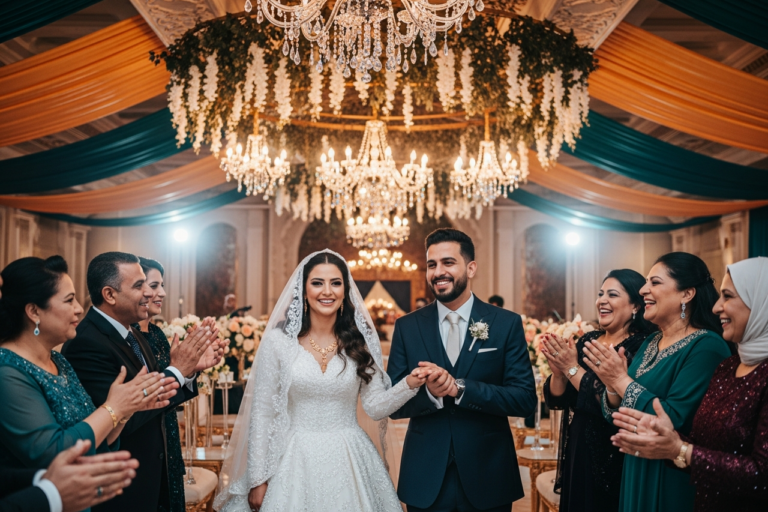
The Egyptian wedding ceremony is a special and beautiful event. It can be a wedding that follows native Egyptian traditional wedding customs or a modern wedding. The Egyptian wedding usually starts with the big entrance of the couple. They often arrive in cars decorated with flowers and ribbons. The main part of the wedding is led by a priest or a bishop. It is a serious time, and people treat it with much respect.
The whole Egyptian wedding ceremony lasts for about 45 minutes. You will hear prayers, singing, and see some important acts that show the joining of the bride and groom. The wedding ceremony has steps that are important to follow. We will go over the main parts of the egyptian wedding and also talk about what people should wear on this day.
Key Rituals Performed During the Ceremony
The Egyptian wedding ceremony is known for many traditions that have deep meaning for both culture and faith. Many times, there is the presence of a clergyman who leads the event and helps make it special. These customs can be different from one family to the next, but a few parts are there in most egyptian wedding ceremonies.
The clergyman’s role is important in the wedding ceremony. He guides the couple and their guests through each step. This will often be the reading of bible verses, prayers for the couple’s life ahead, and the singing of hymns. These times make the event feel very important and blessed as the two join as one.
There are some main things people can see in an egyptian wedding ceremony:
-
The signing of the Je Peniot or the marriage contract.
-
The reading of bible verses and prayers by the clergyman.
-
The exchange of wedding rings. At first, they are worn on the right hand before moving to the left.
-
In some Coptic Christian weddings, there is the crowning of the couple.
Each part is important to the egyptian wedding and is there to show the couple’s love and promise to each other. These egyptian wedding ceremony traditions make the day clear and joyful for all.
Dress Code for Brides, Grooms, and Guests
At an Egyptian wedding, people wear clothes that show respect and joy for the special day. Most brides put on a white gown, much like you would see at a Western wedding. But for some parts, such as the henna night, she might wear a colourful silk dress instead. Grooms usually wear a classic black tuxedo or a nice suit.
Egyptian wedding rings are an important part of the day. Couples often go for simple traditional Egyptian wedding bands instead of big diamond rings. These Egyptian wedding bands are plain gold, which stands for never-ending love. During the wedding, both move their rings from their right hands to their left hands.
Guests are asked to dress formal and modest at an Egyptian wedding. Men should show up in suits. Women can wear smart dresses or gowns. It is best to be a bit covered up, especially during the religious part. But for the party after, you can wear bright colours to join in the happy feel of the celebration.
Festivities at the Wedding Reception
After the serious ceremony, the real party starts! The wedding celebration at an Egyptian wedding is full of laughter, energy, and fun. At the reception, guests can relax and enjoy themselves. The newlyweds become the centre of attention, and everyone cheers for them with lots of excitement. Music and dancing are very important at these events, so the dance floor is always busy.
There is more than music at the reception. You will also find many cultural shows and traditions that make the night special. From the big entrance of the couple to the last dance, every part is meant for people to feel happy. Here, let’s look at the music and the other things that make the egyptian wedding celebration and the dance floor come alive.
Traditional Egyptian Wedding Music
Music is at the heart of a traditional Egyptian wedding. When the couple walks in, a big and lively parade called the “zaffa” starts off the fun. This parade has belly dancers, drummers with old instruments like the “darbuka” and “mizmar,” and singers. They all help walk the couple to their seats.
During the night, Egyptian wedding music brings a lot of energy to the party. There is a mix of old Arabic love songs and new pop tunes. This music pulls guests, young and old, onto the dance floor. The cultural significance of the music is huge. It ties the wedding to a long history of happy moments and brings everyone together.
The music picked for the night is not just to entertain. It shapes the whole night. The songs show happiness, celebrate the marriage, and invite people to join the joy. The zaffa is really special—it is a big way to say the couple is married now.
Dancing, Cake-Cutting, and Cultural Entertainment
The wedding reception is full of fun and busy activities that help make the night last. The dance floor is the main spot, where the bride and groom, their close friends, and family all join in. People take part in both modern and old-style dances. This is a time where everyone shows how happy they are for the couple.
One big part of the night is the cake-cutting part. At an Egyptian wedding, the cake often has more than one layer. People can see it is special and decorated with a lot of care. The bride and groom cut the cake together, sometimes using a big sword, and feed the first piece to each other. This shows that they will share a sweet future. Many people love to snap photos at that time.
You also get to enjoy:
-
A bright and happy zaffa walk to bring in the couple.
-
Belly dancers do a show for the crowd.
-
There’s sometimes a Tanoura dancer, who spins a lot and makes it fun for the guests.
-
People also drink a sweet treat called Sharbat.
All these things come together to make the Egyptian wedding party one of the best memories for the bride, the groom, and their close friends on the dance floor.
Food and Symbolic Customs in Egyptian Weddings
Food at an egyptian wedding is about much more than just filling you up. It is a way to show hospitality, bring good luck, and wish for a rich life. Everything at the wedding feast is made to make all people there feel special and happy. The meals have main courses everyone knows and desserts that taste really good. When you come in, it is not just about eating. It is a big part of the whole event.
There is a charming part where the new couple shares a traditional sweet drink called Sharbat. This is to say that their life together will be sweet. Now, let’s take a closer look at what people eat at an egyptian wedding and what all these foods mean to them. Sharing food is about much more than taste—it’s about beginning a good life together.
Iconic Dishes and Sweet Treats Served
A native Egyptian traditional wedding is known for having a big and tasty meal. The people who host the wedding believe good hospitality matters, so they make sure there is enough food for everyone. You will often see a buffet or a meal with many courses, offering the best foods from Egypt.
There are usually filling main dishes, like “Fattah.” This is a mix of rice, bread, and meat with a garlic-vinegar sauce. It is often served during celebrations. Grilled meats, called “mashwiyat,” are also common. You will also see “mahshi,” which are vegetables stuffed with tasty fillings, and lots of good rice dishes. These foods are rich, full of taste, and meant to be shared by all.
When it is time for dessert, sweet foods stand out. Some favourite treats are:
-
The big wedding cake with many layers.
-
“Kahk,” soft butter cookies that can have nuts or dates inside.
-
“Basbousa,” a syrup-soaked semolina cake that is sweet and moist.
-
A range of fresh fruits and small pastries.
Symbolism Behind Food and Sharing Traditions
In Egyptian culture, food has a special meaning, especially at a wedding celebration. The act of coming together and eating a meal is a big part of what brings two families closer. It stands for unity and the warm welcome people give at the wedding. When there is a lot of food at an egyptian wedding, people are wishing the couple a future that will be full of good things and happiness.
Many of the things people do with food at weddings are supposed to give good luck. When the couple gives each other the first slice of cake, it means they both promise to always help and care for each other. Drinking Sharbat from one glass together is a way to hope for a sweet life full of harmony.
These customs at an egyptian wedding are not just about looks. People do them with real feelings and best wishes for the couple. By taking part in these old and new traditions, everyone at the wedding becomes part of a group that wants only happiness and good luck. This is what makes an egyptian wedding celebration so special in egyptian culture.
Frequently Asked Questions (FAQ)
Are you curious about the history behind wedding traditions in Egypt? Many people want to know what henna night means and why it is so important in Egyptian weddings. There are often questions about the role of the family when the marriage contract is signed. People also ask about the exchange of wedding rings and what it stands for. If this is new to you, you might want to learn more about the engagement party and what makes it special. This could cover what to wear or the sweet drinks people love to have at this happy event.
What Should a Canadian Guest Expect at an Egyptian Wedding?
As a Canadian guest at an Egyptian wedding, you can get ready for a long and loud party. There will be lots of joy, warmth, and big welcomes from people. The wedding ceremony will likely be religious and may feel a bit serious. After that, you will go to the reception. The party will be bright and full of music, dancing, and tasty food. Be sure to enjoy the rich Egyptian wedding culture. Get set to celebrate with everyone all night!
Are There Special Clothing Expectations for Attendees?
Yes, the dress code for guests is usually formal. Men are to wear a suit. Women can go for a modest and stylish dress or gown. The bride might wear a white or a silk dress, but guests should not wear white. It is good to dress in a simple way for the ceremony. This is important, mostly if the event is in a religious place.
What Are the Most Unique Rituals Found in Egyptian Wedding Celebrations?
Some of the most well-known Egyptian wedding rituals happen during the night of henna party. During this, the bride’s hands get decorated before the wedding. There is also a fun “zaffa” procession at the reception. Another big part is the exchange of wedding rings. At the ceremony, the couple moves their wedding rings from the right hand to the left hand. These are a few of the most unique and memorable things seen in an egyptian wedding.
Conclusion
To sum up, when you explore egyptian wedding traditions, you see a mix of old and new customs that make these weddings special. There is meaning in things like the Shabka, and there is a lot of fun at the party after. Each part of the day shows the deep culture behind it all. If you are a Canadian guest, joining in with these traditions makes your time even better. You also learn to respect the different ways people celebrate around the world. You might dance to traditional music or taste some well-known food, but you will see that egyptian weddings are happy times filled with love and people coming together. If you’re going to be at an egyptian wedding, or want to know more about egyptian wedding traditions, don’t be shy to ask for more information!