Key Highlights
Here are the key highlights of Bangladeshi wedding traditions:
-
Bangladeshi weddings are colourful and last a few days. There is the Gaye Holud, the Biye (main ceremony), and the Bou Bhat (reception).
-
The Gaye Holud ceremony is when the bride and groom get turmeric paste put on them. This is done as a blessing and for purification.
-
Family members get very involved in all the parts of the wedding. They help arrange the marriage and join in each ritual.
-
The bride usually wears traditional attire. This is often a red Benarasi silk saree and heavy gold jewelry.
-
There is always a big wedding feast. People eat dishes like biryani and mishti doi, which show their hospitality.
Introduction
Welcome to the bright and busy world of a Bangladeshi wedding! If this is your first time at one, or you are going to have your own, you are going to have a great time. Everything about these wedding celebrations is full of rich Bengali culture, real feelings, and many fun activities. These festivities can last for days. You will see events that happen before the main ceremony. There will be lots of laughter, some happy tears, and family coming together by the end. Every moment is full of tradition. This guide will show you what you can expect, so you can enjoy each part of this special experience.
Understanding Bangladeshi Wedding Traditions from a Canadian Perspective
For people in Canada, being part of a Bangladeshi wedding is like jumping into a brand new way of celebrating. Instead of one wedding day, you will find that bengali weddings are spread over a few days and have many special traditions. It is a great time to see the way modern couples mix their day-to-day lives with bangladeshi wedding traditions that run deep in the culture.
To understand these bangladeshi wedding traditions, you have to look past the timing and plans. You get to see how much family and friends mean at every part. It is about feeling the real heart of each event. Let’s learn what makes these unions so special, and see ways to join in.
Cultural Significance of Marriage in Bangladesh
In Bengali culture, a wedding ceremony is about much more than just two people coming together. It brings two families into one. The whole event shows how strong family bonds are. Elders are there to bless the couple and keep traditions alive.
Many religious rituals and customs take place. These practices have come from the people before us. They help make sure the couple will have a good and happy life. The community comes together to support the couple as they start something new.
From the first meetings of families to the goodbyes at the end, each part of the wedding ceremony shows how everyone is involved. This support from loved ones helps keep family bonds strong. It also helps Bengali culture and traditions continue for future generations.
How Canadian Couples Can Connect with Bangladeshi Traditions
If you and your partner live in Canada and want to honour a Bangladeshi heritage, you can make your wedding special by adding some wedding rituals. To get the most out of this, it helps to know what these traditions mean. It’s all about the warmth of community, the joy of coming together, and getting family blessings. You do not have to follow everything. Instead, just use the parts that matter the most to you.
If you include traditions from a Bangladeshi wedding, you will see how people care for each other. There is real warmth of community here, and you will be able to feel the love. These moments are strong and give families the chance to wish you well in a way that is full of heart.
Some things you could do:
-
You can host a small gaye holud with close friends and family.
-
Think about exchanging floral garlands, or mala badal, during your ceremony.
-
You can choose to wear traditional attire at any point in your celebration.
The Sequence of Bangladeshi Wedding Ceremonies
A Bangladeshi wedding is not just one event. It is a set of wedding rituals spread across a few days. Each part has its own meaning and feel, bringing the families closer as they get ready for the big day.
The journey starts with fun pre-wedding events and ends with the main ceremony, called the Biye. All of these wedding rituals connect, building up the excitement. Let’s see how the key pre-wedding customs and the order of the main events make up these Bangladeshi wedding traditions.
Key Pre-Wedding Customs and Rituals
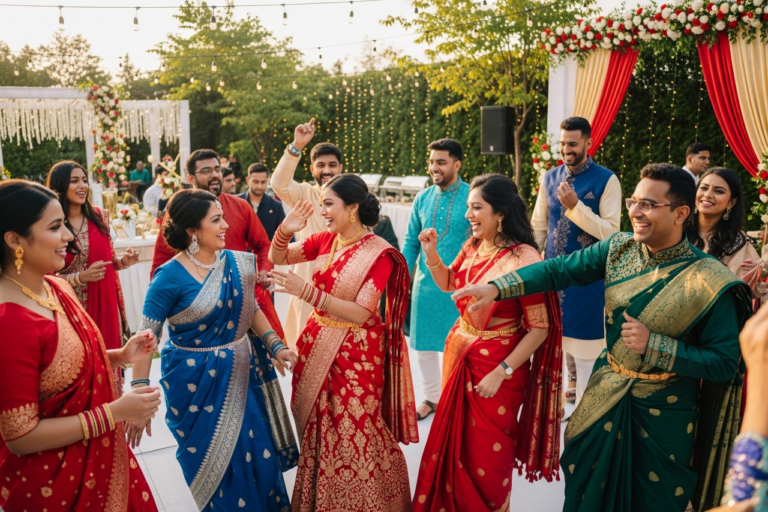
The days before a wedding are filled with happy events. One of the best-known celebrations is the Gaye Holud. At this event, loved ones put turmeric paste on the bride and groom. The Gaye Holud is bright and full of music, dancing, and traditional songs.
Another favourite part before the wedding is the Mehndi party. Here, the bride’s hands and feet are covered in henna. The women from the family join together, have fun, and spend time with the bride as she gets ready for her new life.
There are other special items that are important too, like:
-
Betel leaves: People use these in rituals to make the day lucky.
-
Sweets: These are traded by the families to share good news and bring joy.
-
Gifts: Both families give things like clothing and jewellery as a way to welcome each other.
Timeline of the Main Wedding Events
The main wedding events usually span three core days, each with a distinct purpose and host. The celebrations begin with the Gaye Holud, a vibrant and joyful event that sets the tone for the wedding ceremony.
On the wedding day itself, the groom’s procession, or Bor Jatri, makes a grand entrance at the venue. This leads into the Biye, the main wedding ceremony traditionally hosted by the bride’s family, where the couple is religiously and legally married.
The festivities conclude with a grand reception, hosted by the groom’s family. Here is a typical timeline:
|
Event Name |
Description |
Hosted By |
|---|---|---|
|
Gaye Holud |
A pre-wedding ceremony where turmeric paste is applied to the couple. |
Both families, sometimes jointly. |
|
Biye (Wedding Day) |
The main wedding ceremony, including the religious union. |
Bride’s family. |
|
Bou Bhat/Walima |
A post-wedding reception to introduce the bride to the groom’s community. |
Groom’s family. |
Pre-Wedding Celebrations and Family Involvement
Family involvement is at the heart of every Bangladeshi wedding celebration. This is clear, especially in the pre-wedding events. From the first formal engagement to the fun Gaye Holud, you will see family members at each step. They give their blessings, show support, and join in the rituals.
These gatherings are not only there to be seen. They play a big part in joining two families. The engagement and Gaye Holud give good examples of how family members start the holud festivities in a special way. These moments show the real meaning and value that family brings to any Bangladeshi wedding.
Engagement and Family Introductions
The engagement, called Adan Pradan, be the first step in the wedding journey. The groom’s family comes to the bride’s house. Then, the bride’s family visits the groom’s house. It is a time for the families to meet and get to know each other. The occasion be formal. Families decide to join together and start to plan the wedding.
Both families give gifts to each other. These include sarees, gold jewellery, and sweets. They show that each family welcomes the bride and groom. The families also decide on a good day for the wedding.
This first meeting builds respect between the groom’s family and the bride’s family. The tradition be nice. It shows that marriage connects two people and their families.
The Meaning and Rituals of Gaye Holud
The Gaye Holud is one of the most loved pre-wedding festivities. The name “gaye holud” means “turmeric on the body.” In this ceremony, people use a paste made of turmeric. They put the turmeric paste on the bride and the groom. The ritual stands for clean start, blessings, and good luck for them.
In the past, the bride and the groom had their own Gaye Holud events. Now, many couples like to celebrate together instead. Their guests put the turmeric paste on them and feed them sweets. Everyone enjoys the music, dance, and happy mood with their friends and family at the event.
The meaning of the Gaye Holud is about more than having a party. This ceremony does the following:
-
It is believed to give the skin a healthy glow before the wedding.
-
Shows the blessings of married women for a happy married life.
-
Helps families grow closer in a fun and relaxed way.
Traditional Attire and Symbolic Wedding Elements
Traditional attire plays a big part in any Bangladeshi wedding. It adds color and beauty to the wedding day. The groom and bride both wear outfits with lots of detail. These clothes come from a long history.
The bride often wears heavy gold jewelry. The groom wears a neat kurta. Every part of their attire is chosen with great care. These ornaments are more than just pretty items. Each one shows signs of prosperity, love, and their new life together. Let’s take a closer look at what these dresses and ornaments mean.
Iconic Wedding Dresses for Brides and Grooms
The bride’s wedding attire is often the main thing everyone looks at during the celebration. For the main ceremony, she will usually pick a red Benarasi silk brocade saree. This choice is old and beautiful. It stands for love and marriage. She often finishes her look with a golden veil, along with special hair and makeup.
The groom will also dress in a style that looks rich and new. He may wear a silk kurta and dhoti for the event. Sometimes, he might change into a sherwani. In Hindu ceremonies, the groom adds a special conical headpiece called a ‘topor’. This brings a cultural touch that stands out.
The dress code can be a bit different for some other times:
-
Gaye Holud: Both the bride and groom might put on yellow or red cotton outfits for holud.
-
Reception (Bou Bhat): The bride could wear a fancy saree or lehenga, and the groom may go for a formal suit or another sherwani.
-
Muslim Weddings: The attire at these weddings can include styles like salwar kameez or sherwanis. These outfits bring together both cultural and faith-based styles.
Jewellery, Symbols, and Accessories in Bangladeshi Weddings
Jewellery is a big part of how a Bangladeshi bride looks on her wedding day. She is often covered in heavy gold jewelry. This makes her look good and also shows her family’s wealth and her new life as a married woman. Many ornaments are passed down in the family. So, they have special meaning for the bride as well.
Gold is not the only thing that matters. Other things and symbols are important too. The bride’s hands and feet are covered in henna. Her hair may be decorated with fresh flowers. In Hindu weddings, the bride wears white conch shell bangles, called Shankha, and red coral bangles, known as Pola, which show she is married.
All these things put together make the bridal look really lovely. Rich fabrics, shiny ornaments, and flowers make the event feel special. This bridal look shows beauty and prosperity. It is also about good beginnings for the couple.
Festive Food, Hospitality, and Reception Traditions
Food is at the heart of Bangladeshi hospitality. This shows the most during a wedding. The wedding feast is big. It is made to make guests happy and to honour the couple. Meals like biryani and sweets such as mishti doi fill the menu, making it a great time for everyone.
After the wedding, there is a reception called Bou Bhat. At Bou Bhat, there is a grand meal. This meal brings the bride into her new family and with her local people. Some dishes are favourites at the wedding feast. Food in Bangladesh shows the warmth and kindness that people have in their culture.
Popular Dishes Served at Bangladeshi Weddings
A Bangladeshi wedding is not just about the ceremony. The wedding feast is also something people never forget. At most wedding feasts, the main dish is often a tasty biryani or pulao, cooked using special rice, meat, and the right mix of spices. People can find many rich curries and meat dishes too.
The menu will have lots of vegetarian food as well. One well-known dish is aloo posto, which is potatoes cooked in a poppy seed paste. This spread is made to be full and uses the best of Bengali cooking, so everyone will feel happy and full when they leave.
No wedding meal in Bangladesh is done until you have dessert. Popular sweets you can find are:
-
Mishti Doi: This is a sweet yogurt with caramel, loved by Bengali people.
-
Rosogolla: These are cheese balls that are soft and soaked in sweet syrup.
-
Payesh: This dessert is a creamy rice pudding, usually seasoned with cardamom and nuts.
How Food and Feasting Reflect Wedding Hospitality
In Bangladeshi culture, people believe giving a big and tasty meal shows real hospitality. The wedding feast lets the host family show their happiness and respect for their guests. The care put into planning the menu means the occasion is very special.
Sharing a meal brings family members and the wider community together. It helps everyone feel close and enjoy moments as a group. The warmth of community is strong when all come together to enjoy the wedding feast.
The wonderful food spread stands for the family’s hopes for a good life for the couple. By taking care to feed every guest, the families show their kindness and make everyone feel welcome.
Conclusion
To sum up, learning about Bangladeshi wedding traditions gives Canadian couples a special chance to see more of the world. It can make your wedding feel richer and more fun. When you know what different customs, attire, and foods mean, you can make a day that feels true to you and your partner. The bright rituals and family bonds you see in bangladeshi weddings help connect people. They also build bridges between cultures. So, if you like the idea of bangladeshi wedding traditions, or just want to know more, remember each piece—attire or food—has its own story to tell. If you want to add some of these wonderful things to your big day, you can always get help and support!
Frequently Asked Questions
Are there differences between Muslim and Hindu wedding ceremonies in Bangladesh?
Yes, there are the many cultural traditions that overlap, but the main religious rituals are not the same. A muslim wedding in Bangladesh has the Nikah. The Nikah is the Islamic marriage contract ceremony. A Hindu wedding uses Vedic mantras, the couple walks around a sacred fire (Saptapadi), and there are other rituals that are part of the faith.
What are some common post-wedding rituals Canadian guests should know?
Some of the main wedding rituals are Bou Bhaat and Bidai. In Bou Bhaat, the groom’s family holds a meal for the bride. Bidai is a touching farewell when the bride leaves her home and family. At times like this, guests may see ‘Salami.’ Here, older people give cash gifts to the couple to show their blessing.
These wedding rituals, like bou bhaat, farewell, and salami, show the strong bond that joins two families together.
How do families decorate venues for a traditional Bangladeshi wedding?
At a traditional Bangladeshi wedding, the venue is often full of flowers and bright fabrics. There is also elaborate lighting in the space. You may see conch shells, betel leaves, and decorated pots as part of the decorations. All these things help make the venue look and feel very festive. It is a good way to make the bangladeshi wedding stand out and be special for everyone there.