Key Highlights
-
Almost 79% of the total population of the Philippines says they are Roman Catholic. This makes the country mostly Catholic.
-
Islam is the largest minority religion. Many people in the Muslim population of the Philippines live in the southern area called Mindanao.
-
The Philippine government gives people the right to choose their own religion. Because of this, different religious practices and groups can be found everywhere.
-
Other well-known groups are Iglesia ni Cristo, Seventh Day Adventist, and many Protestant groups.
-
Religious holidays and ways of worship are a big part of what people in the Philippines do every day and during their biggest festivals.
Introduction
Welcome to an inside look at the Philippines. This asian country stands out because faith and culture are closely connected. If you are from Canada and want to know about this lively place, it helps to understand how religion works in daily life. The Philippines is mostly Christian. But there are many different beliefs there. In this guide, you will find out how people show their faith in different ways. There are big parties held for their beliefs. There are also moments when faith shows up in daily life. All these things help shape the spirit of the Filipino people.
Overview of Religion in the Philippines
The Philippines is a country where most people are Christian. Out of the total population, most are Roman Catholic. This is because the country was under Spanish rule for a long time. Because of this, the Philippines is now one of the biggest Catholic countries in the world.
Besides Roman Catholic, the population of the Philippines also has other Christian denominations. One big religious group is Iglesia ni Cristo, also called Church of Christ. There is also a good number of Muslims in the country. Every religious group in the Philippines helps to build a mix of different spiritual beliefs. In the next sections, you will find more about these main faiths and how many people are in each group.
Major Faiths in the Archipelago
Roman Catholicism is the biggest and most well-known faith in the country. It shapes much of the culture and the everyday lives of people. You see its effect in local events, special days, and how many people live. The Catholic Church is very important to most Filipinos.
Another large religious group is the Iglesia ni Cristo. This church started in the country and has a steady group of followers. There are also many Protestant churches. These religious groups grew in number when the country was under American rule. Some churches here are the United Church of Christ in the Philippines.
The Aglipayan Church, known as the Philippine Independent Church, is a group that started from Roman Catholicism in the early 1900s. It is seen as a national church. There are also other groups, like the Church of Jesus Christ, that add to the mix of Christian faiths found in the islands.
Demographic Breakdown of Religious Groups
Understanding the religious affiliation of the population of the Philippines reveals a society deeply rooted in faith. The largest religious group by a significant margin is the Roman Catholics, comprising nearly four-fifths of all households. This data, often reflected in sources like the CIA World Factbook, highlights the country’s unique position as a Christian stronghold in Asia.
The 2020 census data provides a clear picture of the religious demographics. While Roman Catholics form the majority, other groups have substantial followings.
Here is a breakdown of religious affiliation in the Philippines based on the 2020 census:
|
Religious Affiliation |
Share of Population |
|---|---|
|
Roman Catholic |
78.8% |
|
Islam |
6.4% |
|
Iglesia ni Cristo |
2.6% |
|
Seventh Day Adventist |
0.8% |
|
Aglipay |
0.8% |
|
Iglesia Filipina Independiente |
0.6% |
|
Bible Baptist Church |
0.5% |
|
United Church of Christ in the Philippines |
0.4% |
|
Jehovah’s Witness |
0.4% |
|
Church of Christ |
0.4% |
|
Other religious affiliations |
8.2% |
Historical Development of Religion
The timeline of religion in the Philippines has been full of big changes. At first, the people there had their own beliefs based on nature and spirits. Life changed a lot when traders and people from other nations came. They brought new faiths that shaped the islands in new ways.
The biggest change was during spanish rule. At that time, Catholicism became the main faith in the country. This time also brought religious syncretism. Many local customs got mixed with Christian ideas. This mix was made by both strong religious leaders and big changes among the people. Let’s now see what life was like before anyone arrived, how Christianity got started, and when Islam first came to the Philippines.
Pre-Colonial Indigenous Beliefs and Practices
A long time ago, before the rise of monotheistic religions, the islands were filled with many beliefs. Different ethnic groups in the area each had their own way of doing nature worship. They were part of folk religions that believed in spirits and gods living in the trees, water, and mountains. People saw these beings as a real part of everyday life.
Each community had special people, like spiritual leaders, who ran the animist rituals. These leaders led events to ask the gods and spirits for help. The ceremonies helped people get good harvests and get well when sick. So, these practices often tied the people to the land around them and made them work together.
Now, there are not as many people who follow these ways. But you will still find parts of these beliefs in some places. Some ethnic groups mix old practices with main religions. Others work hard to keep the old ways alive. These folk religions and nature worship are now an important part of the Philippines’ deep spiritual story.
Arrival and Spread of Christianity
Christianity is the main faith in the Philippines because of more than 300 years under Spanish rule. When the Spanish came during the 1500s, they wanted to add the land to their empire and push the Catholic faith. Missionaries did all they could to get the local people to join the Catholic Church.
The Catholic Church grew very strong. It had a lot of say in the way the country was run, how kids learned in school, and even in the lives of the people. Filipinos learned about things like the Holy Trinity, the saints, and big Church events. The thought of having a patron saint for each town became a big part of community life.
As time went on, most Filipinos became Catholics, though many still held onto old beliefs and mixed them with their new faith. The work of the missionaries and the strength of the Catholic Church made the Philippines the top country in Asia for Christians, especially among different christian groups. This is still true today because of their history with the catholic church, patron saint traditions, and the long years of spanish rule.
Islam’s Early Influence in the Southern Philippines
Before the Spanish came, Islam was already strong in the southern part of the Philippines. Arab traders and teachers brought the faith to this place early in the 14th century. This happened many years before Christianity reached the islands. It is an important part of the nation’s religious past.
Islam grew, mostly in the Sulu Archipelago and Mindanao. These places saw the start of sultanates. For Muslim Filipinos here, Islam was not just a religion. It became a full way to live, shaping law, culture, and their social life. These groups did not let the Spanish win them over for many years.
Today, Islam is the largest minority religion in the Philippines. Muslim Mindanao is still the centre for their culture and belief. The different religious practices and long history of Muslim Filipinos remain a big and lasting part of what makes the country unique.
Christianity’s Role in Filipino Society
Christianity has a central role in Filipino society. There are forms of this faith that can be found across the country. The Catholic Church shapes many things in the people’s lives. It has a deep effect on how families live. It also guides politics in the Philippines. Roman Catholicism is more than just a religion for many. It is a big part of the culture and who they are.
The country is not made up of just Catholic people, though. There are Protestants too. Among these, Evangelical Protestantism and other branches of Christianity have grown a lot. These Christian denominations help people know what is good or not. They also have a big say in how people act and get along together. Next, we will look at how the Catholic Church shapes the culture. We will also talk about how other christian denominations, like evangelical protestantism, are becoming important.
Catholicism and Its Impact on Culture
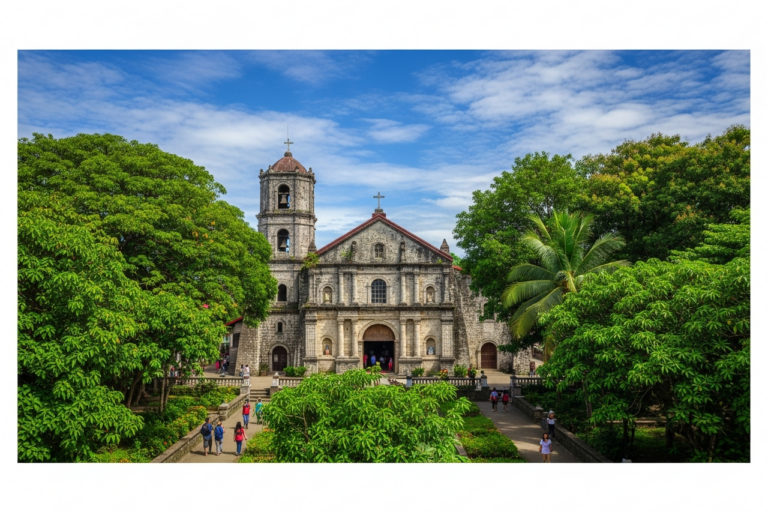
The Roman Catholic faith is part of the lives of most Filipinos. You see this in the way people celebrate lively fiestas. These are big gatherings where the whole area comes together to honour a patron saint. There will be special religious ceremonies. After that, people eat, join fun parades, and listen to music.
Filipino Catholicism is not quite the same as in other places. It brings together the old traditions that have been here for many years and beliefs from outside. This mix is what makes it stand out. Religious leaders like the local priest, as well as higher church leaders, have strong influence in what people think and do in the community.
The Roman Catholic Church also affects social issues and politics in the country. What the Catholic Church says about family, life, and justice matters a lot to many people. For most Filipinos, being part of the Roman Catholic Church is tied closely to who they are as a person and as a Filipino.
Growth of Protestant and Other Christian Denominations
While most people in the Philippines are Catholic, Protestant churches have grown a lot, mainly since the time when the Americans were there. American missionaries brought in new denominations, giving people a choice besides being Catholic. This helped the country have many types of Christian faiths.
Now, there are many Protestant churches and other Christian groups in the Philippines. The United Church of Christ in the Philippines, which brings together different Protestant traditions, is one. Evangelical groups such as the Assemblies of God and the Church of God are there also.
There are local groups too, like the Iglesia ni Cristo (Church of Christ). These groups are big and have brought in millions of followers. Each one has its own community, worship places, and support networks all over the country.
Minority Religions and Their Contribution
Beside the Christian majority, the Philippines has many smaller religions that help shape its culture. The largest minority religion in the country is Islam. Islam has long roots here, especially in the south. People who follow these faiths add different traditions and ideas to the nation.
There are also small groups of Buddhists, Hindus, Jews, and Baháʼís. Most live in the bigger cities. Even though their numbers are small, they bring more variety to the country’s religion scene. Let’s look at why Islam is important in Mindanao, and notice how these other faith communities play a role too.
Islam in Mindanao and Cultural Significance
The region called Muslim Mindanao is known as the centre of Islam’s history and culture in the Philippines. For many years, a strong Muslim community has lived here. The people have held on to their faith and ways of life, even when there was pressure from outside groups.
The muslim population of the philippines mostly lives in Mindanao and the Sulu Archipelago. They have a long history and traditions that are different from the Christian majority. Islamic ideas shape their art, music, food, and the way they live together. You can find mosques at the centre of their villages and towns, not churches.
Filipino Muslims are an important religious group. They add a lot to the country’s mix of cultures. The story of their fight for their own rights and to keep their culture alive shows how people of different faiths live together in these islands. It is a big part of what has shaped the philippines now.
Buddhism, Hinduism, Judaism, and Baháʼí Faith
While these groups are not big, other world religions are in the Philippines, too. Buddhism and Hinduism came to the islands a long time ago, even before colonizers, through trade. You can still notice their mark in some old languages and stories from the country. Now, these religions are mostly practiced by people from Chinese-Filipino and Indian-Filipino communities.
Judaism and the Baháʼí Faith are here as well, but their groups are even smaller. Most meet near temples or in community centres in cities like Manila.
These smaller religions help make urban areas more mixed and show that the country respects freedom when it comes to religion. Their own religious practices add to the nation’s spiritual identity.
-
Buddhism: Most common with Chinese Filipinos, with temples in big cities.
-
Hinduism: Practiced mainly by the Indian-Filipino group.
-
Baháʼí Faith: A small yet organized community, with its own local spiritual assembly.
Indigenous Faiths and Revitalization Efforts
Before there were big religions, the indigenous peoples in the Philippines followed their own beliefs. These were called folk religions and were based on animism. In these old ways, people show respect to nature spirits and to their ancestors. It is the oldest kind of spirituality in the islands.
Today, many have changed to Christianity or Islam. But some groups still do these animist rituals. Lately, there has been more interest in bringing back these indigenous faiths. People want to feel close to their old roots again. The next parts will talk about these traditional practices and how they are being kept alive.
Traditional Animist Rituals and Practices
Traditional animist rituals are very important in the folk religions of the Philippines. These ways of life are different from one ethnic group to the next. But one thing is clear in all of them. People in these groups show a lot of respect for nature. They also believe that the world of spirits lives side by side with our human world.
Nature worship is a big part of these beliefs. People think mountains, rivers, caves, and old trees are holy. They say these places are where strong spirits or gods live. The people do rituals so they can get help for their crops, heal someone who is sick, or to mark big events like when someone is born, gets married, or dies.
A shaman or a wise elder usually leads these events. He or she connects the people with the spirit world. The leader uses chants, gifts, and actions with meaning to keep things in balance between humans and nature. Folk religions, such as these, have kept these old traditions and passed them down in their ethnic groups for many years.
Current Efforts to Preserve Native Religions
There is a group growing among indigenous peoples in the Philippines. They want to keep their old spiritual ways alive. This push to bring back these traditions comes after many years where their culture and religion started to look more like others. Now, they want to show everyone that who they are is special.
The work to keep these traditions alive often starts with community elders and people who care about culture. They write down old stories, chants, and ceremonies. The goal is to share this important knowledge with young people, so it doesn’t get lost. This work helps their towns feel closer and makes people proud of their own ways.
Some groups and even a local spiritual assembly are all about doing this work. They speak up to get others to see and respect the beliefs of indigenous peoples. They want people to understand that these old faiths are an important part of the nation’s story. Thanks to them, these beliefs can still be heard and have a place in the Philippines today.
Religion’s Effect on Filipino Customs and Daily Life
Religion is not just something people in the Philippines do on Sundays. It is a big part of everyday life there. You can see faith everywhere—from the decorations inside a family home to the things people say each day. Religious practices are a big part of what people in the Philippines do. These ways shape how people act with each other, what they value, and the rules the community follows.
There are many holidays in the calendar, and most of them are about religion. On these days, people in the community come together for bright and lively celebrations. Family is very important, and religion has a strong hold on what families believe and do. As this is the heart of the society, next we will look into how people in the Philippines celebrate holidays and how their faith gives shape to their family values.
Religious Holidays and Celebrations
Religious holidays in the Philippines are important and lively events. They show a lot of colour, faith, and the strong community feeling found in the country. People in the Philippines love to show their Filipino hospitality during these times.
The biggest religious event is Holy Week. It happens before Easter. People join processions, go to church, and have time with their families. Christmas is another big part of their life. The country has one of the longest Christmas seasons in the world.
There are many town fiestas. These are yearly festivals, usually for the area’s patron saint. People in the town or barangay get together to enjoy parades, music, dances, and lots of food with their friends, family, and people who visit.
-
Holy Week: This is seen all over the country. There are serious processions and people take part in religious events.
-
Christmas: The holiday starts early, sometimes in September, and brings lots of cheer.
-
Fiestas: These are local parties that honour the patron saint. They are a mix of religion and big get-togethers with everyone.
-
Eid al-Fitr: This is a special day for Filipino Muslims. It marks the end of Ramadan and brings the community together.
Influence on Family, Values, and Social Norms
Religion, especially Filipino Catholicism, has a big part in the Philippines. It shapes how people live with family and what values people have. The family is at the center of society, and what the church teaches helps keep families close, makes people respect old folks, and helps them support each other.
Main Filipino values, like “utang na loob” (debt of gratitude) and “kapwa” (shared identity), often mix with Christian ideas about charity, being kind, and helping the community. These values shape what people do and how they treat each other. People work together and care about the group more than just themselves.
What the church says about right and wrong, marriage, and life has an effect on people’s choices and how the whole society thinks. Religion is a strong part of daily life. With this, faith helps people stay close as a group and makes it easier to get through everyday life.
Filipino Catholicism continues to connect people, shape values, and hold the community together.
Changes and Trends in Religious Affiliation
The Philippines is mostly Catholic, but the number of people who say they are Catholic is slowly going down. This has been happening for some years, as shown by census data.
At the same time, other christian groups are getting bigger. These include Evangelical churches and some new churches that started in the country. The shift is stronger in urban areas. In cities, people get to see more new ideas. But in rural areas, many still stay true to the Catholic faith. The next part will show the latest facts on these changes in religious affiliation.
Recent Census Data and Percentage of Catholics
The 2020 census shows that 78.8% of people in homes in the country are Roman Catholics. This is still a big number, but it is a little lower compared to past counts. There is now a bit more mix when it comes to religion in the country.
Over the years, the number of Catholics has slowly gone down. Back in the early 1900s, there were more people who were Catholic. But now that number keeps getting smaller as other groups start to grow in size.
The Iglesia ni Cristo (Church of Christ) and other groups like different types of Protestants are now bigger. More people are joining them, and these churches are having a greater impact. Because of this change, the Philippines will still have more Catholics than any other group for now, but the country’s religion is now more mixed.
Conclusion
In short, looking at the many religions in the Philippines shows how people in the country have many beliefs and ways of life. There are old native practices. There is also a big effect from Christianity, along with smaller faiths that add their own ideas. Because of this, faith has a strong place in Filipino life and culture. Learning about these sides helps us get to know the Philippines better and see why it is good to respect and welcome all beliefs. If you want to talk more about this or have questions about how these things shape life in the Philippines, feel free to ask!
Frequently Asked Questions
How common is interfaith marriage in the Philippines?
Interfaith marriage is not something rare, but it can bring challenges. This is because family and religion matter a lot. People see more interfaith marriages happen in urban areas where there are different groups. In rural places where there are not many differences, it isn’t as common. If a religious group is flexible, and the families are open, then there is more acceptance for these marriages. Social rules are often shaped by religion and what people do in their daily life.
How do Canadian Filipinos maintain their religious traditions?
Like Filipinos living in America, many Filipinos in Canada keep up with their religious practices by building close community groups. They start or join places like local parishes, a group of Church of Christ, or United Church. This helps them hold on to what they do, celebrate holidays, and share their faith with the next generation.
Are outsiders welcome in Filipino religious practices?
Yes, outsiders are usually very welcome. The people show Filipino hospitality, and this extends to religious practices too. Visitors often get an invite to watch or join in celebrations like fiestas. Because the idea of free exercise and enjoyment of religious profession exists, many groups—like Filipino Catholicism or a local spiritual assembly—are open and will let people in. Most people in a community want you to feel at home when you come in, no matter where you are from.