Key Highlights
-
Sri Lanka is known for its rich religious diversity. Buddhism is the most common faith, with Hinduism, Islam, and Christianity also being important in the country.
-
Buddhism has a special role in the country’s constitution. For many Sri Lankans, it is a big part of their identity.
-
Sri Lanka went through a long civil war, but many of the people still have good feelings about religious diversity.
-
The country’s biggest festivals—Vesak for Buddhists, Deepavali for Hindus, Eid for Muslims, and Easter for Christians—show just how lively its culture can be.
-
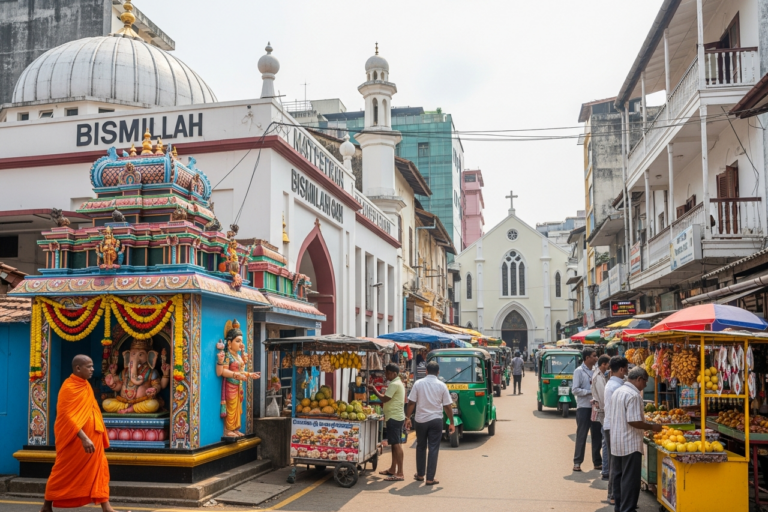
There are many places of worship across the island. You can see old Buddhist stupas, Hindu temples, mosques, and churches in many places in Sri Lanka.
-
The country’s constitution protects religious freedom, but there can still be some tensions. Often, these happen between Buddhist monks and groups in the minority.
Introduction
Welcome to a look inside the spiritual life of Sri Lanka. The country is in Southeast Asia. People know Sri Lanka for its lovely views and nice beaches. But there is much more to find. The island is shaped by many beliefs and old ways that people follow. Religion is important in the daily life of most of the total population. It helps shape their culture, how they celebrate, and who they are as people. If you are from Canada and want to learn about this interesting place, understanding the different religions in Sri Lanka will help you see what matters to the people who live there.
Overview of Religion in Sri Lanka
Religion in Sri Lanka is made up of many different faiths. The country is known to be a place where many religions live side by side. You can see this religious diversity almost everywhere in Sri Lanka. Most people in Sri Lanka are Buddhist, but there are also strong groups of Hindus, Muslims, and Christians all over the island.
This mix of beliefs makes a special culture in the country. To really know what Sri Lanka is like, it helps to learn about the country’s religious affiliation and how its history shaped these groups. In this piece, we will look at how these faiths live together and help build Sri Lanka’s identity.
Defining the Religious Landscape
The way religion works in Sri Lanka is shaped by law and culture in a way that stands out from other places. The country’s constitution puts Buddhism in the “foremost place.” This means Buddhism is looked at as the state religion. The government needs to protect and help Buddhism grow. This rule shapes public life and how people in the country see themselves.
Since Buddhism is so important in Sri Lanka, religious leaders like monks play a big role. They have a lot of say in what goes on in society and sometimes even in politics. For a lot of people there, being from Sri Lanka is tied to being Buddhist. But, the law also says every religious group can have their freedom of religion.
Because of that, there are many groups in the country. Minority faiths like Hinduism, Islam, and Christianity live beside the main religion. Each religious group brings its own community and leaders. This creates a mix of beliefs across the country. There can be tensions, but overall, many ways of faith come together to help shape Sri Lanka.
Demographic Breakdown by Faith
To truly understand Sri Lanka’s religious makeup, looking at the numbers can be very helpful. The demographic breakdown shows a clear majority faith but also highlights the significant presence of several minority religions that have been part of the island’s story for centuries.
Based on census data, the total population is predominantly Buddhist. This religious affiliation is closely tied to the Sinhalese ethnic majority. Hindus are the next largest group, primarily composed of the Tamil community. Muslims and Christians form other substantial minority communities.
Here is a simple breakdown of the religious demographics in Sri Lanka:
|
Religion |
Percentage of Population |
|---|---|
|
Buddhism |
70.2% |
|
Hinduism |
12.6% |
|
Islam |
9.7% |
|
Christianity |
7.4% |
Historical Roots of Religious Pluralism
The religious diversity in Sri Lanka goes back a long way. For centuries, people have come to the island for trade. They also brought their culture and faiths with them. Buddhism came from India more than two thousand years ago. It became a big part of Sinhalese life.
Hinduism has also been in Sri Lanka for a long time. It is strong with the Tamil people. Also, it is linked to Southern India. The muslim community began when Arab traders arrived and stayed on the coasts. This group became a part of life there, too. After that, European colonizers showed up. The Portuguese brought Catholicism. The Dutch and British brought new Protestant beliefs.
With all this history, Sri Lanka has become a place with many faiths. But it has not always been easy. Tension between the groups played a part in the civil war, which lasted many years. Now, most Sri Lankans try to respect different beliefs. Many people here want to live in peace with others who have a different faith.
Buddhism – The Heart of Sri Lankan Spirituality
Buddhism is not just a religion in Sri Lanka. It is at the centre of the country’s spiritual and cultural life. It is the state religion, and you can see its mark everywhere. You see it in the saffron robes of buddhist monks. You also see it in the many ancient buddhist archaeological sites found all over the land. People in Sri Lanka follow theravada buddhism, which is one of the oldest kinds of Buddhist thinking.
Buddhist groups are part of all this, with their communities of buddhist monks and buddhist nuns. These people help shape how people in Sri Lanka act and think. Their presence is strong in the moral and social ways of life there. In the next parts, this text will show where buddhism comes from in Sri Lanka. It will talk about the main beliefs, and how buddhism is part of daily life. You will also learn how it is found in festivals and old traditions.
Origins and Arrival of Buddhism
The story of Buddhism in Sri Lanka goes back to the 3rd century BCE. People believe that Mahinda, who was the son of an Indian ruler, came to the island to share what the Buddha taught. He met the king of Sri Lanka, Devanampiyatissa, at a place called Mihintale. This place is now known as a special spot for pilgrims.
The king and the people who were close to him decided to follow this new way of life. That was how Theravada Buddhism was first brought to Sri Lanka. It was a big moment in the country’s past. It helped form a strong group of Buddhist monks and got many people in the kingdom to start living by Buddhist teachings.
As years went by, Buddhism grew even more in Sri Lanka. This led to the building of large stupas, big monasteries, and many famous Buddhist archaeological sites. These places are still around now. They show the deep and lasting mark that Buddhism has made in Sri Lanka.
Key Tenets Practiced by Sri Lankan Buddhists
Sri Lankan Buddhists mostly follow Theravada Buddhism. This is one of the oldest forms of Buddhism. It focuses on each person working toward freedom from suffering by following the first Buddha’s teachings. The main goal is to reach Nirvana. This means the end of pain and the repeated cycle of life and death.
Buddhist monks and buddhist nuns help guide people. They spend their lives learning and living these lessons. They act as spiritual helpers for others, and people support the monasteries in return. This connection between the monks and the rest of the people is very important to the faith.
Some main beliefs and actions in Theravada Buddhism are:
-
The Four Noble Truths: Knowing that life brings pain, wanting things brings pain, but pain can stop if you follow the Noble Eightfold Path.
-
Karma: What you do shapes what happens to you—good moves bring good results and bad ones bring bad results, in this life and after.
-
Rebirth (Samsara): Life keeps going in cycles. You are born, live, die, and come back, based on your karma.
-
Meditation and Mindfulness: Doing these helps you train your mind, find wisdom, and feel at peace.
Buddhist Influence on Daily Life
For most sri lankans, Buddhism is a big part of life. It is not just something people do when they visit temple. The faith shapes the way people act, how they see family, and what they think is right or wrong. For a lot of people, being a Buddhist is the same as being sri lankan. Their religious identity and their country are tied together.
You can see how much this means when people show respect to buddhist monks. They bring food or other gifts for the monks and ask for good wishes for their homes and families. Simple things like lighting a lamp in the house or having a quiet moment to think are things people do each day. These habits help keep the faith close in daily life.
Buddhist groups and temple teams also help bring people together. They are the ones who put on big festivals, help people in need, and give advice about big events like weddings or funerals. By doing these things, they help sri lankans stay connected and keep up with values that come from Buddhist ways of thinking.
Major Buddhist Festivals in Sri Lanka
Sri Lanka has many lively Buddhist festivals all year. These festivals help bring people together for joy and to think quietly about life. They are more than just times to pray. The whole country joins to show its strong spiritual roots. Because of state protection, Buddhism can be freely celebrated everywhere in the country.
Two big festivals in Sri Lanka are Vesak and Poson. Vesak falls in May when there is a full moon. People mark this day by thinking about the birth, reaching wisdom, and passing away of the Buddha. During this time, people show kindness, help others, and go to temples. The streets and houses look bright with lanterns and lights. People from all walks of life can get free food from small stalls.
Poson is in June on the full moon day. It marks the time when Buddhism first came to Sri Lanka. Many people travel to Mihintale, which is the place where the first Buddha teaching took place. Buddhist groups in every part of Sri Lanka organize these events.
The main Buddhist festivals are:
-
Vesak Poya: This is the holiest time for Buddhists in Sri Lanka. People hang lanterns, give food, and join other good acts and prayers.
-
Poson Poya: This festival is about Buddhism arriving in Sri Lanka. The biggest parties happen in Anuradhapura and Mihintale.
-
Esala Perahera: This is a huge parade in Kandy where they honour the Buddha
Important Buddhist Cultural Traditions
Buddhism has become a big part of life in Sri Lanka. It brings many traditions and customs that the people follow all year. These ways help people stay close to the faith and remember its history. Many of these customs center around respect for buddhist monks and buddhist nuns.
One main tradition in Sri Lanka is called “dana,” or giving. People give food to monks each day or give money to help take care of temples. Many believe this kindness helps bring good karma. Another tradition is going on a trip to visit sacred buddhist archaeological sites like Anuradhapura or Polonnaruwa. Families go together to show respect at these places.
These customs are part of every day and important events in people’s lives. They teach people how to act and connect with others.
-
Almsgiving (Dana): This is when people give food and other things monks need. It is a good thing to do.
-
Observing Poya Days: Full moon days are special holidays. People go to temples, pray, and do good things on these days.
-
Pirith Chanting: Monks come together and chant to keep people safe and help stop bad luck. This happens in homes and temples.
-
Bodhi Puja: People bring offerings to a Bodhi tree. This is the same kind of tree where the Buddha found answers.
These traditions connect everyone in the community. They keep the spirit of buddhist monks
Hinduism in Sri Lanka
Hinduism is the second biggest religion in Sri Lanka, and it has been on the island as long as Buddhism has. Most people who follow this faith are from the Tamil communities. They live mainly in the north and east of the country, as well as in the central highlands and the capital city, Colombo.
The faith is known for its lively temples, bright festivals, and old teachings. These things are a big part of culture in sri lanka. In this text, we will look at where Hinduism in Sri Lanka comes from, talk about its main beliefs and practices, and find out about the major festivals that the people celebrate.
Origins and Presence among Tamil Communities
The history of Hinduism in Sri Lanka has grown closely with the story of the island’s Tamil people. People believe that Hindu customs reached Sri Lanka when the early groups came from Southern India, even before there was written history. Over many years, trade, people moving back and forth, and rule by South Indian kings made these links stronger.
So, Hinduism is now the main religion for most Sri Lankan Tamils. The numbers show that many Hindus stay in the Northern and Eastern parts of the country. There is also a big group called the “Up-Country” Tamils. They live in the middle highland areas. These people come from workers the British brought over in the 1800s when they started tea farms.
This long history has left a strong influence on the island. The way people follow Hinduism in Sri Lanka is mostly Shaivism, which means they worship Lord Shiva. There are a lot of things in common with Hindu practices in Tamil Nadu, India. This shows the close, strong bonds between both groups in Sri Lanka.
Core Beliefs and Rituals
At the centre of Hinduism in Sri Lanka are some basic ideas. People believe in many gods and goddesses. They also believe in things like dharma, which means doing your duty, karma, which is the idea that what you do comes back to you, and samsara, the never-ending cycle of being born again. Lord Shiva is the god most people pray to. His sons, Ganesha and Murugan—who is also called Skanda or Kataragama Deviyo—are also very important.
Rituals are important in the daily life of Hindus in Sri Lanka. Many people do “puja” at home or in temples, which are called “kovils”. In a puja, people offer things like flowers, fruit, or incense to their gods. The priests say prayers in either Sanskrit or Tamil when this happens.
These religious acts help people get close to their gods. These acts also help show what people believe.
-
Dharma: The duty and right actions you are supposed to follow in life.
-
Karma: The idea that every choice or action has an outcome, and this changes what will happen to you next.
-
Moksha: The goal to be free from being born over and over.
-
Puja: The act of praying and giving simple gifts to gods, done every day or each week in Sri Lanka.
Prominent Hindu Temples and Pilgrimages
Sri Lanka has some of the oldest and most respected Hindu places of worship in the world. People call these temples “kovils.” These places are more than just spots for prayer. They show off years of hard work, skill, and deep faith. Many of them are under archaeological heritage management. This is to keep their history safe and respected.
One well-known temple is the Nallur Kandaswamy Kovil in Jaffna. It is a top centre of Hindu life in Sri Lanka. Another is the Koneswaram Temple in Trincomalee. It sits on a cliff that looks out to the sea. It is loved as one of the five oldest Shiva temples in Sri Lanka. Down south, the Kataragama temple brings together Hindu, Buddhist, and Muslim followers. It is a special place for many people.
For many Hindus in Sri Lanka, going on a trip to these holy places is a key part of their spiritual life.
-
Nallur Kandaswamy Kovil: This major temple in Jaffna honours Lord Murugan. It is well-known for its huge yearly festival.
-
Koneswaram Temple: This old Shiva temple in Trincomalee has a stunning spot by the sea.
-
Munneswaram Temple: This group of temples near Chilaw is also for Shiva. It is one of the five old Shiva shrines.
-
Kataragama Temple: In the south, this site
Celebrated Hindu Festivals
Hindu festivals in Sri Lanka are bright and lively events. The people show much feeling, enjoy big meals, and gather with family. These festivals are important to the Hindu community, and they are public holidays. The fun and color of these days make sri lanka’s culture stronger.
Thai Pongal is a harvest event in January. People say thank you to the sun god, Surya, for giving them plenty from the land. Families make a meal called “pongal,” which is sweet rice. They cook it in a new clay pot and let it boil over. This is a sign that good things and wealth will come. Deepavali, known as the “Festival of Lights,” is another big day. This festival is about good winning over bad. Houses are bright with small clay lamps. Families share sweets and gifts.
These events show faith and culture in joyful ways.
-
Thai Pongal: A four-day harvest event where people thank nature.
-
Deepavali (Diwali): The festival of lights. It is the time to mark that good is stronger than bad.
-
Maha Shivaratri: The “Great Night of Shiva” is for fasting, thinking deeply, and staying up all night to pray to Lord Shiva.
-
Vel Festival: A bright procession in Colombo to honour Lord Murugan. People see his statue taken through the city in a chariot.
Islam’s Footprint on the Island
Islam has been in Sri Lanka for over a thousand years. The muslim community has always been a key part of the country’s many groups. They bring their own ways, special customs, and lively Islamic festivals to life.
Muslims live in many parts of the island. There are many in the Eastern Province and the Puttalam district. In the next sections, we will look at how Islam came to Sri Lanka, what the muslim community believes, and some of their main customs.
History of Islam in Sri Lanka
The history of Islam in Sri Lanka goes back to the 7th century. Arab traders from the Middle East started coming to the island at that time. They were interested in the many spices and gems found in Sri Lanka. The island was also an important spot on the sea routes used for trade.
After a while, some of these traders decided to stay. Many of them built lives in coastal towns and married women from the area. That’s how the first Muslim communities got started there. They brought their faith, culture, and ways of living with them. Islam reached Sri Lanka not by war or big missionary work, but by trade and people choosing to live together.
This is a big part of why the Sri Lankan Muslim community stands out. They are known more for their religion than for their ethnic background. People in the group usually speak Sinhala or Tamil, depending on where they are from in Sri Lanka. Still, the thing that always brings them together is their faith.
Beliefs and Practices among Sri Lankan Muslims
Sri Lankan Muslims, like the muslim community around the world, follow the main teachings of Islam. They believe in one God, Allah, and that Muhammad is his last messenger. The Quran is their holy book. It gives them guidance for living, from how they act each day to how they care for others.
In their daily lives, muslims follow the five pillars of Islam. These are the base of their faith and how they live. Many in the muslim community also follow certain cultural ways when it comes to dress, eating food that is halal, and how they meet with other people. For example, many muslim women wear a headscarf called hijab. This is a way to show their faith and who they are.
Life in the community is very important. Faith brings families and friends together, and becomes even more important during Islamic events and holidays.
-
Shahada: Saying and believing that Allah is the one God and Muhammad is his prophet.
-
Salat: Praying five times a day.
-
Zakat: Giving to help those in need.
-
Sawm: Not eating or drinking during the day in the month of Ramadan.
-
Hajj: Going to Mecca at least one time in life if you can.
Mosques and Community Centres
Mosques, also called “masjids,” are the main places where the Muslim community in Sri Lanka comes together to pray. You can see these nice buildings, which often have domes and tall towers, in cities and towns all over the island. They are not just places for prayer but are also community centres.
People in the Muslim community come to mosques for much more than worship. They go for daily prayers, Friday talks, and special gatherings during times like Eid. Mosques hold classes to teach children the Quran, and adults can get religious education there too. These buildings are also important for community life. They host weddings and help people who are in need.
Mosques play a big part in what it means to be Muslim in Sri Lanka.
-
Red Mosque (Jami Ul-Alfar Masjid): This is an old and famous spot in Colombo with a stunning look.
-
Ketchimale Mosque: Thought to be one of the oldest in sri lanka, found in Beruwala.
-
Community Hubs: Mosques are places where people in the muslim community meet for social events, learning, and helping others through charity.
-
Muslim Marriage: Many times, people in sri lanka hold the “Nikah” ceremony, or muslim marriage, at mosques to make their marriage official.
Islamic Festivals and Community Customs
Islamic festivals are important for the Muslim community in Sri Lanka. There is prayer, sharing of food, and giving to the poor at these times. People come together with their families and others in their area. These events are a lively part of the country’s calendar, which includes many faiths. The two most celebrated festivals are Eid al-Fitr and Eid al-Adha.
Eid al-Fitr is known as the “Festival of Breaking the Fast.” It marks the end of Ramadan. During this time, families meet up to pray at the mosque. Many wear new clothes and enjoy a meal together. People also give to those who have less. Eid al-Adha is called the “Festival of Sacrifice.” It is about remembering the willingness of Prophet Ibrahim to give up his son.
Here is what these festivals include for the muslim community in Sri Lanka:
-
Eid al-Fitr: This festival ends Ramadan with group prayers, lots of food, and visits to family.
-
Eid al-Adha: This day has a special animal offering. The meat from this offering is shared with family, friends, and those who need food.
-
Mawlid al-Nabi: This marks the birth of Prophet Muhammad. People pray and have processions.
-
Community Feasting: There is always sharing of food with neighbours and those with less at these festivals.
Christianity and Its Diverse Traditions
Christianity brings another key part to the story of religion in Sri Lanka. Christians are not the largest group, but they still shape what the country is today. Their role in culture, teaching, and help for people is strong. The people who follow Christianity here are a mix of Roman Catholic and other christian groups.
You will see many christian churches around Sri Lanka. Some are big, old buildings from the time Spain and Portugal ruled, and some are small local churches in towns or villages. In the next sections, we will talk about how Christianity came to sri lanka, which roman catholic and other christian groups live on the island, and what the faith does in people’s lives now.
Introduction and Evolution of Christianity
Christianity started to grow in Sri Lanka when the European colonizers came. The Portuguese were the first, landing in 1505. They were strong in their push to spread the Roman Catholic faith. They built many Christian churches, and some people along the coast became Roman Catholic.
Later, the Dutch took over in the 17th century. They brought Protestant beliefs and set up the Dutch Reformed Church. The Dutch did not support Catholicism and wanted their own church to grow. After that, during British rule in the 19th century, new Protestant groups arrived in Sri Lanka. Anglicans set up the Church of Ceylon, and there were also Methodists and Baptists who came at this time.
All of this colonial history helped shape today’s Christian community. At first, many saw these faiths as part of foreign rule. But now, Christianity has grown deep roots in Sri Lanka. People from both the Sinhalese and Tamil groups are part of this Christian community.
Catholic and Protestant Communities
Today, the Christian people in Sri Lanka are part of different groups. Most Christians in the country, around 80%, are Roman Catholic. The Roman Catholic Church is strong here. It has its own dioceses all over the country and takes part in a lot of school and social help work.
The rest of the Christians are part of Protestant groups. Some of these, like the Anglicans (Church of Ceylon) and Methodists, have been in Sri Lanka for a long time. In the last few years, there are also more people who join new groups like the Assembly of God. These evangelical and Pentecostal groups are getting bigger.
Because of this, Christian worship and what people do in church can be very different from one group to the next.
-
Roman Catholic: This is the biggest Christian group in Sri Lanka. Most is found along the west coast.
-
Anglican (Church of Ceylon): This church is linked to old British rule. It is also a Protestant group.
-
Methodist Church: This group is also linked to education and helping people for many years.
-
Evangelical and Pentecostal Groups: These new and growing groups, such as Assembly of God, are getting more and more people to join.
Notable Churches and Historic Missions
Sri Lanka has a deep Christian past that you can see in its many well-known churches and missions. These places of worship are more than just spots for prayer. They are also big parts of history and show amazing style in how they’re built. Most of them are from the time when other countries ruled the island, and they mix European looks with a feel that fits the warm, tropical air.
On the west coast, especially near Negombo, which many people call “Little Rome,” there are a lot of beautiful Roman Catholic churches. The church leaders here have always been important, not only for faith, but also in the community. In places like Colombo and Galle, you will see well-known Protestant churches. These come from Sri Lanka’s time under Dutch and British rule.
These churches and missions show the lasting role of Christianity in Sri Lanka.
-
St. Anthony’s Shrine, Kochchikade: This is a well-loved Catholic church in Colombo. People of all religions come here to pray and to see what they believe are miracles.
-
St. Lucia’s Cathedral, Colombo: This large and beautiful church is the main place for Roman Catholics in the city.
-
Wolvendaal Church, Colombo: This old Dutch Reformed church is one of the first Protestant churches in Sri Lanka that people still use today.
-
St. Mary’s Cathedral, Jaffna: This is a key Catholic church in the north end of the island.
Role of Christianity in Modern Life
In modern Sri Lanka, Christianity is still important. You can see this, for example, in schools and hospitals, where the Christian community runs many of the best places. These schools and hospitals welcome people from all faiths. This role in helping the public is a big part of why the Christian community stands out.
Every week, the Christian community comes together for worship services on Sundays. This is a big part of their lives in Sri Lanka. But, they have also faced some tough times. One was the Easter Sunday bombings in 2019. These attacks were meant for churches and hotels. The Easter Sunday bombings hurt not just the Christian community, but the whole country. Events like this show how religious minorities, like Christians, can still be at risk.
Still, the Christian community in Sri Lanka stays strong. They keep doing good for others. They help out with social service, they work for peace, and take part in conversations that bring different groups together. The Christian community fights for better understanding, and they help support the country even through hard times.
Other Religious Minorities and Indigenous Beliefs
Sri Lanka does not only have the four main religions. The country’s religious diversity also includes smaller groups and people who hold on to old beliefs. The Burghers, who come from mixed European families, have their own Christian ways. There are also very small groups of Zoroastrians and Baha’is in Sri Lanka.
On top of this, old customs and the honouring of ancestors still go on. These often mix with the main religions. In the next part, we will talk more about these small but interesting sides of sri lanka’s religious diversity.
Burghers and Other Christian Denominations
The Burgher community in Sri Lanka is made up of people whose families came from Europe, mostly from the Portuguese, Dutch, and British. They married local Sri Lankans, so now their community is a mix of these groups. Over time, there are not as many Burghers because a lot of them have moved to other countries. Even with fewer numbers, the Burgher people hold on to their own cultural and religious identity.
Most Burghers in the country are Christian. You will find many who are Roman Catholic. This comes from the time when the Portuguese were in Sri Lanka. Some others are part of the Dutch Reformed Church. These old Christian groups are still a big part of who the Burghers are today.
Besides these main groups, there are also smaller Christian groups in Sri Lanka. These are christian groups like the Jehovah’s Witnesses and The Church of Jesus Christ of Latter-day Saints. These groups are not as big, but they still play a part in the religious identity of the country. Sometimes people in these groups get attention because they tell others about their faith. Some of them also face pressure from people in sri lanka for the way they practice their beliefs.
Zoroastrians, Baha’is, and Emerging Faiths
Sri Lanka has a few small but very old religious groups. The Zoroastrians, who are also called Parsis, are one of them. They came from Persia, which is now Iran. Their roots in Sri Lanka go back many years, as their families came for trade a long time ago. Even though this group is now very small, they have helped a lot in business and charity work.
Another small group in Sri Lanka is people who follow the Baha’i Faith. This is a new religion. It teaches that all religions have value and that all people are one. Even if there are not many Baha’is in Sri Lanka, they work to bring people of all faiths together and support community projects.
Besides these old and new groups, there are also some new and growing faiths in Sri Lanka. Most of these are small and stay in certain areas. Still, they show that sri lanka is always open to new ways of thinking and new beliefs.
Ancestral and Folk Traditions Persisting Today
Beneath the main religions in Sri Lanka, there is still a strong faith in old traditions and beliefs. These customs come from the ancestors of the Sri Lankans and go back further than Buddhism and Hinduism. People in Sri Lanka, no matter their official religion, still add these customs to their daily spiritual life.
In many parts of the country, people look to spirits from nature, old gods, or even family members who passed away. They hope these beings will give them help, protection, good health, or luck when they need it. People still do exorcisms, create charms, and get advice from oracles. These things are common, especially in villages and smaller towns.
The way sri lankans mix these old beliefs with new ones is a big part of their spiritual world.
-
Worship of Local Deities: Many people, including those who follow Buddhism or Hinduism, also respect a group of local gods and goddesses. These gods look after certain places or parts of everyday life.
-
Belief in Spirits: It is normal for people to believe in ghosts, demons, and other spirits. There are many ways used to keep these spirits happy or to keep them away.
-
Astrology: Reading horoscopes is very popular. Sri lankans use them for things like picking wedding dates or finding the right time for big plans.
-
Ayurveda and Ritual Healing: Many in Sri Lanka use old ways of healing
Interfaith Relations and Coexistence
Getting along with people from different faiths is an important part of life in Sri Lanka. For many years, you can see people from different religions living together. The country has a culture where there is often some religious harmony and people from all groups try to get along. At times, there has also been some stress and trouble between these groups.
The government and people in the community are both trying to help build more understanding and teamwork among the different faiths. Local authorities work to solve arguments and help everyone live together in peace. The next parts will look at how these relationships between groups work and what makes them strong in Sri Lanka.
Sri Lanka’s Framework for Religious Harmony
Sri Lanka has a legal system that helps different religions live together in peace. The constitution says every person in the country has the freedom of religion and freedom to think as they wish. At the same time, it gives Buddhism a special seat in the country. The Constitution says the state will protect it. This mix of ideas helps guide how Sri Lanka tries to keep religious harmony.
The government works together with central religious bodies from the biggest faiths in the land to look after religious affairs. These groups speak up for their people and talk to the government about any problems or needs that come up. But there are still some tough issues. For example, religious conversion sometimes causes trouble. Some groups want the law to stop people from changing their religion.
The system wants to give all people in Sri Lanka fair treatment. Here’s how things work:
-
Constitutional Guarantees: Every citizen has freedom of religion. This is a fundamental right.
-
Ministry of Religious Affairs: This is a government office. It looks after religious matters and helps build harmony.
-
State Protection for Buddhism: There is a line in the constitution that gives Buddhism the “foremost place”. The state must protect it.
-
Inter-Religious Councils: These are official groups where leaders of the main faiths come together to talk.
Each part of this rulebook tries to make life peaceful. People can practice their religion, but Buddhism has a little more support. There are rules to
Interfaith Dialogue and Local Initiatives
Beyond what the government sets up, a lot of the best work for religious harmony in Sri Lanka is done by people in the community. In many places across Sri Lanka, you can see local groups and civil society organizations working hard to help religious leaders and others connect. They focus on bringing people from different backgrounds together so they can talk, listen, and learn from one another.
These groups set up workshops, culture-based activities, and projects where everyone can join. Their aim is to help people meet each other, understand what others believe, and not just stick to old ideas or fears. At times, local authorities also help these efforts because they know how much it matters for the whole community to get along.
This kind of work is needed to help the country get past old troubles and make a better, more united future for all.
-
Peace-building workshops: These programs are where youth from different backgrounds get to meet and learn from each other.
-
Community dialogue sessions: These are times when religious leaders and other people in the area talk openly about any issues.
-
Joint celebrations: These events give everyone a chance to enjoy each other’s religious festivals.
-
Mediation by local leaders: Both religious and community leaders help solve problems before they grow into bigger ones.
Shared Sites and Multifaith Events
One thing that really shows people can live together in Sri Lanka is how there are shared places of worship. These are places that are important to people from more than one religion. They show the long story of how religion has changed and stayed the same in the country.
Kataragama is one of the best-known places for this. It is in the south and is special to Buddhists, Hindus, and some Muslims too. There is also Adam’s Peak, or Sri Pada, which is a mountain where people of all main faiths in Sri Lanka drive or walk up for religious reasons. These places of worship help people feel close and teach respect for each other.
The Department of Cultural Affairs and groups in the community help a lot by setting up events for people from different religions. These things help make people feel more at peace with each other in Sri Lanka.
-
Kataragama: There is a temple there that both Hindus and Buddhists care for. Hindus go there to worship Lord Murugan. Buddhists think of the place as the home of an important local god.
-
Adam’s Peak (Sri Pada): People walk up this mountain from different faiths. At the top, they see a footprint and say it belonged to Buddha, Shiva, Adam, or St. Thomas.
-
Interfaith Iftars: During the month of Ramadan, people who are not Muslim get to join Muslims for the Iftar meal, which is how they break
Religion and Cultural Identity in Sri Lanka
In Sri Lanka, people connect their religion and who they are in a strong way. For many, what they believe is not just something private. It is a big part of what makes them who they are. This links to their group, the language they speak, and what they do with others. In Sri Lankan society, the tie between faith and who someone is holds a lot of power.
You can see how religion touches the lives of people every day in Sri Lanka. It shows up in daily habits, family ways, the words people use, and the clothes they choose. The next parts will go over how faith and where you come from are linked, how religion shapes the way people show their culture, and how faith matters in the home and with family.
Connection between Faith and Ethnicity
In Sri Lanka, there is a close link between people’s ethnicity and their religious affiliation. This makes up a big part of Sri Lanka’s culture and way of life. It also affects the country’s politics and traditions.
Most people in the Sinhalese majority are Buddhist. For them, the Sinhalese language, their customs, and being part of Sri Lanka all tie back to Theravada Buddhism. The Sinhalese often feel that being truly Sri Lankan means you are both Sinhalese and Buddhist.
Most people in the Tamil communities are Hindu. Many of their customs and their religion have a strong link with those found in Southern India. The muslim community stands out, because their religion comes first for their identity and not ethnicity. They may speak either Sinhala or Tamil. But with Christians, you can find them across both Sinhalese and Tamil groups.
Rituals, Dress, and Language Influences
Religion shapes a lot of daily life in Sri Lanka. You can see it in public events, the way people dress, and even the way they speak. Every group has its own customs. These set people apart, but they all help make Sri Lanka’s culture rich and full.
For example, you’ll see Buddhist monks wear saffron robes. On temple days, many Buddhists dress in white. Hindu women wear colourful sarees during big festivals. Some Muslim women wear the hijab. All these clothes show religious identity. There is a strong meaning behind how people dress.
Religion also changes language. The Sinhala language has many words from Pali. Pali is the old language used in Theravada Buddhism. Tamil, the main language for Sri Lankan Hindus, uses many Sanskrit words. The Department of Cultural Affairs helps promote and celebrate these different ways of life.
-
Rituals: Big public parades like the Esala Perahera for Buddhists or the Vel Festival for Hindus are a big part of Sri Lankan life.
-
Dress: You can see religious identity in what people wear. This includes the Buddhist monk’s robe or the Hindu pottu, the dot worn on the forehead.
-
Language: Religious books and customs have added to both Sinhala and Tamil languages.
-
Greetings: Ways of saying hello, such as “Ayubowan” in Sinhala, often have religious roots. It means “may you live long.”
Role of Religion in Sri Lankan Family Life
Religion is very important in the daily life of families in Sri Lanka. For most people, their religious identity shapes their values and how they see the world. It is at the heart of many family traditions and day-to-day habits. It helps them know what is right and wrong and is part of big moments in life.
From the beginning, children are brought up by the religious beliefs that are kept at home. Many customs when a baby is born, gets older, marries, or even dies have deep links to religion. For example, in a Buddhist home, a family can talk with an astrologer and a monk to pick a name for a new baby. A Hindu family may do long prayers in a temple for a wedding.
Daily family life often goes along with religious routines. This can be things like having prayers at a family altar in the house, visiting a temple or church every week, or marking special festivals through the year. All these things help families come close and let religious identity and values move from parents to children.
Religion in Sri Lanka’s Education System
Religion is part of the education system in Sri Lanka. All public schools must offer religious education, and it is a required subject. The lessons are made to help students learn about the religion they follow. The government gives state funding to support this.
But, there are some issues. For example, it can be hard to find enough available teachers for every religion in each school. Faith-based schools also be a big part of the education scene. In the next part, we will see how religious education works and what young people in Sri Lanka think about religion now.
Religious Education in Schools
In Sri Lanka, public schools teach kids about religion from the start until they finish high school. It is something that the schools have to do. Each child learns about their own religion. There are lessons for Buddhism, Hinduism, Islam, or Christianity, and the teacher who gives the lesson is also from that religion.
The government gives state funding for these classes. It is also the one to make the curriculum and write the books for each group. The focus is to help all students know the key ideas, the rules to follow, and the history in their own religion.
But this plan can run into problems. In schools where there are lots of different religions, it can be hard to have available teachers from every faith. This is tough for schools, and it can cost a lot. Because of this, some students do not get lessons about their own religion. This can make people ask if the education system in Sri Lanka gives every student and religion the same chance to learn.
Influence of Faith-based Institutions
Beyond the public school system, faith-based schools play a big role in education in Sri Lanka. Some of the oldest and well-known schools in the country were started by Christian groups or by people who wanted to renew Buddhist or Hindu traditions. The central government often gives some money to help these schools keep running.
These schools have two main jobs. They give kids a good academic education, and they also teach the moral and cultural values of their faith. Because of this, many parents choose them. They want their children to grow up with strong religious and ethical values.
But, there are international schools that use a different plan for teaching. They do not focus on one religion. Many families like this if they want something more secular for their children’s education.
-
Historic Mission Schools: Many top schools started by Catholic, Anglican, or Methodist groups. These schools still keep a strong Christian culture.
-
Buddhist and Hindu Schools: These schools were built to help teach and save the culture and religious values of Buddhists and Hindus.
-
Pirivenas: These are schools for Buddhist monks. Students learn what they need to become monks in these special places.
-
Madrassas: These are Islamic schools. They give religious lessons to Muslim children.
Youth Perspectives on Religion
The way young people in Sri Lanka see religion is changing and can be quite mixed. Many of them still have a strong religious affiliation, and they follow what their family does. At the same time, lots of new ideas come in from things like school, the world, and social media.
For some people, learning and seeing more makes them want to get to know their faith better. For others, it can make them more open-minded or more likely to question the old rules and how things are done in religion. Social media now is a big spot where the youth in Sri Lanka talk, share, and sometimes question religious norms.
Even with all the new things, religion is still a key part of who most Sri Lankan youth are. But now, they move through their faith in a world that is more connected and different than what their parents knew. This brings new ways for them to understand and show their religious affiliation.
Major Religious Sites to Visit in Sri Lanka
For anyone visiting Sri Lanka, it is important to see the top places of worship. These spots are more than places for people to pray. They are full of history, art, and the kind of buildings that show the heart of the island. You will find old buddhist archaeological sites, respected hindu temples, famous mosques, and christian churches built in the past. There is something here for everyone to enjoy.
At these sites, the faith is still alive. You can see rituals that have gone on for many years. You also get to feel the real spirit of the country. Now, let’s look at some of the most important places for the big groups of faith in Sri Lanka.
Sacred Buddhist Temples and Stupas
Sri Lanka has many Buddhist temples and stupas all over the country. These are dome-shaped buildings that hold relics. They are some of the most stunning Buddhist archaeological sites. The people in Sri Lanka see these as very important places of worship, and they play a big part in the spiritual life of the country. People from all over the world travel here to visit these spots.
The ancient cities Anuradhapura and Polonnaruwa are both UNESCO World Heritage sites. You can find some of the most impressive stupas and old ruins from monks here. Up in the hills, there is the Temple of the Sacred Tooth Relic in Kandy. Very likely, it is the most respected Buddhist place on the island. It keeps a relic that many believe to be one of the Buddha’s teeth.
These places are not just old buildings. They are still working Buddhist temples today. You can get a real feel of what devotion looks like.
-
Temple of the Sacred Tooth Relic (Sri Dalada Maligawa): It is Kandy’s most-known temple and holds the Buddha’s tooth relic.
-
Ruwanwelisaya Stupa: This is a huge white stupa in Anuradhapura. It was built way back in the 2nd century BCE.
-
Dambulla Cave Temple: Here you will find caves filled with many Buddha statues and fancy wall paintings.
-
Gal Vihara: This is a rock temple in Pol
Renowned Hindu Shrines
Sri Lanka has some well-known Hindu temples, called “kovils,” that are full of life, colour, and deep feeling. These temples play a big part in the practice of Hinduism in the country. They also show the strong cultural link with Southern India. Many of these temples are very old. Their past and care are taken care of by people who do archaeological heritage management.
In Jaffna, in the north, you can find the Nallur Kandaswamy Kovil. This is a stunning temple for Lord Murugan. It stands out with its great design and is known for a big 25-day festival every year. This festival brings in hundreds of thousands of people who come to pray. Then on the east coast, the Koneswaram Temple in Trincomalee sits on a cliff that looks out over the sea.
The Hindu temples in sri lanka are not just cool-looking buildings. They have strong spiritual power for people who visit them.
-
Nallur Kandaswamy Kovil: This is Jaffna’s most important Hindu temple. It’s known for both being strict and for its big festival.
-
Koneswaram Temple: This old Shiva temple, in Trincomalee, is also called the “Temple of a Thousand Pillars.”
-
Munneswaram Temple: This old group of temples sits near Chilaw. Both Hindus and Buddhists go there to pray.
-
**Mav
Historic Mosques and Churches
The buildings in Sri Lanka show how many different groups and histories have helped shape the country. Mosques and Christian churches are a big part of this. They tell stories about sri lanka’s connections with trade and its colonial history. These churches and mosques are key places for the muslim community and for people who belong to the roman catholic and other christian churches.
One of the most well-known mosques is the Jami Ul-Alfar Mosque, also called the Red Mosque, in the Pettah part of Colombo. Its red and white stripes make it easy to spot from far away. In Negombo, a seaside town, you can find many large christian churches, which is why people have started to call it “Little Rome.”
These churches and mosques help us see the island’s rich and many-sided past, showing the stories of sri lanka’s minority faiths.
-
Jami Ul-Alfar Mosque (Red Mosque): This mosque has an Indo-Saracenic look and is in Colombo. It was built back in 1909.
-
St. Anthony’s Shrine, Kochchikade: People of all faiths visit this Catholic church in Colombo. Many believe it brings them miracles.
-
Wolvendaal Church: This dutch reformed church in Colombo is both beautiful and old, going back to 1749.
-
St. Mary’s Cathedral, Negombo: This roman catholic church is large and full of detail. It shows
Unique Multifaith Heritage Sites
Some of the most interesting places of worship in Sri Lanka are the multifaith heritage sites. These special sites are respected by people from more than one religion. They show the long history that the island has with different faiths living together. The places are often looked after with archaeological heritage management.
The best known of these is Kataragama in the south. The big shrine here is for a deity called Kataragama Deviyo by Buddhists and Lord Murugan by Hindus. It is a very strong pilgrimage site for the two groups. Muslims and Christians also come here to visit.
These sites show how different faiths can mix and share the same places.
-
Kataragama: This large holy city has a main temple that Buddhists and Hindus both use.
-
Adam’s Peak (Sri Pada): This mountain is a famous pilgrimage. Buddhists, Hindus, Muslims, and Christians each have their own ideas about the special footprint at the top.
-
Munneswaram Temple: This temple is mainly for Hindus, but many Buddhists come to pray here too.
-
St. Anthony’s Shrine, Kochchikade: This Catholic church is a favourite spot for people from all faiths to pray or ask for help.
These places of worship show the good side of sri lanka where people come together. This kind of heritage is something that is kept safe with archaeological heritage management.
Festivals and Holidays – A Calendar of Faith
Sri Lanka has many festivals and holidays all through the year. The people in this place come from many backgrounds. Sri Lanka celebrates holidays for all four main faiths. This is why it has one of the highest numbers of public holidays in the world. Every festival is a special way for people to share faith, culture, and family time.
You can see the gentle light of Vesak lanterns or the bright colors at Deepavali. These events let people and visitors see the true heart of the country. Next, you will read about some of the most important festivals for Buddhist, Hindu, Muslim, and Christian groups in Sri Lanka.
Buddhist Vesak and Poson
Vesak and Poson are the two biggest religious festivals for Buddhists in Sri Lanka. These days fall on the full moon and are called Poya days. They are public holidays in the country and people celebrate with a lot of faith and joy everywhere on the island.
Vesak comes in May and is the most important. It remembers three key events that happened in the life of the Buddha — his birth, the day he reached enlightenment, and his passing away. The whole country lights up with colourful lanterns during this time. People make these lanterns and decorate their homes and roads. They also go to temples for prayers. This is also the time when people do good deeds. Many give away free food and drinks to others.
Poson comes in June. It marks the time when Buddhism first came to sri lanka. The main celebration happens in Anuradhapura and Mihintale, which is where the first teachings were given.
-
Vesak: The festival of lights, giving, and remembering the Buddha’s life.
-
Poson: This day marks when Buddhism came to sri lanka. People travel in large groups to old religious places.
-
Poya Days: These happen every full moon and are public holidays in sri lanka, made for Buddhist practices.
[Learn more about sri lanka and Buddhist festivals here.]
Hindu Thai Pongal and Deepavali
Thai Pongal and Deepavali are two important festivals for the Tamil community in Sri Lanka. Many Sri Lankans hold these days close to their hearts. Thai Pongal takes place during the harvest. The festival is full of joy, with bright rice dishes and lots of colour in every house. People put detailed kolam designs in front of their homes, and families say thank you to the Sun God.
Deepavali is also known as the Festival of Lights. It stands for the win of good over bad. Families light oil lamps to make their houses and hearts bright. It brings people together and helps the community feel close. These two celebrations show how rich and varied the cultural and religious diversity is in Sri Lanka.
Muslim Eid Celebrations
Eid celebrations in Sri Lanka bring the Muslim community together in a show of happiness. On this day, families decorate their homes. They make special food and sweets to share with others. This sharing shows the kindness and thanks that are important during Eid. Many people also join together in prayers at mosques. This helps them feel close and be strong in their religious identity.
In recent years, people have also worked to build good ties between the faiths in Sri Lanka. There are more chances now for the muslim community and others to learn from each other. Some of these are open meals and talks between groups. These actions help everyone understand each other better, and give the society more unity and respect among all.
Christian Christmas and Easter
In Sri Lanka, the Christian community comes together to celebrate Christmas and Easter in big ways. These days have strong roots in the local culture and also mean a lot for faith. At Christmas, there are happy gatherings, people go caroling with friends, and many decorate their homes. Churches light up with bright lights and show nativity scenes.
Easter is about starting fresh. People join worship services that help them remember the resurrection of Christ. Families and friends get together and share warm moments. Christian groups all over Sri Lanka join in these celebrations. They help bring everyone closer and show how much religious diversity there is in this country.
Challenges and Developments in Religious Freedom
Finding your way through religious freedom in Sri Lanka means you need to see what many communities go through. In recent years, there have been growing problems, especially for minority groups. This happens because of social tensions and the way politics work. The government plays a big role here. It tries to balance state protection for different religious identities and meet the needs of all people in the country.
At the same time, many people in these communities want more peace. They work hard to bring people from different religions together and talk. Some groups do important work, like the National Christian Evangelical Alliance of Sri Lanka. They focus on being more open to everyone and help look after minority rights. What’s happening now shows that Sri Lanka is still working toward a society where freedom of expression and respect for all can grow.
Recent Legal and Governmental Initiatives
In sri lanka, the government has tried to make things better for religious freedom in recent years. They want to make the approval process for places of worship easier. This is good for minority groups because it helps create religious harmony. The cabinet has also met with leaders in central religious bodies. These leaders include Christian and Muslim leaders. They have talked about problems with unfair treatment and community safety.
All these talks show that the government knows there are many different religious groups in the total population of sri lanka. Legal protections for these religious groups are slowly getting better. This helps make a place where all sri lankans can follow their beliefs without being afraid.
Social Attitudes and Community Safety
Social attitudes in Sri Lanka are important for the safety of people in the community. Many Sri Lankans accept and respect religious diversity. Still, sometimes there is quiet tension between different faith groups. This can sometimes affect how people feel when they are out in public or when they go to worship. Religious leaders often help bring everyone together. They like to encourage talks between people of different beliefs, so the community gets stronger. Lately, the government in Sri Lanka started programs that work to protect the rights of different groups. This is made to help everyone feel safe and welcome. These actions lower the chances of people being scared or threatened. They also help people in Sri Lanka learn how to treat others with respect. This respect is very important for peace in society.
Efforts to Protect Minority Rights
Sri Lanka has made a lot of progress in keeping the rights of minority groups safe, even with all the religious diversity in the country. The government and local groups work together to make the country a place where all people, no matter their ethnic or religious background, get respect. The prime minister’s office and religious leaders help with talks that bring people from different backgrounds together so they can understand each other better. Local authorities are also an important part of this. They help manage issues and make sure that people from minority groups can follow their faith without any fear. By using the Sri Lankan constitution, these steps try to stand up for the basic rights of every single person in Sri Lanka.
Interfaith Relationships and Marriage
Navigating interfaith relationships in Sri Lanka can make life more interesting. Family life often shows deep-set values, and the way people look at such pairs can change a lot from one group to the next. If you come from a Sinhalese or Tamil background, it can shape how the family takes in the couple, which could lead to problems or backing, based on what is normal in the group. There are also rules and laws, since partners might run into trouble when trying to register a marriage or deal with things they may get after someone passes away. When people in Sri Lanka choose to join together across cultures and celebrate, they follow many different customs. This brings more meaning, grows love, and helps everyone understand each other better. When couples find something in common in faith, they strengthen their bond, and it can make more religious harmony for others too.
Family and Societal Perceptions
In Sri Lanka, the way people see interfaith relationships is mixed. Some accept them, while others are not sure, especially among the Sinhalese majority and different ethnic groups. Many families worry about how to keep their religious identity when two people from different backgrounds come together. In cities, more Sri Lankans are open to new ideas about love and marriage. Social media and ideas from around the world play a big part in that. When people welcome different cultures, it can help us all get along better. Celebrating events that bring together parts of Hindu, Buddhist, and Christian traditions lets people talk and share. This helps us break down barriers and brings the country closer. It makes it easier for everyone to live together in peace from all the different communities.
Legal Considerations for Interfaith Couples
Dealing with the law can be hard for interfaith couples in Sri Lanka. People who want to marry often have to follow different religious laws. Buddhist, Christian, and Muslim rules can be very different from one another. Because of this, some couples face tough problems when it comes to marriage registration, child custody, and inheritance. All of this shows there is a real need for clear legal systems.
Legal steps that support all faiths matter in Sri Lanka. People are now working to help give equal rights to interfaith couples. These efforts can help build more religious harmony and protect couples who want to follow different spiritual traditions.
Celebrating Multicultural Unions
Multicultural unions in Sri Lanka show off how rich and diverse the country really is. Many couples come from different backgrounds and have their own ways of being together. They mix traditions from Buddhism, Hinduism, Islam, and Christianity. This not only brings two people closer, but it helps everyone understand each other better.
Weddings in Sri Lanka often have rituals that are important to each person’s faith. Family and friends get to take part in the bright, happy events. These moments help people keep their religious identity while making peace with others. It’s a good way for people to see the strength that comes when they understand and care about the different groups living in one place.
Conclusion
If you look at religious life in Sri Lanka, you will see many layers within its culture. There are many different groups here, including Theravada Buddhism, Christianity, Hinduism, and Islam. They all come together and make a rich mix. Still, there are big problems when it comes to religious freedom. You can see it in fights between groups and how the government handles rights for those in the minority.
Many religious leaders and local groups are working to make things better. They try to bring people together. They focus on keeping and caring for diversity. Learning to value Sri Lanka’s many faiths can help everyone talk more openly and helps the world get along better. It is important for people in Sri Lanka to welcome this mix. That is how they will move towards peace and living together.
Frequently Asked Questions
How do different faiths coexist in Sri Lanka?
In Sri Lanka, people from many different faiths live together. There is respect between each group, and their cultures often mix. Their festivals and rituals sometimes come together, which helps bring unity to all the communities. People talk and work together between the faiths, and this is important for everyone to understand each other better. Laws also help protect the rights of every group, so all beliefs can be part of a peaceful place.
Are religious festivals open to tourists and internationals?
Yes, there are many religious festivals in Sri Lanka where tourists and people from other countries can join. People can come to events like Thai Pongal, Deepavali, Eid, Christmas, and Easter. These often have big celebrations that are open to the public. You get to see the rich culture and how the community comes together during these festivals in Sri Lanka.
What should Canadians know about religious customs when visiting Sri Lanka?
When you travel to Sri Lanka, it’s good for Canadians to respect the local religious customs. This means dressing the right way and acting properly when you go to sacred places. If you know what festivals like Thai Pongal and Deepavali, or Eid celebrations, mean to the people, your visit will be even better. You will have more good talks with the local people and get more out of your time in Sri Lanka.