Key Highlights
-
The people in Rwanda mostly follow Christianity. Most of them are Catholic, Protestant, or Pentecostal.
-
The country’s constitution says there is religious freedom. But the religious groups must sign up with the government and follow some rules.
-
Islam is not as big as other religions in Rwanda. Still, the Muslim community is respected and is part of life there.
-
Religious groups or their leaders did many things during the 1994 Rwandan genocide. Some helped with the violence, but others gave people a safe place.
-
The government has rules for places of worship. These rules affect smaller religious groups too.
-
In Rwanda, you see many different religious groups working together. They help with social work and help the community grow.
The keywords “religious groups,” “religious freedom,” “worship,” “Islam,” “genocide,” “Rwanda,” “Christianity,” and “Rwandan genocide” are part of this explanation.
Introduction
Are you thinking about a trip to Rwanda, or do you just want to learn more about the people there? It is good to know about how religion shapes daily life for Rwandans. Faith is an important part of who the people in this country are. It plays a big role in how they live, celebrate, and work together in their communities.
This easy guide gives you a close look at religious practices in Rwanda. It will help you see how these shape both daily life and important events. You will also get to know more about what makes Rwandans who they are. With these ideas in mind, you can learn more while you spend time in this wonderful part of East Africa.
Overview of Religion in Rwanda
Religion in Rwanda is mostly Christian. Many people follow different Christian groups or denominations. The main types you will see are Roman Catholicism, Protestantism, and Pentecostalism. There is also a smaller Muslim community and some other minor faiths.
The Rwandan constitution gives people the right to worship freely. This freedom of worship is usually respected. But for any religious groups to act legally, they must sign up with the government. This law affects how people in Rwanda show their religious affiliation in public. Next, we will look into the main faiths and changes in their numbers over time.
Major Religions and Their Prevalence
Christianity is the most widespread religion in Rwanda, with a deep-rooted presence. Catholics and Protestants make up the largest segments of the Christian population. According to the 2022 census, Roman Catholics account for 40% of the population, while various Protestant groups, including Anglicans and Baptists, constitute 15%. Pentecostals and Seventh-day Adventists also have a substantial following.
Islam is the largest minority religion, with about 2% of the population identifying as Muslims. The majority of Muslims are Sunni. Other faiths, like Jehovah’s Witnesses and the Baha’i Faith, along with those who hold no religious beliefs, make up the remainder of the population, each representing a small percentage.
Here is a simple breakdown of the religious demographics in Rwanda:
|
Religious Group |
Percentage of Population |
|---|---|
|
Roman Catholic |
40% |
|
Pentecostal |
21% |
|
Protestant |
15% |
|
Seventh-day Adventist |
12% |
|
Other Christian |
4% |
|
Muslim |
2% |
|
Jehovah’s Witnesses |
0.7% |
|
No Religious Belief |
3% |
|
Other Small Groups |
<3% |
Key Demographic Trends
The way people see religion in Rwanda has changed a lot over the years. Most people are still Christian, but the number of Pentecostal and evangelical churches has gone up in the last few decades. This is a key trend that many have noticed with religious groups. There are also many small, new churches, but some of them find it hard to get registered with the government.
In the past, religious belief in Rwanda was often mixed with ethnic divisions, such as those between the Hutu and Tutsi. This was especially clear during the time of colonization and before the genocide. Since the genocide, the government has tried hard to not let people be divided by ethnicity. Now, religious organizations are seen more as ways to bring the country together, not to separate people by their group.
Key trends in Rwanda’s religious groups include:
-
More Pentecostal and evangelical Christians now.
-
Smaller religious groups coming together so they can meet government standards for worship.
-
Less focus on linking religion to ethnic identity and more focus on national unity.
Christianity in Rwanda
Christianity has played a big role in Rwanda since it was brought by European missionaries. The Catholic “White Fathers” came in the late 19th century. That was the start of big changes in culture and daily life. Now, religious belief is at the heart of Rwandan life. You can see it in their holidays, daily life, and the way people get together.
The Catholic Church and many different Protestant groups are part of this change. Both are all around in Rwanda. In the next parts, you will get to see more about what the Roman Catholic Church and the different Protestant groups do for the spiritual life in the country.
Roman Catholic Influence
The catholic church has been a big part of the story in rwanda. The white fathers brought it to the country in the late 19th century. After that, catholicism became the main religion for a lot of people. The church opened many schools and hospitals to help people. For many years, it was one of the main groups that offered education and healthcare in rwanda.
This long past shows how close the catholic church is to rwandans. Many people in rwanda say they are catholics. The church holds many traditions and holidays, and these are important for the people there. Some parishes and even things done at a national level come from the church, as it has many buildings and staff to help in all parts of the country. The church is strong and still shapes social and community life.
Every year, a lot of catholics go to kibeho. This place is famous because people saw marian apparitions there in the 1980s. You can see the faith of many rwandans during these visits. The catholic church still helps with social welfare and tries to make life better in the community today.
Protestant and Other Christian Denominations
Along with the Catholic Church, there are many Protestant and other Christian groups that do well in Rwanda. Anglicans and Methodists have been there for a long time. There are also new Pentecostal and evangelical churches growing fast. These groups help make religious life in Rwanda more varied. They give people different ways to worship and be part of a community.
But not all religious groups have an easy time. The government has made tough rules for places of worship. Churches need to meet special health, safety, and building standards now. Having to meet these rules is hard for smaller groups, especially those seen as schismatic religious groups. Sometimes these groups do not have enough money or people to keep up. Because of this, some of them have shut down or joined bigger groups.
Some challenges are as follows:
-
Jehovah’s Witnesses say their children have been made to join ceremonies in government schools that go against their beliefs.
-
It is hard for independent and charismatic churches to pay and provide what is needed for new registration.
-
All religious groups now need to follow rules about noise, which can limit loud worship or calls to prayer.
This shows that, while there is a lot of religious variety in Rwanda, all groups—including the Catholic Church, Anglicans, and others—face some of the same problems with worship and the new rules.
Islam and Minority Religions
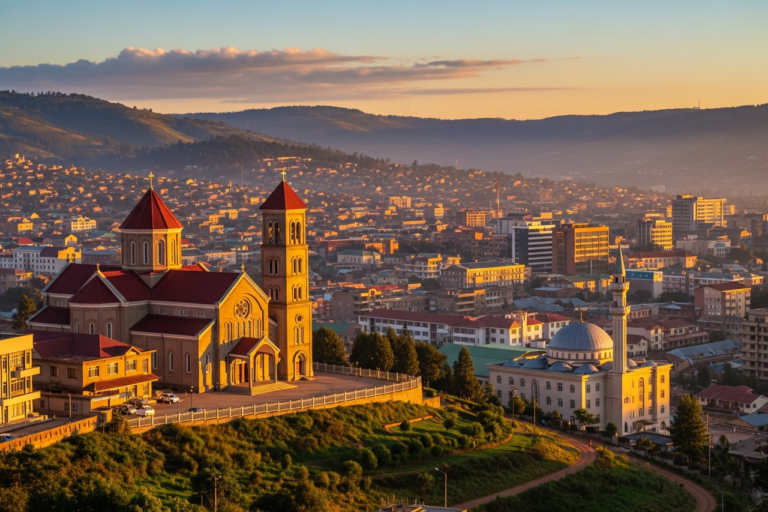
Christianity is the main religion in Rwanda, but the country also has a strong Muslim community and other smaller faiths. Islam has been a part of Rwanda for many years, and Muslims play an important role in daily life. You will see mosques across Rwanda, mostly in the Nyamirambo area of Kigali.
Rwanda also has other minority religions. The Baha’i Faith and old animist beliefs are found, yet only a few people practice them. Next, we will look at how Muslims in Rwanda live and also see how these other small faith groups fit into life in the country.
Islamic Community and Practices
The Islamic community in Rwanda is small but full of life. The people here have set up roots and feel proud to be part of this place. Most Muslims in Rwanda are Sunni. They work closely with the government. They team up to fight against violent actions. The community puts a lot of effort into helping young people. They share messages of peace and ask people to work well with the police.
For Muslims living in Rwanda, daily life is shaped by the time for prayer, being with others, and worship. The first mosque in Nyamirambo is well-known. It is one of the important places where people from the community come for prayers and to meet others. These mosques are not just for worship but also for social time. Prayers are mostly held in Arabic. But, talking about issues and announcements is done in Kinyarwanda, the country’s own language. This helps everyone understand and be a part of things.
Lately, the government started new rules about noise. These rules have changed how the call to prayer is made, as mosques can no longer use loudspeakers in the same way. Officials asked that these places use modern tools like radio to call people to prayer. The rules are the same for any public event, whether it is religious or not.
Keywords used: first mosque, rwanda, muslims, worship, mosques
Other Minority Faiths and Their Societal Role
There are other small faiths and ways of thinking in Rwanda besides Christianity and Islam. The Baha’i Faith and Jehovah’s Witnesses, for example, are a small, known part of the country’s mix of religious belief. There is also about 3% of the people in Rwanda who say they have no religious belief, which means they are either atheists or agnostics.
These smaller religions and others without a faith can follow what they believe. But some face problems that are just their own. For example, Jehovah’s Witnesses deal with problems at school. This can happen if their faith does not go along with some school or country activities, like ceremonies that show love for Rwanda or other religious events.
Here is how the country handles some of the smaller groups:
-
The government says it supports the rights of Jehovah’s Witnesses when they are in school. The Minister of Education has made it clear that students must not be asked to leave school because of what they believe.
-
The Baha’i group is small but does have people here in Rwanda.
-
Atheists and agnostics are few in number, but these people are noticed and included in Rwanda’s national headcount.
Religion’s Impact on Rwandan History and Culture
Religion has had two different effects on Rwanda’s history. It has brought people together and also pulled them apart. During the rwandan genocide, some religious leaders did very bad things. But some chose to help and protect people, even when it put them in danger. All of this has left rwanda with a big and complicated story when it comes to faith.
Now, many religious institutions help people move past the pain from the genocide. They work together with others to bring reconciliation, support social welfare, and help build strong communities. The next parts will look closer at what religion meant during the genocide. You will also see how churches and other places of faith are working to change rwanda today.
The Role of Religion During the Rwandan Genocide
The role of religion in the 1994 Rwandan genocide is both sad and hard to talk about in the country’s past. During that time, some churches became places where massacres happened. Some religious leaders took part in the violence. This made the ethnic divisions between the Hutu and Tutsi even bigger. Many people lost trust in religious groups as a safe place and a source of good guidance.
But that is not the whole story. While there was so much pain, some religious leaders and everyday followers stood up to those who carried out the killings. There were priests, pastors, and nuns who put their own lives at risk to help Tutsis and moderate Hutus. These people gave hope and showed what it means to care for others, even in Rwanda’s worst time.
After the genocide, there were deep wounds left for religious groups. Some leaders’ actions made many think about what happened and hope for change in their churches. This history still shapes the way religion is lived and seen in Rwanda now.
Influence of Churches and Religious Institutions
In Rwanda today, churches and other religious groups have a big impact on the lives of the people. They do more than teach faith—they help people by looking after the social welfare of those who need it. Leaders from many religions work together on important programs. They help with peace, bring people together, and take care of the people in the country who need help the most.
These churches and groups use their big networks to offer key services. Like, interfaith councils join with the government on plans for public health. Many churches help pay for health insurance for the poor. They are also important in education, health, and helping people during tough times. This work is key because some things the government alone can not do.
You can see their significant role in a few places:
-
Running schools and hospitals to help many Rwandans.
-
Setting up projects for the community and teaching people about problems like gender-based violence.
-
Giving a space for different faiths to talk and work together. This helps build unity in Rwanda.
Conclusion
To sum up, it is important for Canadians to know about the different religions in Rwanda. Christianity has a big effect there, but Islam and other smaller religions also have a significant role. Each one adds something special to Rwanda’s story. When you see these different beliefs, you get a better idea of the country and can show more respect when you meet people there.
As you visit Rwanda, remember that religion helps shape what people do, their traditions, and what they believe in. If you want to find out more about the way people live in Rwanda or are planning a trip, you can ask for more information anytime!