Key Highlights
-
Russian Orthodox Christianity is the main religion in Russia. It has a deep place in the country’s history and culture.
-
Russia is home to more than one faith. There are large Muslim, Buddhist, and Jewish groups, and each is found mostly in different areas.
-
Islam comes next as the biggest faith. Most Muslim people live in Tatarstan and the North Caucasus.
-
During the Soviet times, it was hard to follow any religion. Things changed a lot after that time, and now there is a big rise in how many people follow their faiths.
-
Local beliefs like Shamanism and Paganism are growing again, especially in places such as Siberia.
-
Many Russians say they belong to a religion like Russian Orthodox or Orthodox Christianity. Still, not many go to church often. For most, religion is a big part of their culture, not just about what they believe or do.
Introduction
Welcome to our guide on religion in Russia! In this country, you will see the grand and golden domes of Russian Orthodox cathedrals. You will also find quiet and simple faith in many different communities. People here have busy religious life. The freedom of religion is written in the country’s constitution. Yet, their long history gives Russia a special spiritual world. In this guide, you will learn about the old roots of russian orthodox faith. You will see how many different groups live their religious life. You will find out how belief shapes culture all over this big and varied country.
Religious Landscape of Russia
Modern Russia is a country where people follow many different faiths. Russian Orthodox Christianity is the main religion, but it is not the only one. The country is a secular state. This means no person has to follow one set faith by law.
You will see that some traditional faiths, such as Islam, Buddhism, and Judaism, have been here for a long time. There are also Catholics and other religious minorities, along with people who follow old local traditions, especially in the regions of Siberia. All these groups help make modern Russia a place with many beliefs. Knowing about this variety helps us see Russia’s cultural identity. Next, we will look at the main religions, where they are found, and how they link with different groups.
Major Religions Practiced Today
The most common religion in Russia is Orthodox Christianity. The Russian Orthodox Church is a big part of life and culture in the country. Still, Russia is home to more faiths. These other religions have been here for many years.
Islam is the second most common religion in the country. You will find many Muslims in the North Caucasus and Tatarstan. Buddhism is strong in places such as Buryatia, Kalmykia, and Tuva. Judaism is also part of history here, even though it faced hard times in the past. Some Protestant churches, as well as the Old Believers, play a role in Russia’s religious mix, too.
Because there are many groups, the Russian Orthodox faith stands out, but it is not the only important religion. All these faiths help shape the national story. The most common religions in Russia are:
-
Orthodox Christianity
-
Islam
-
Buddhism
-
Judaism
-
Various Protestant denominations
Diversity Across Regions
Religious practices in Russia are not the same everywhere. They change a lot from one region to another. This is because of the country’s long history and how many different kinds of people make up Russia. For example, the North Caucasus and the republic of Tatarstan are mostly Muslim. Islamic ways and teachings play a big part in daily life in these areas.
At the same time, the middle part of Russia, including Moscow, is the main spot for the Moscow Patriarchate and Russian Orthodoxy. In bigger cities like Saint Petersburg, you will see many different faiths living side by side. There are Orthodox cathedrals, nice Buddhist temples, and old synagogues too.
In the parts of Siberia and the Far East, some of the indigenous peoples of Russia have started to follow their pre-Christian traditions again. Many of them turn to Shamanism and beliefs tied closely to nature and their family lines. This helps make each part of Russia special, showing off many ways that people follow their faith throughout the country.
Religion and Ethnic Groups
In Russia, many people see their faith as a big part of who they are. This is true for Russian citizens from many backgrounds, and it is tied to where their families come from. For a lot of non-Slavic groups, being in a religious group is also about their community and who they are as people.
For example, many Tatars are Muslim. They form a big group in Russia, and this is very clear in Tatarstan. In this area, Islam is a big part of life and how things are run. In the same way, Buryats, Kalmyks, and Tuvans are often Buddhist. The places where they live are important for Buddhism in Russia.
So, in Russia, your religion is often about your family’s culture and home life, not just what you believe. Here are some important points:
-
Tatars and Bashkirs are mostly in a religious group that is Muslim.
-
Buryats, Kalmyks, and Tuvans follow Buddhism.
-
Some Siberian groups take part in Shamanism or have their own faith customs.
-
Most ethnic Russians are in the orthodox christianity religious group.
Historical Overview of Religion in Russia
The story of religion in Russia is long and full of big changes. It began before orthodox christianity arrived. At first, early Slavic people held on to old beliefs that were tied to nature and the world around them. When orthodox christianity came in the 10th century, it became a key part of life. This faith linked the church with the growing russian state.
There have been many changes in how faith and power work together. Over time, people built large orthodox churches. These churches showed the church’s strength. In the 20th century, things got hard for the church under Soviet rule. There was a lot of repression. Later, there was a strong return of faith. The history goes from old pagan ways to the new post-Soviet spiritual landscape.
Pre-Christian Traditions and Paganism
Before many people started believing in Orthodox Christianity, the area that is now Russia had many different spiritual beliefs. Early Slavic people followed forms of paganism. They prayed to many gods that were linked with nature, the seasons, and farming. These beliefs shaped the way they saw the world and what they did every day for a long time.
There was more than just Slavic paganism in these lands. Other local beliefs also grew, especially across the huge eastern parts of the country. For the indigenous peoples of Russia, especially in places like Siberia and the Altai Mountains, Shamanism has been a key spiritual way of life. Shamans help people by acting as a link between the spirit world and the human world. They do rituals to help heal and guide others.
In some Turkic and Mongolic areas, people also followed a belief called Tengrism. This faith focuses on Tengri, the sky god who will be there forever. Even though these old ways of believing were mostly pushed away when bigger religions like Orthodox Christianity took hold, some parts of paganism and Shamanism are still alive. In fact, a few groups are bringing these traditions back now. These ancient practices help keep the country’s rich and varied spiritual past a part of life today.
Adoption of Christianity
The start of Christianity in Russia in the 10th century was a big change for the country. At this time, the Slavic people were not christian—they followed other beliefs. That changed when Duke Vladimir of Kyiv chose to bring in Christianity in 988. He made many people get baptized, sometimes using force, which forever changed their spiritual and political life.
At first, not everyone wanted this new faith. The people had to follow it. But now, the Russian people have come to accept orthodox christianity. The rich church rituals, beautiful icons, and great church buildings drew people in and became a strong part of their culture. The russian orthodox faith started to connect very closely to the government, and the leaders at the time gave the Church a lot of support.
Because of this support, many churches and temples were built all over the country. These buildings were so beautiful that people from all faiths noticed them. The central place of orthodox christianity in russian society was set. That’s why the russian orthodox tradition is still such a big part of Russian culture today.
Soviet Era Impact on Religion
The 20th century saw a big and very harsh time for religion in Russia when the Soviet Union came up. The Soviet Union, an atheist state, saw religious institutions as a danger to its own way of thinking and rule. Because of this, the government started a strong effort to go after every faith. They pushed atheism across the country, took away church property, and tore down thousands of churches, mosques, and synagogues.
Many religious leaders and regular believers suffered a lot. Some went to prison, some were killed, and some were sent far away. The Soviet constitution talked about freedom of conscience, but in real life, following any faith was a big risk. People could lose their work or be left out in society. The idea was to build a full secular state, but many people kept their faith alive in secret, hiding their religion in private homes instead of out in public, away from the eyes of the government.
This time was hard and left a heavy mark on the country’s spiritual life. The main points of this era’s plan for religion were:
-
The widespread destruction of religious buildings.
-
The cruelty and killing of clergy and other believers.
-
The state’s work to talk about atheism in schools and daily life.
-
The government taking church property for itself.
Post-Soviet Religious Revival
The collapse of the Soviet Union in 1991 was a big turning point. It meant people in Russia could enjoy religious freedom again. After many years of the government pushing atheism, the people in Russia were now free to practice their beliefs. Many people started to show new interest in their old faiths. There was a clear spiritual change across the country.
The Russian Orthodox Church was the biggest part of this change. The church got back its place as a key group in Russian life. Many churches and old monasteries had once been taken down or changed by the state. But now, these were being rebuilt all over. The Russian Orthodox Church started to be seen again—people noticed it more in public life, in schools, and it helped shape the country’s ideas and culture.
But this religious revival was not just for the Russian Orthodox Church. Other religious organizations saw growth too. Muslim, Buddhist, and Jewish groups also started new and positive things. They opened up their old buildings, started schools, and got closer to their traditions and culture. All in all, the years after the collapse of the Soviet Union changed how people felt about faith in Russia. People could choose what to believe in, and that made a big difference in the country’s life and culture.
Demographics and Statistical Insights
Looking at the numbers for religion in Russia helps us get a clear picture of the country’s spiritual life. Studies by the Pew Research Center and other groups show us how many people say they belong to a certain faith group and how their beliefs are changing over time. A big part of the total population in Russia calls themselves religious, but not everyone goes to services often.
These stats show that in Russia, being part of a religion is often about the culture and history, not just about following rules or going to events. Next, we will talk about how many people belong to each religion, how beliefs change from one place to another, and look at trends in how young and old people believe, as well as the difference between city and country areas.
Religious Identification in the Russian Population
When it comes to religious identification, a significant majority of Russian citizens align with a faith, even if they don’t actively practice it. Orthodox Christians make up the largest religious group by a wide margin, with estimates suggesting that around 70% of the population identifies with this faith. This high number reflects the deep cultural connection many Russians feel to the Orthodox Church.
Muslims represent the second-largest religious community, comprising a substantial minority of the population. Their numbers are concentrated in specific ethnic republics and have been growing. Other faiths, such as Buddhism, Judaism, Catholicism, and Protestantism, are practiced by smaller percentages of the population, but they maintain vibrant communities. A notable portion of the population also identifies as non-religious or atheist.
Here is an approximate breakdown based on various studies:
|
Religious Group |
Approximate Percentage of Population |
|---|---|
|
Orthodox Christians |
65-71% |
|
Muslims |
10-14% |
|
Non-Religious/Atheist |
13-16% |
|
Other Christians (Catholic, Protestant) |
1-2% |
|
Buddhists |
~1% |
|
Jews |
<1% |
Regional Differences in Belief
The religious map of Russia is not the same everywhere. Different places have their own main belief systems. This shows the country has many groups and a long story. You will see many orthodox churches in the centre of Russia, but in other places, other faiths are stronger.
In the North Caucasus, with areas like Chechnya and Dagestan, most people follow Islam. Tatarstan is another place where a lot of people are Muslim. Here, Islam has a big part in day-to-day life and culture. These Islamic ways are part of who the people are.
If you go east, you will find Buddhism is important in Buryatia, Kalmykia, and Tuva. These are some parts of Russia where people are Buddhist. Datsans, or Buddhist monasteries, are centres for both faith and culture. In parts of Siberia, there are also many people who follow old shaman and pagan ways. Sometimes, these beliefs mix with orthodox christianity, and people follow both. This mix of different faiths and local culture is found in many parts of Russia.
Generational Patterns and Trends
Generational trends in religious beliefs tell an interesting story about Russia after the Soviet era. The oldest generation grew up during the toughest Soviet anti-religious years. Because of this, they are the least religious. Middle-aged and younger people, however, are more likely to say they have a religious identity. This change comes from the spiritual revival that started when the USSR fell.
But having a religious connection does not always mean that people practise their faith. Some research, including studies from the Russian Academy of Sciences, has found that many young people say they are Orthodox Christian. Still, for them, this is more about culture than strong faith in religion. They do not go to church often, and they usually do not follow many religious rules. For these young people, Orthodoxy is a big part of their national story and heritage.
All of this shows a shift in the way people view religion. Many in the total population, especially young people, see faith as something that connects them to others and their country, not just a set of rules to follow. This idea of “belonging without believing” is a strong part of religious life in Russia today.
Urban vs Rural Perspectives
Views on religion can change a lot between Russia’s cities and countryside. In many small towns and villages, the local church is very important. It is a big part of social and religious life for the people there. People hold on to tradition, and religious life is more about the whole group and their daily ways. Many people feel close to their local parish and the priests who work there.
But things are different in big cities like Moscow and St. Petersburg. These places have some of the top religious sites and many kinds of faith. Still, life in the city moves fast, so a lot of people do not take part in religious life often. Many people in cities say they belong to a faith for cultural reasons. But they do not go to church often. This leads to a pattern where many people say they have a religious identity but do not always join in the activities.
Local authorities are important in both the city and country. They help look after religious sites and what goes on around them. At the same time, it is easy to stay private in big cities, so there is more space for many types of religious life or even not believing at all. The split between city and country shows why some people in Russia feel strong about their faith but may not take part in organized religious life.
Russian Orthodox Christianity
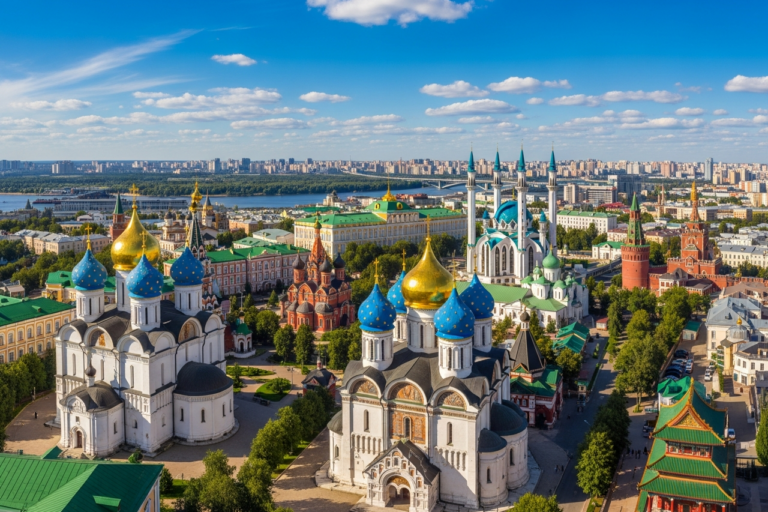
Russian Orthodox Christianity is more than just a religion in Russia. It is a big part of the country’s identity. The Russian Orthodox Church, which is led by the Moscow Patriarchate, has strong roots in Russia’s culture and history. You can see its mark everywhere. The famous onion domes of Orthodox churches stand out in cities and towns. People come together for important religious holidays all year.
For a lot of Orthodox Christians, this faith feels very personal. At the same time, some people see it as mostly part of their culture. That is why many say they are Orthodox even if they do not often go to church. In the next parts, you will find out the main beliefs, how this faith shapes the culture, and what makes Russian Orthodox traditions different.
Russian Orthodox, Orthodox Christianity, Russian Orthodox Church, Moscow Patriarchate, Orthodox churches, religious holidays, Orthodox Christians, Russian Orthodox Christianity
Origins and Key Beliefs
Russian Orthodox Christianity started after the Great Schism in 1054. This event divided Christianity into two branches. One branch became Western (Catholic). The other became Eastern (Orthodox). Russia got its faith from the Byzantine Empire. The country followed the Eastern Orthodox tradition from them. This history is seen in key beliefs. People in the russian orthodox tradition value tradition, mystery, and the holy meaning of icons.
A central belief in orthodox christianity is the Holy Trinity. This means God is the Father, the Son (Jesus Christ), and the Holy Spirit. Orthodox Christians focus a lot on showing respect for saints and the Virgin Mary. She is known as the Theotokos, or “God-bearer.” Icons are special in this faith. They are more than paintings. They are viewed as holy windows that help in prayer and worship.
Russian orthodox Christianity is also known for its beautiful and deep church services. These ceremonies have not changed much over the years. The main goal for a believer is “theosis.” This means to become closer to God by having faith, praying, and taking part in church sacraments. These main ideas have had a strong effect on both the spiritual and cultural life in Russia.
Influence on Daily Life and Culture
The teachings of Orthodox Christianity have shaped Russian culture and everyday life in many ways. You can see the impact of the Russian Orthodox faith in art, buildings, books, and music. The well-known onion-domed churches are more than just places for prayer. They stand as important symbols for Russia.
Many Russian names come from saints. Big religious holidays like Easter and Christmas are important national events and are celebrated with special foods and time with family. Even people who may not be very religious still join these traditions, because they are a big part of the culture and help people feel closer to their roots. There are also many common phrases in the Russian language that began with religious ideas.
beliefs and values from the church have shaped the way people think and act. Ideas about tough times, hope for a better life, and caring for others show up a lot in Russian books and the way people talk. These ideas come from the long history of Russian Orthodox teachings. Because of this, Orthodox Christianity continues to be a strong part of Russian life and culture.
Church Attendance Trends
One thing that makes modern Russian religious life interesting is the clear gap between what people say they believe and how often they go to church. Most people in Russia say they are Orthodox Christians, but only a few go to church often. This shows that people in post-Soviet Russia have their own way of looking at faith.
For a lot of Russians, saying they are Orthodox Christians helps them show love for their country and culture. It helps them feel connected to Russia’s history and all the old customs, which the government tried to hide in the past. Many people do not see the need to join in all the religious traditions. The church is seen as a big part of Russia, and standing by it can be a way to show you care about your nation.
These signs show that, for many Orthodox Christians, faith is something that gives them a sense of belonging, either by themselves or with others, more than a rule to follow every week. People may go to church for big holidays, for baptisms, or to light a candle, but it’s not something they do all the time. This shows that their belief is still strong for them, even if they do not follow the usual routines of religious life.
Orthodox Holidays and Traditions
Orthodox holidays are bright and deeply important in Russian culture. These days in the russian orthodox church come with their own special ways to celebrate. People visit orthodox churches for services that can feel very serious. Russian orthodox religious holidays use the Julian calendar, so christmas is on January 7. These times are filled with strong spiritual meaning and also loved family traditions.
The biggest holiday in the russian orthodox church is Easter, called ‘Paskha.’ People get ready for it by fasting for many days during Great Lent. The night before Easter, they spend all night in church with a vigil. At home, families dye eggs with colors, bake bread-like cakes called ‘kulich,’ and make a sweet cheese food called ‘paskha.’ People greet each other by saying “Khristos Voskrese!” which is answered with “Voistinu Voskrese!”
There are some other days in the year that are also important in russian orthodox life. Each one has its own ways of showing love, belief, and ties with the past. The main russian orthodox holidays are:
-
Christmas (Rozhdestvo)
-
Easter (Paskha)
-
Epiphany (Kreshchenie)
-
Trinity Sunday (Troitsa)
-
The Intercession of the Theotokos (Pokrov)
Minority Christian Communities
Besides the main Orthodox Church, there are many other Christian groups in Russia. The country has followers of Catholicism, different protestant churches, and the old believers. These smaller groups each have their own history and ways of worship. They add to the religious diversity of Russia.
But not all of them have it easy. For example, the Jehovah’s Witnesses are banned and called an “extremist” group. In the next parts, we will look at these Christian groups and see where they fit in Russian society. We will also talk about the history of Catholicism and the special ways some of the lesser-known groups, like the old believers and many protestant churches, practice their faith.
Catholicism in Russia
Catholicism has been in Russia for a long time, but the history of it here is simple and tied closely to ethnic groups. Most of the people who are Catholic in Russia have roots in Poland, Lithuania, or Germany. The land where their families once lived became part of the Russian Empire. Now, the Catholic group is one of the smaller religious minorities.
The connection between the Catholic Church and the russian government is not easy or simple. There are rules about missionary activity that can make it hard for churches or people who seem to come from outside. Still, there are Catholic communities in big cities. The Cathedral of the Immaculate Conception in Moscow is a main place for their faith and community.
Catholicism is a minority faith in Russia and lives in the shadow of the larger Orthodox Church. The people who follow this faith hold on to their special traditions, both religious and cultural. Even though their numbers are not high, they are a special part of Russia’s mix of beliefs. They work together to find their place in the changing world of religion in Russia.
Protestant Churches
Protestant churches like Baptists, Pentecostals, and Lutherans are another key Christian group in Russia. Protestantism came to the country long ago, first through German settlers and then through groups led by people from Russia. In Soviet times, they faced harsh treatment, but these groups often showed real strength and worked in secret.
After the 1990s, Protestant churches started to grow, helped in part by missionary activity from other countries. But this growth has not always gone smoothly. Sometimes, local authorities and the main Orthodox Church see their outreach with doubt or are worried by it. There are also some rules made to control religious groups, and this can be hard for some of the denominations.
Even with these problems, Protestant communities stay active all over modern Russia. They are known for strong community ties, their focus on personal faith, and reaching out to help others. These churches give a spiritual home to a committed group and add to the wide mix of religion in Russia today.
Old Believers and Lesser-known Sects
The Old Believers are a religious group in Russia. They are an important part of the country’s history. In the 17th century, they left the Russian Orthodox Church. This happened because they did not accept changes the church made to its rituals. Because of this split, many Orthodox Old Believers faced trouble for many years. Some had to leave and move to far-off places in Russia or other countries so they could keep their old ways.
Old Believer communities can still be found today. These communities are known for sticking to old church practices very closely. They also keep a very traditional way of life. Many still follow rules and customs that were used before the Russian Orthodox reforms. This lets people in their group stay connected to Russia’s long history. The people in these groups tend to work closely together and often depend on each other.
In addition to the Old Believers, there are some other religious organizations and groups in Russia that many people do not know about. These groups sometimes have beliefs that are not the same as those of main religious organizations. In some cases, their rules might not fit with what the government wants. Because of this, some members look for other options like alternative civilian service instead of joining the army. Here are some things you might find with Old Believers:
-
They use the two-fingered sign of the cross.
-
They use old prayer books and icons from before the reforms.
-
Their past includes being cut off and chased away.
*
Islam in Russia
Islam is the second-biggest religion in Russia. The faith has been in the country for over a thousand years. Many ethnic groups in Russia have followed Islam for a long time. This is especially true in the North Caucasus and the republic of Tatarstan. Many of Russia’s Muslims have roots that link them to places close by, like Central Asia.
Today, Muslims play a big part in Russian life. You will find their numbers growing, mostly in large cities like Moscow. In the next parts, you will get to know more about the history and rise of Islam in Russia, its key role in some regions, and how Muslims there practise their faith each day.
History and Growth of Islam
The history of Islam in Russia goes back a long way. It started before people in Kyiv became Christian. The faith began to spread in the Caucasus during the 7th century. The first mosque in Russian lands was built in Dagestan, about the year 651. Years later, in the 10th century, Volga Bulgaria—a place that is now called Tatarstan—decided to make Islam its official state religion.
As time went on, the Russian Empire grew bigger. The land expansion included places with large groups of Muslims. Many of these people lived in the Caucasus, the Volga area, and places close to Central Asia. Because of this history, Islam is known as one of Russia’s four main religions. The other three are Orthodox Christianity, Buddhism, and Judaism.
When the Soviet Union was in charge, people who followed Islam, and all other faiths, faced tough times. The leaders closed many mosques and were strict with religious leaders. Even then, Islam survived. After the 1990s, the faith became stronger again and grew fast. Today, Muslims in Russia are an active part of all society. The group is big and keeps growing, with important links to Russian history and culture.
Role in Tatarstan and Other Regions
In some parts of Russia, Islam is a main faith. It is not just a minor belief, but strong in the area’s way of life and politics. The Republic of Tatarstan is a clear example of this. Islam there has been the top religion for over 1,000 years. It is tied closely to the Tatar identity. The capital, Kazan, is a key place for learning and culture for Muslims in Russia.
The North Caucasus region also stands out. It includes places like Chechnya, Dagestan, and Ingushetia. These republics have more Muslim people than any other faith. Islamic ways and society rules can be seen every day. These can also be seen in law and politics. The religious group here is a big part of how people act and live their lives.
Islam matters even outside these areas. Big groups of Muslims live in many Russian cities. They add a lot to the mix of groups and ideas you find in Russia. Some of the main areas where you can see lots of Muslims include:
-
The Republic of Tatarstan
-
The Republic of Bashkortostan
-
Republics of the North Caucasus (like Chechnya and Dagestan)
-
Western Siberia
Islamic Practices and Observances
The religious life of Muslims in Russia is shaped by the main rules of Islam. This includes daily prayers, fasting during Ramadan, and giving to charity. Mosques are important for prayer, and they are also places where people meet and spend time together. In areas where many Muslims live, you can hear the call to prayer. It is easy to see Islamic traditions in these places because people practice them openly.
Major Islamic holidays like Eid al-Fitr (Uraza-Bayram) and Eid al-Adha (Kurban-Bayram) are very important. In some regions, such as Tatarstan and Chechnya, these days are public holidays. Local authorities help by closing roads for prayers. This helps when a lot of people need space to pray, especially in big cities like Moscow.
Even though Muslims are a minority in Russia, their religious life is strong and lively. They build schools to teach Arabic language and the Quran. They print books about their religion and keep their own traditions. This helps them be true to their roots. At the same time, they add more variety and colour to Russian society.
Buddhism in Russia
Buddhism is one of the four traditional religions that are recognized by law in Russia. It has been practiced in the country for many years. Most people follow it in a few areas called the “Buddhist republics.” The Tibetan form of Buddhism is the one people here follow most. Many Buddhists in Russia see the Dalai Lama as their spiritual leader.
This old faith has seen good times and very hard times in Russia. In the next parts, the focus will be on the people who live in the Buddhist republics. There will also be a look at how this religion has changed over time. The text will share which rituals and festivals make Buddhism special in Russia.
Buddhist Republics and Communities
Buddhism in Russia is found mostly in three main places. People call these places the Buddhist republics. They are Buryatia, Kalmykia, and Tuva. You can find these areas in Southern Siberia and near the Caspian Sea. The Buryats, Kalmyks, and Tuvans live here. These groups have followed Buddhism for a long time.
Kalmykia is the only place in Europe where most of the people are Buddhist. Elista is the name of its capital city. Elista has the largest Buddha statue in both Russia and Europe. In Buryatia and Tuva, which are both in Siberia, people mix Buddhism with local ways. These ways include Shamanism. A place called Ivolginsky Datsan is in Buryatia. It is the main place where the leader of Russian Buddhists stays.
You can also find Buddhist communities in big cities outside these republics. One of the Russian Buddhist temples is in St. Petersburg. In fact, this is the northernmost Buddhist temple in the world. Buddhists in Russia have worked hard to keep their faith alive. This religious group has made strong centres where they can honour both their spiritual roots and their culture.
Historical Presence and Development
The history of Buddhism in Russia started in 1741. That year, Empress Elizabeth Petrovna said Buddhism was one of the country’s official religions. The faith first came to the Buryat people, a Mongolic group who lived in this part of Russia. Later, it spread to the Kalmyks and Tuvinians as well.
For many years, Buddhism grew in these places and did well. Monasteries, called datsans, became centres for learning, medicine, and culture. Russian Buddhists had close ties to the spiritual centres of Tibet. The Dalai Lama was looked up to as their spiritual head.
But things changed during the Soviet era. The government was against most religions. Buddhism faced hard times. Many monasteries were destroyed. Thousands of monks were killed or put in prison. In the 1990s, after the Soviet Union ended, Buddhism was recognized again. It started to grow fast, building temples and bringing back its old ways.
Unique Rituals and Festivals
Buddhism in Russia has many special rituals and festivals. These are very important in the everyday life of the people. Most of these traditions come from the Tibetan school of Buddhism. In the Buddhist republics, you will see these colourful and lively acts of faith and culture.
Sagaalgan, or Lunar New Year, is one of the biggest religious holidays. Families get together at this time. There are special meals, along with prayers and rituals at the datsans, which are the monasteries. People do these to leave the last year behind and look forward to a happy and good new year. Another big event is Tsam. In this festival, monks wear masks and dance as different spirits. This is done to keep away bad spirits.
These religious holidays and traditions mean a lot for believers. The festivals and rituals bring people together and make their ties even stronger. They also let everyone see what Buddhism in Russia is like. Some main festivals and rituals are:
-
Sagaalgan (Lunar New Year)
-
Tsam (Masked Cham Dances)
-
Maidari Khural (Festival of the Coming Buddha Maitreya)
-
The lighting of 1,000 lamps
-
Rituals for purification and blessing
Judaism in Russia
Judaism has been present in Russia for a very long time. People in Jewish communities have lived there for many years. Over this time, they have faced hard moments and a lot of persecution. Still, it is important to see how their strong will helped them get through many rough periods. Now, Jewish life in Russia is coming back. Groups like the Federation of Jewish Communities of Russia do a lot to help grow these communities.
There are big places like the Moscow Choral Synagogue. There are also many smaller centres where people can take part in Jewish culture and religion. Today, there is new energy around all of this. In the next parts, you will find out more about the history of Jews in Russia. You will also learn about Jewish life right now, as well as the groups and places, like the federation of jewish communities of russia and the Moscow Choral Synagogue, that help Jewish people hold on to their culture.
History of Russian Jewry
The story of Jews in Russia is long and often sad. Jewish people have lived in the area for many years. They have had to face a lot of unfair treatment and hard times in that place. Under the Russian Empire, most Jews had to live in a set area called the Pale of Settlement. There were harsh laws for them. There were also pogroms, where people attacked Jewish people.
The Russian Orthodox Church, being the main church, sometimes made things worse for Jews. It sometimes created even more stress for people in the Jewish community. When the Soviets took over, life did not get much better. The Soviet government said it was against hate toward Jews, but it made it hard to practise Judaism. It closed synagogues and punished the people who led the religion. Years of trouble and pain made many Jews from Russia leave their home.
But even with all that, Jewish life and tradition stayed strong. Since the Soviet time ended, people have worked hard to bring their faith and culture back. The Federation of Jewish Communities of Russia helps make things better. This group works to help Jews find their roots again and fight against hate.
Contemporary Jewish Life
Contemporary Jewish life in Russia is seeing a strong comeback. After many years of hard times, Jewish groups are finding new energy in their culture and religion. This is happening most in large cities, like Moscow and St. Petersburg. You can see this change in the way old synagogues are opening again, new Jewish schools and community centres are starting, and there is new interest in Jewish traditions.
The federation of jewish communities of russia has helped a lot with this. It gives social help, supports religious schools, and sets up cultural events for people. This lets more people connect with their history and roots. The famous Moscow Choral Synagogue used to be a symbol of endurance. Now, it is full of life and is home to a strong and busy community.
These days, many people in Russia feel proud to be Jewish, and not many feel the need to hide it. The group is smaller now than it was in the past because some have moved away or blended into other groups. Even so, it is still a lively and strong religious organization. It plays an open part in Russia’s mix of cultures. This helps add to the country’s rich and diverse ways of life.
Synagogues and Cultural Centres
Jewish life is coming back in Russia. You can see this now, as there are more synagogues and cultural centres being built or fixed up. These religious sites are not just for prayer. The places are where people come together, learn, and keep their culture alive. The Moscow Choral Synagogue is very important. It is a big landmark for Jewish people in the country and is a special place for the community.
In St. Petersburg, the Grand Choral Synagogue stands out as a great part of Jewish history and is home to a pretty big group of people. The federation of jewish communities of russia has helped start many new synagogues and community centres. They are opening these even in smaller cities where there are not as many Jewish families.
These places give the people a lot to do and learn. They help keep Jewish culture and ways strong for young people. Some well-known places are:
-
The Moscow Choral Synagogue
-
The Grand Choral Synagogue in St. Petersburg
-
The Moscow Jewish Community Centre
-
Numerous regional synagogues and Chabad houses
-
Jewish day schools and Sunday schools
Ethnic and Indigenous Religions
Besides the big world religions, Russia also has many smaller faiths from the indigenous peoples of Russia. People in places like Siberia and the Altai Mountains have long followed beliefs such as Shamanism, Paganism, and Tengrism. These traditions have strong ties to nature and old family knowledge.
For many years, these native faiths did not get much support. But now, many people are interested in bringing them back. They are becoming more important to the people in these areas and make up part of their culture. Let’s look at what these faiths are about, how they are coming back in today’s world, and the way they fit with the main religions in Russia.
Shamanism, Paganism and Tengrism
Russia covers a huge amount of land. It is home to many old and native spiritual ways that came before both Christianity and Islam. One of the best known is Shamanism. Many of the indigenous peoples of Russia still practice Shamanism today, mostly in Siberia and the Far East. In Shamanism, people believe that a shaman can talk with the spirit world for healing or advice. This is often done with the help of music, drumming, or dance.
The early Slavs followed Slavic Paganism. This faith taught that there were many nature gods. Most people switched to Orthodox Christianity later on. But some old pagan festivals and customs did not go away, and parts of them are still kept as folk traditions, or have come back with new pagan groups.
There is also Tengrism. This old Turkic and Mongolic faith is still found in some parts of Russia. Tengrism is about the worship of Tengri, the god of the sky, and living in harmony with nature. These faiths show a close link to the land and to ancestors by the indigenous peoples of Russia. They give another way of looking at the world next to the big religions most people know.
Regional Influence and Revival
In the last few decades, the indigenous peoples of Russia have seen their old faiths come back in many places. This is happening because the indigenous peoples of Russia want to take back their cultural identity and ways after many years of being pushed aside. You can see the effect of these beliefs growing, especially in spots where they have always been strong.
The Tuva Republic is a good example of how Shamanism is coming back. There are many shamans there who help people with their knowledge and healing skills. People from all over the country go to Tuva to join in their special ceremonies. This is happening in other places too, like the Sakha Republic (Yakutia) and the Altai Republic, where the old faiths now have a real spot in daily local life.
But this movement is bigger than just prayer or old rituals. It is about showing that their own culture and choices matter. There are some main ways you can see this:
-
The making and legal approval of shaman and pagan groups.
-
The fixing or rebuilding of places where old ceremonies took place.
-
Mixing old beliefs into local parties and community festivals.
-
More people learning and talking about these ancient faiths in schools and in public.
This growing return to old faiths is stronger now for the indigenous peoples of Russia.
Interactions with Mainstream Faiths
The link between the native religions and the big faiths in Russia like the Russian Orthodox Church, Islam, and Buddhism is not always simple. For a long time, the bigger faiths pushed to make people follow their beliefs. This often led to the loss of old shaman and pagan ways.
But, in many parts of the country, you can now see a mix of both old and new. Many people still go to a Russian Orthodox church or a mosque, but at the same time, they hold on to some of the old native faiths. In Siberia, a lot of people may go to an Orthodox church but still ask a shaman for help when they need to. In the places where most people are Buddhist, there are some who do both Buddhist practices and old shaman things at the same time.
Sometimes, there are problems, especially when people from the more strict parts of the bigger faiths do not agree with the older ways. Even so, more people are starting to see that these older faiths are a big part of who they are. Because of this, there is now more kindness and, in some cases, the different groups work together. This has built a mix of ways to believe, where the Russian Orthodox church and old native faiths, plus other groups, meet and share ideas.
Eastern Faiths and Spiritual Movements
Besides Russia’s main religions, the country has many other types of beliefs. There are small groups of people who follow Hinduism, Sikhism, Taoism, and Zoroastrianism, and most live in bigger cities. These groups help make Russia’s religious life more varied.
But people in new religious movements often face problems. Some deal with strict laws and people may not trust them. In the next parts, we will talk about these smaller Eastern faiths, what new spiritual groups do, and where you can find their people and groups.
Hinduism, Sikhism, Taoism and Zoroastrianism
While these faiths are not the main ones in Russia, some Eastern faiths do have a small but active group of followers in the country. Hinduism, for example, is followed by a small community. Most are Indian people who live in Russia or Russians who have joined movements like the International Society for Krishna Consciousness (ISKCON).
Sikhism, Taoism, and Zoroastrianism have followers in Russia too, but these communities are even smaller. These groups are found mostly in big cities. This is where followers can meet for prayer and take part in community events. As a religious group, they keep a low profile. Still, they add to the mix of cultures in cities such as Moscow and St. Petersburg.
For these small groups, keeping their religious and cultural identity in a country where other faiths are more common is not easy. They trust their close friends and use cultural centres to keep old ways and customs alive. Even though they make up just a tiny part of the population, these a religious group communities show that Russia is connecting more with the world and its many beliefs.
Role of New Religious Movements
New religious movements (NRMs) have a hard and often tough spot in modern Russia. Once the Soviet Union fell, people started to have more religious freedom. After this, there were many spiritual groups, both from Russia and from other countries, and they got new followers fast. These movements showed people a different way to look for meaning in life.
But, the Russian government and the russian orthodox church do not always trust NRMs. They worry about outside influence, scams, or even harm to people’s minds. So, they made laws that are hard for these groups. Some of these movements were even called names like “cults” or “destructive sects.”
Because of that, many groups have gone through big legal trouble. Some groups were shut down or banned after landing on the federal list of extremist materials. With these rules, lots of new religious movements find it hard to know what will happen next. The key problems for them are:
-
Difficulty in registering as official religious organizations.
-
Scrutiny from law enforcement agencies.
-
Restrictions on missionary and public activities.
-
Negative portrayal in state-controlled media.
Centres and Followers in Russia
Most people who follow smaller Eastern faiths and new religious movements in Russia are in big cities. Moscow and St. Petersburg are good places for these groups because there is more diversity and people can keep their privacy. Their religious sites are often small. Some use rented halls. Others turn apartments into temples or use small cultural centres.
The number of people following faiths like Hinduism and Sikhism is often about how many immigrants there are from countries like India. But it is not just immigrants. Some Russians also join these religious organizations because they like their ways of life and ideas. These groups try to make a sense of community. They do this by having regular gatherings, festivals, and lessons for people.
Even if these groups are small, they are very important for their members. They give people a space to practice their faith and keep their culture, even when they are far from where their religion started. They are a small part of Russia’s religious diversity. Most times, they have fewer resources and do not get as much notice as traditional faiths in the country.
Religion and Russian Culture
In Russia, you can see that religion and culture are part of daily life. Faith is a big part of the country’s art and the way people live. You see, hear, and even feel this in what people build, what they write, and the music they make. Religion shapes what Russia is today.
People there also mark their calendars with religious holidays and many festivals. These events bring folks together and each has its own ways to celebrate. It’s not only about Orthodox Christianity. Other groups, like Islam and Buddhism, also help shape Russia’s culture in different areas. In the next parts, we will look at how faith and art work together in this country.
Art, Architecture and Sacred Spaces
Art and buildings in Russia show just how important religious life is. The domes you see on many Orthodox churches, like in Saint Basil’s Cathedral, are more than pretty—these shapes stand for art, faith, and the story of the country. Places like the Kazan Cathedral and many old monasteries are not just about prayer. They show off skill and hand work and act as spaces where people can gather, especially during religious holidays. Here, members of many groups come together and feel a strong bond. All these things, from big churches to small meeting spots, show the mix of beliefs you will find in modern Russia.
Festivals and Public Life
Celebrations and festivals are very important in public life in Russia. They show both the cultural identity and the strong religious traditions people have. Major russian orthodox holidays like Easter and Christmas are big events with processions. Many people come together from places like Moscow and Saint Petersburg to take part.
These events show just how much the russian orthodox church means to the people. At the same time, you can see how many different religions there are, with local customs and ideas from many minority groups. These gatherings make people feel connected to each other. They help build unity and add to the many religious ways of life in Russia. People get a chance to talk and share with each other in this big country.
Religion in Literature and Music
You can find themes of faith and spirituality all through Russian literature and music. The link between religious beliefs and a group’s way of life is easy to see in these works. Many well-known authors, like Fyodor Dostoevsky and Leo Tolstoy, wrote about people and their lives using Orthodox Christianity. They talked a lot about what is right and wrong, and how people hope for a better ending.
In Russian music, there is also a strong spiritual side. Tchaikovsky and Rachmaninoff, for one, made music that feels holy and deep. Orthodox hymns and chants are a big part of this, too. They help make religious life richer for many people and show real devotion to faith and the group’s traditions.
These works in Russian literature and music show how important Orthodox Christianity, religious beliefs, and religious life are in shaping their stories and music.
Government and Religious Regulation
In modern Russia, how the state and the religious institutions work together can be quite complex. This is mostly because of history and what has happened in the past. The Russian Orthodox Church holds an important place, and that affects what happens for Russian Orthodox people, other Orthodox Christians, and all the different religions. These groups have to deal with a lot of rules and steps that come from local authorities. Even though freedom of conscience should be there, in real life, it is often not so easy. Local authorities and the people who run things at the top in Russia give out policies that can limit what you are allowed to do.
The government keeps an eye on what missionaries do. They also keep up a federal list of extremist materials. This list changes how different religions can talk about their faith and reach out to Russian citizens out in towns and cities. Looking at how all this plays out tells us a lot. It helps people learn more about religious life in modern Russia.
State Policy and Legislation
Legislation about religion has a big impact on the spiritual life of modern Russia. The Russian state wants to respect freedom of conscience but also keep some control over religious organizations. The laws in the country often focus on the Russian Orthodox Church. This is because the Russian Orthodox Church has a long history with the central government. Because of this, religious minorities, like Jehovah’s Witnesses and Old Believers, can sometimes face limits in different parts of Russia. Russia is now a secular state, and its rules and policies are being watched by international organizations. These groups want to make sure the country is following human rights standards and the rule of law.
Religious Freedom and Restrictions
In modern Russia, religious freedom moves ahead with care within a secular state. The Russian Constitution says there should be freedom of conscience. However, some rules now make things harder, mainly for groups like Jehovah’s Witnesses and religious minorities. The Russian Orthodox Church has a big part in this. It can shape local laws and choices that affect many religious organizations. Law enforcement agencies watch over religious activities, which can lead to problems between groups. People now see that to understand daily religious life in Russia, you need to look at the mix of belief, social rules, and the strong role of the Russian Orthodox Church.
Relationship Between State and Religious Institutions
The connection between the state and religious institutions in Russia shows both working together and having times of tension. The Russian government knows that the Russian Orthodox Church has a lot of influence. This is why the Russian Orthodox Church often takes part in talks about the country’s core values and identity. But this relationship does not mean all religious groups get the same level of status. Some smaller or minority faiths can face limits.
How the state deals with different religious organizations in Russia depends on laws and what local authorities decide to do. If you want to see how faith shapes life in Russia, it helps to look at this connection. Faith is a big part of daily life for many people there. It also helps shape Russian culture in many ways.
Conclusion
Understanding religion in Russia shows us a big mix of beliefs and old ways. The Russian Orthodox Church and the government work together, and this shapes religious life in a big way. The russian orthodox church has a strong say in what happens in the country. People in Russia have faced problems with freedom of conscience. Still, you will find many religious organizations across the country, including orthodox christians and jewish people. There is a strong spirit of faith among the people, and that can be seen every day.
As modern Russia goes through changes, we can see how they hold on to their religious life. People still find new ways to practice their beliefs. The russian orthodox faith and other groups show that everyone can find their place. That makes Russia’s culture and history even more special, and it is something the people are proud to show the world.
Frequently Asked Questions
How has religion evolved in Russia since Soviet times?
Since the end of the Soviet Union, religion in Russia has become more common. More people go to church now, and the government often helps the Orthodox Church. This change is part of a bigger movement where many old traditions are coming back. You can see this in what people value and how they spend time together in their community.
Are there restrictions on religious practice or attire in Russia?
In Russia, there are some rules about religious practices and clothing, mainly for those who are not part of traditional faiths. These laws can stop people from showing their faith in public. There are also special rules for wearing religious attire, mostly in state institutions. How people follow these rules can be different, depending on which religious group or part of the country they are in.
Why do many Russians identify as religious but rarely attend church?
Many people in Russia say they are religious. This is because of the culture and history in the country. For many, being spiritual means more to them than going to a church often. There is a mix of old ways, what people feel inside, and some doubt about big church groups. So, most people in Russia choose to have their own way when it comes to what they believe, instead of taking part in group worship.